
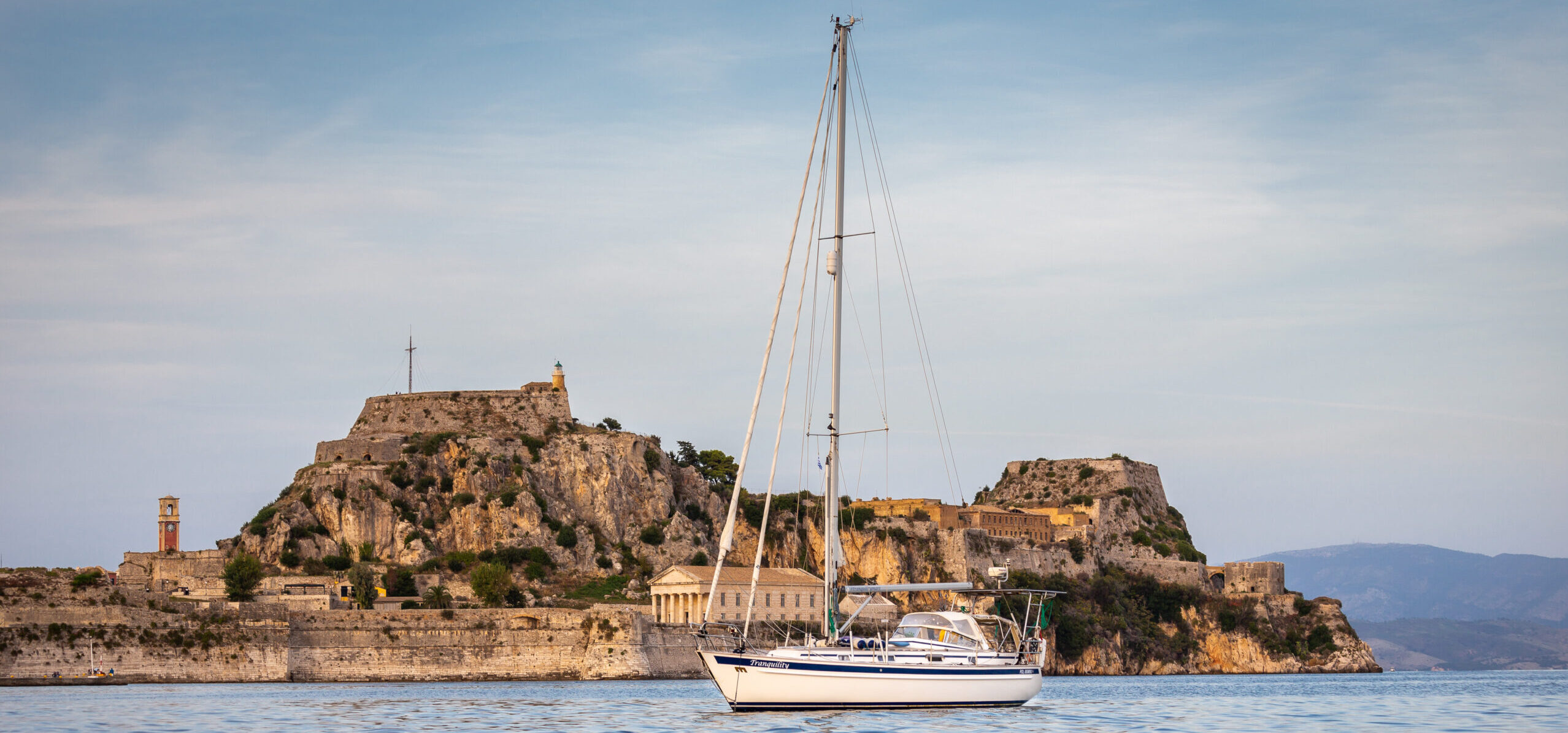
Welcome to the second part of the Logbook 2025, sailing Norway to Spain. We encourage you to read the first part (Spain-Norway) before embarking on this leg!
Shetland Islands – The Way Back
After two weeks of sailing in Norway — during which we reached as much as 60 miles inland and stopped at the northernmost point of our 2025 journey — it was finally time to turn south. But we knew one thing for sure: we couldn’t skip the Shetlands without one more, longer stop.
The passage from Norway turned out to be quite tiring. The sea was rough, and the swell made sailing very uncomfortable at times.
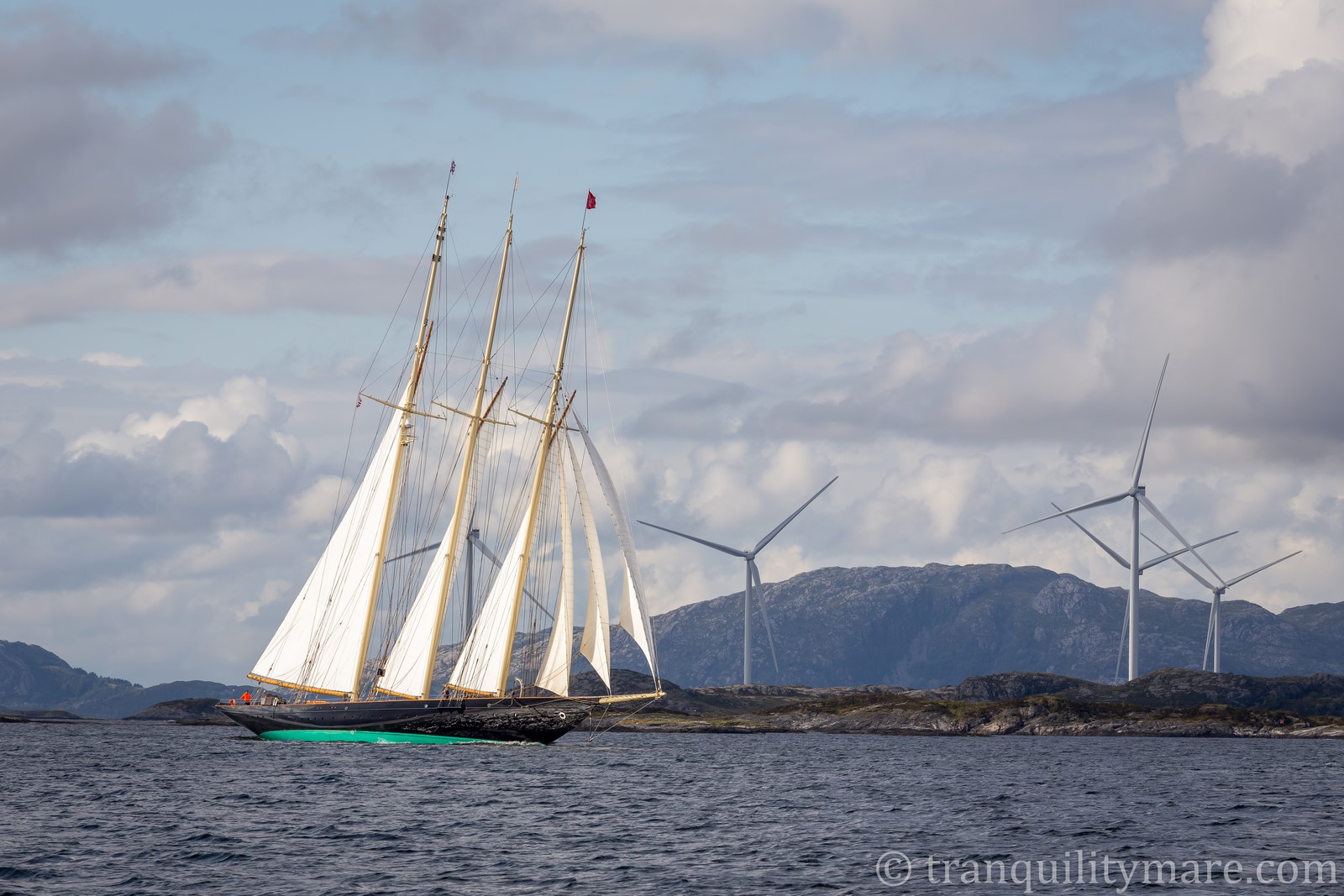
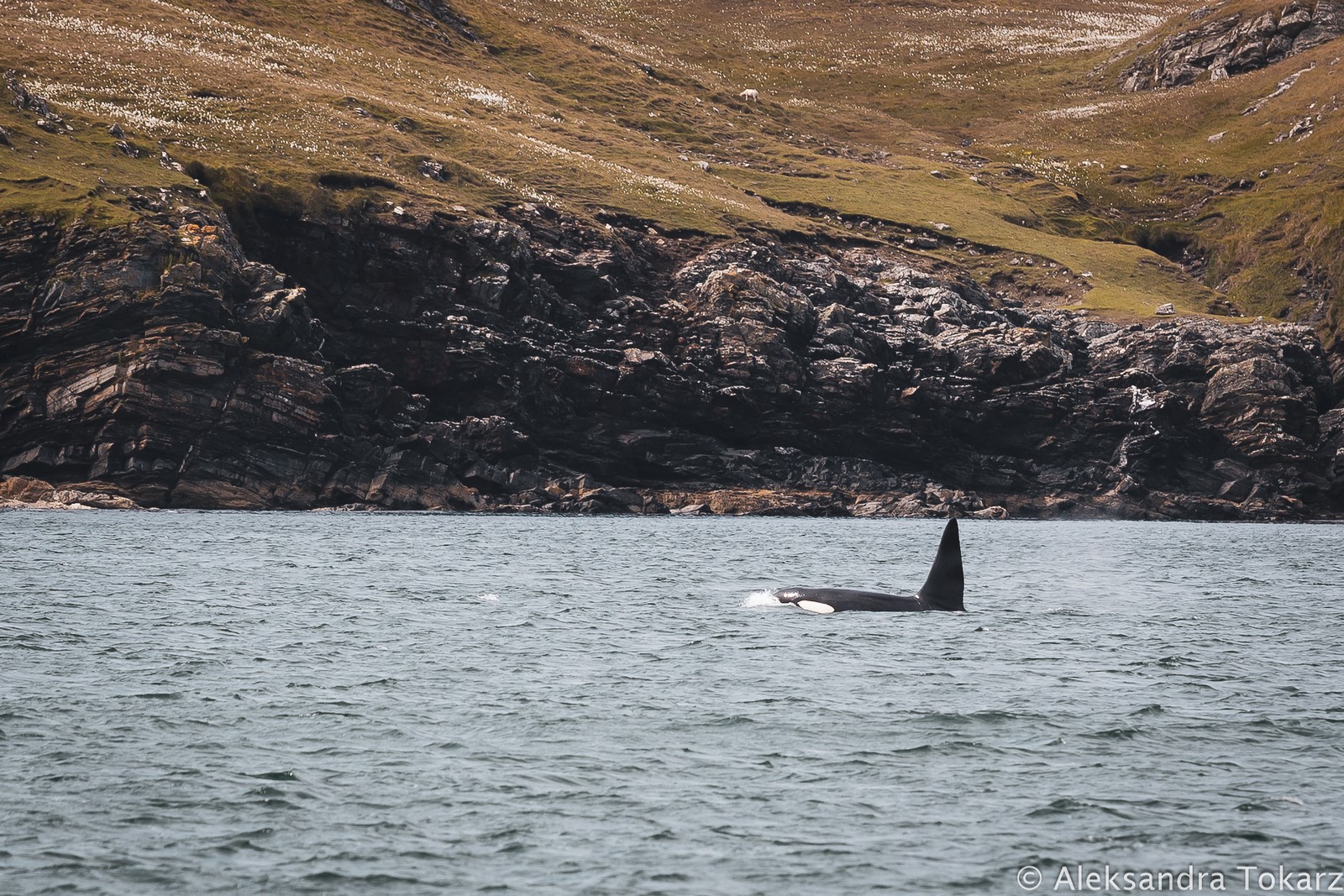
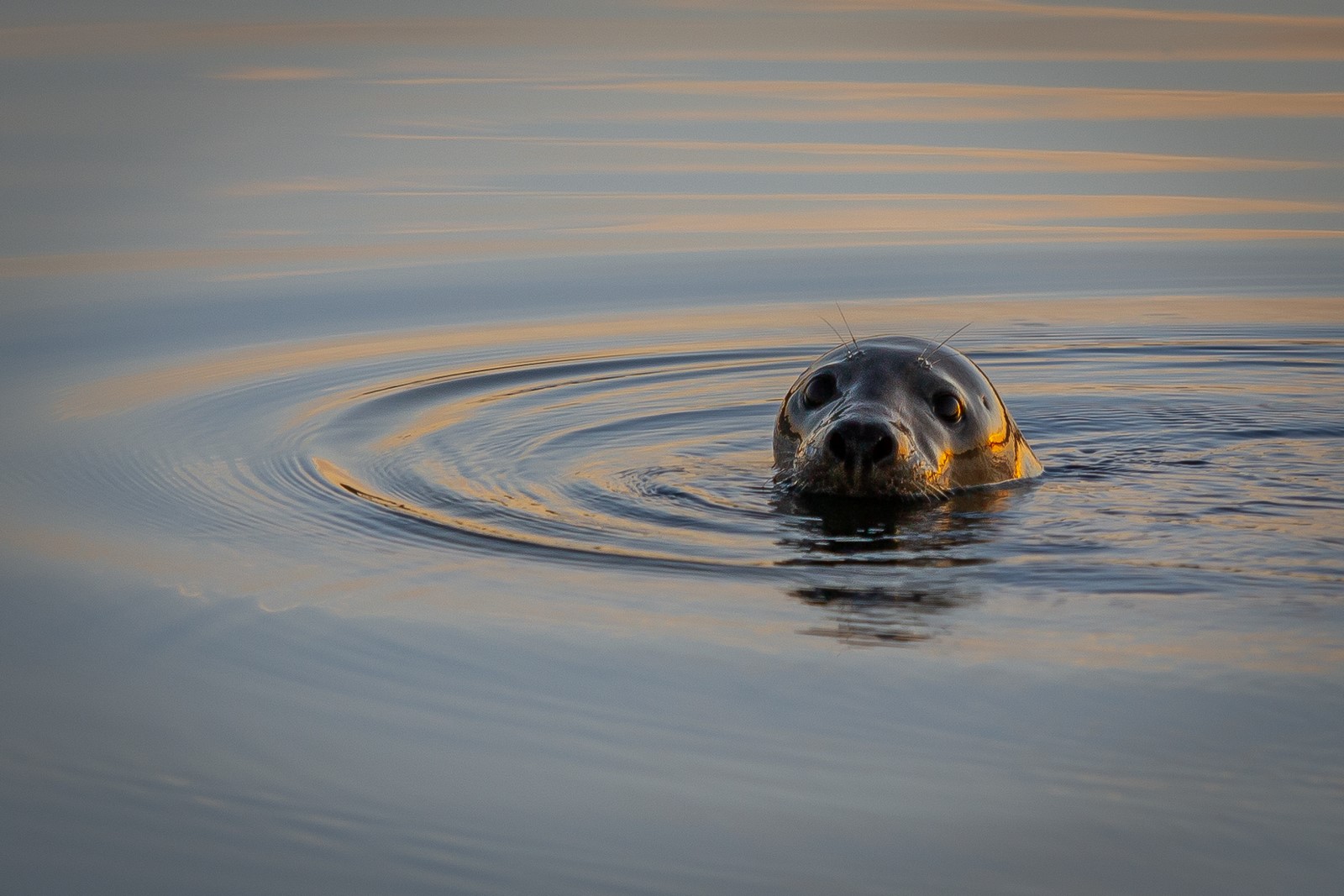
Once again, however, the Shetlands made it all worthwhile: puffins, seals swimming right up to the yacht at sunset, long walks along the cliffs, and a warm, welcoming local community. And just when it felt like we couldn’t be more amazed, one of my biggest dreams of 2025—came true: encountering orcas in their natural habitat. And not the ones known from the incidents near Gibraltar.
Orca Encounter in Shetland
Of course, it didn’t happen by accident. We spent a long time reading, planning, and gathering information on how to increase our chances. And then, one morning, we got a message with their latest location. We checked the map — and it turned out to be exactly along our planned route for the day.
Luck does favour the prepared.
For five hours, we searched them. Once we finally spotted the pod, we stayed in its vicinity, watching orcas move and hunt. Every now and then, a distinctive black fin would cut through the waves. They surfaced for a moment, then disappeared again, and all we could do was scan the horizon, waiting for the next glimpse.
Once again in my life, I found myself saying: I could die happy now.
It was hard to believe we were experiencing something like this — being out there, on the water, with these extraordinary creatures felt almost surreal.
The Catalina crash on Yell
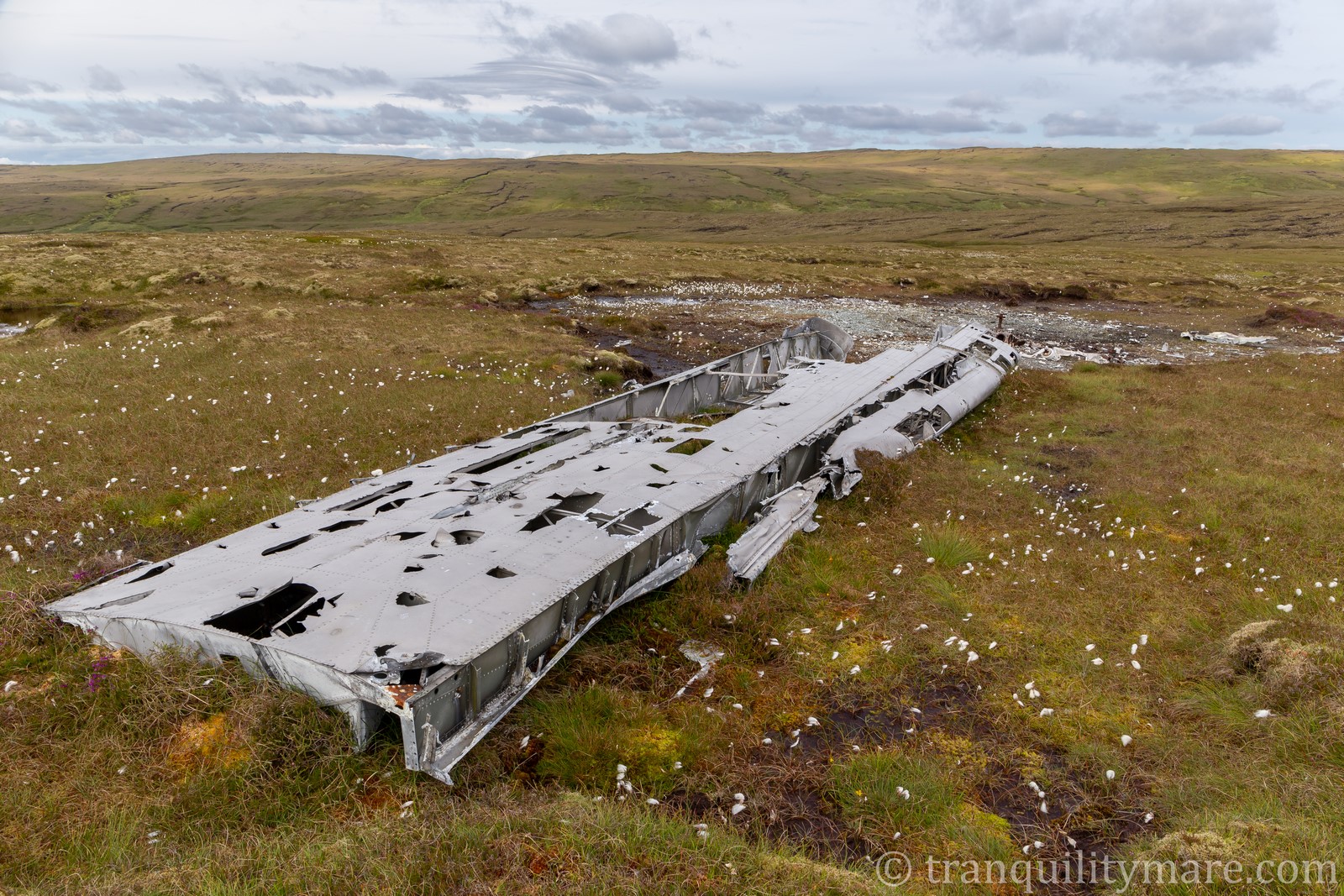
We continue exploring more anchorages and bays. From one of them, we set off towards the crash site of a Catalina aircraft that went down on the island of Yell in 1942.
Do you remember the story about the concrete blocks near Brest and the pilot who tracked down the Bismarck? He — along with several crew members — was later reassigned from France to the North Sea to hunt sister warship: the Tirpitz. And this is where their mission came to an end. Caught in severe icing conditions, they were unable to continue the flight, and lighting up the nearby airfield took too long. Out of a crew of ten, only three survived.
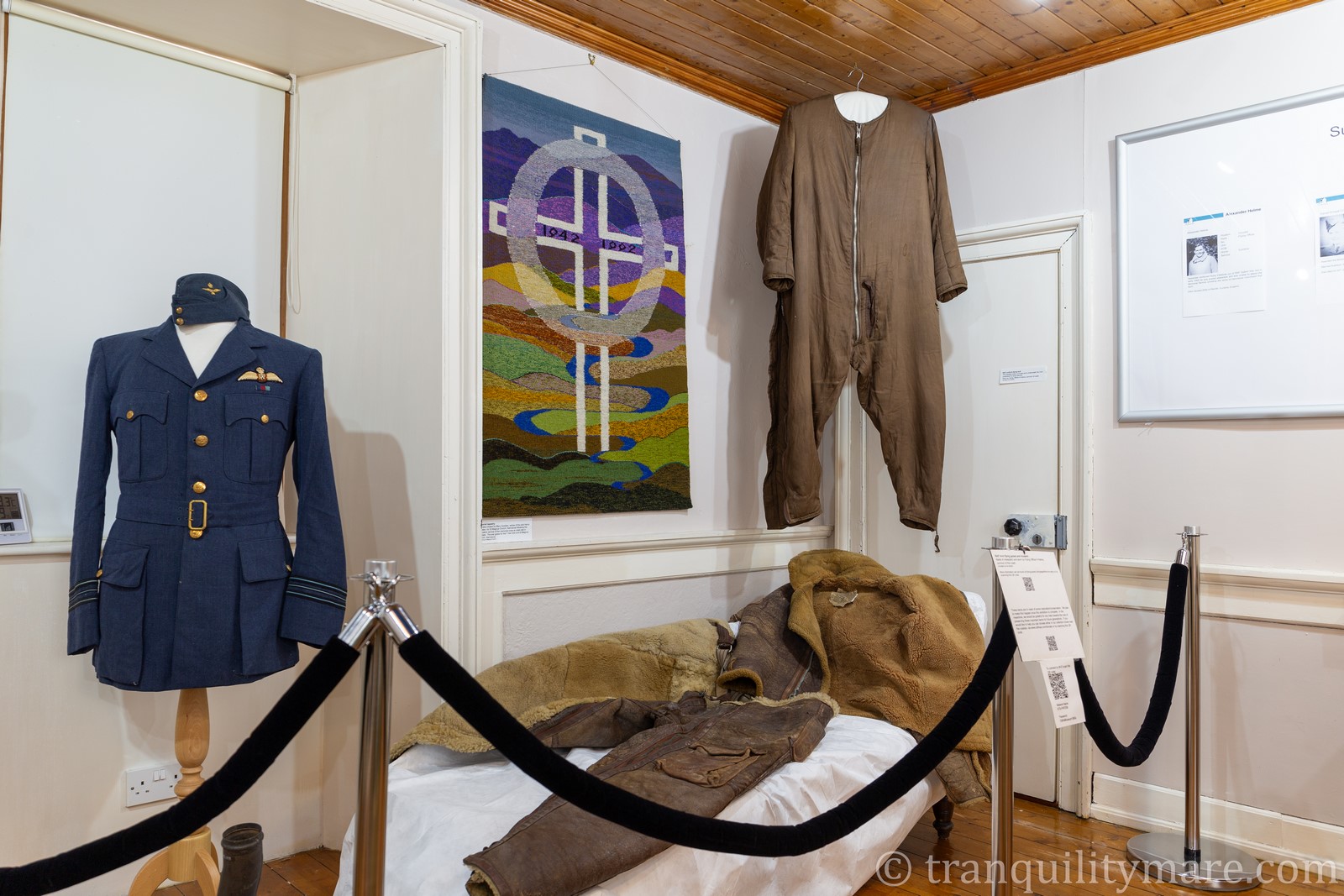
At the small Old Haa Museum in Burravoe, there is a room dedicated to this tragedy.
Lerwick – the capital of the Shetlands
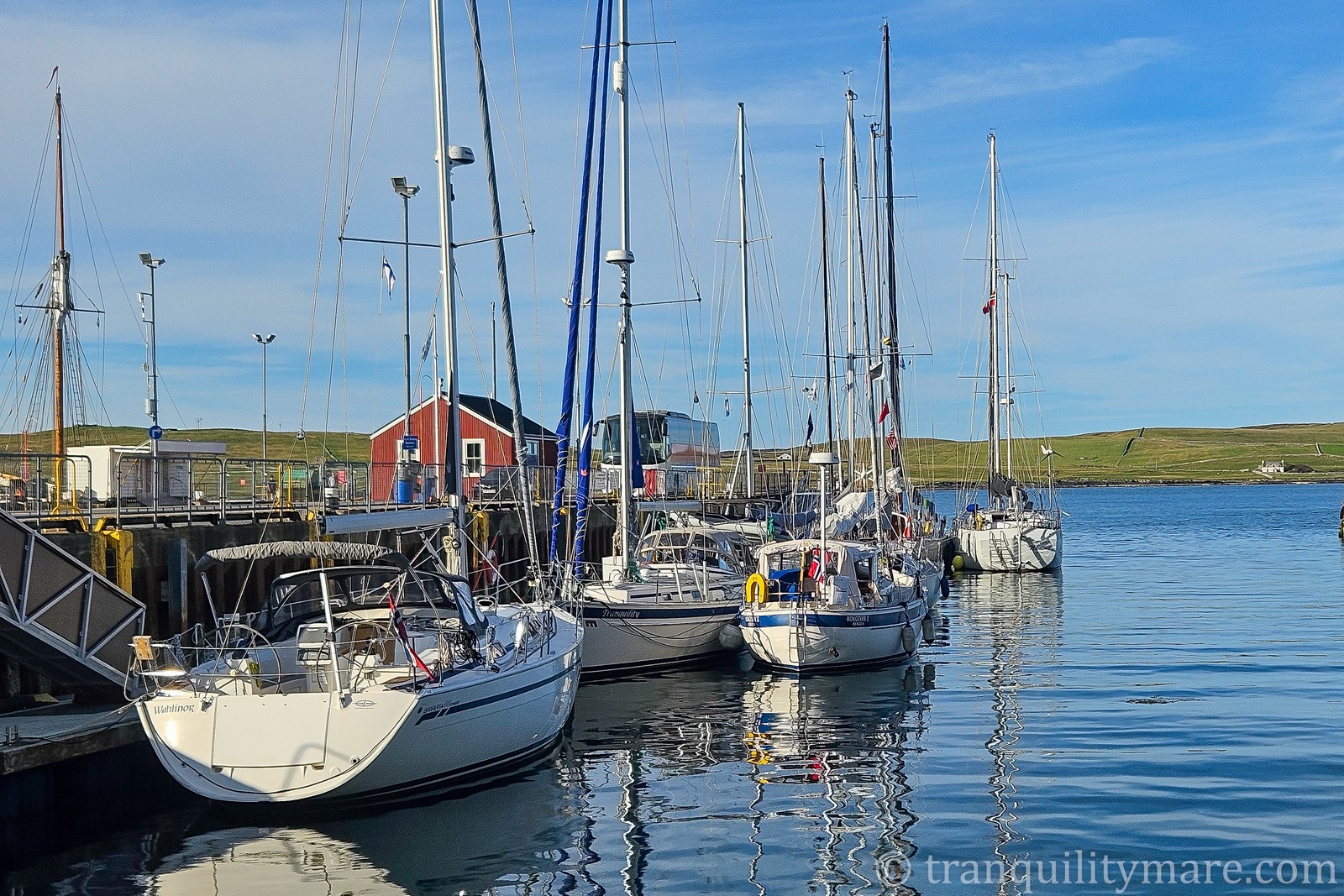
During our second stop in the Shetlands, we finally visit Lerwick — the capital of the archipelago. As expected, it’s much more touristy than the other places we’ve seen on the islands. Yachts are rafted together, cruise ships come and go, but even so, it’s a very welcome stop after weeks spent in the Norwegian and Shetland wilderness.
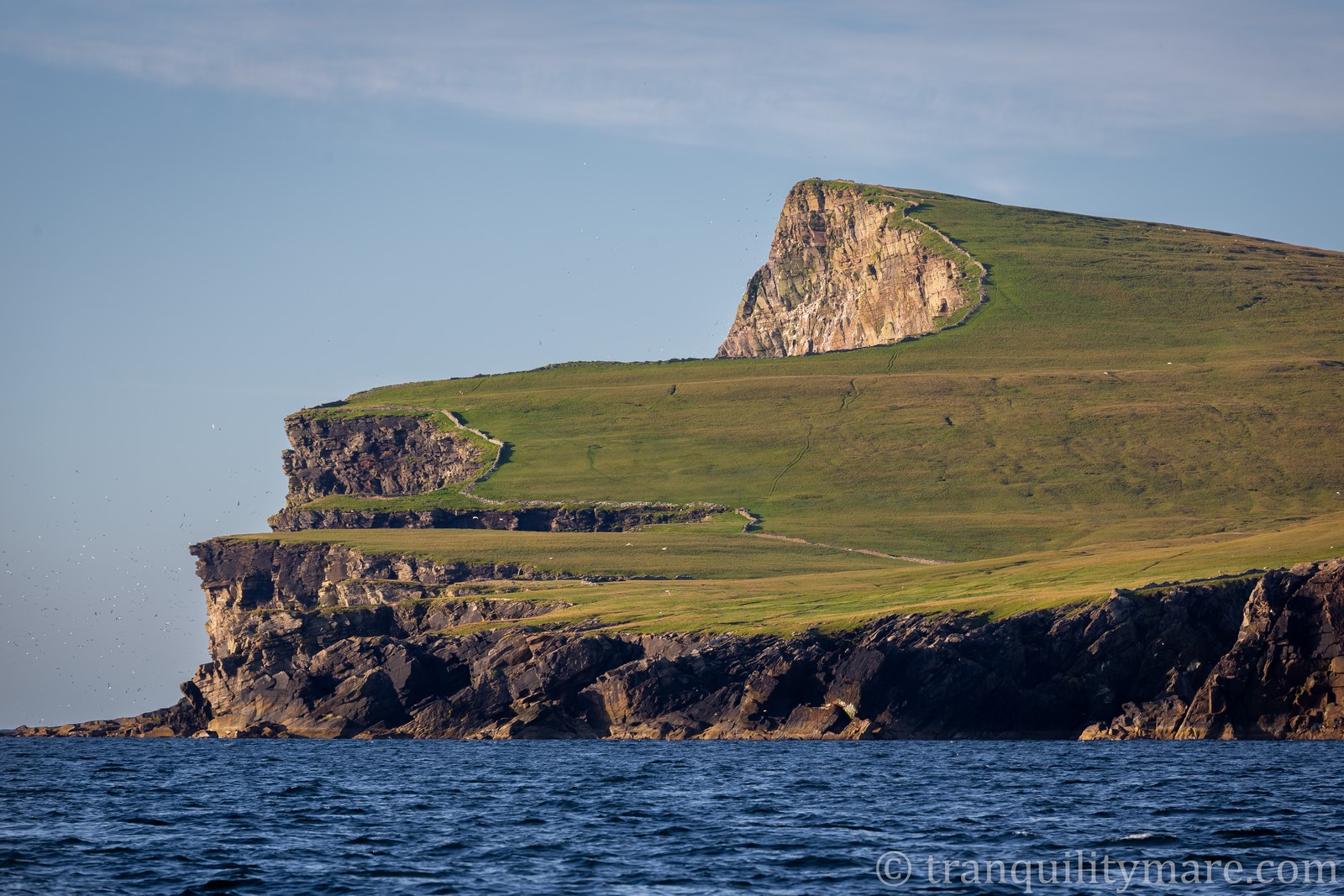
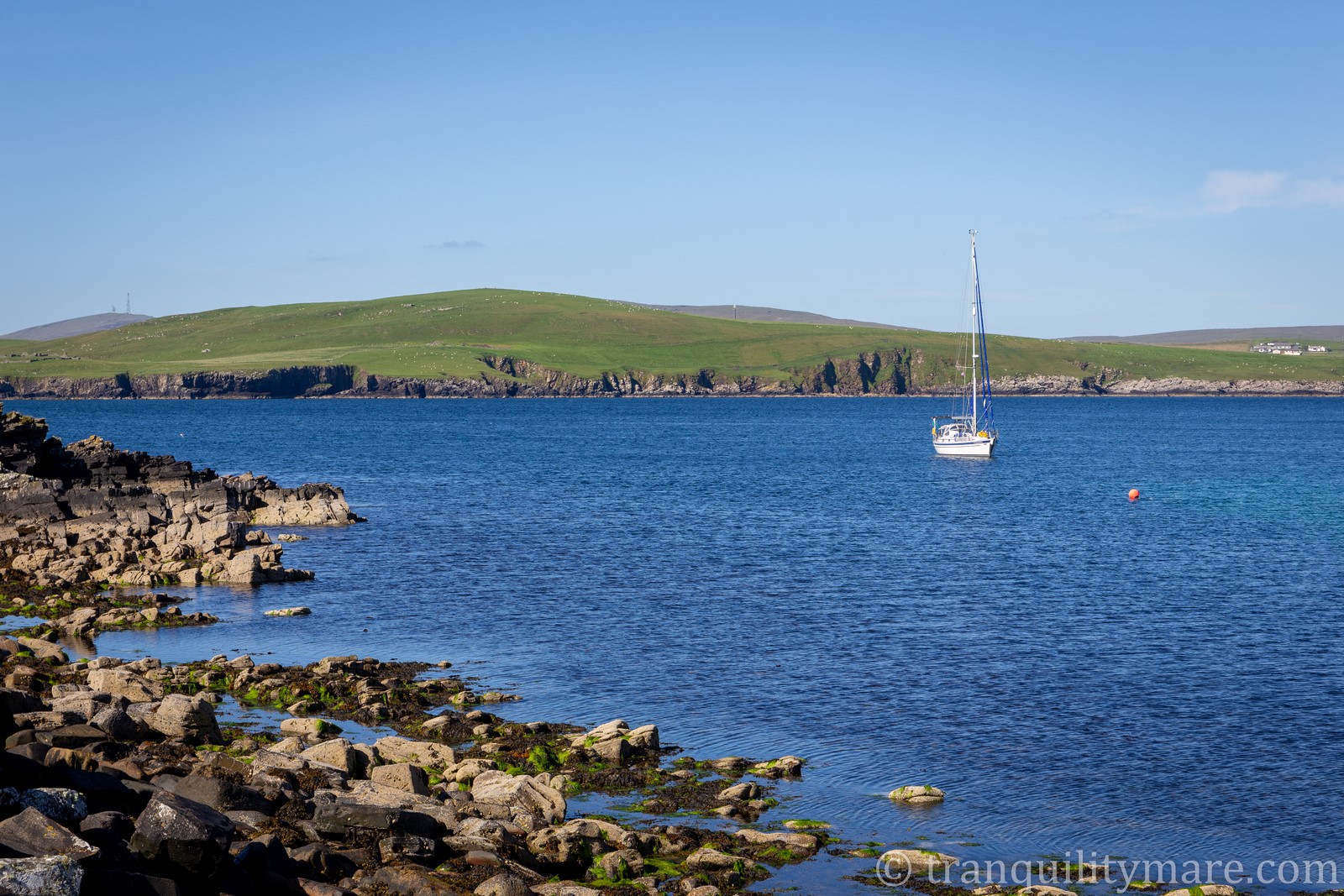
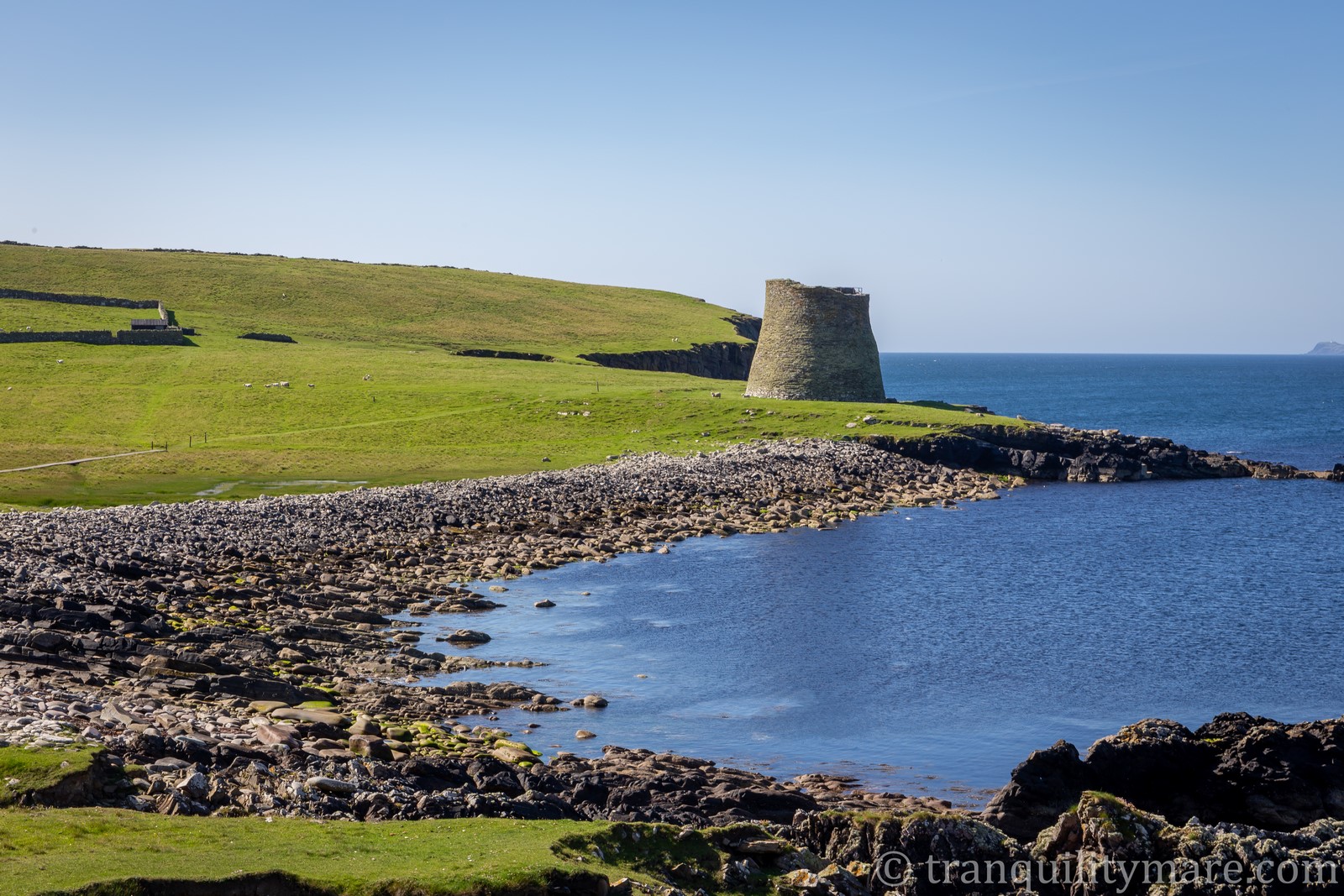
As we slowly make our way south, we visit more mysterious brochs and take in the surrounding nature. Almost every day, it feels like we’re sailing through Jurassic Park. The sheer abundance and diversity of life — especially seabirds — is hard to put into words.
Sailing to Fair Isle
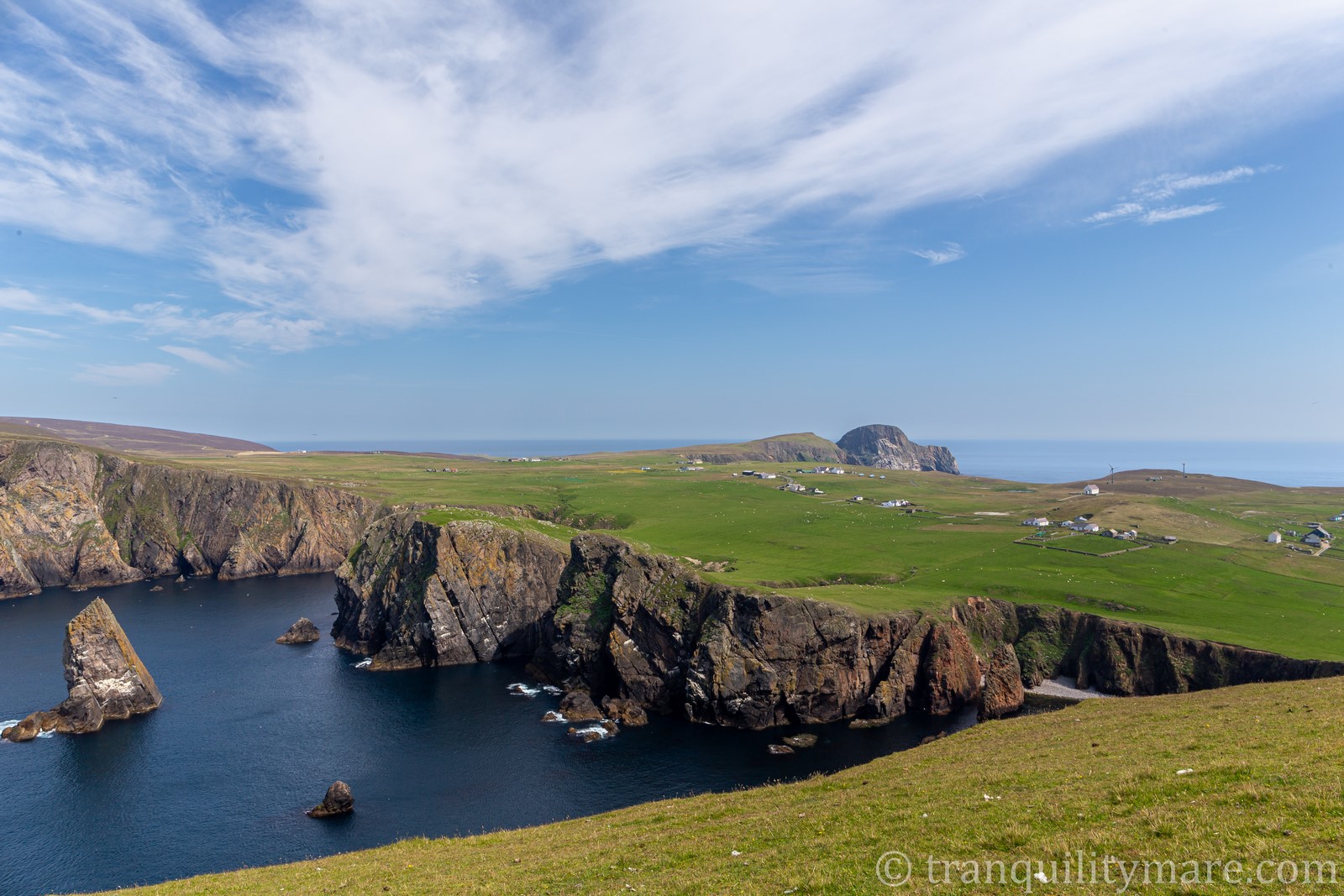
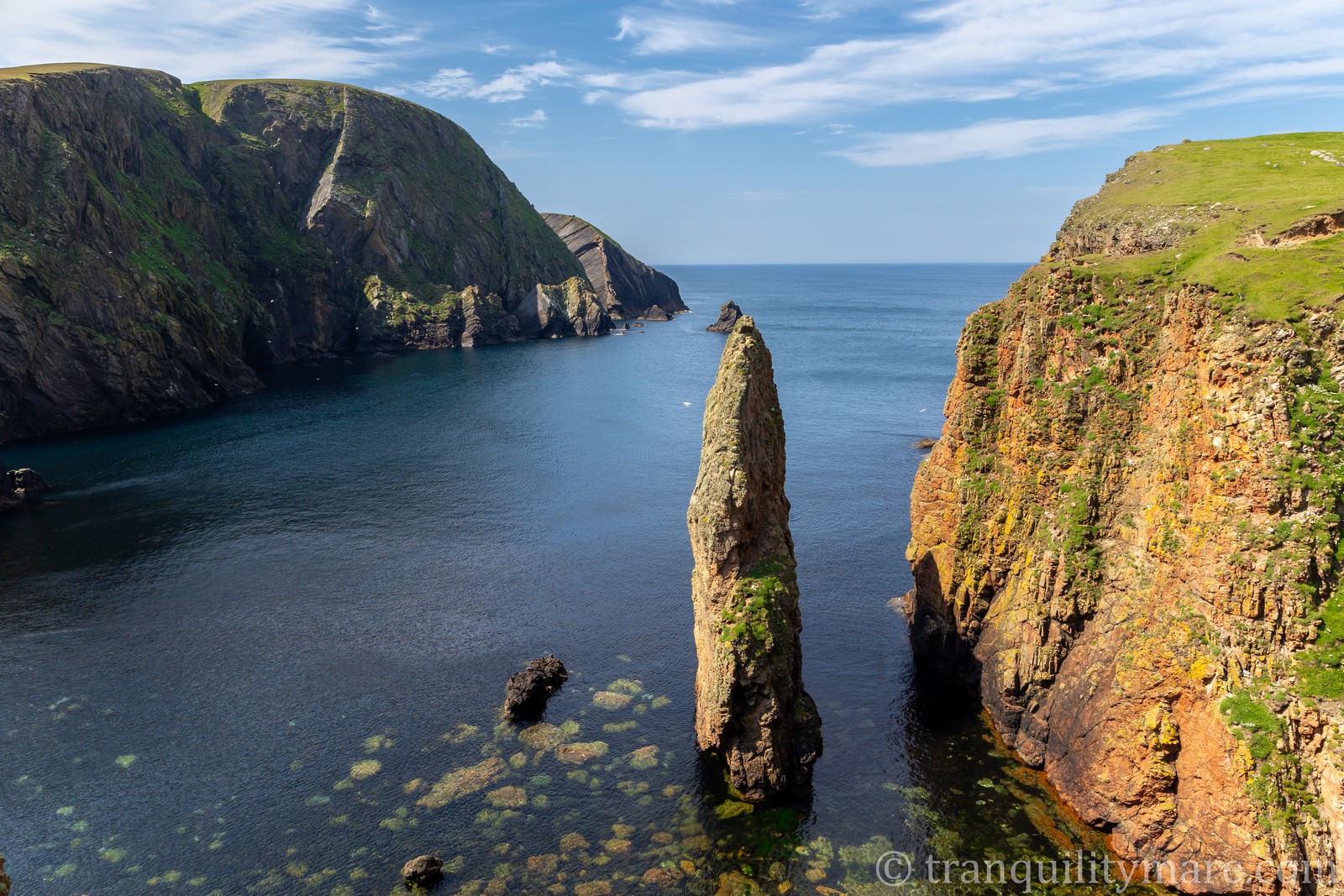
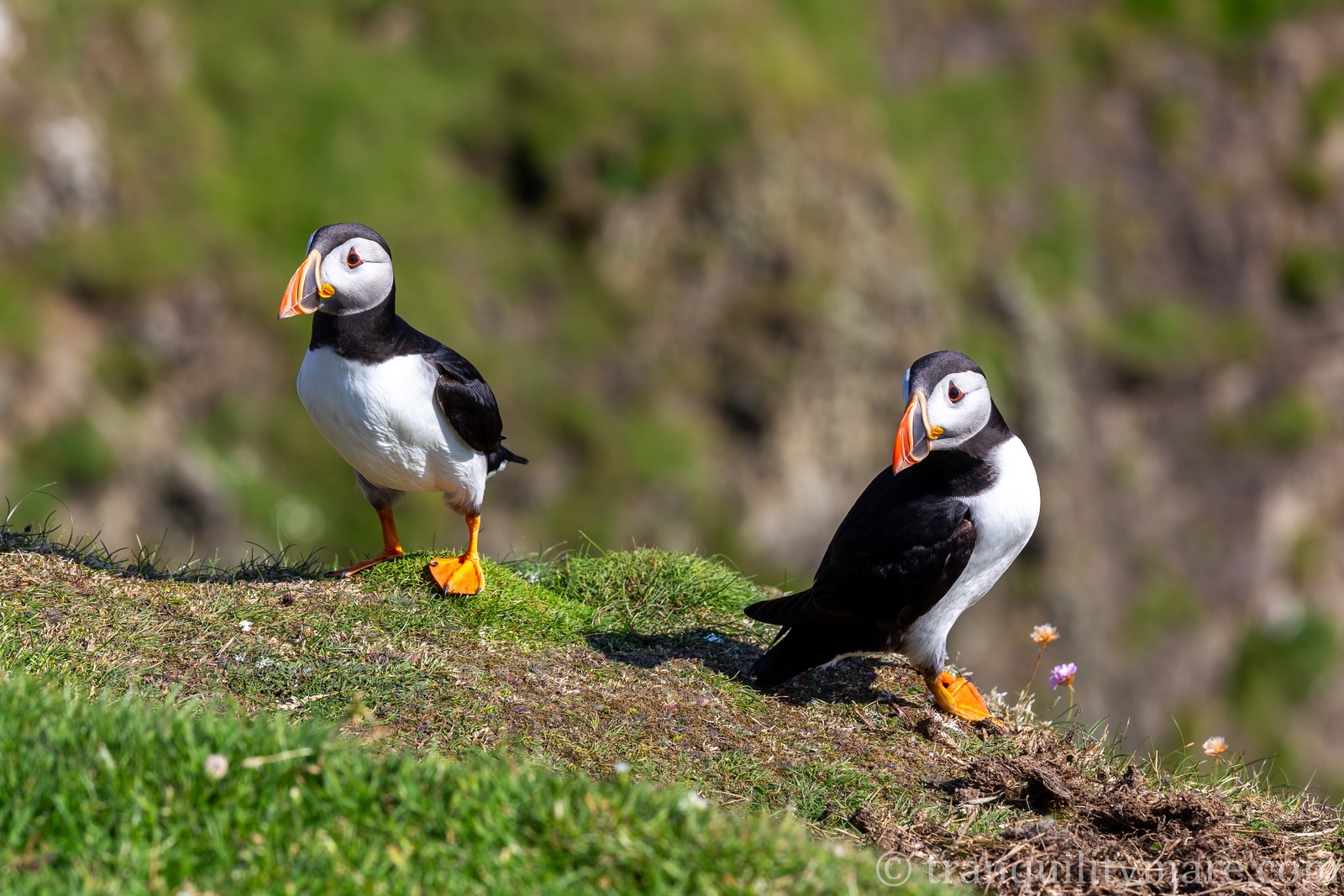
As much as we’d love to stay longer in the Shetlands, we start watching for a weather window to reach Fair Isle. This small island lies exactly between Orkney and Shetland and is a true paradise for nature lovers. Every year, over a million seabirds nest here. And any excuse to see puffins is a good one.
We spend a few days there, walking the island back and forth. The result? So many bird photos on our memory cards that editing them will probably take years.
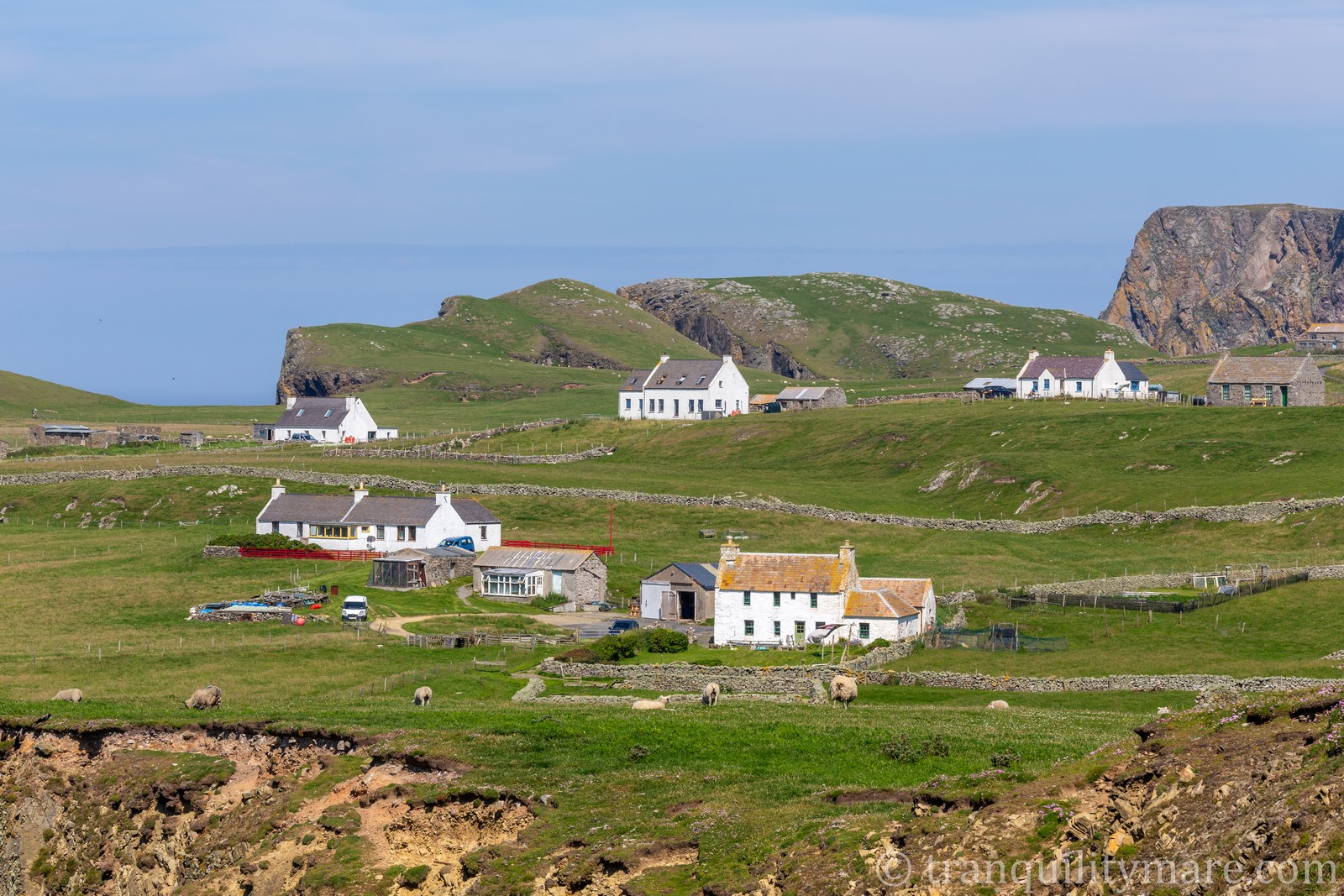
We’re amazed — although slightly surprised by the number of farms and the presence of agriculture on the island. We expected something more remote and wild, but maybe we’ve just been spoiled by the northern Shetlands.
Sailing To Orkney
There’s still one more archipelago left to explore north of Scotland — Orkney. From a navigation perspective, it’s more demanding, mainly due to the very strong tidal currents between the islands. The landscape is also noticeably flatter.
We approach from the northwest and, over the course of a few days, move slowly between anchorages towards Kirkwall — the capital of the archipelago. Each day brings a new tidal puzzle to solve. Even short passages of just a few miles require careful planning.
But there’s one thing I’ll remember most from this place. The smell of cattle. It hits almost immediately, as soon as we enter an anchorage.
Kirkwall
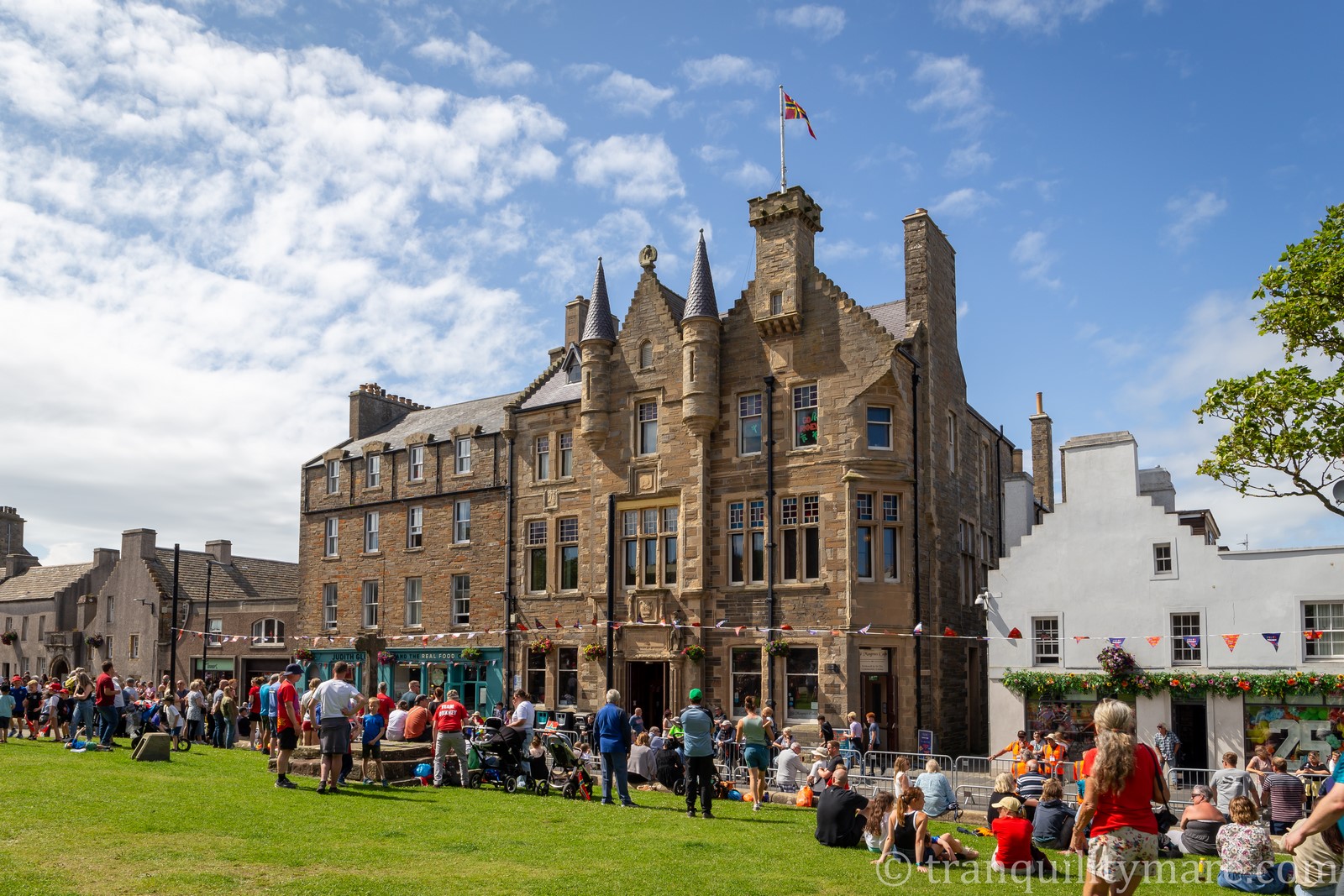
It quickly turns out that the most convenient way to explore the key sites is by renting a car or using public transport. Moving between bays by boat — often very exposed ones — can be logistically complicated, mainly due to the strong currents. So we leave the boat in Kirkwall and head ashore to explore mysterious stone circles and burial mounds dating back as far as five thousand years.
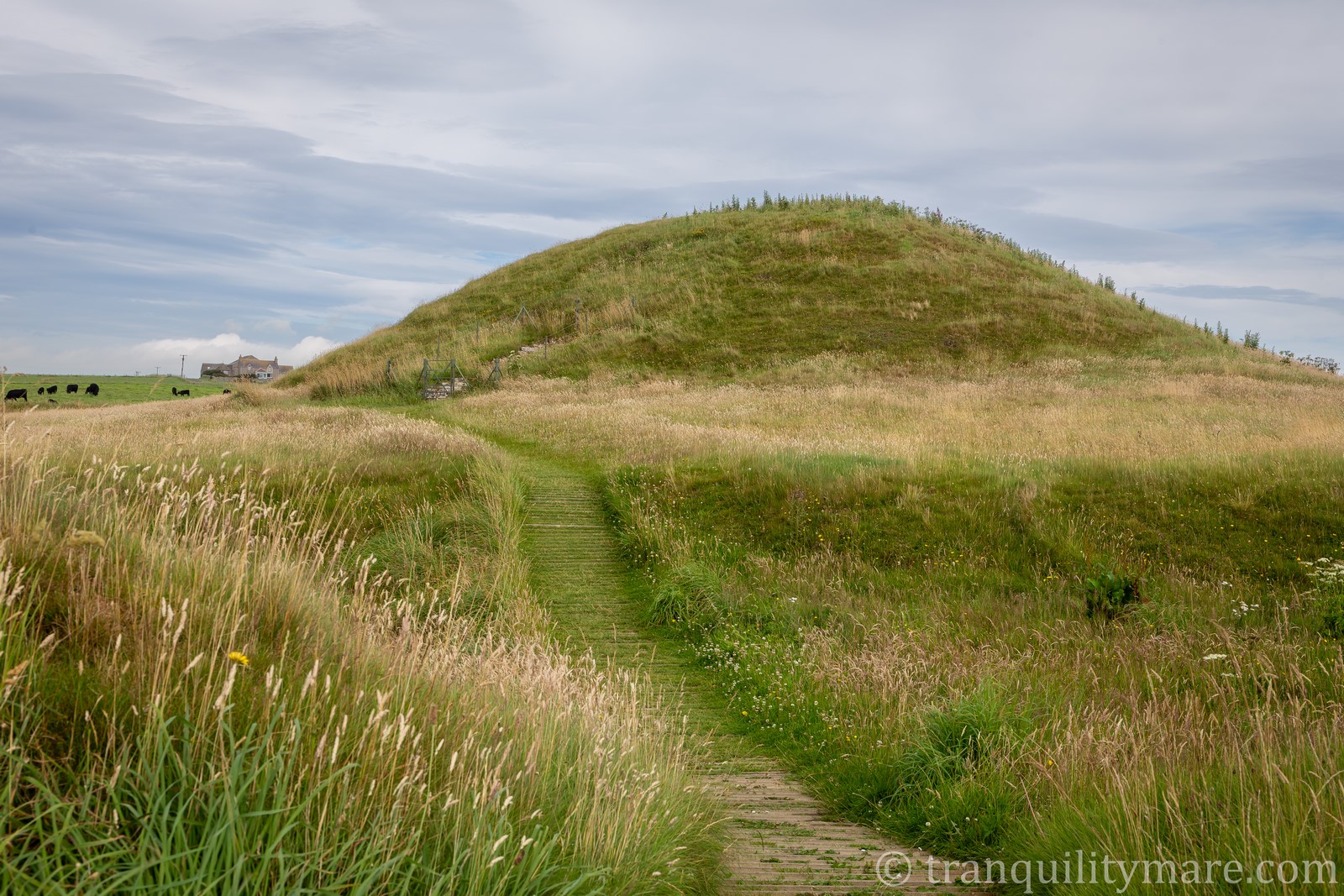
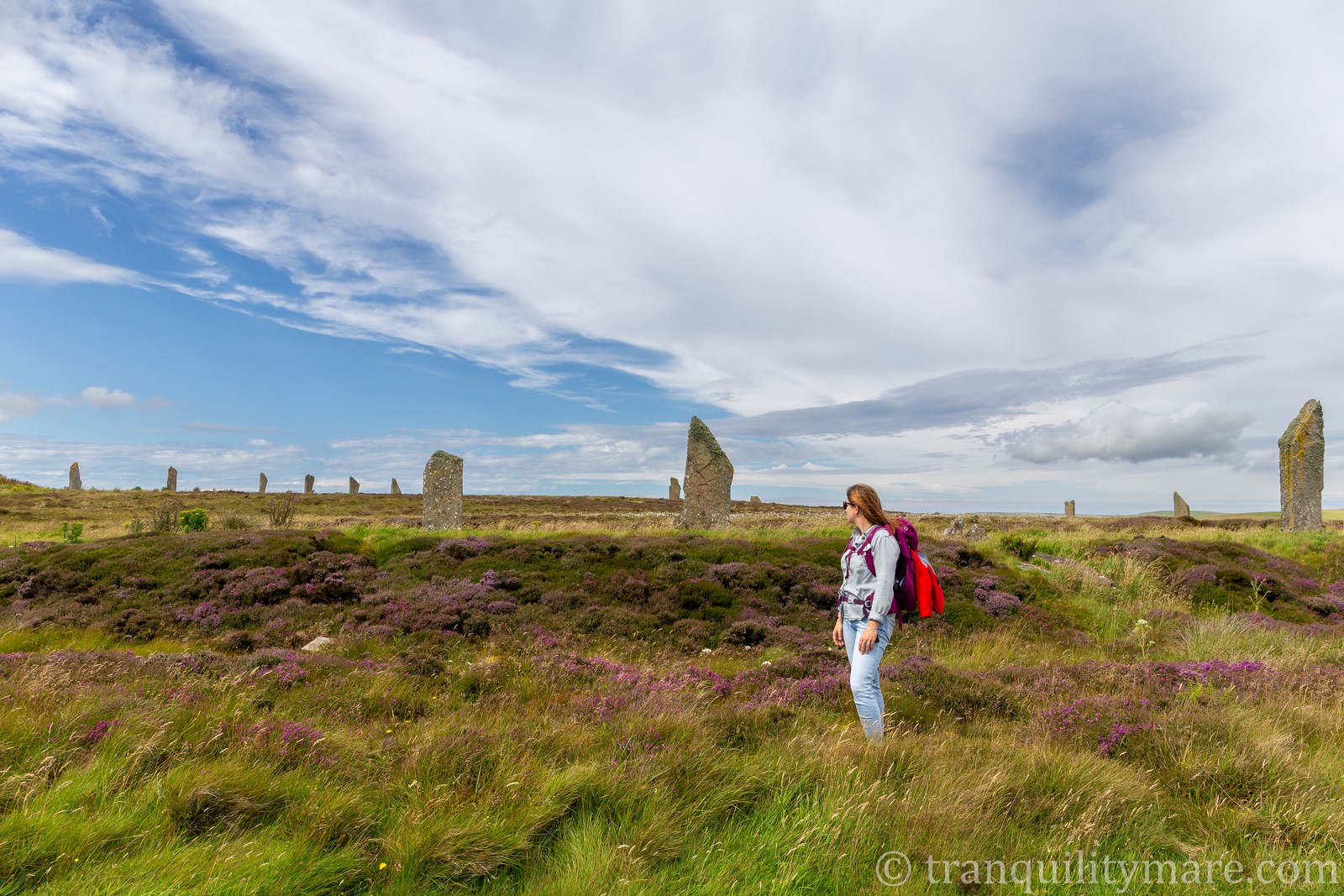
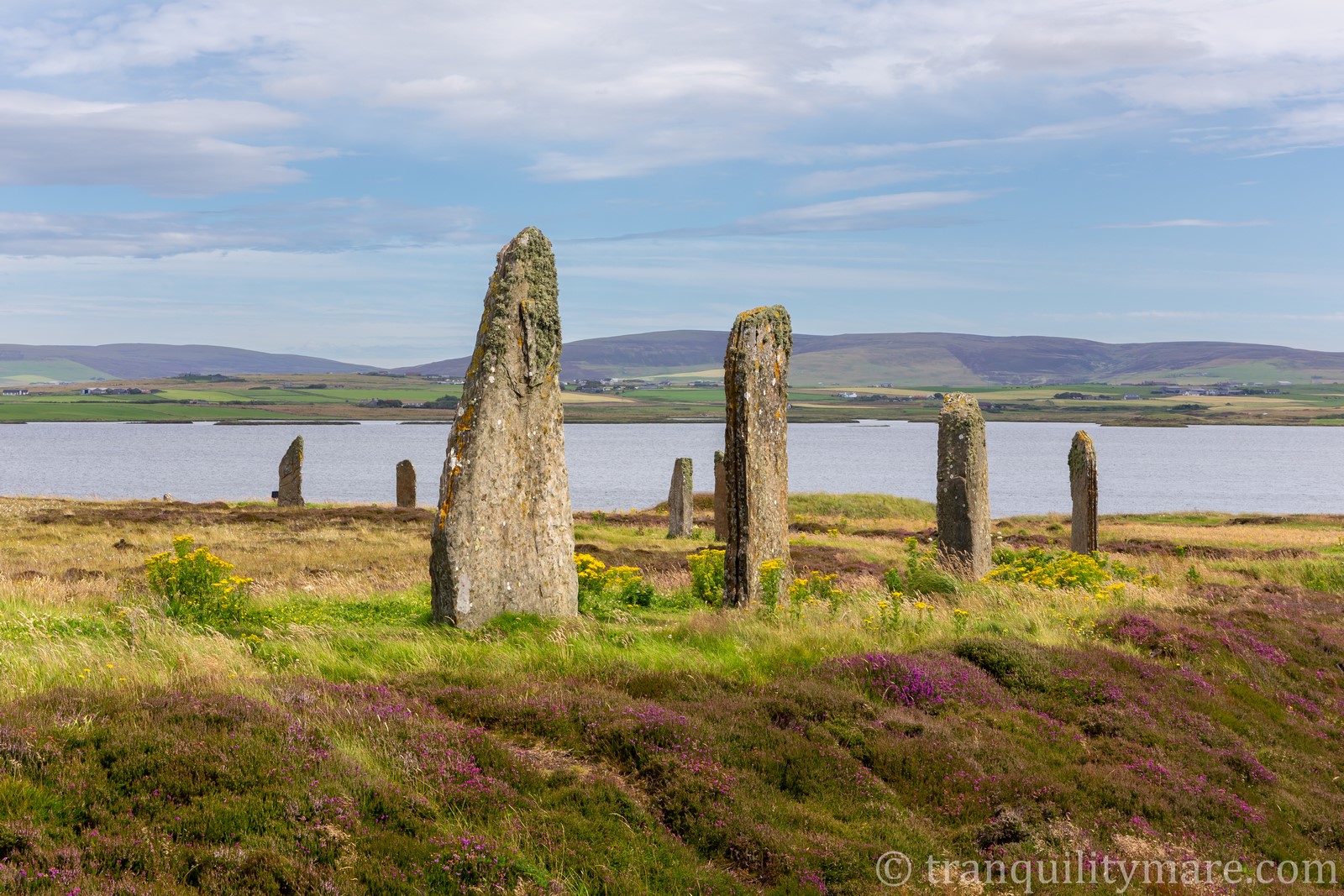
There’s also a nice surprise waiting for us in the harbour — not far from where we’re moored, the Polish tall ship Kapitan Borchardt is docked. We end up spending a really enjoyable afternoon with her crew.
While Orkney is fascinating from a historical perspective, it doesn’t quite impress us visually as much as the Shetlands did. It seems like very few places will be able to top them.
Rounding Cape Wrath
The return to Scotland’s north-west coast is another weather-and-tide puzzle. Ahead of us lies Cape Wrath — a headland almost as infamous as the nearby Pentland Firth. Even though we set off in thick fog, the planning turns out to be spot on. Morning at this ominous corner of Scotland greets us with calm seas and surprisingly friendly conditions.
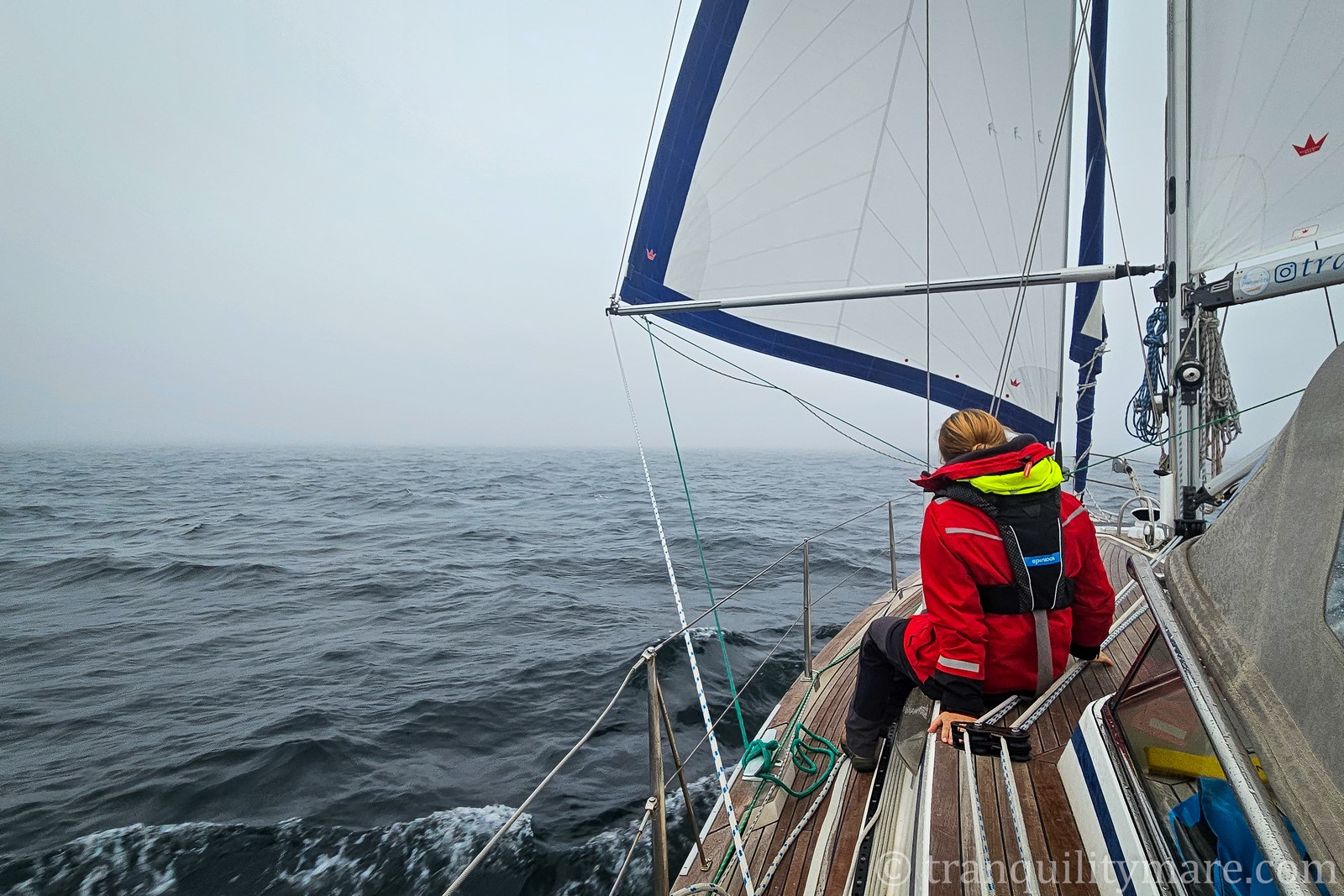
We begin exploring the coastline from the north: small bays, no signs of civilization, silence, and complete peace. And once again, the same thought comes back — maybe we should stay here longer. Much longer.
Hebrides and a Humpback Encounter
It’s already the end of July, though, so we slowly have to start thinking about heading back south. The Hebrides are still ahead of us, and as we sail along the north-west coast, we keep watching for a weather window to cross over to the outer archipelago, towards its largest town — Stornoway.
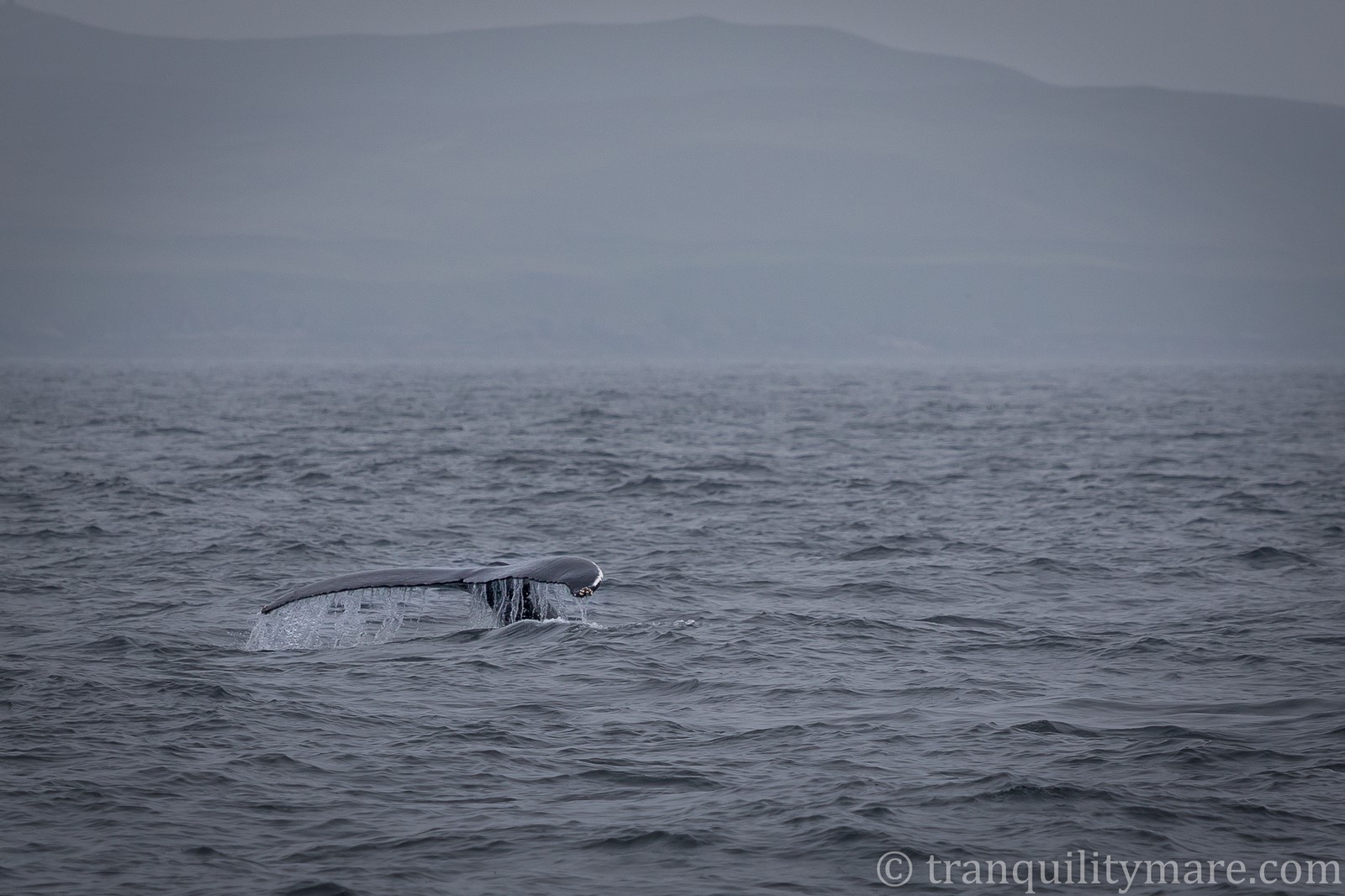
Along the way, we stay extra alert, knowing that whales are often spotted in this area. At one point, we notice a fin. Could it be a minke whale, which is common here? A moment later, everything becomes clear. The distinctive tail fluke leaves no doubt — it’s a humpback.
Once again, luck is on our side. We can hardly believe our eyes. Spotting a humpback isn’t nearly as common as encountering other whale species, so we decide to double-check with experts. We’re right. What’s more, it turns out that this particular individual has never been catalogued before. The photos we send in will be used to officially register it. We even get the chance to name it. But that privilege comes with a £500 price — so our humpback will have to stick with a number 🙂
Outer Hebrides and The Dream of St Kilda
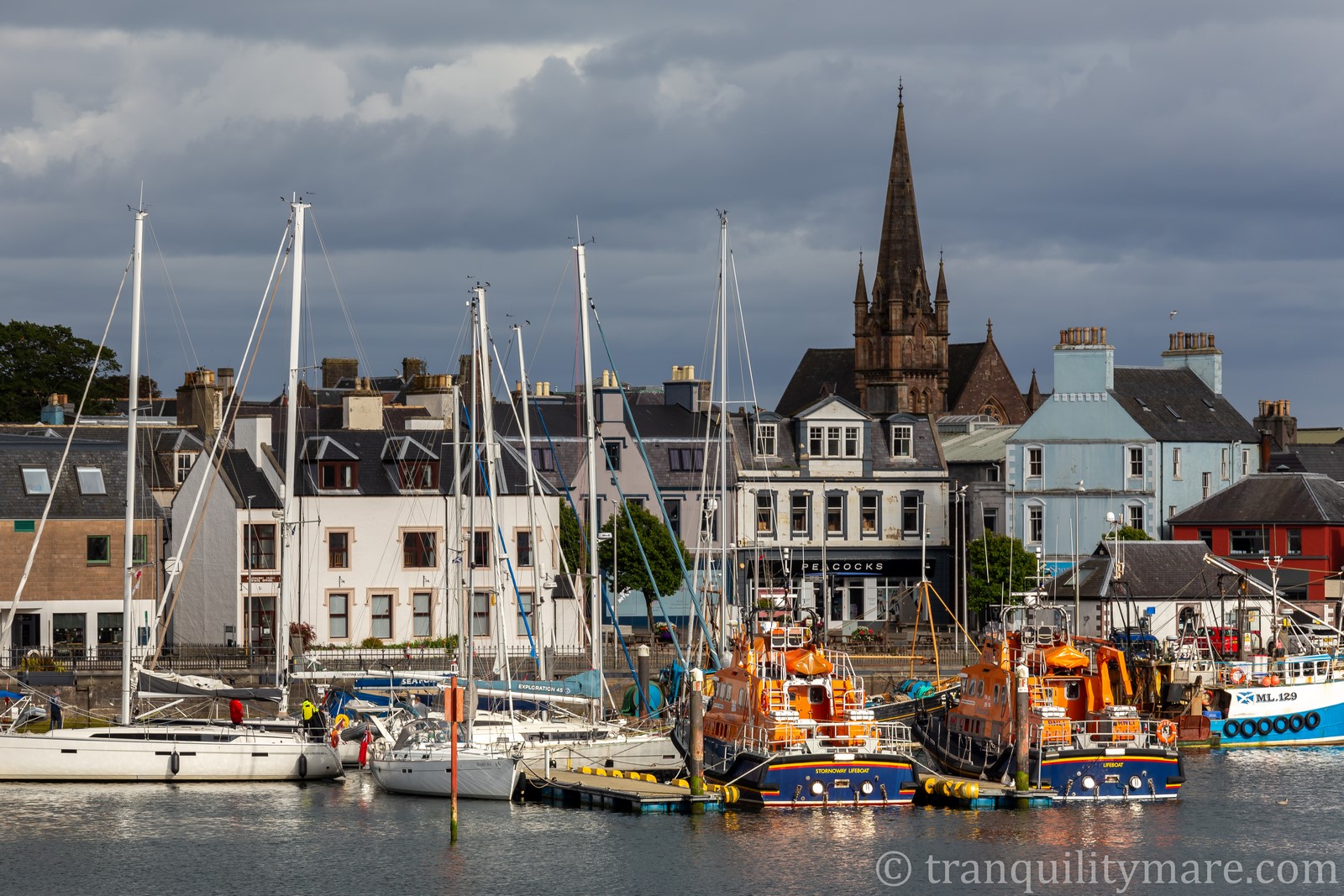
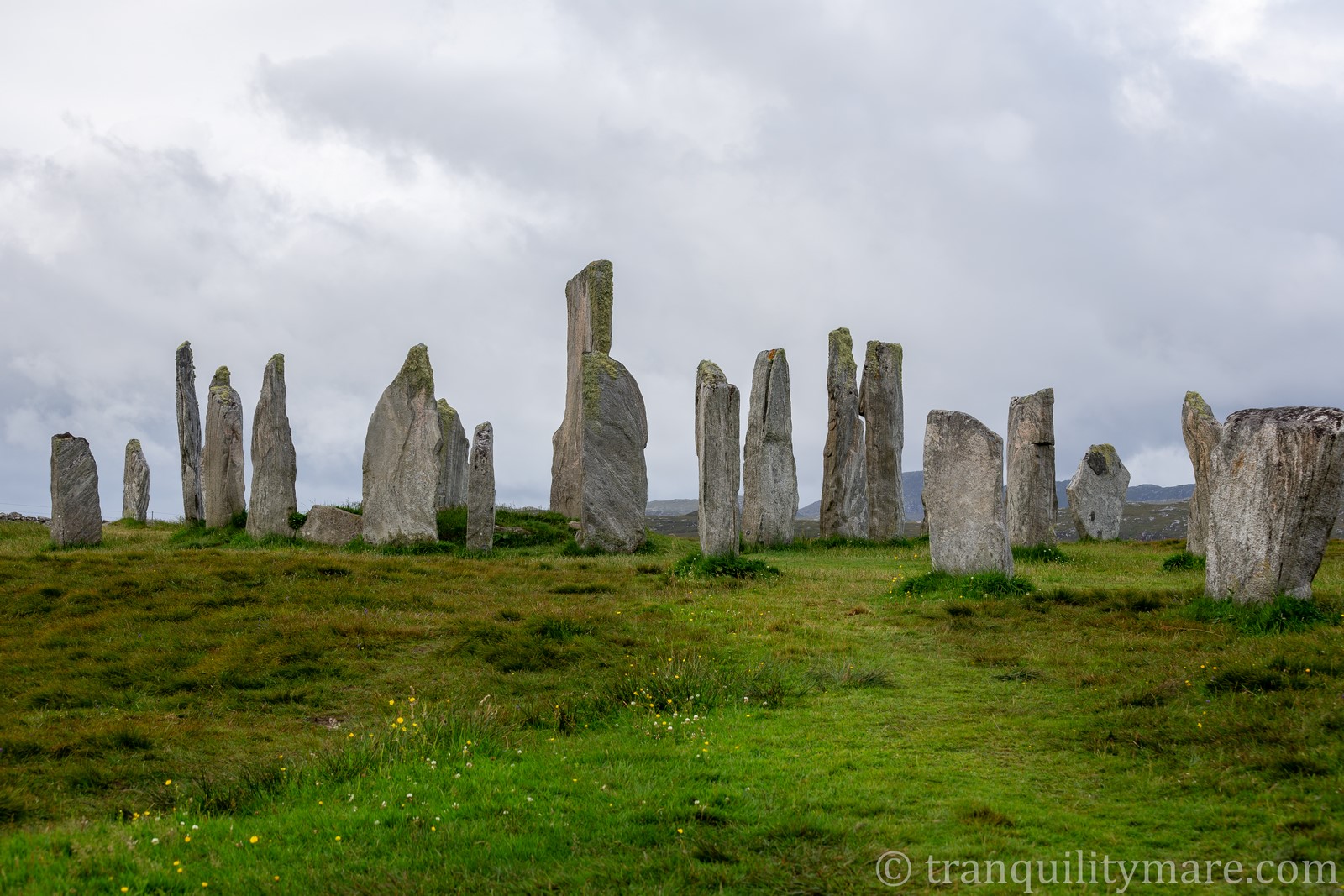
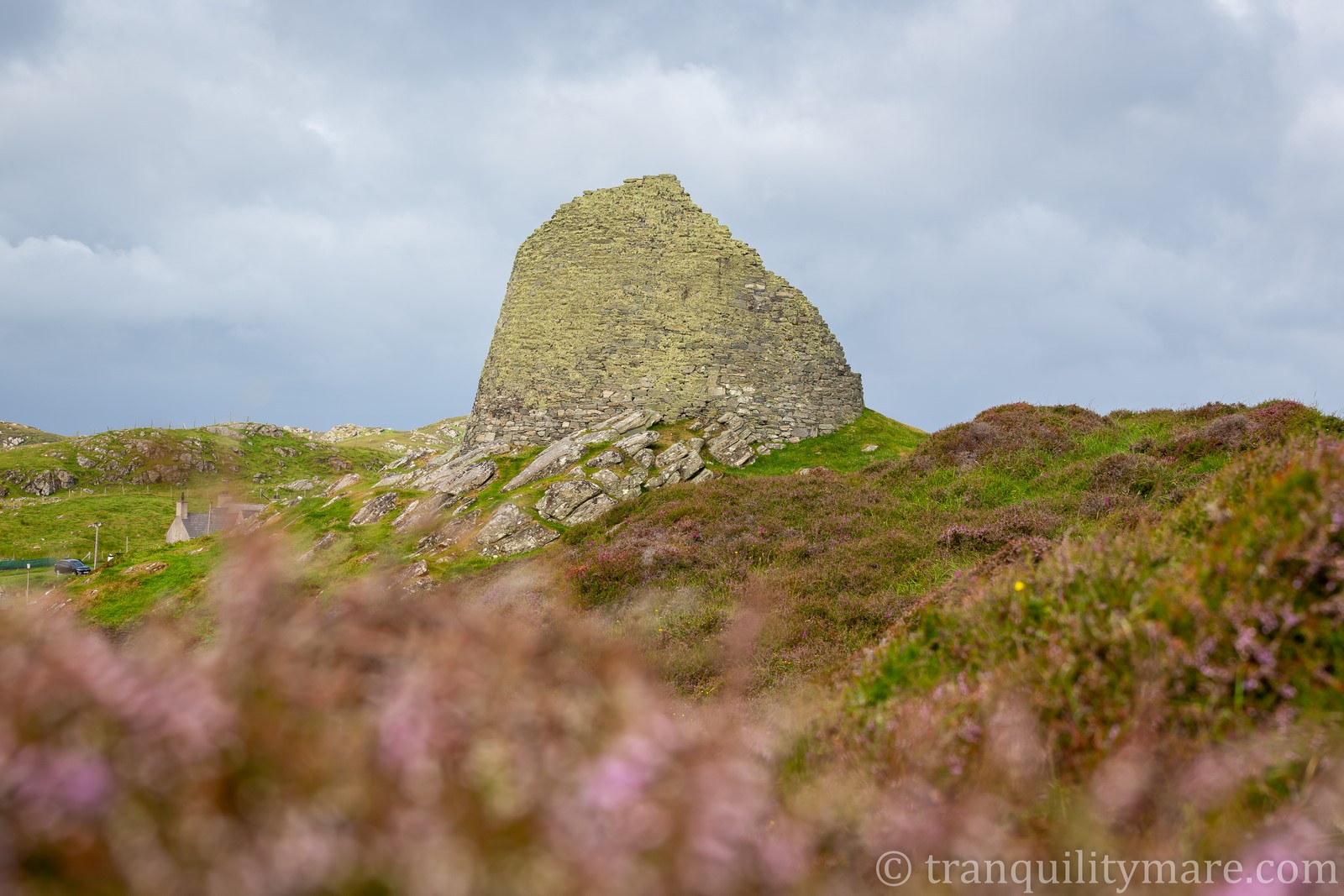
We arrive in the Outer Hebrides, in Stornoway, in fantastic spirits. Here, just like in many other places, the easiest way to explore the archipelago is by car — the main attractions, such as stone circles, brochs, and open-air museums, are located on the western coast, where safe anchorages are hard to find.
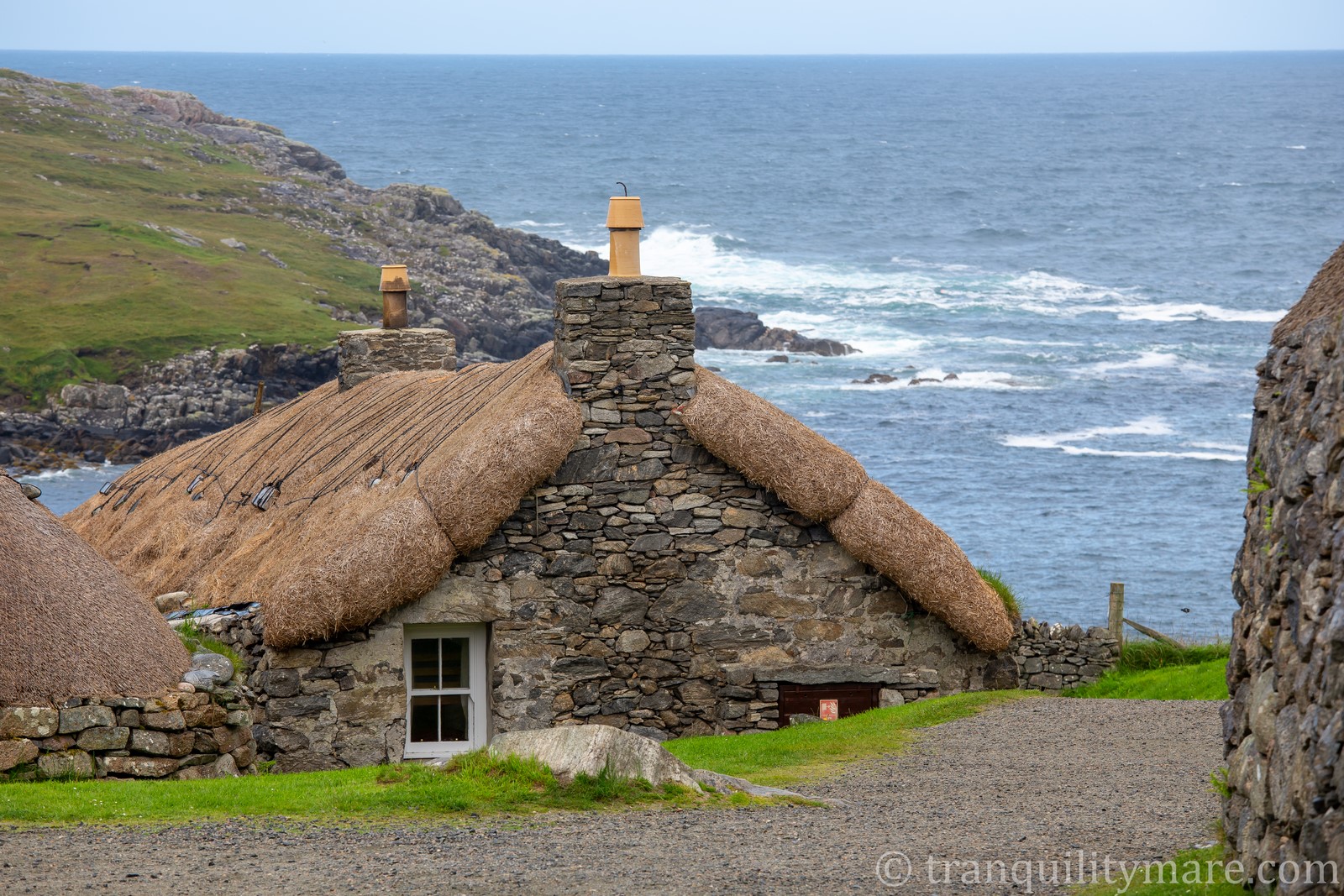
Even though the list of dreams fulfilled on this journey keeps growing, there’s still one that stays in the back of our minds — a trip to St Kilda. It’s the most remote island in the United Kingdom, where, until the 1930s, the last hunter-gatherer community in Europe lived.
Why was getting there such a dream for us? Because reaching this island — located nearly 40 miles from the Outer Hebrides, out in the open North Atlantic — requires a very specific weather setup. Easterly winds to get there. Westerlies to anchor safely. A weather window to explore. And then westerlies again for the way back.
That combination doesn’t happen often. That’s why only a handful of yachts make it there each year, and from the very beginning we treated this idea more as a dream than a plan. But it seems that 2025 decided to spoil us until the very end — once again, we get the perfect weather window. We push through the wild currents in the strait between Harris and Lewis, which don’t always behave exactly as predicted, and sail overnight to reach the island, wrapped in fog, by morning.
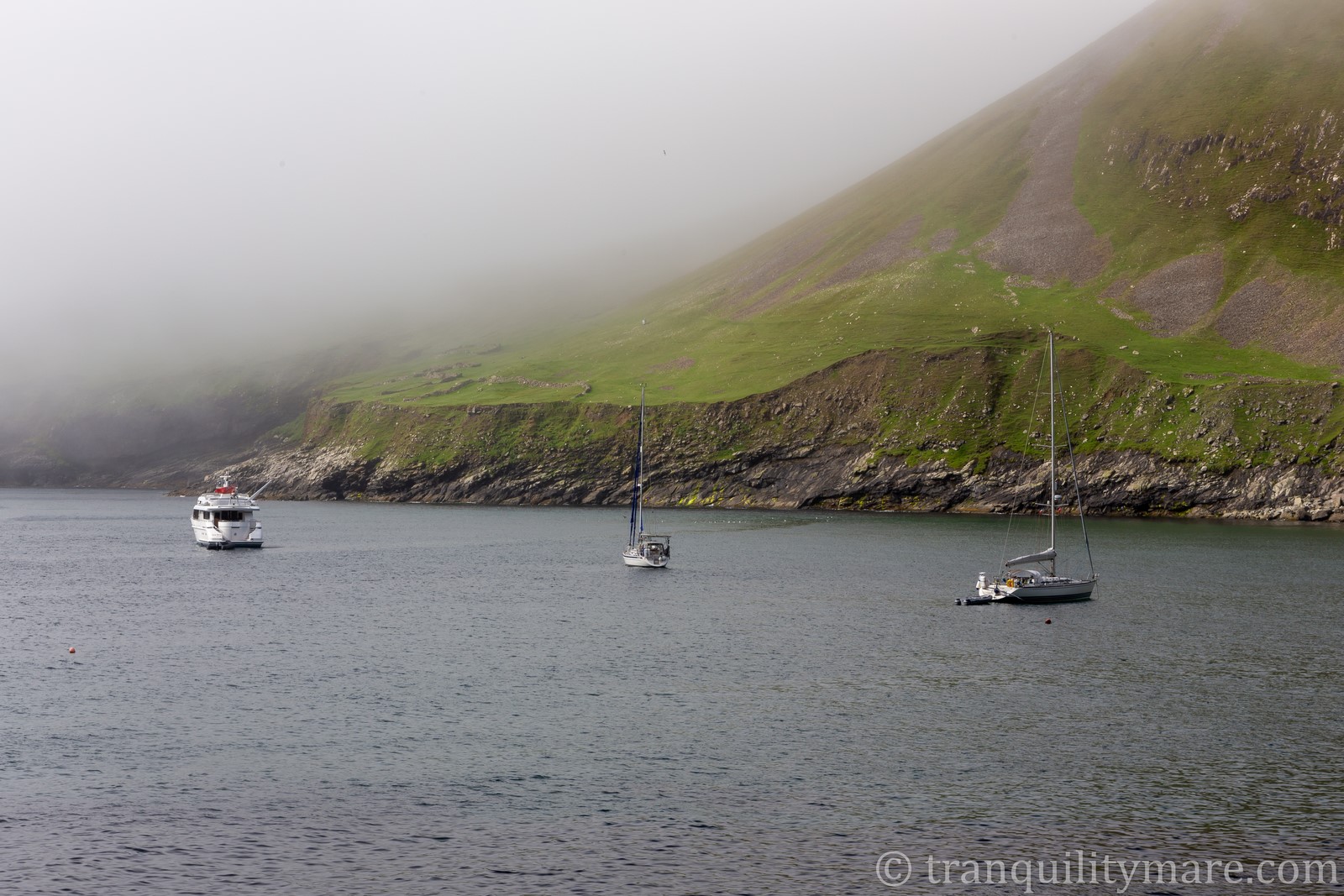
Sailing to St Kilda
Knowing how quickly the weather on St Kilda can change — sometimes within just fifteen minutes — we don’t waste any time. After a short rest following the night at sea, we launch the dinghy and head ashore. The island is still covered in mist, but we hope it will clear later in the day. At the quay, we’re greeted by park rangers who give us detailed instructions for visiting the island.
We spend the entire day there, hiking all the way up to the base of the clouds that hide the highest cliffs. Once again, we’re amazed — although we do notice far fewer nesting birds than before, as the breeding season is slowly coming to an end.
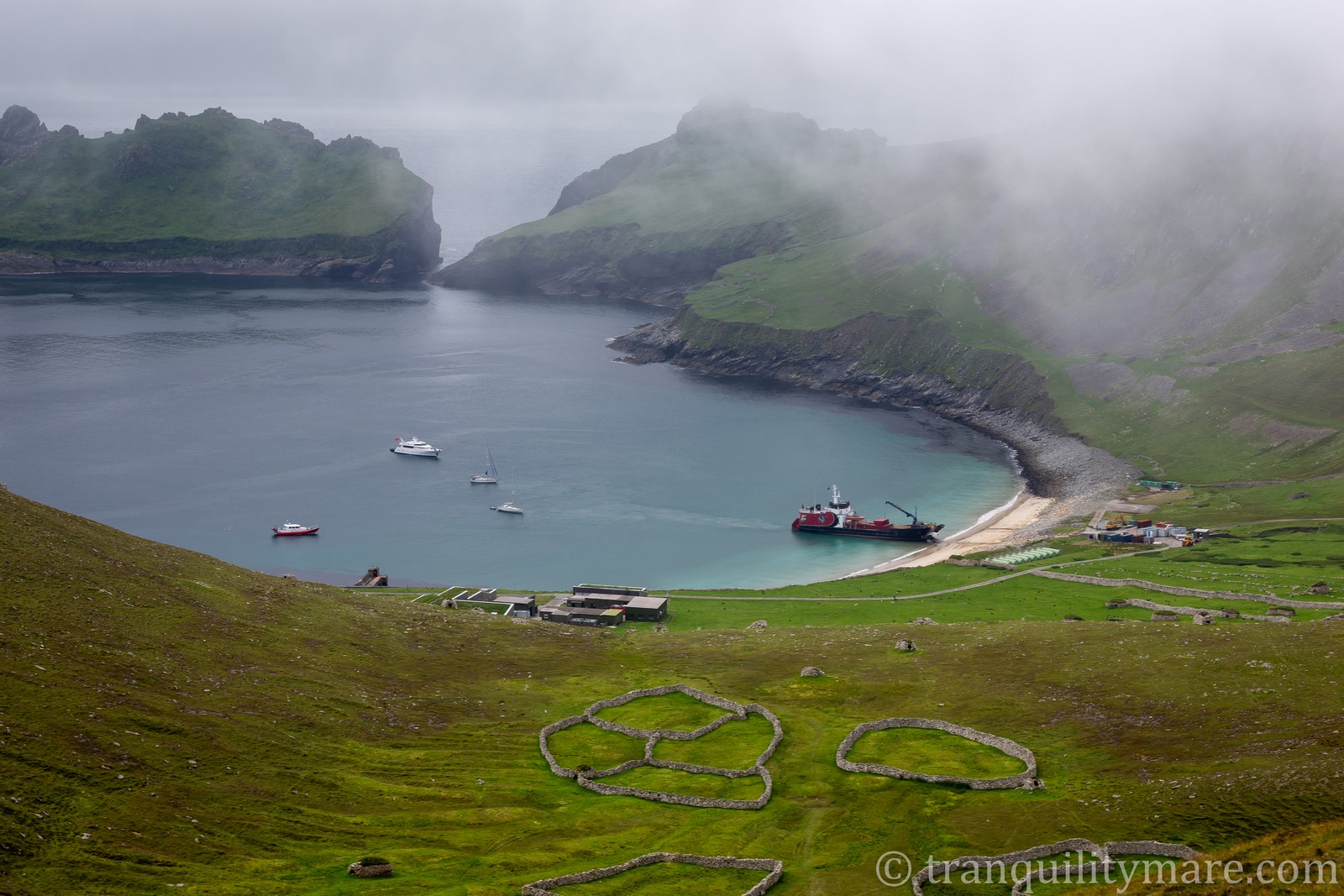
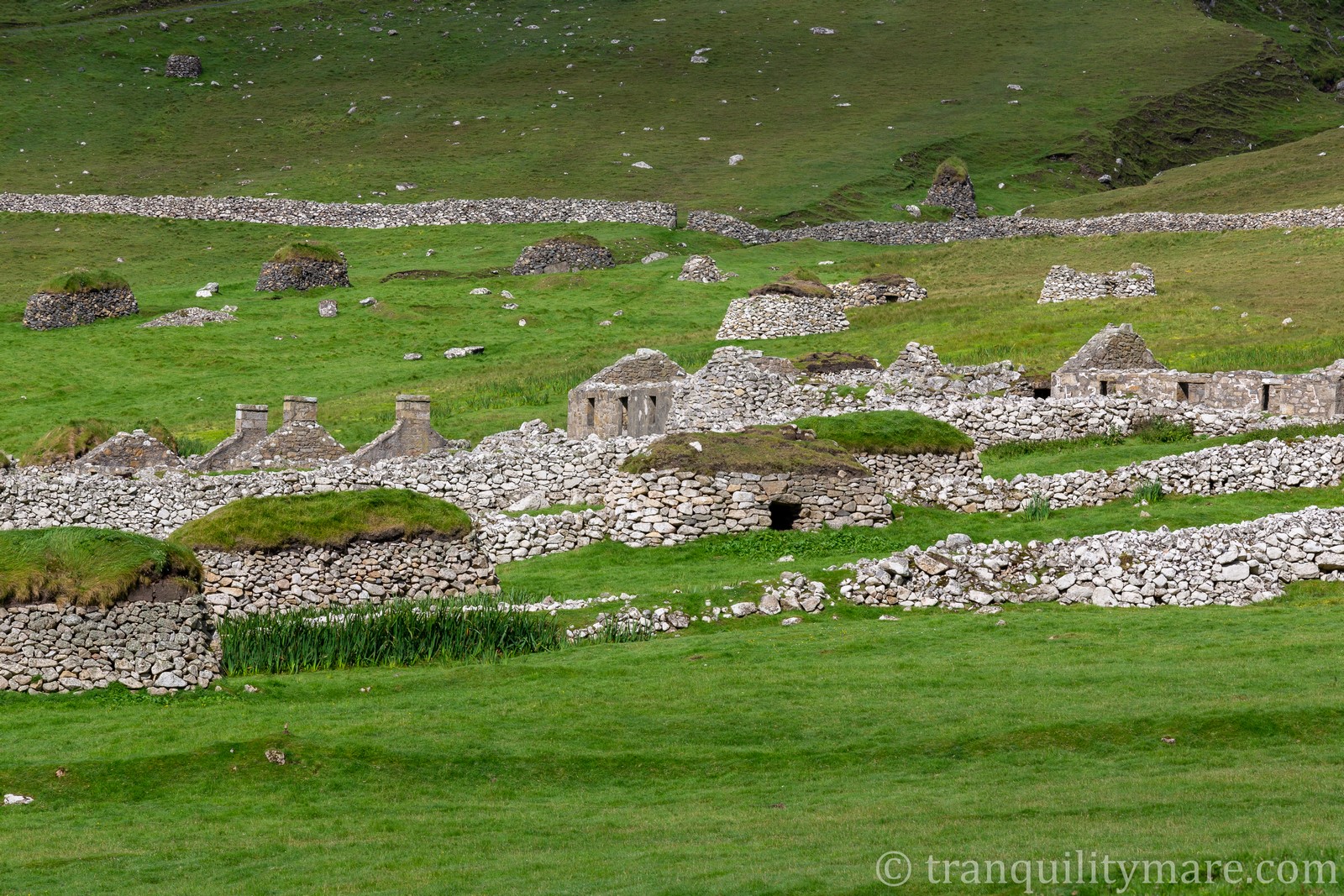
Still, the island’s history and the simple fact that we managed to get here at all are more than enough reason to celebrate. Especially considering that the yachts arriving just twelve hours after us weren’t as lucky. Rain and near-zero visibility made it impossible for them to go ashore, and the forecast forced them to turn back towards Scotland without ever setting foot on the island.
Storm Floris
The forecasted storm forces us to head back as well. It even has a name — Floris — so there’s no room for underestimating it. Once again, we find shelter in Stornoway, this time doubling up our mooring lines and securing the boat carefully. And as for the brave crew — we take on the storm… in a pub. That’s how we spend the next two days.
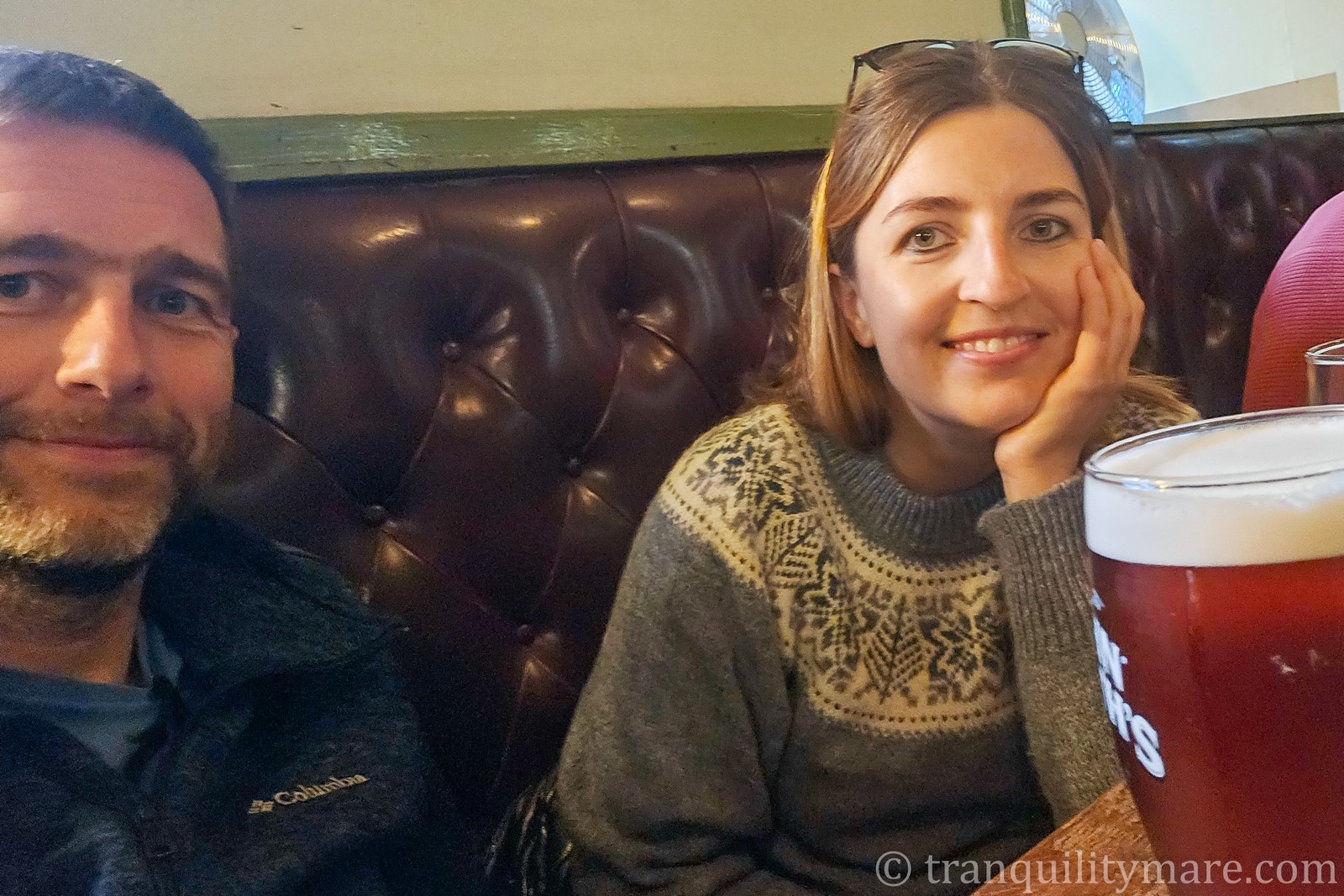
Stornoway is one of the few places in the Hebrides where trees actually grow. When choosing a safe spot, we follow simple logic — if they’ve survived countless storms here, it must be a good place to hide. And we’re right. Wind readings here are noticeably lower than in other parts of the islands.
In the wake of the storm
After a few days, the storm begins to ease. The marina comes back to life, and from early morning everyone is busy preparing to head out. A large number of yachts — including us — leave the harbour and continue their journey.
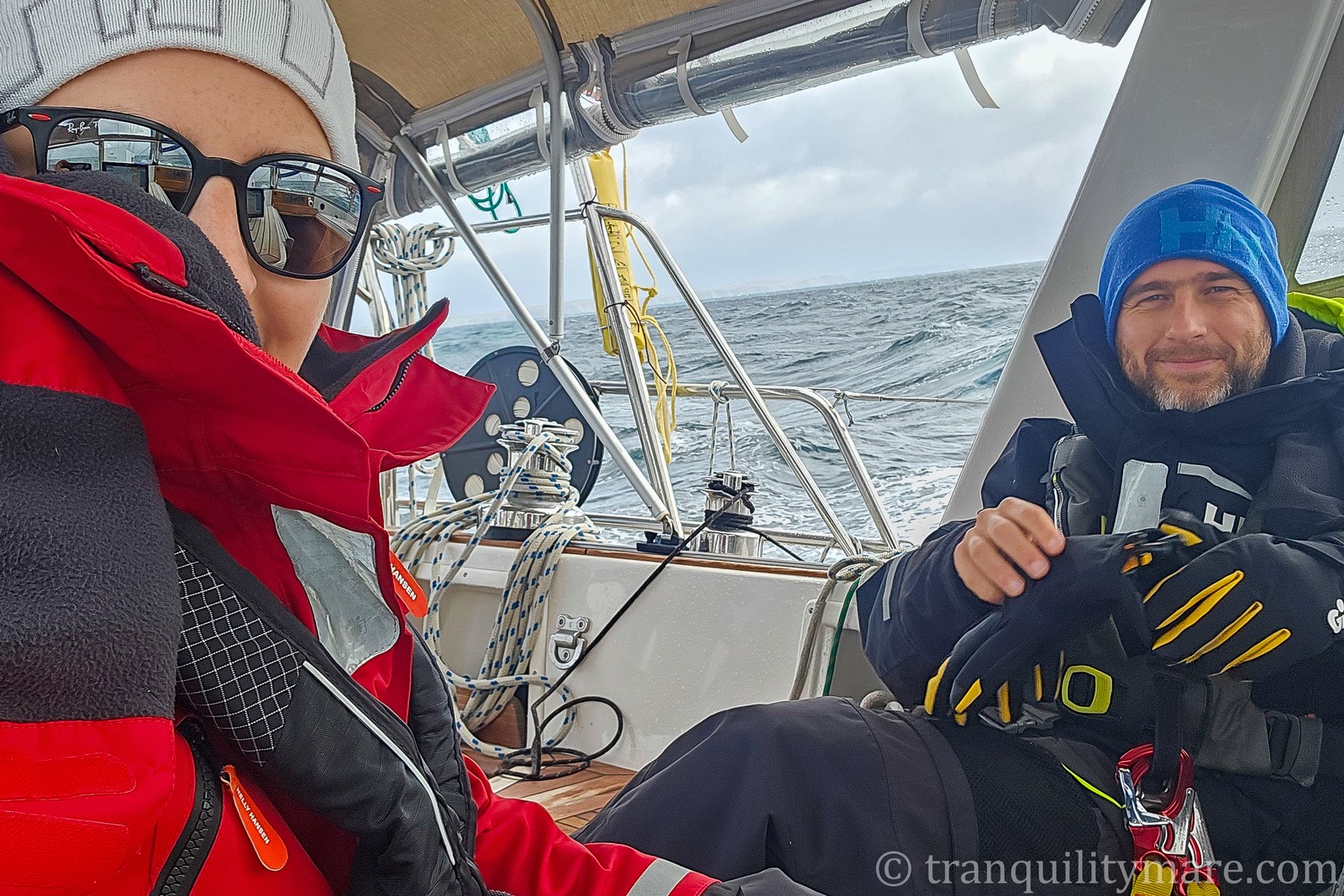
Sailing in the wake of a storm isn’t easy, though. Squalls pass through regularly, and often our wind instrument shows 50 knots. We reach the northern part of the Isle of Skye, and after just a few hours of rest, we set off again at dawn to time our passage through the narrow strait between the island and the mainland — a place known for its very strong currents. This time, the calculations don’t fail us. We pass through the narrowest and most challenging sections near Loch Alsh without any surprises.
Mallaig and the Hogwarts Express
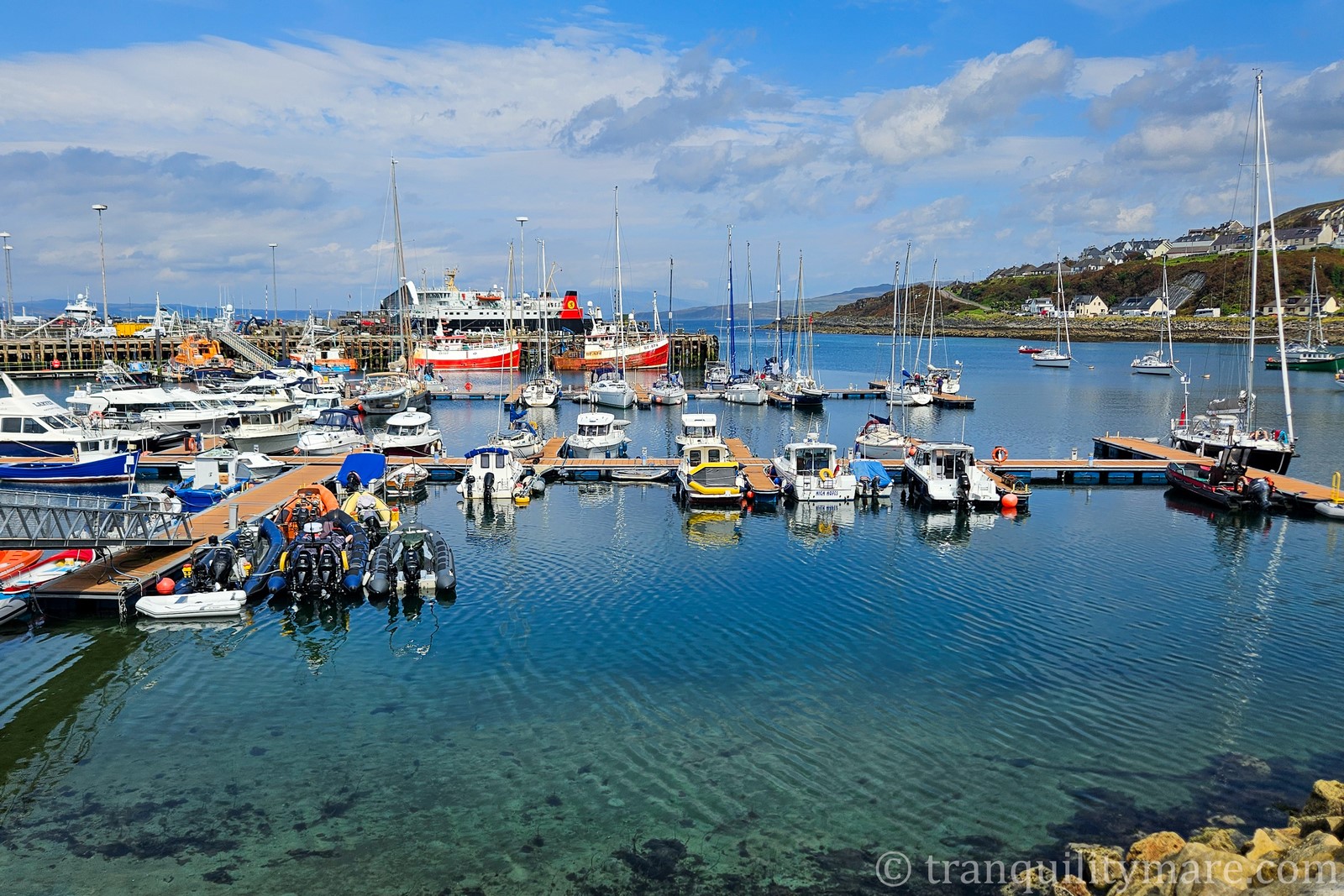
After a few windy days at anchor, we reach Mallaig — a small town that serves as the main gateway to the Isle of Skye. It’s also a familiar place for Harry Potter fans. This is where the famous Hogwarts Express finishes its journey, the very same route we had already crossed earlier along the Caledonian Canal.
In Mallaig, our tireless friend joins us. Her journey from Poland to this small Scottish town takes two full days.
Inner Hebrides
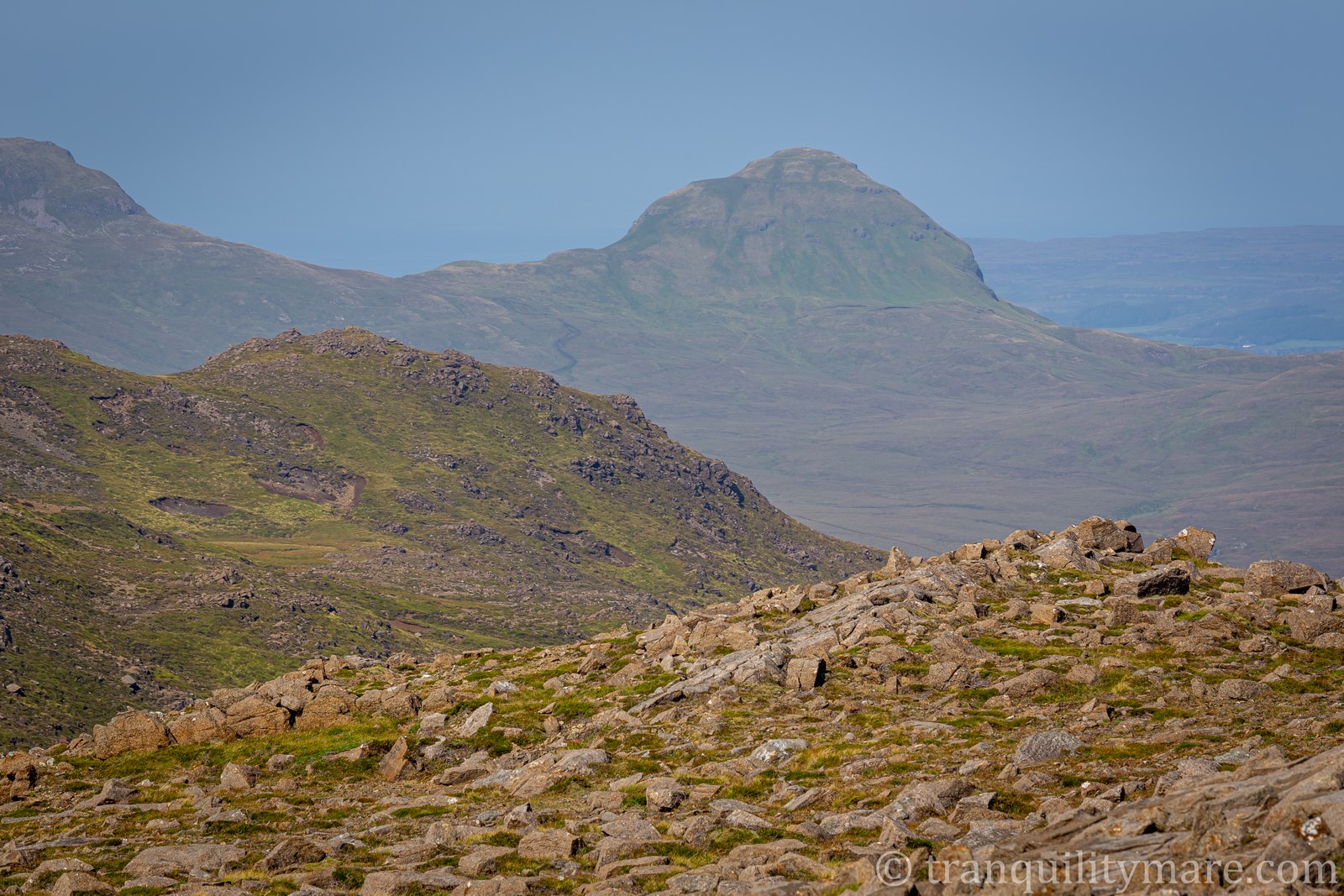
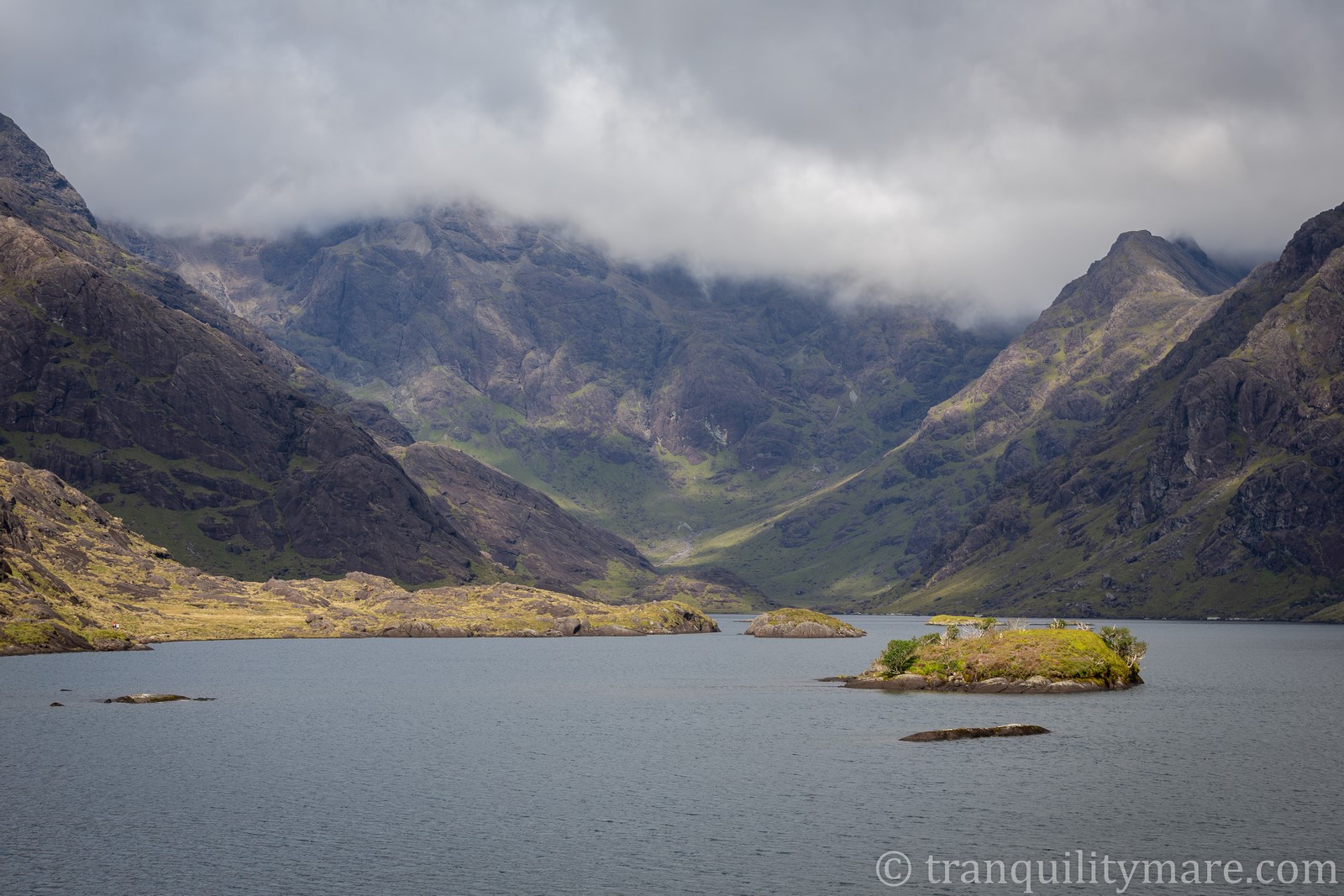
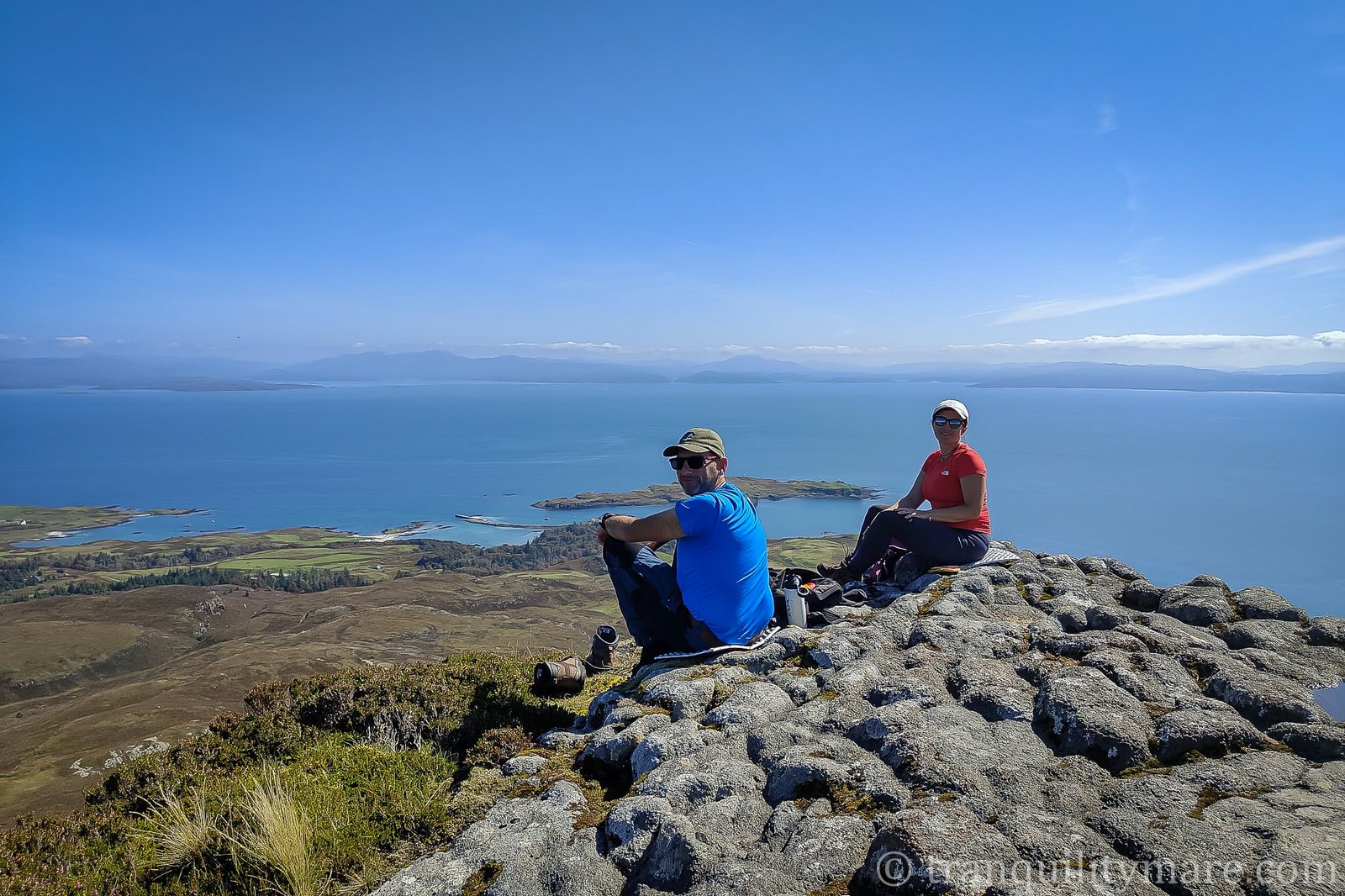
For the next week, now with a bigger crew, we sail around the islands of Rum, Eigg, and Skye. We hike in the mountains, watch seals, and constantly remove ticks — something Scotland definitely doesn’t lack. Once again, it doesn’t disappoint.
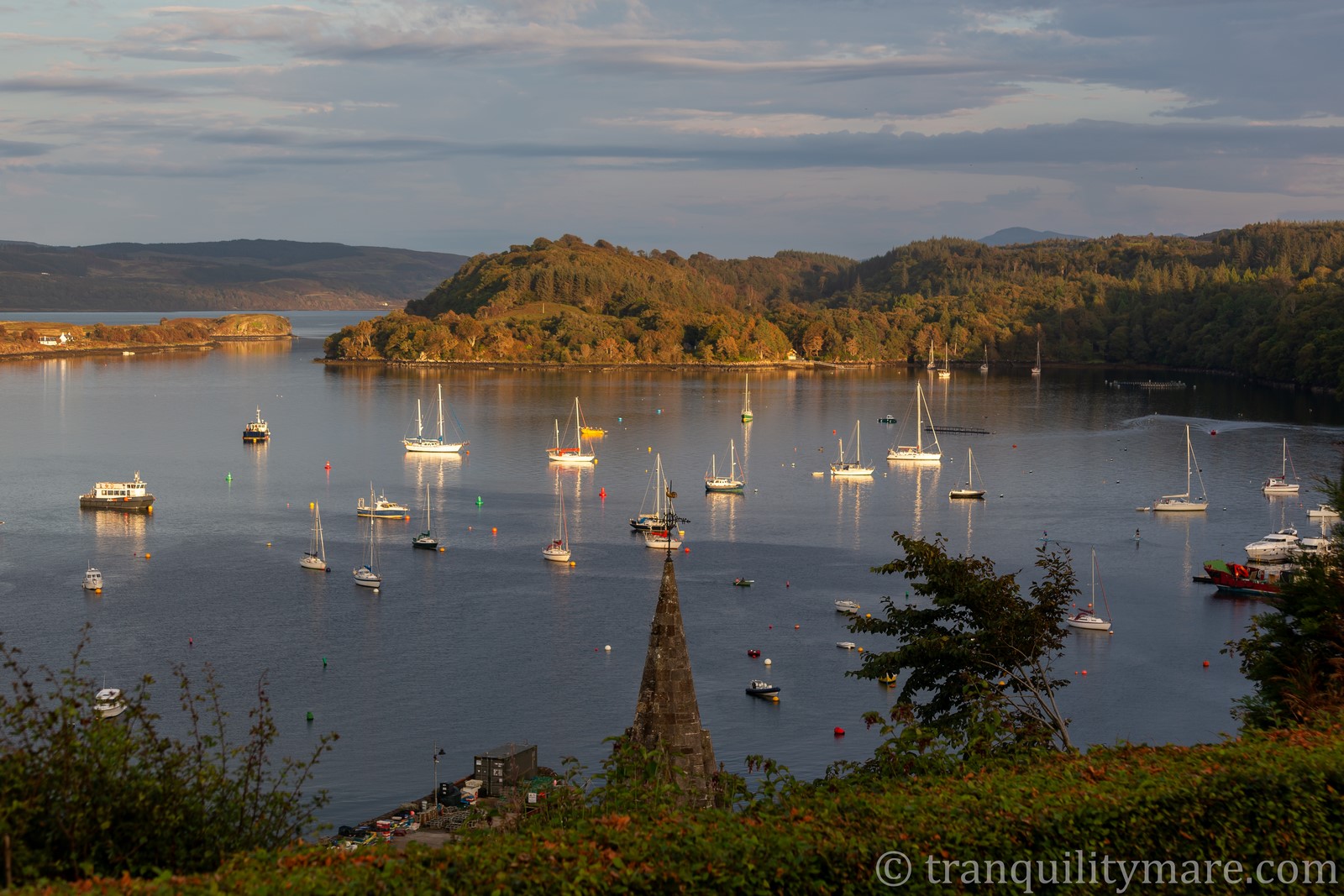
We make our way to Tobermory on the Isle of Mull, where we visit a well-known whisky distillery and say goodbye to Marta. She, in turn, faces another two-day journey back home. We hope it was worth it.
Oban and Iona
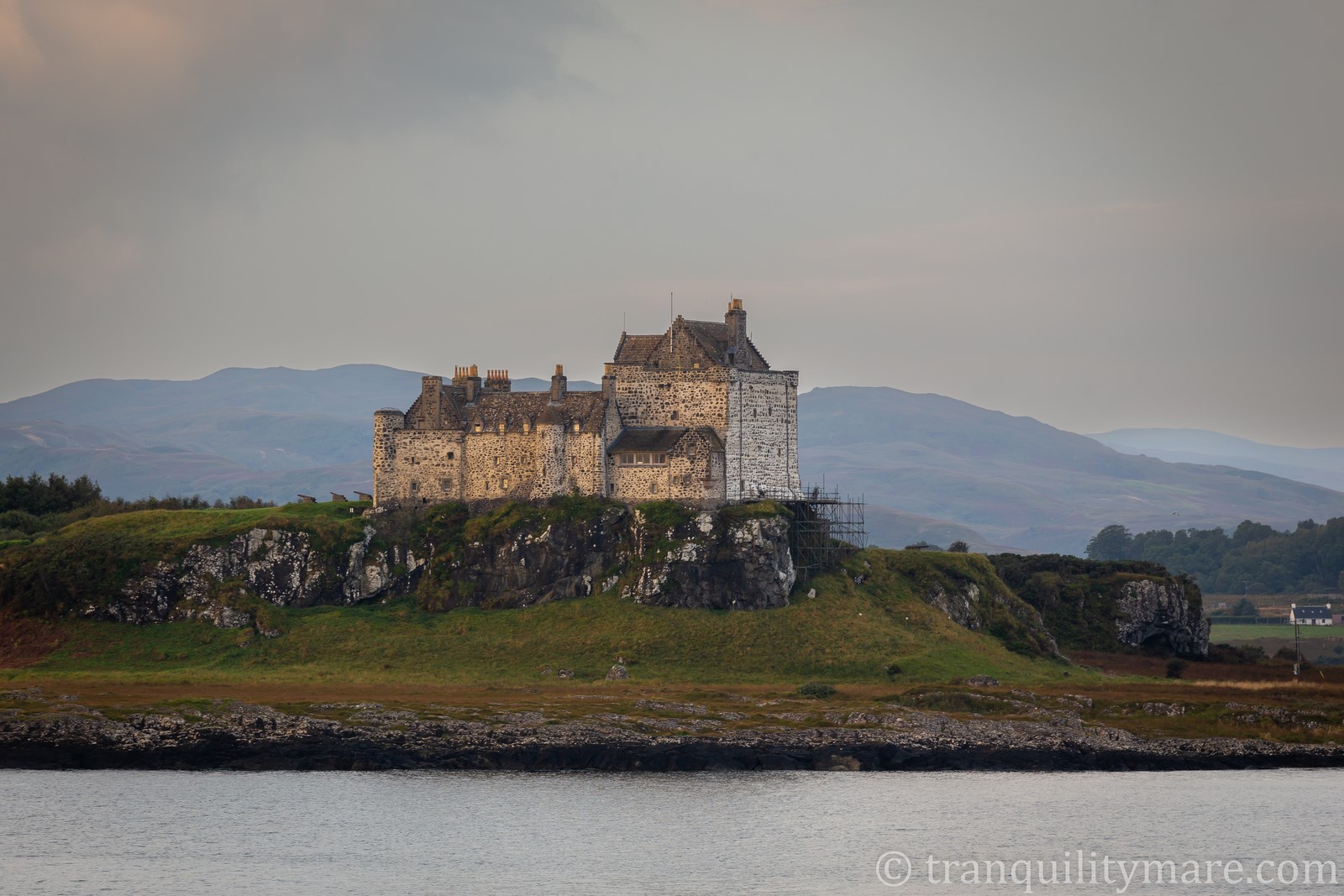
Our next stops bring us to the area around the popular town of Oban. We visit Duart Castle on the Isle of Mull and anchor near a mussel farm. As much as I love them, after the amount I had that day, I didn’t touch mussels again for the next two months. We also anchor off the small island of Kerrera before finally entering the marina in Oban. Here, we experience a bit of a culture shock. It’s by far the largest town we’ve seen since leaving Inverness, and it feels slightly overwhelming.
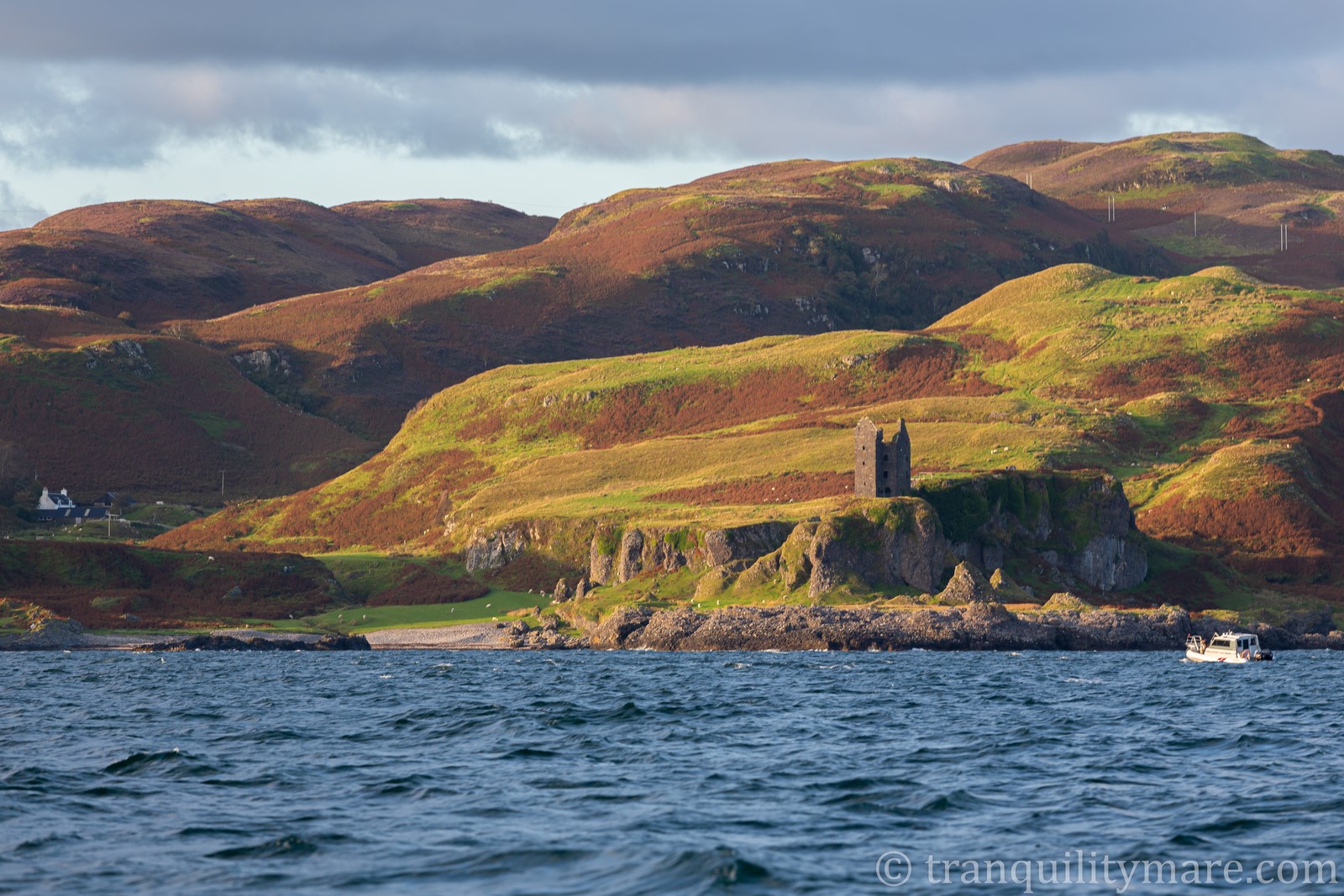
The forecast isn’t great, though, so instead of heading further south, we decide to take a ferry — or rather, two ferries and a bus — to visit one more island: Iona.
It’s a sacred place for the Scots, where Irish missionaries first arrived. Because of that, it’s quite touristy, but definitely worth the visit.
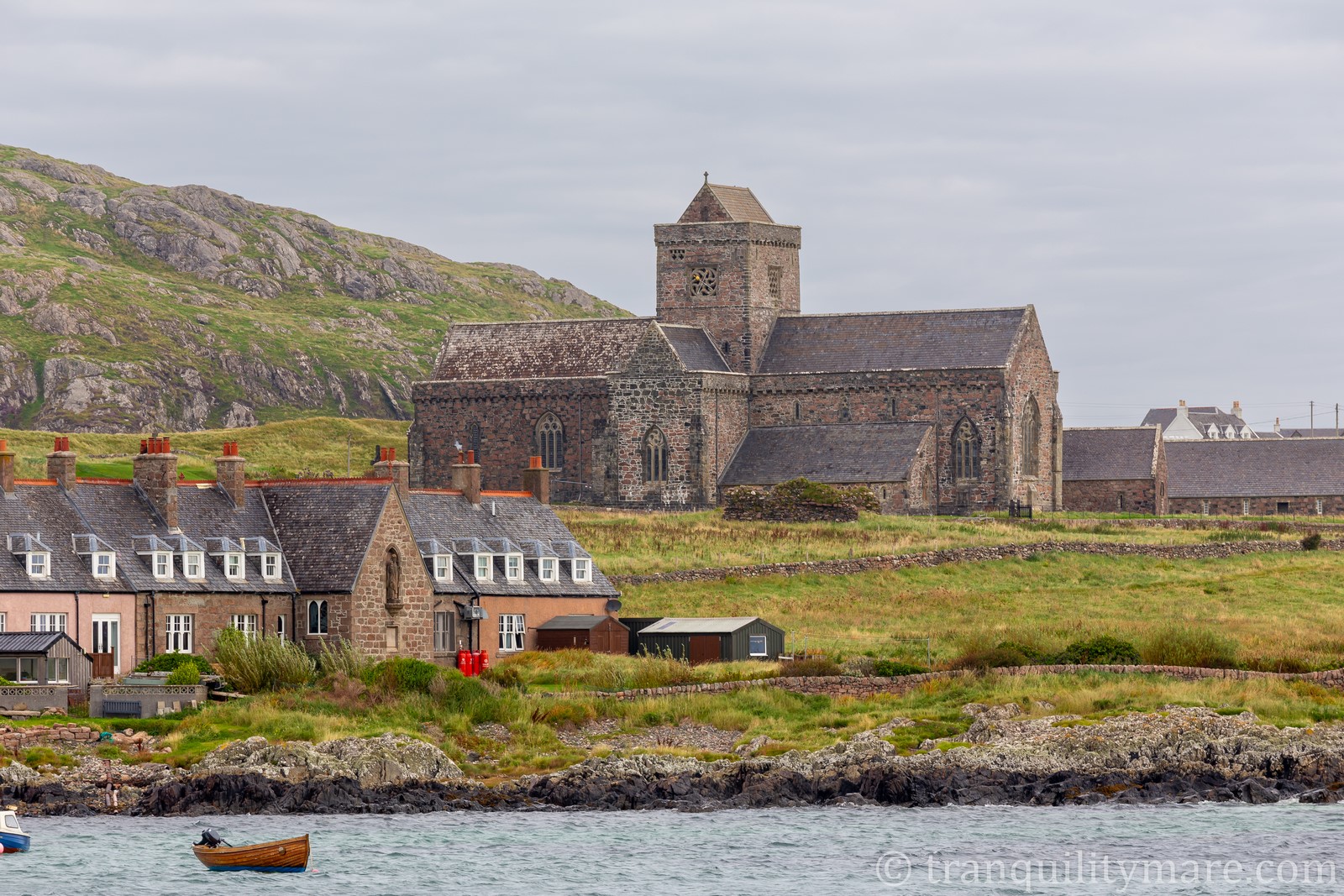
Oban turns out to be our last stop in Scotland. Even though we really wanted to visit the islands of Jura and Islay, the weather doesn’t cooperate. So instead, we sail straight to Northern Ireland. Destination: Belfast.
Ireland Sailing
Belfast and the Titanic
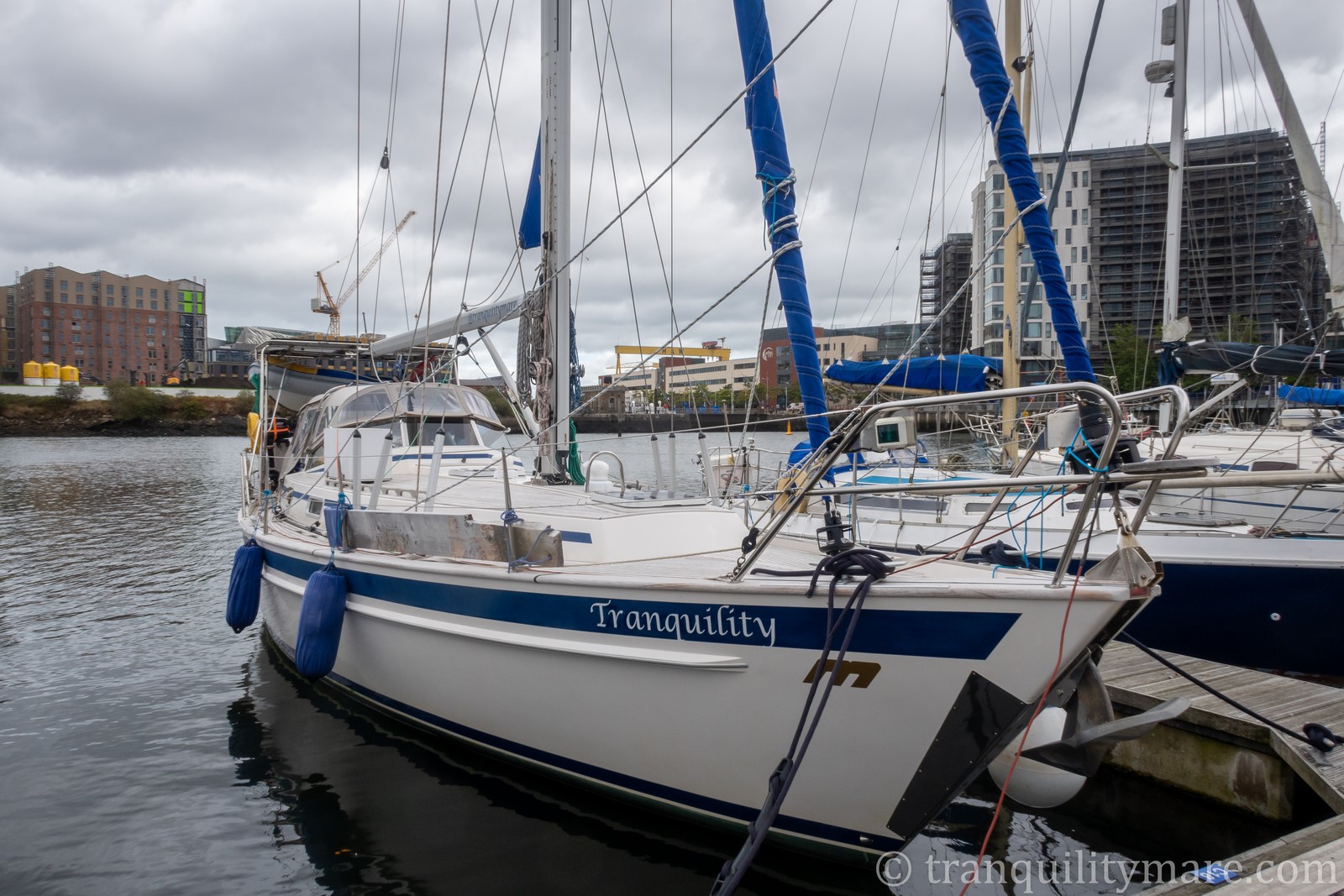
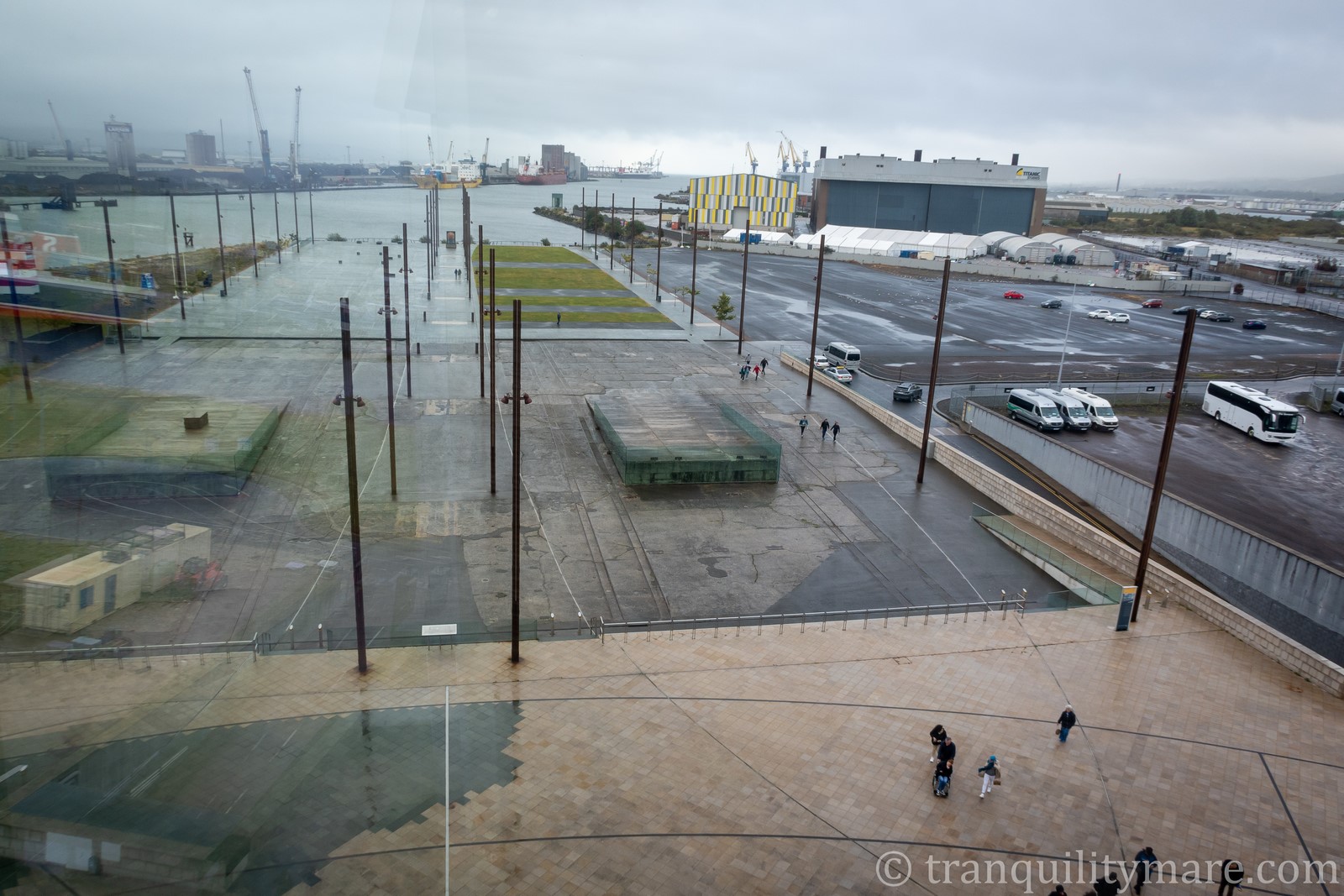
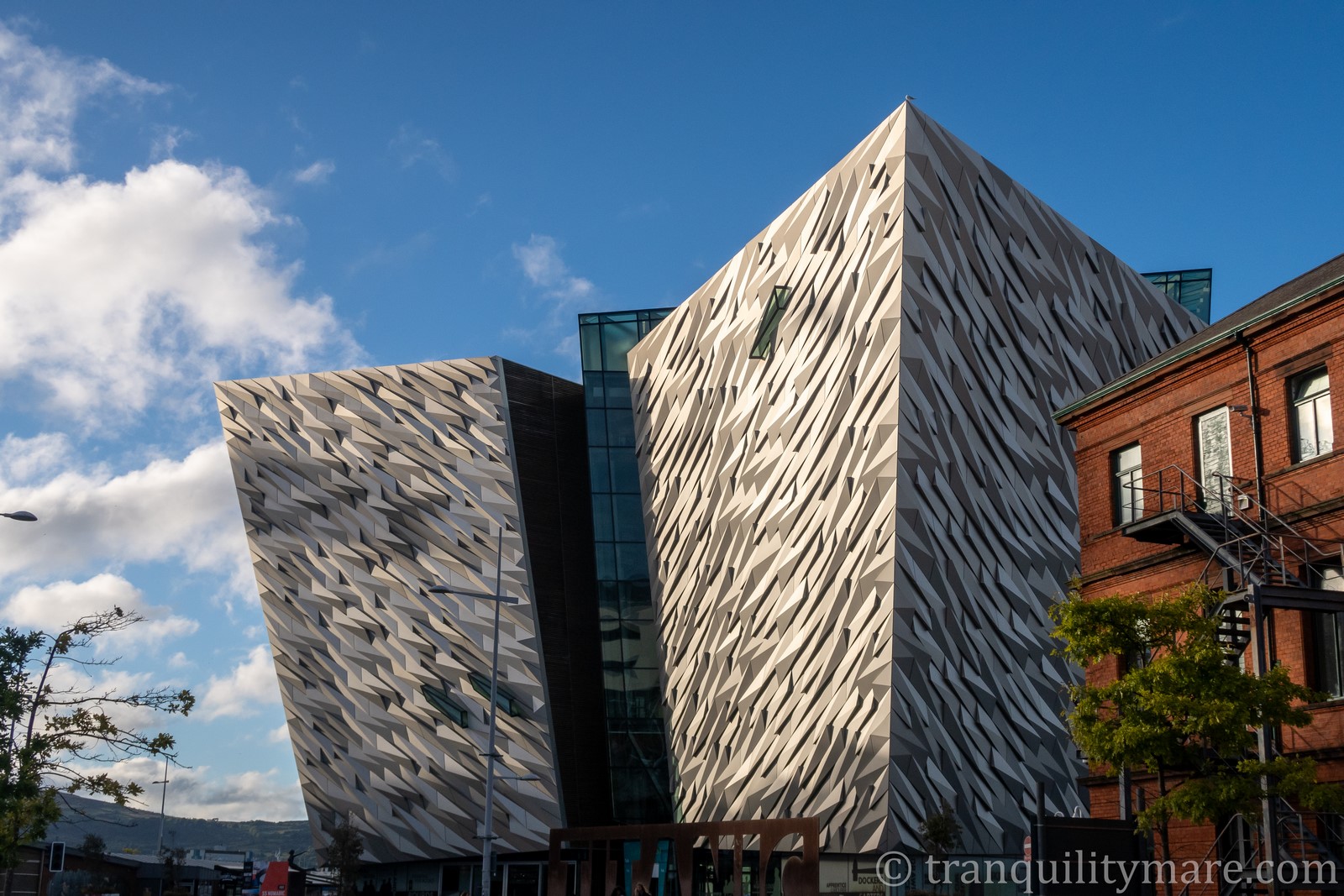
Entering the harbour at night through a narrow channel, surrounded by massive ships, is already impressive. But nothing compares to the moment we moor right next to the dry dock where the Titanic was built. The fact that I can sail my own boat to a place with such maritime history — a story I basically grew up with — feels surreal.
Of course, we visit the Titanic Museum. It’s very modern, but it leaves us with mixed feelings. Turning a human tragedy into a tourist attraction doesn’t sit entirely right with us. We would have preferred a more balanced approach, less focused on mass tourism.
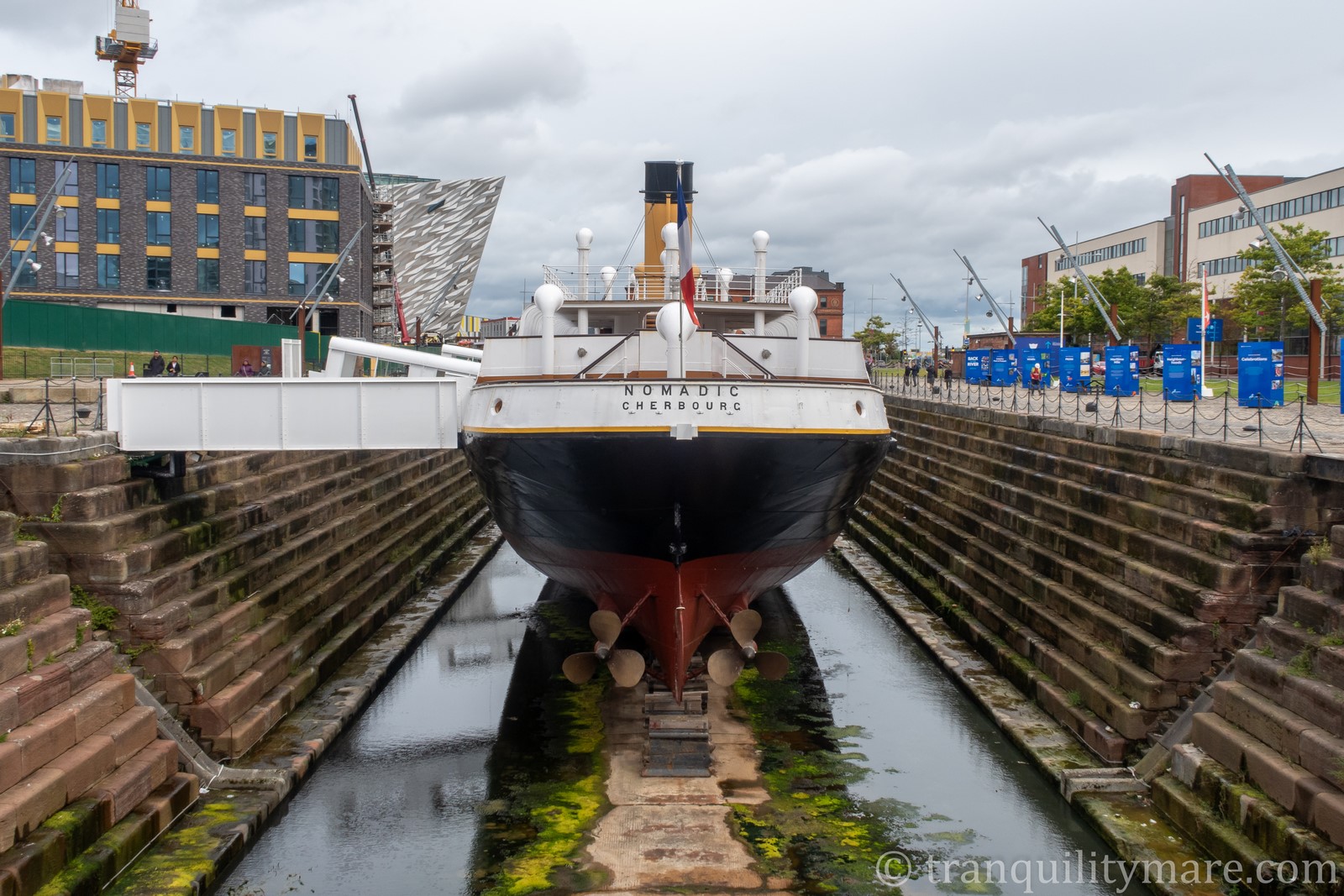
Right outside the museum stands the restored SS Nomadic, which was used to ferry passengers to the Titanic when it couldn’t enter port due to its size. So essentially, it was exactly what our dinghy is to Tranquility. Quite a nice “dinghy,” to be fair.
Belfast and “The Troubles”
Belfast also carries the weight of a very complex and difficult history — the conflict between the IRA and the unionists.
As usual, we join a walking tour to explore the city. Curious to understand more, we also take part in a second, more thematic tour focused specifically on the conflict, which is often euphemistically referred to here as “The Troubles.”
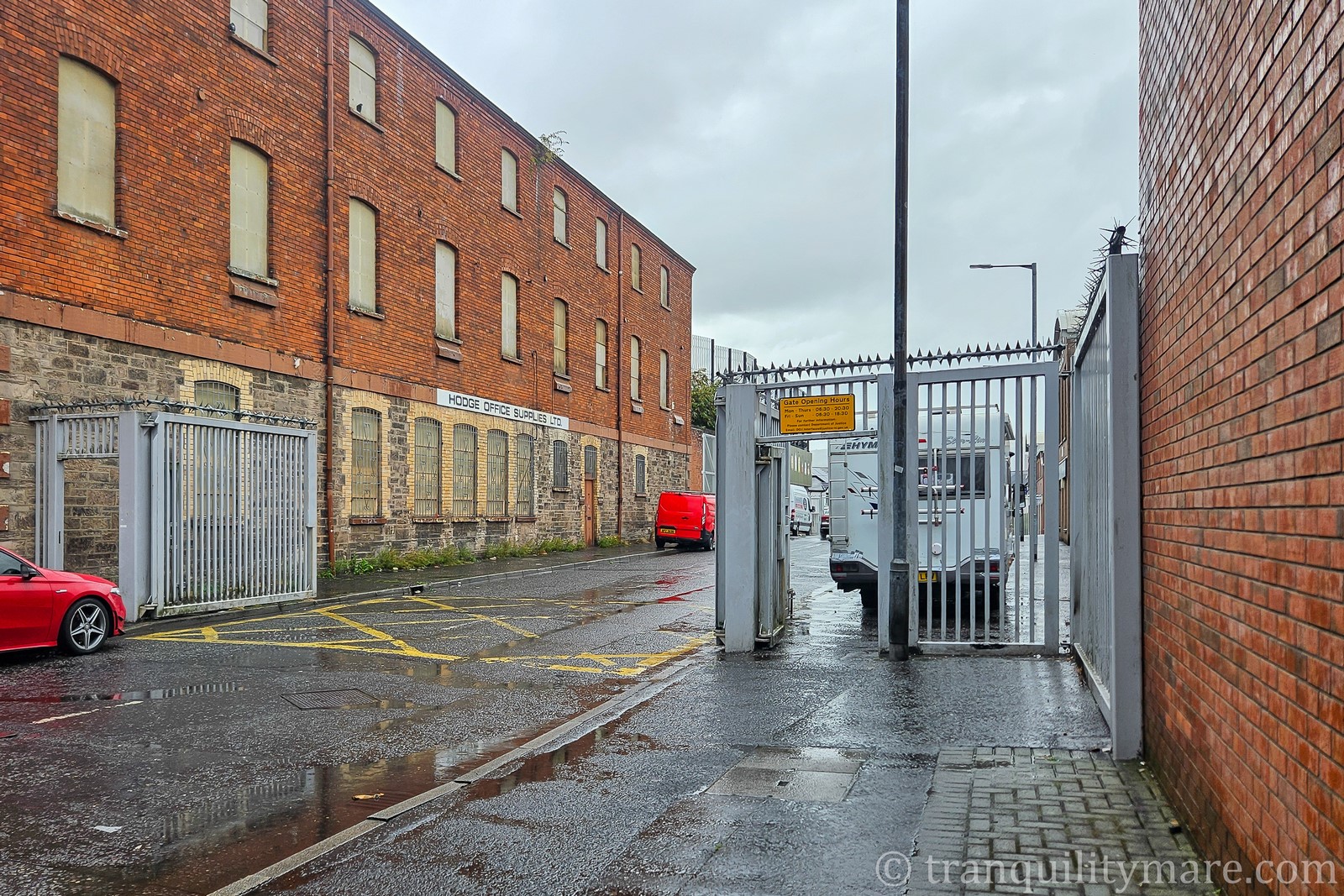
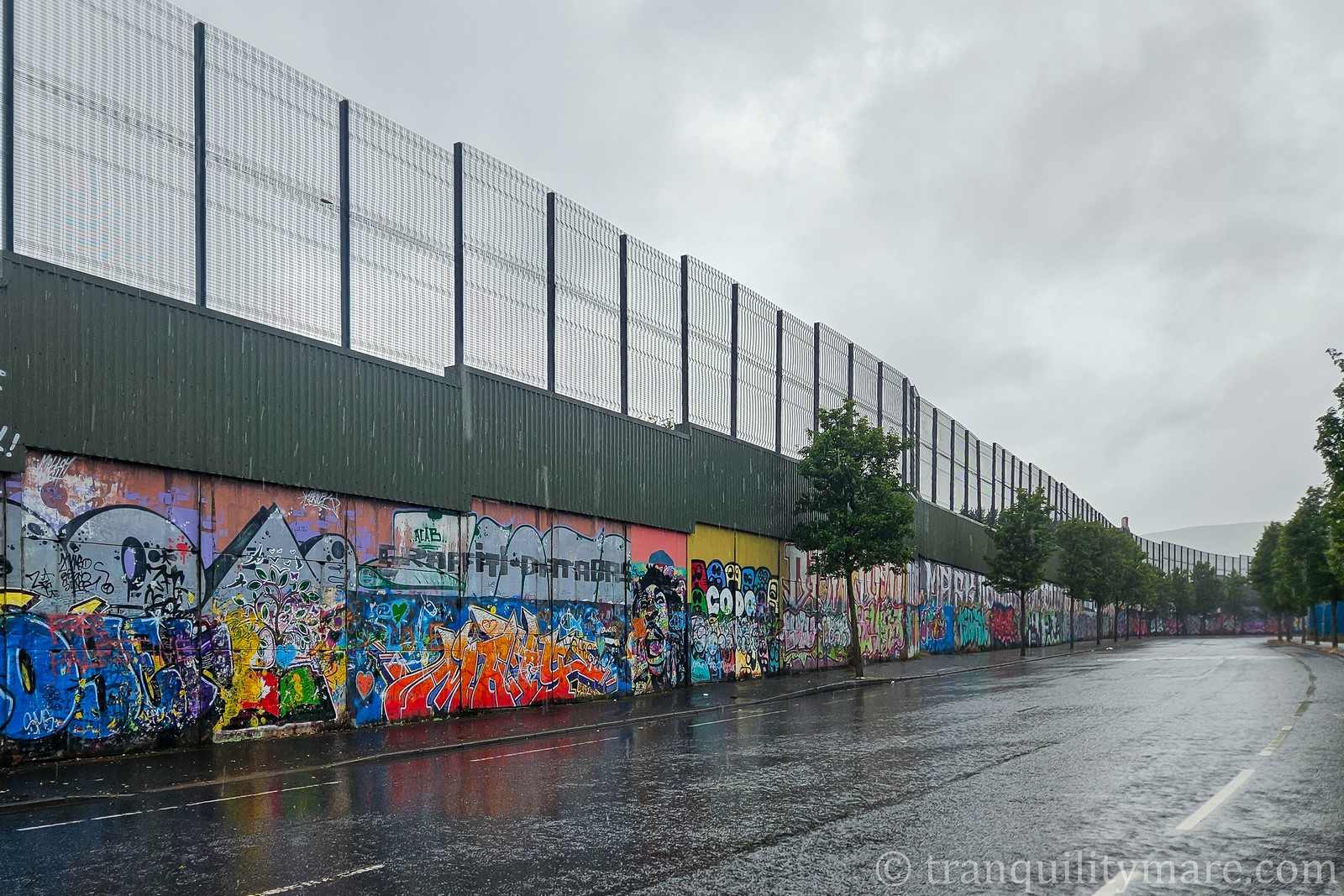
It’s hard to believe that in the 21st century, in Europe, some neighbourhoods are still separated by four-metre-high walls that are locked at night to reduce tensions between communities. Even more surreal are the billboards encouraging people to join paramilitary groups, along with their symbols carved into the gates of private homes — all of this in areas loyal to the union with Great Britain. It leaves us with more questions than answers.
Dublin and Heading South
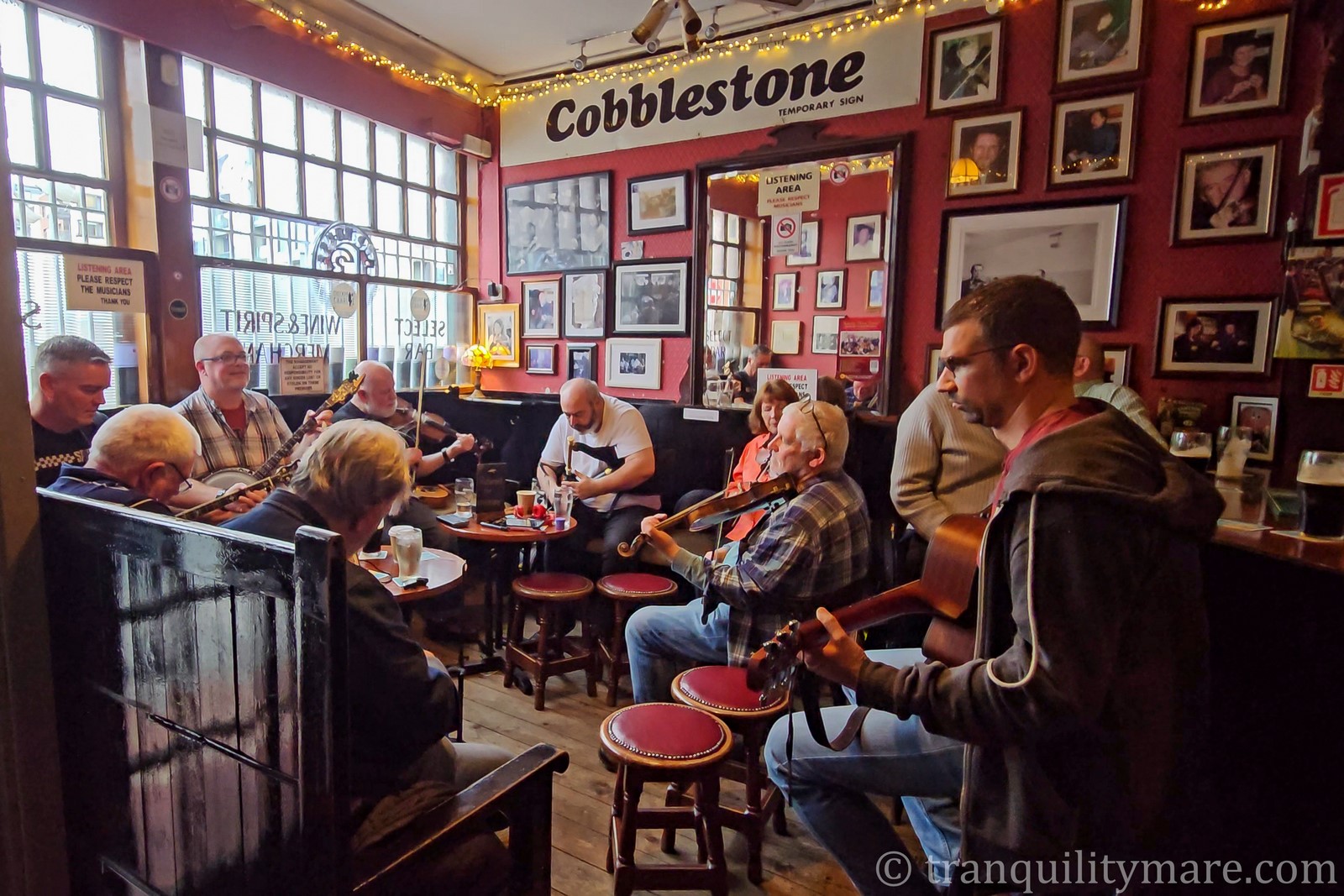
From Belfast, we make our way to Dublin. Once again, we explore the city, spend our time listening to live Irish music, and sipping Guinness. But eventually, it’s time to head south.
The southern winds, however, have other plans. Once again, we find ourselves stopped in Milford Haven in Wales — a place where we had already spent quite some time on our way north. Somehow, we keep coming back here… although we’re still not entirely sure why.
Isles of Scilly – the British Bahamas
After a few days of waiting, being pushed around by the wind, and moving back and forth between anchorages and the marina, we finally head south. The weather is finally on our side, and after a pleasant few dozen miles, we reach an archipelago we had skipped on our way north — the Isles of Scilly.
These British islands, stretching out from Cornwall, are often called the “British Bahamas”, thanks to their beautiful sandy beaches and turquoise waters.
We plan to stop in a small bay on the island of St Agnes, but the anchorage turns out to be far from ideal. Once we arrive, we see that the available space is limited by private mooring buoys, and despite a northerly shift in the wind, there’s still a noticeable swell rolling into the bay.
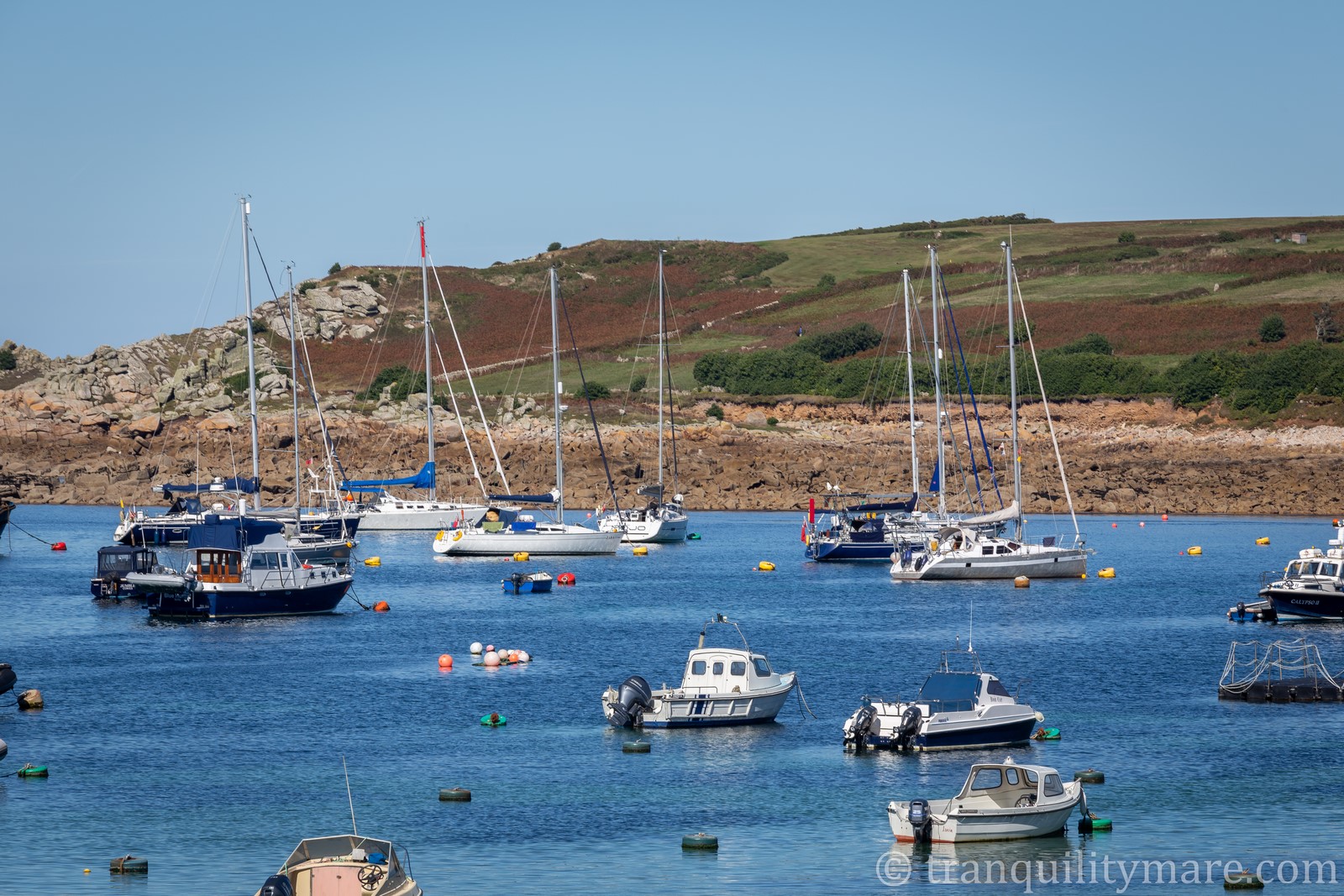
After a few hours of being uncomfortably rocked at anchor, we decide to move on to the largest island in the archipelago — St Mary’s. There, we pick up visitor moorings, tying both bow and stern, and head out to explore the island. Over the next few days, we drift lazily between the smaller islands of the archipelago. However, the tight and exposed anchorages — almost always affected by swell — make it difficult to find a truly comfortable spot to stay. As soon as the weather allows, we set course for France. Once again, the English Channel lies ahead.
Sailing the French coast
The passage goes smoothly, but a delayed weather front pushes us further east than planned. This time, we skip Brest and stop instead in the smaller marina of Aber Wrac’h, located further north. That’s where we complete the formalities of re-entering the EU.
Lorient
This time, instead of crossing the Bay of Biscay offshore as we’ve done before, we decide to sail along the French coast. Our first longer stop is Lorient — the world capital of offshore racing and the place where the French East India Company was founded and based.
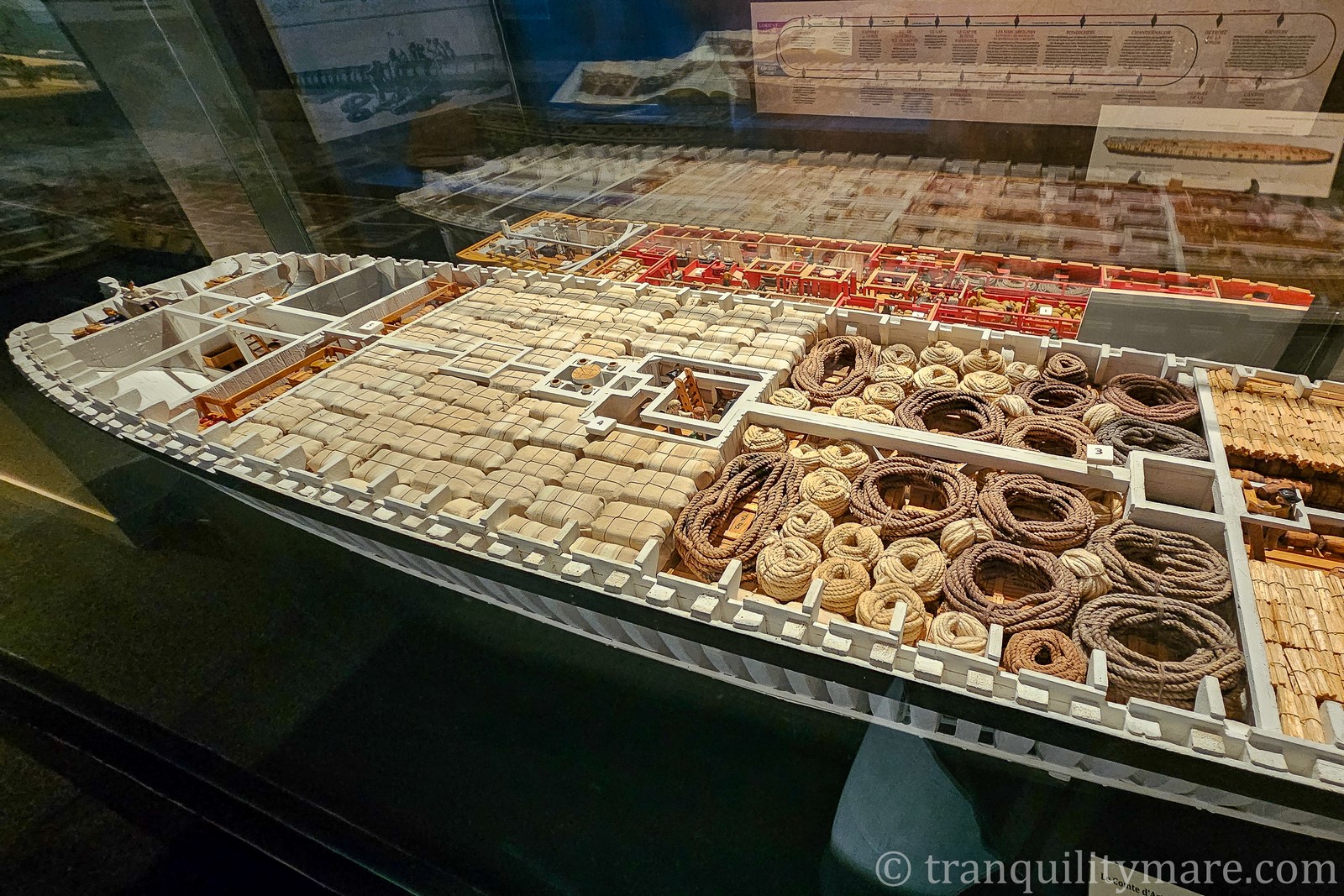
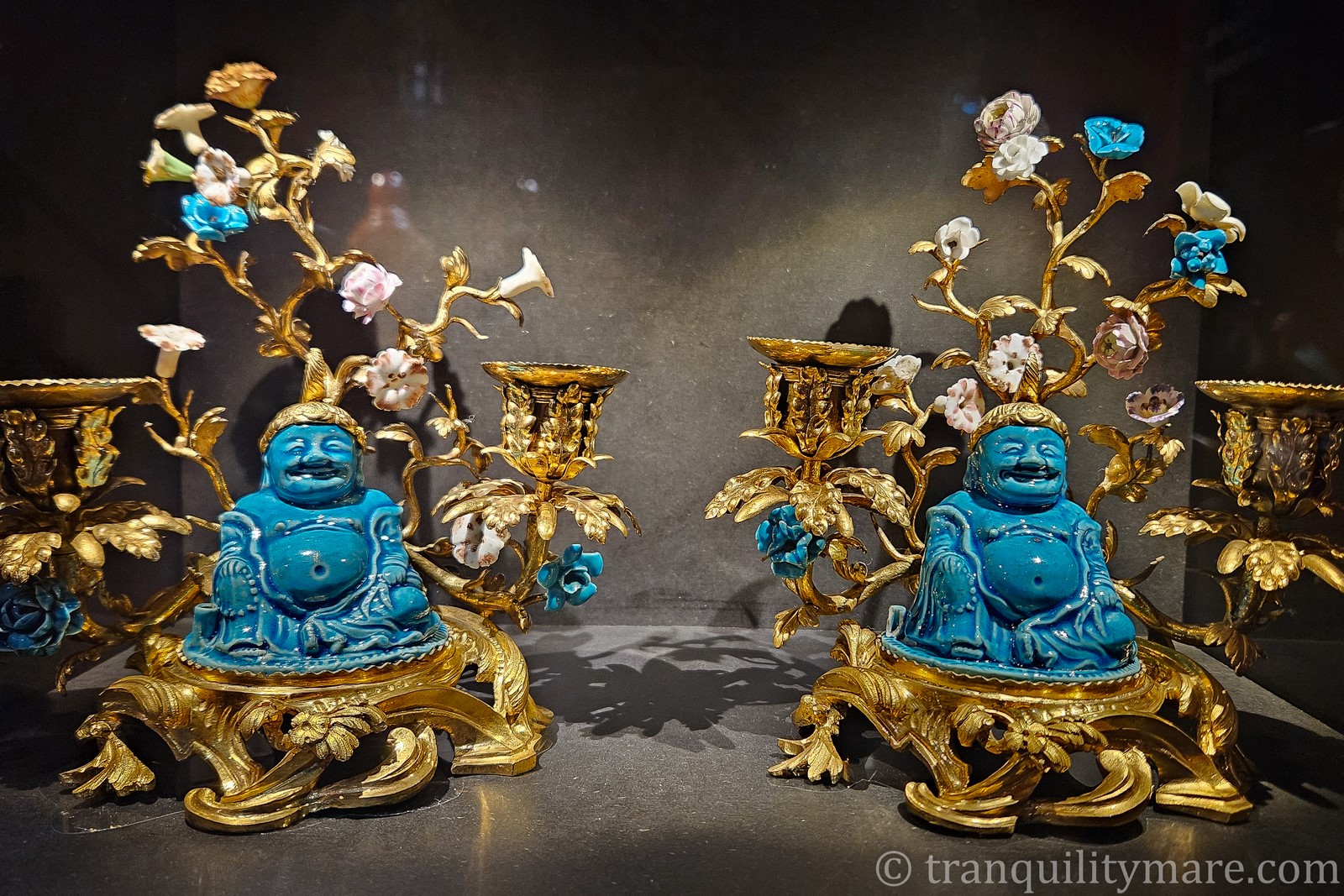
Since both of these aspects genuinely interest us, we spend a few days in the city, exploring it intensively. It’s home to one of the best museums dedicated to the East India Company, with impressive exhibitions, artefacts, and stories from the colonial era. Nearby, there’s also a smaller but very interesting maritime rescue museum.
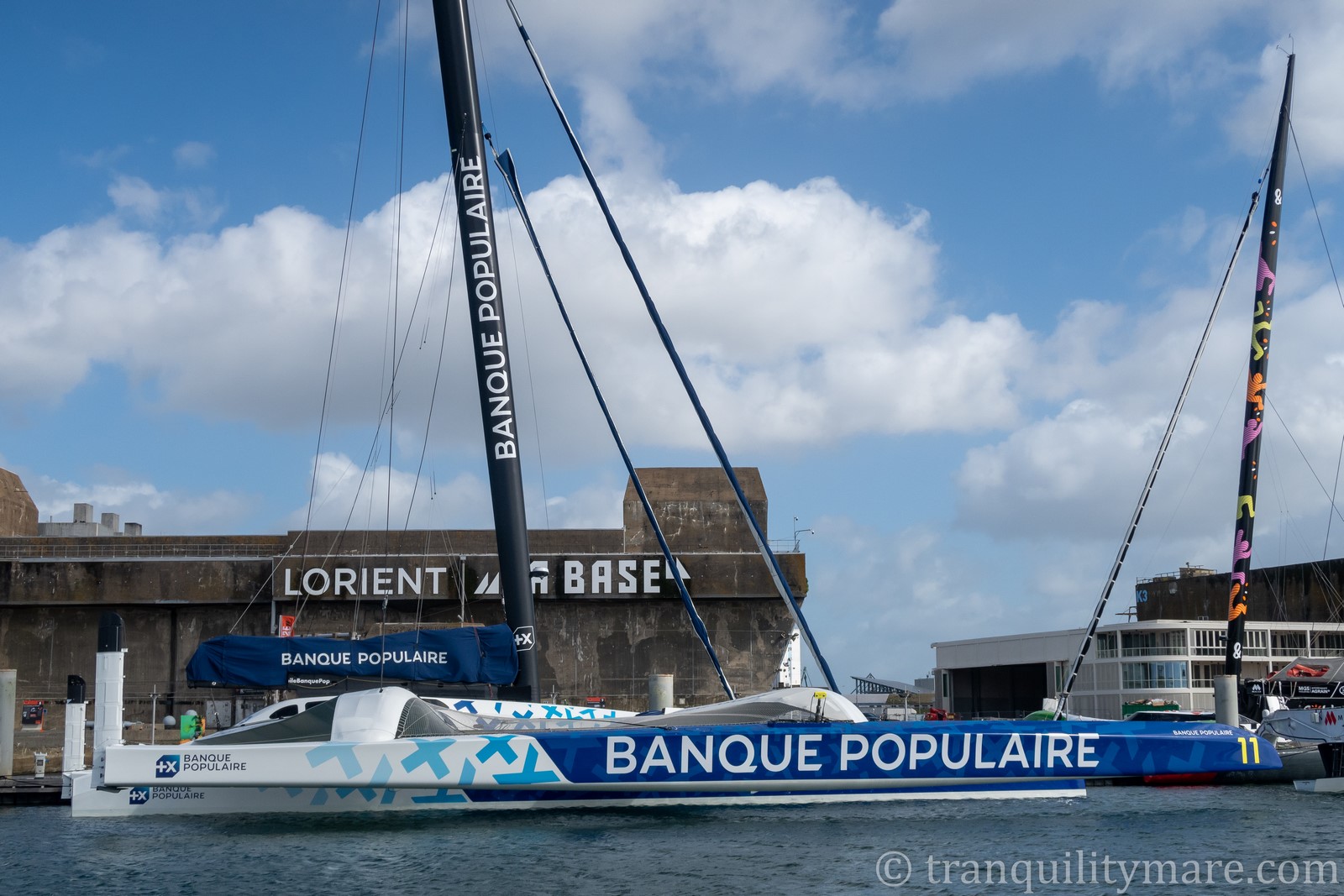
In the marina, we admire some of the most advanced racing yachts in the world. The trimaran Sodebo, which we see there, goes on just a few months later to break the round-the-world sailing record and win the Jules Verne Trophy, completing the circumnavigation in just over 40 days — beating the 2017 record by 12 hours.
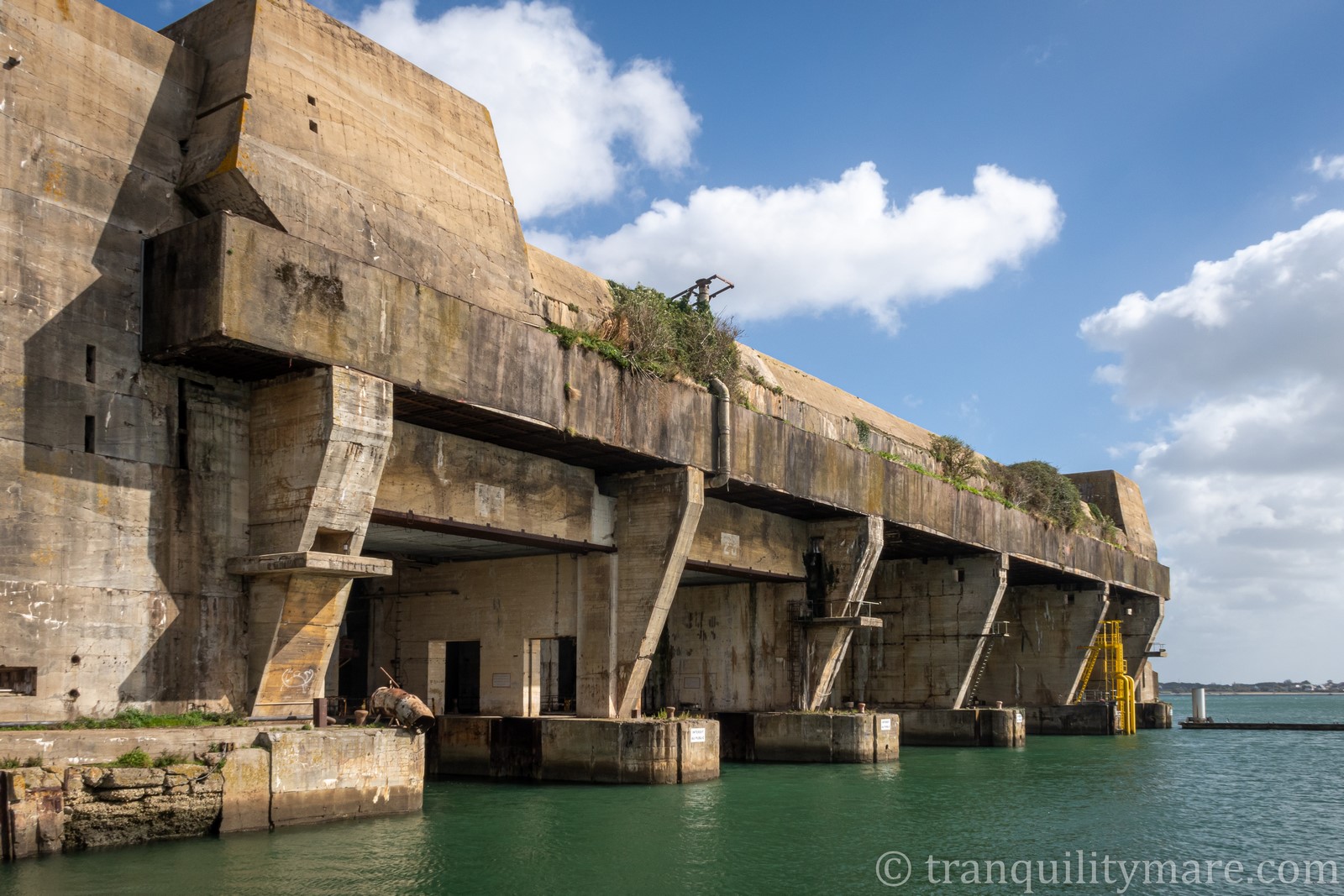
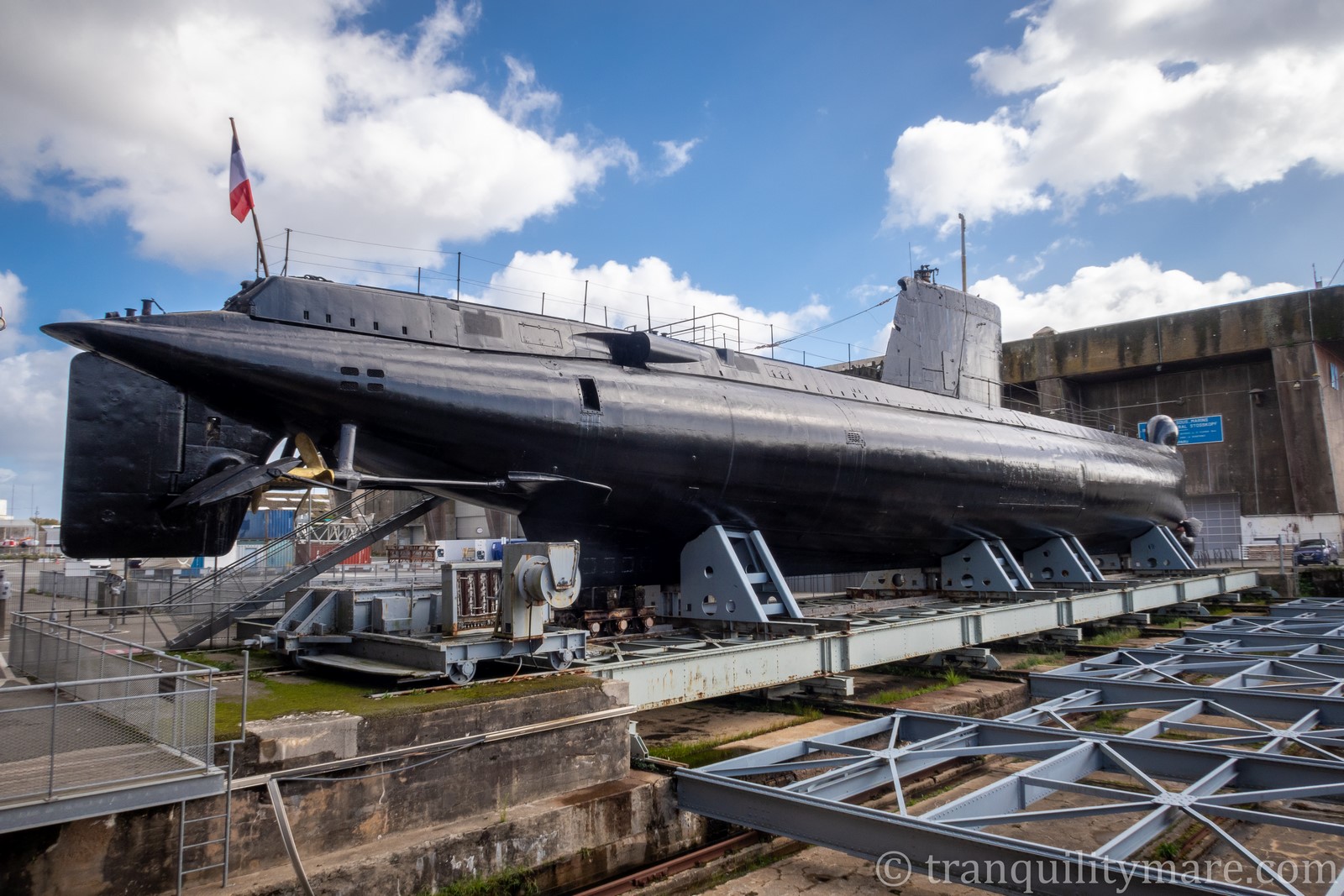
Lorient also offers the rare opportunity to visit a submarine open to the public, which, of course, we do. It’s a French vessel from the 1960s, but during World War II, this was the site of a massive German U-boat base. The enormous bunkers still tower over the marina to this day.
Île d’Yeu
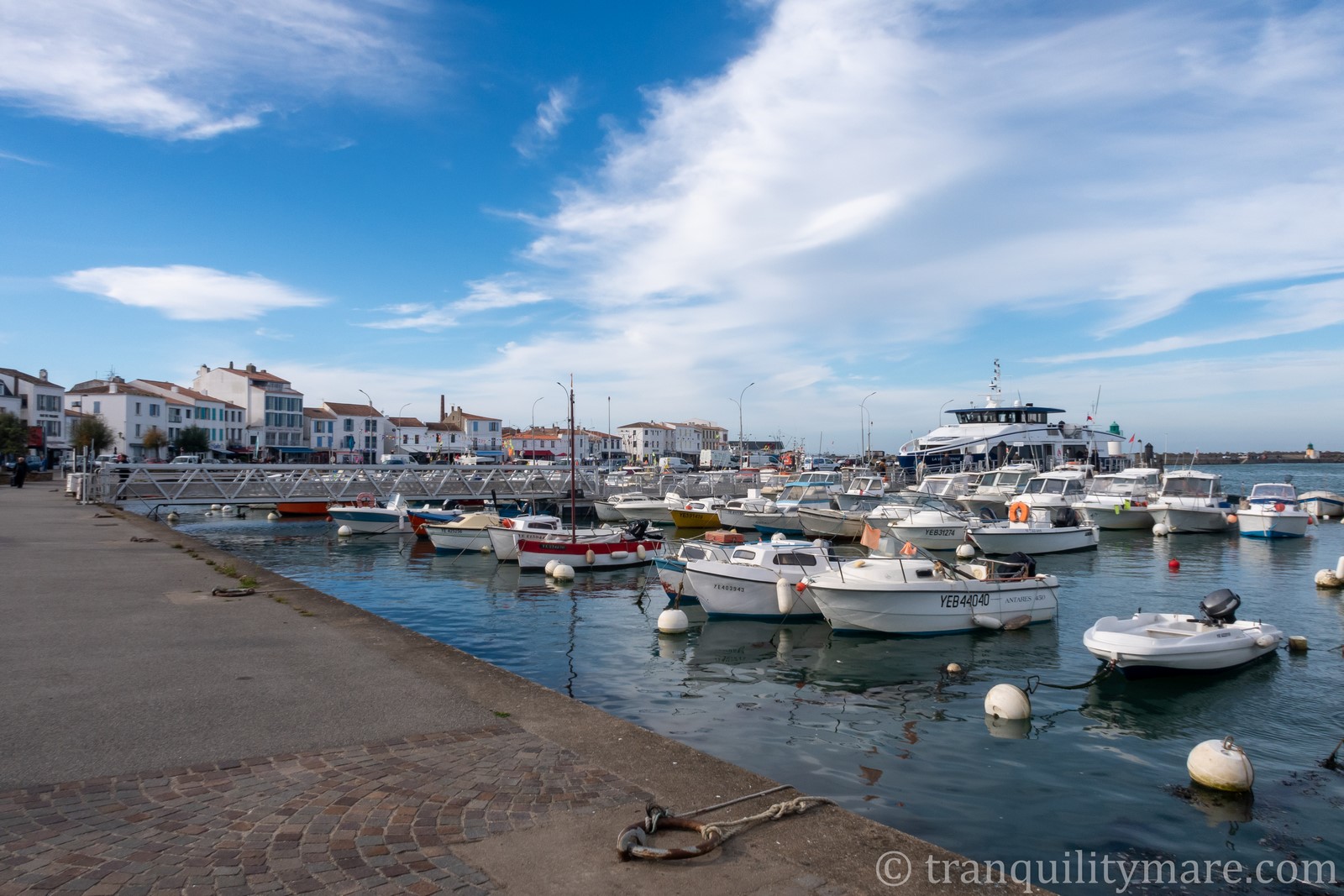
Our next stop in France is the peaceful island of Île d’Yeu, located between Lorient and La Rochelle. We rent bikes and manage to explore the entire island in a single day. It’s full of cycling paths and small trails, which makes it a perfect and very enjoyable way to get around and discover the island.
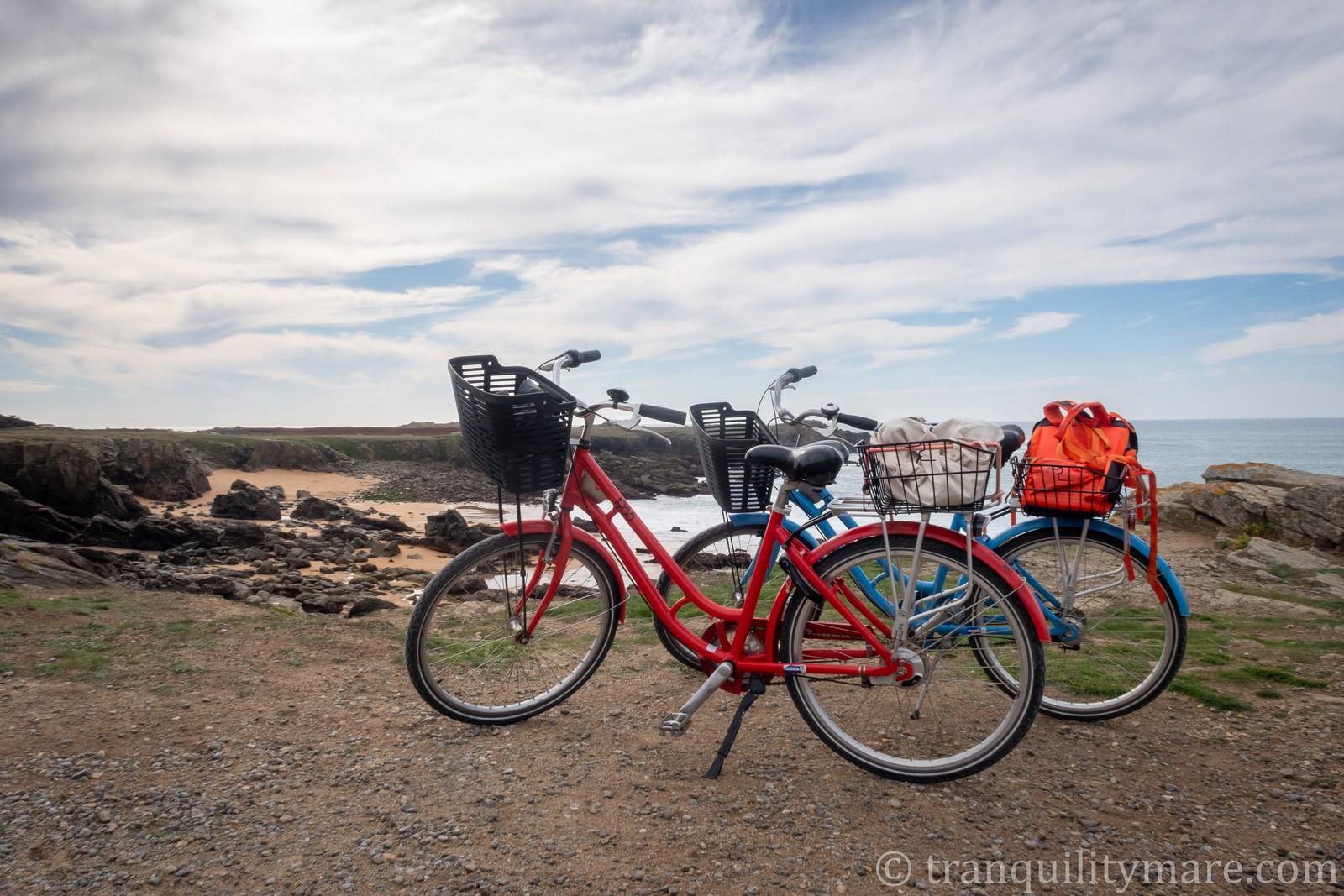
La Rochelle
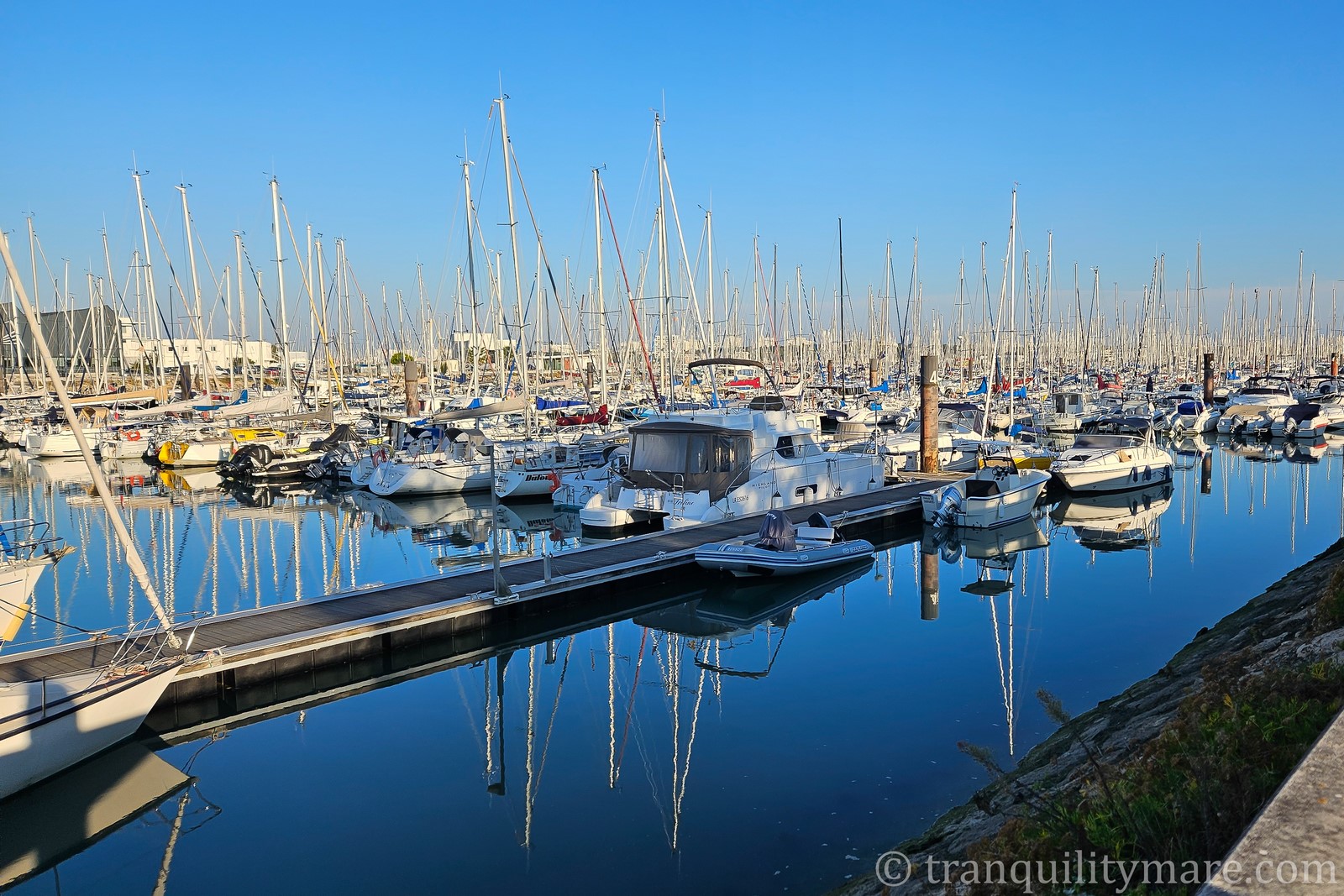
From Île d’Yeu, we head towards La Rochelle, our last stop in France. Even as we approach the marina, it’s clear that sailing is truly thriving here — the water is packed with boats of every kind. The marina in La Rochelle is the largest in Europe, with around 5,000 berths. It’s seriously impressive — especially considering that walking out of it takes longer than getting from there into the city itself.
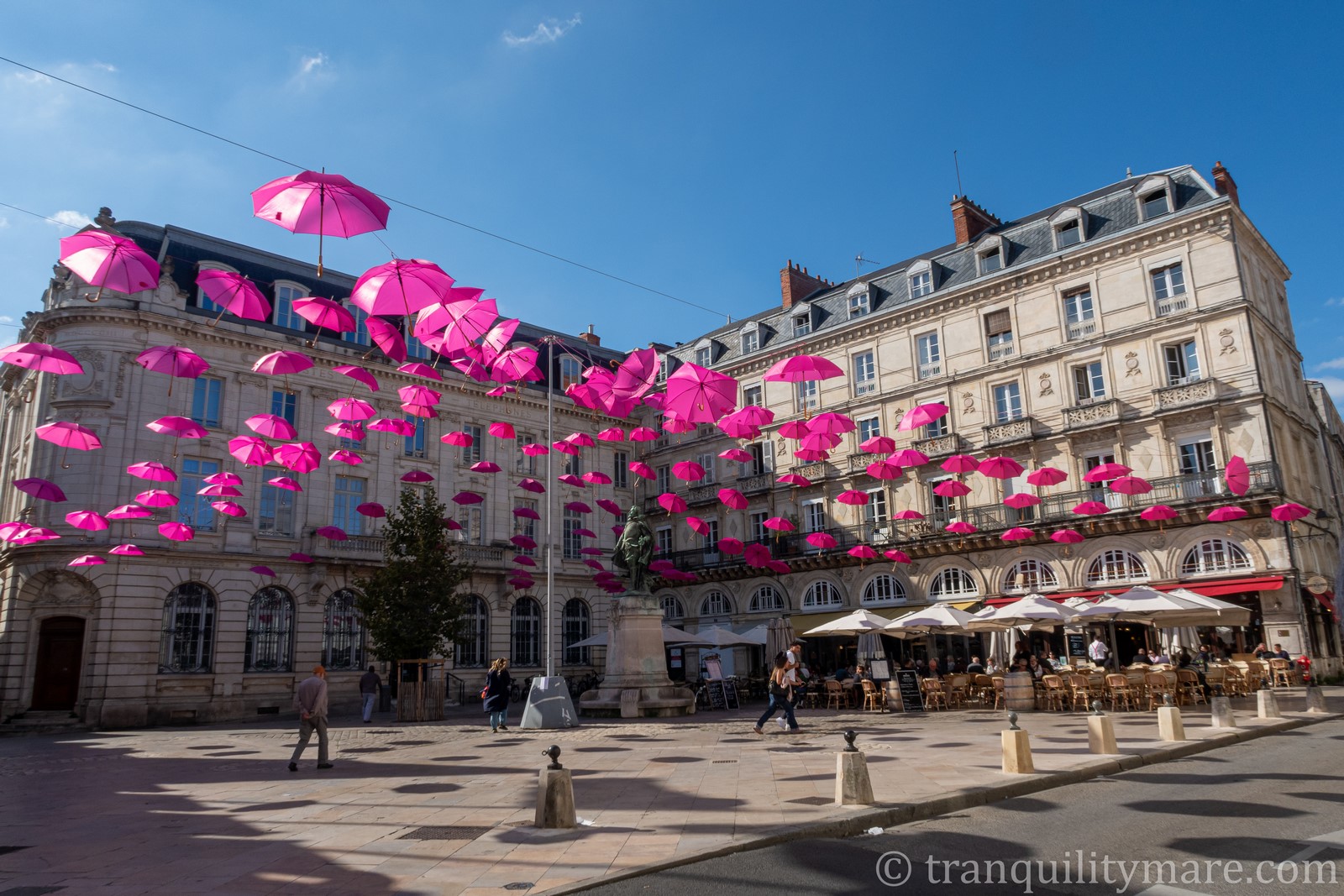
The city charms us just as much. Elegant French architecture, autumn sunshine, constant movement on the water, and plenty of interesting landmarks make it a place that’s absolutely worth recommending.
Bay of Biscay
Are we heading into the Bay of Biscay? Yes — although this time, in a slightly shorter version.
Standard route from Brest to A Coruña usually takes around three days. From La Rochelle to Bilbao, our first planned stop in Spain, it’s closer to a day and a half.
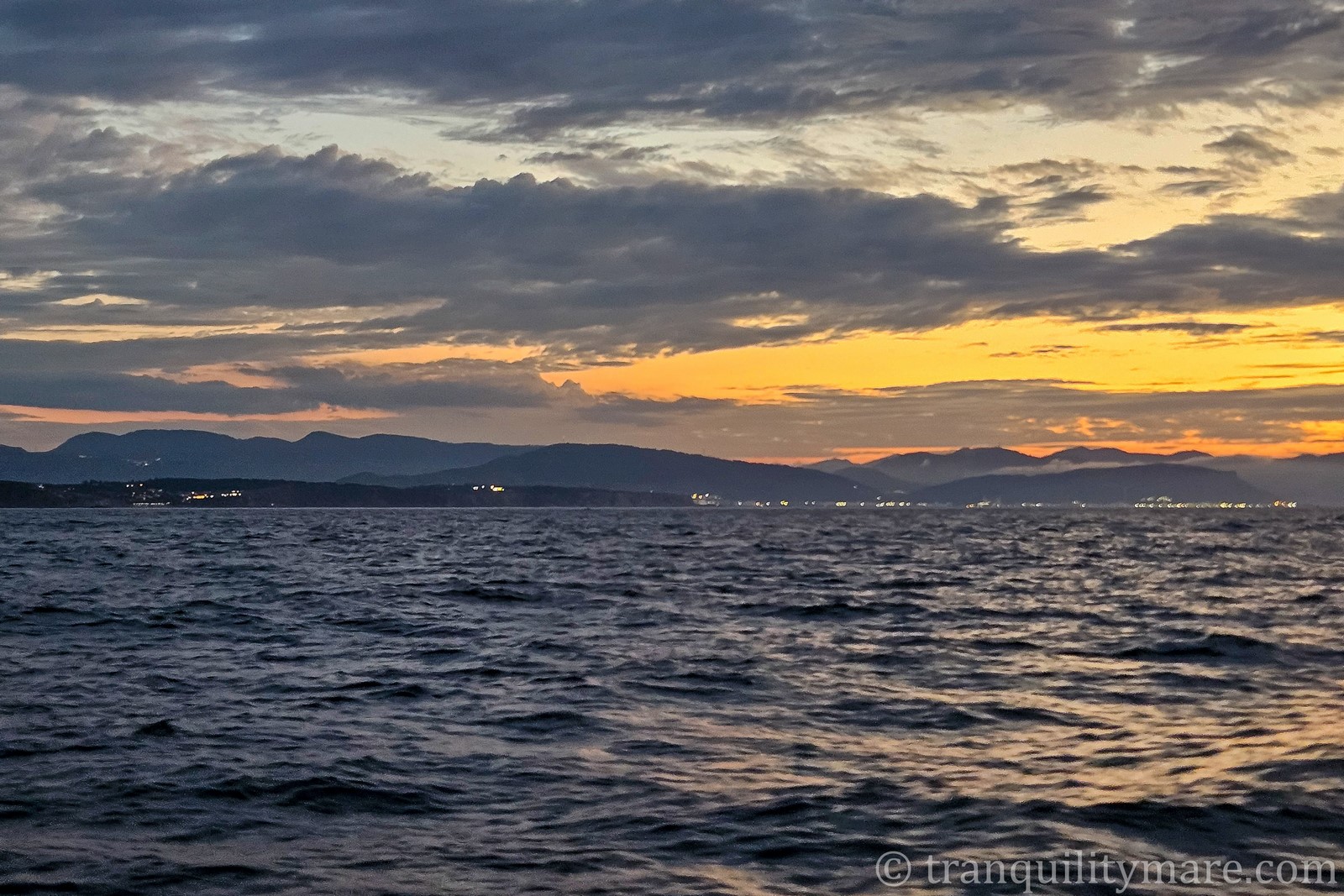
And these turn out to be the most pleasant and calm Biscay conditions we’ve ever experienced. For most of the passage, we sail under gennaker, with fantastic conditions. We reach Bilbao before nightfall, so we stop at an anchorage east of the city and enter the port the following day.
Bilbao – A Coruña
The marina isn’t exactly close to the city — getting there requires about a 30-minute train ride. The plan is simple: a walking tour and getting to know a part of Spain we haven’t visited before. Bilbao is the capital of the Basque Country, so we’re curious to see what makes it stand out — apart from the language.
We eat incredible tapas and pintxos, wander around the city, and the next day head to the place most tourists visiting Bilbao make their way to — the Guggenheim Museum of modern art. Let’s just say it was the worst €30 we’ve ever spent… and leave it at that.
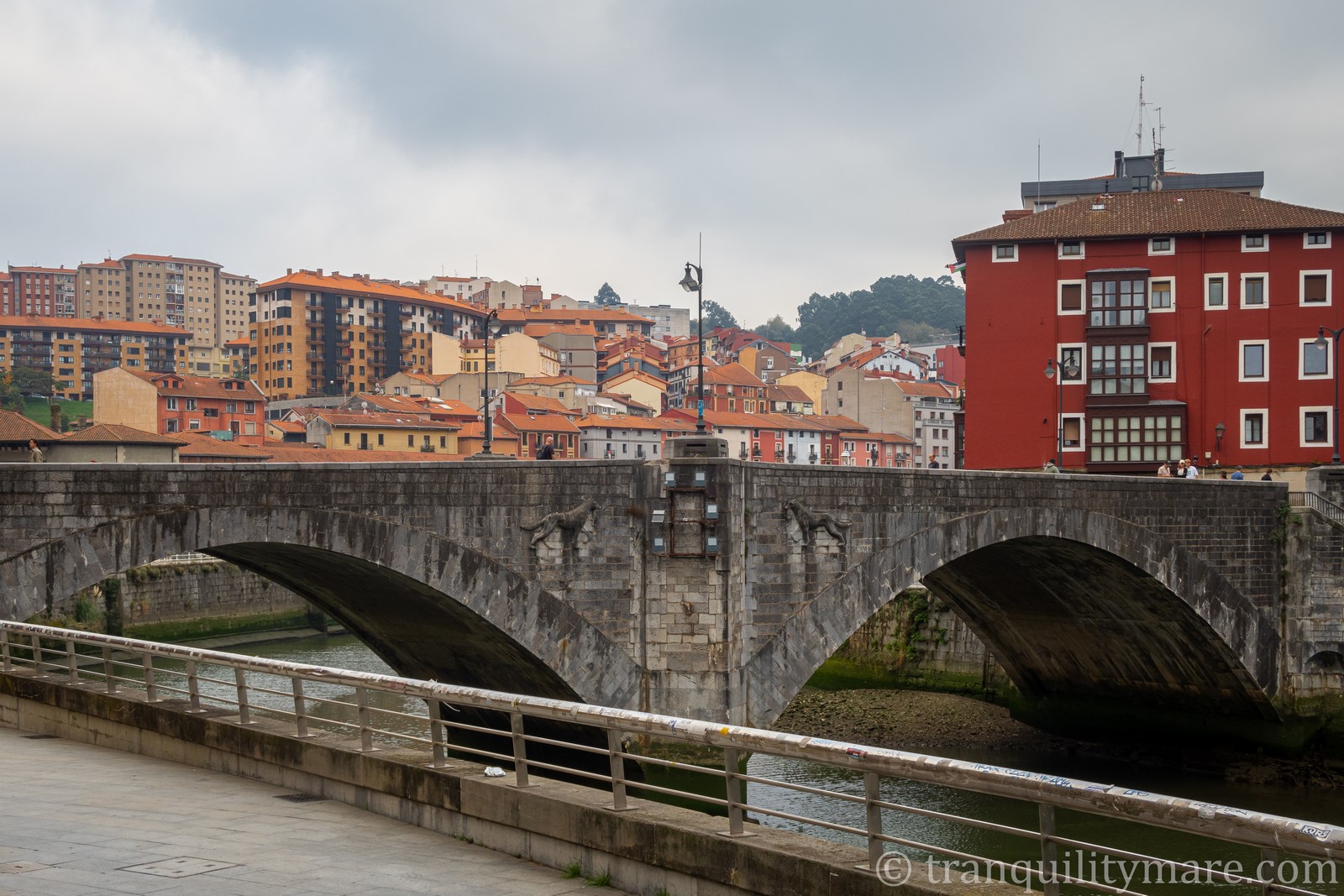
Pro-Palestine protests and a general strike in Spain make getting back to the port more complicated than expected. For 50 minutes, we’re packed like sardines on the metro, with fewer trains running than usual. The result? We already feel unwell as we leave Bilbao. Two more nights at sea, with a short stop in Gijón, don’t help either.
By the time we reach A Coruña, we’re properly sick. We end up staying there for over a week, as what started as a cold quickly turns into something much worse — to the point where even stepping out onto the deck feels like an effort, and basic tasks become surprisingly difficult. That’s what happens when you come back into contact with civilization after spending nearly half a year in remote, sparsely populated places.
West Coast of Spain
By the time we finally leave A Coruña, it’s already the end of October. Ahead of us lies another demanding stretch of sailing along the coast — this time accompanied by a less friendly pod of orcas than the ones we encountered in Shetland. Just thinking about this passage is exhausting.
From experience, we know what it means: uncomfortable sailing in shallow waters, constant lookout, avoiding fishing nets, and complicated route planning. Especially since this time, attacks are happening all around us — one day ahead, then 10 miles ahead… The orcas are clearly active.
Baiona
Our planned stop in the Bay of Vigo doesn’t work out either. We arrive in the evening only to find that none of the marinas have space for our boat — which is quite surprising at this time of year. With no other option, we keep going — another two hours to Baiona.
We end up staying there for a few days, as another autumn storm hits the coast. Baiona turns out to be a charming and interesting place, although definitely quiet out of season. It also holds an important place in history — it was the first European port to receive news of the discovery of America. In 1493, Columbus’ caravel La Pinta arrived here after the expedition.
Porto
Being in the area and not visiting Porto — even though we’ve been there many times before — is simply not an option. Unfortunately, our speed on the way to the familiar Leixões marina is so poor that the last two hours of sailing would take place in complete darkness. With large amounts of unlit fishing nets along the route, we decide not to risk it.
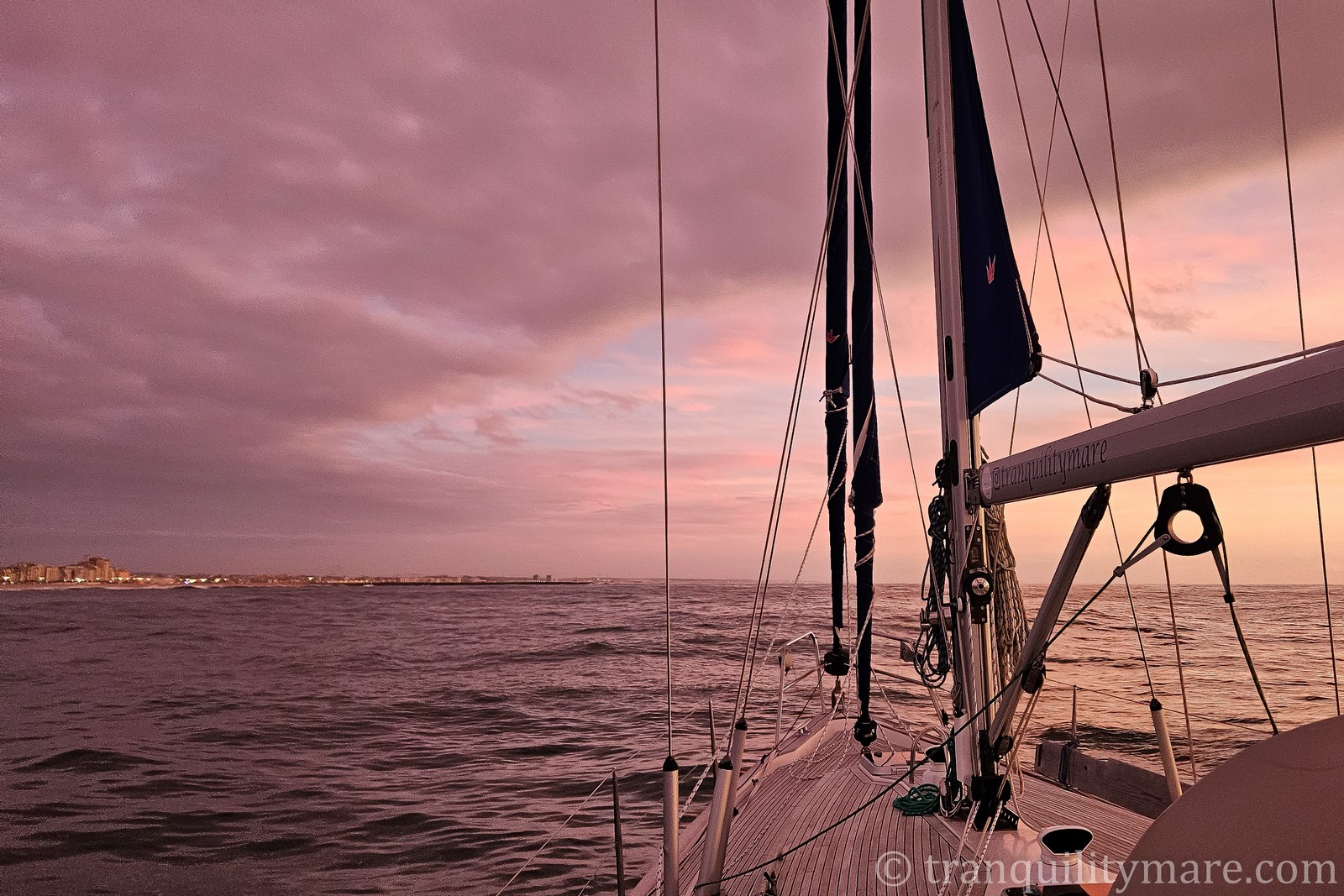
Instead, we head to Póvoa de Varzim, a smaller, very touristy seaside town north of Porto. It turns out to be a great choice — the marina is far more comfortable, cleaner, and overall more pleasant than Leixões, which, unfortunately, isn’t among the cleanest. There’s also a fast metro connection to Porto, making it a perfect base for visiting the city. And Porto — once again — doesn’t disappoint, even in late autumn.
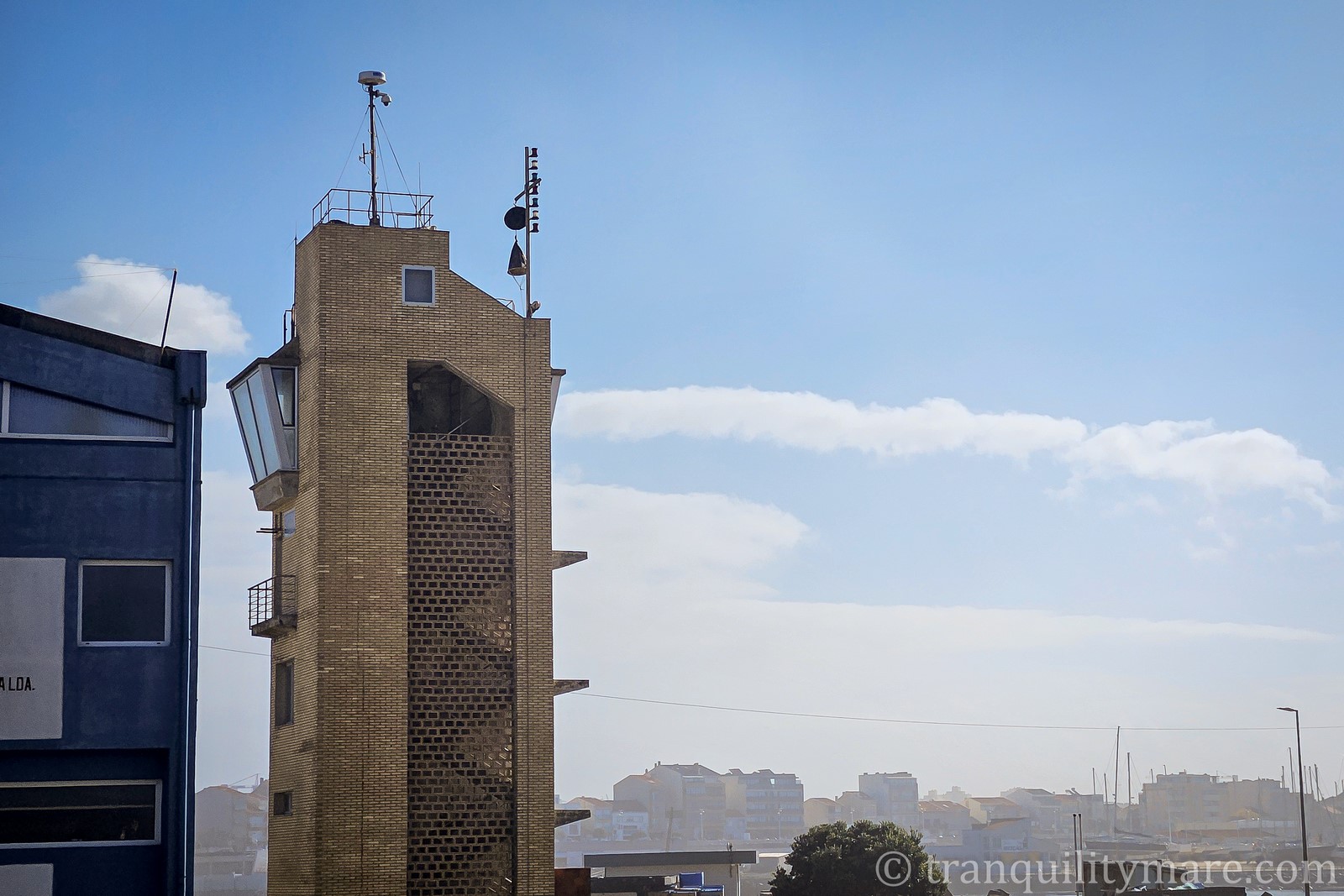
Like many ports along Portugal’s Atlantic coast, Póvoa de Varzim has its downsides. In autumn and winter, when Atlantic storms hit the coast, many ports remain closed for days — sometimes even weeks. Their status can be monitored online here or by checking the signals and lights on the harbor tower or at the entrance. Ignoring these restrictions can result in heavy fines. But to make things even more confusing — we’ve learned firsthand that the signals on the tower don’t always match official documentation. Sometimes they even contradict the information available online or on the port’s own website.
Nazaré
After a few days, we finally catch a short weather window — just a few hours — when the port is open, allowing us to escape another approaching storm and the next multi-day closure.
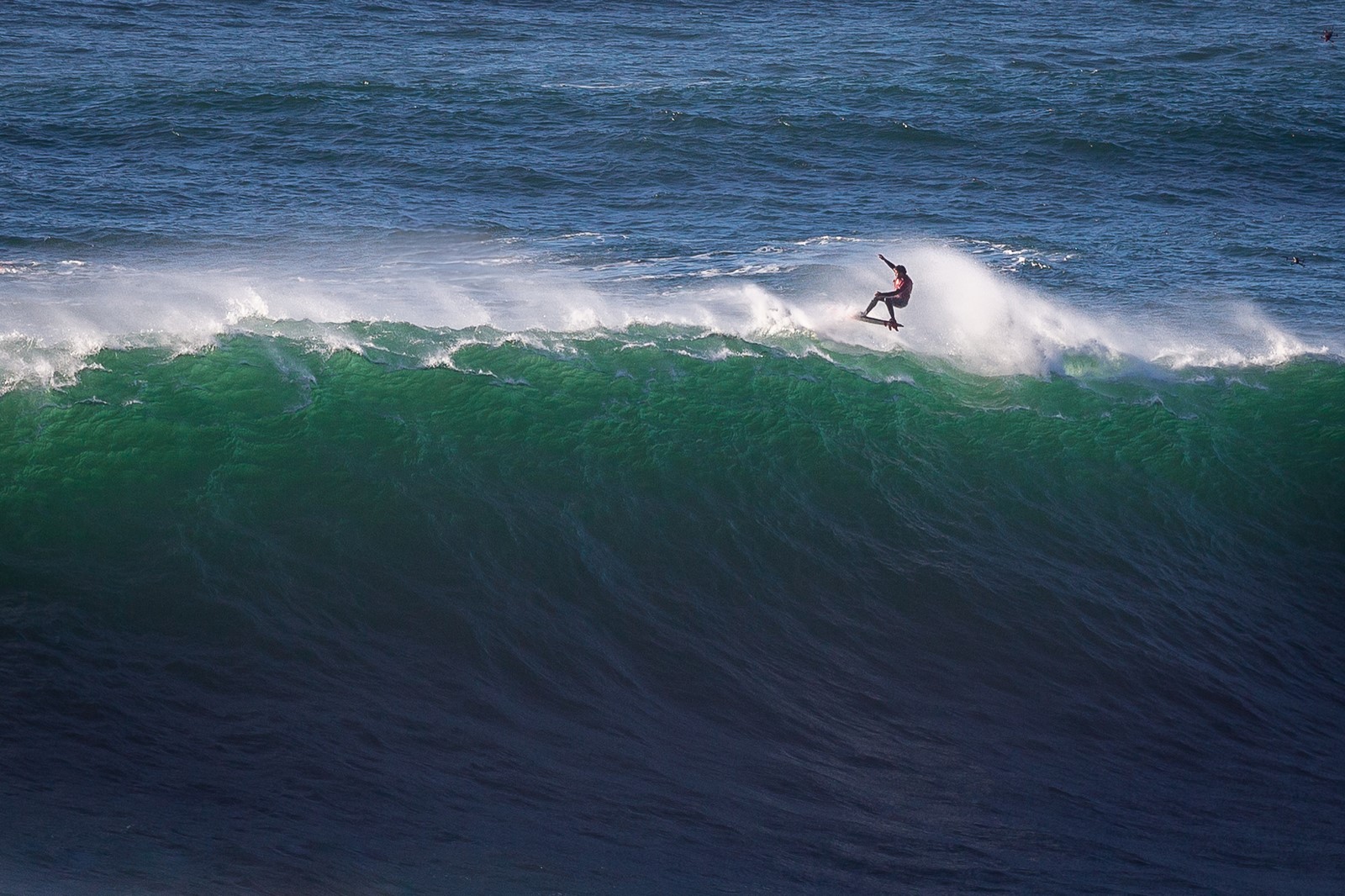
We make our way to Nazaré, a place we already know well. It’s often one of the few marinas that remain open even in rough conditions, mainly thanks to its good protection and harbor layout. Seeing the waves building, we check the forecast… for surfers. Not because we surf ourselves, but because Nazaré is a global hotspot for the sport. Along with surfers, crowds gather here to watch from the cliffs above the famous Praia do Norte.
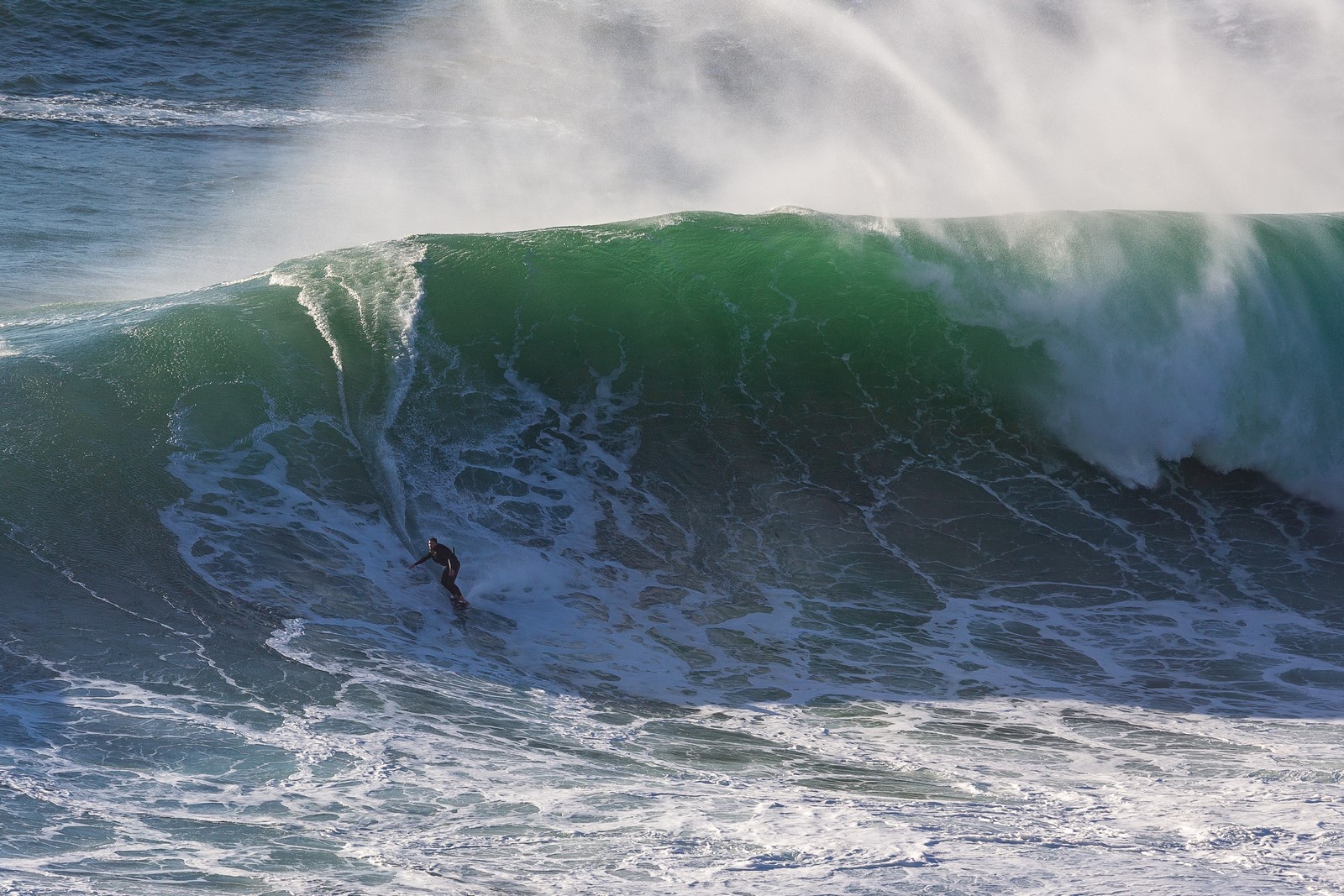
We’re not wrong — the forecast promises incredible conditions, with waves exceeding 12 meters. Although in Nazaré, that’s not as shocking as it sounds. This is where the world record for the highest wave ever surfed was set — nearly 30 meters.
After docking, we head straight to the viewpoint. The cliffs are packed with spectators cheering on the surfers, and the sight of massive waves and tiny human figures is unforgettable. We spend hours watching this raw encounter between humans and nature — and even manage to capture a few shots of the main actors.
We also visit the stalls selling traditional dried fish and, tempted to try it, buy a few pieces. After preparing them the traditional way, we’re not entirely convinced — we don’t really see the advantage over fresh fish… except for the fact that it doesn’t need refrigeration.
Cascais and Lisbon
More waiting for a weather window, and once again a slow push south. Short days don’t always allow us to follow the recommendation of avoiding night sailing in areas with orca activity. We end up entering the next port — Cascais, near Lisbon — after dark.
It looks like another longer stop. We use the time to visit Lisbon again — more specifically Belém, our favorite part of the city. Mainly because of the Monument to the Discoveries, built in 1960 to honor Portuguese explorers.
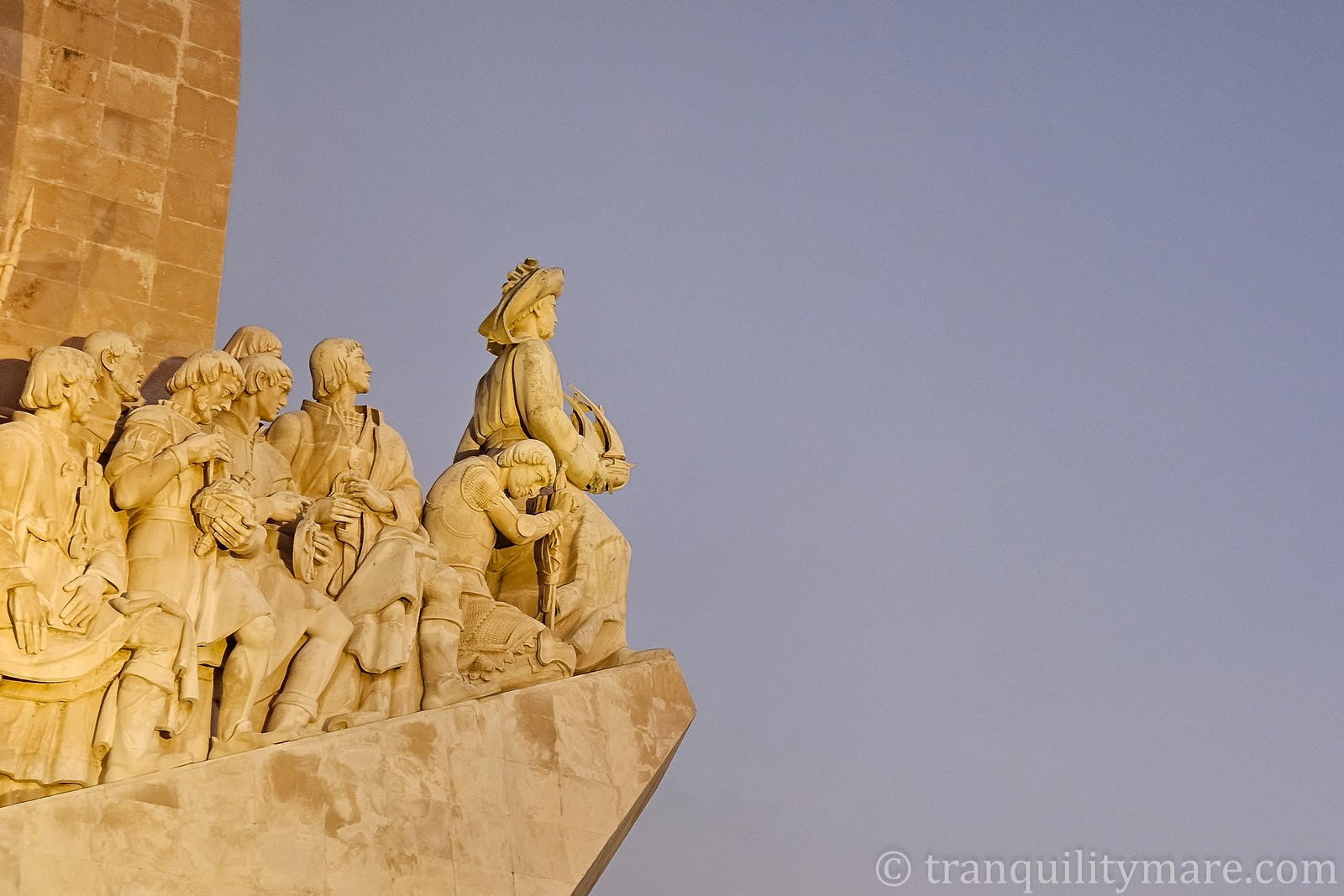
At its front stands Henry the Navigator, who initiated and inspired Portugal’s maritime expeditions. Among the 33 figures, you can find names like Vasco da Gama and Ferdinand Magellan. In front of the monument, there’s also an impressive compass rose combined with a world map marking the routes of Portuguese voyages. How many of them will we one day sail ourselves?
With each passage through orca territory, we feel more and more tired of having to adapt our sailing to the problem. Since orcas tend not to attack in very deep waters, from Cascais we decide to head far offshore, west into the ocean, to depths exceeding 1000 meters — avoiding the coastal areas where encounters are most common.
Two days out on the open ocean, without constantly scanning for orcas, noticeably lift the crew’s morale — and finally bring back the joy of sailing.
Cádiz and Seville
As planned, we only return to the coast at the latitude of Cádiz, where we’re aiming for our next stop. Avoiding the high-risk orca areas — even for a short stretch — turns out to be a very good decision.
We had planned to visit Cádiz a long time ago, but somehow our routes always skipped it. This time, we finally make it. And since we’re already close to our final destination, we take the time to explore both Cádiz and take a trip to Seville.
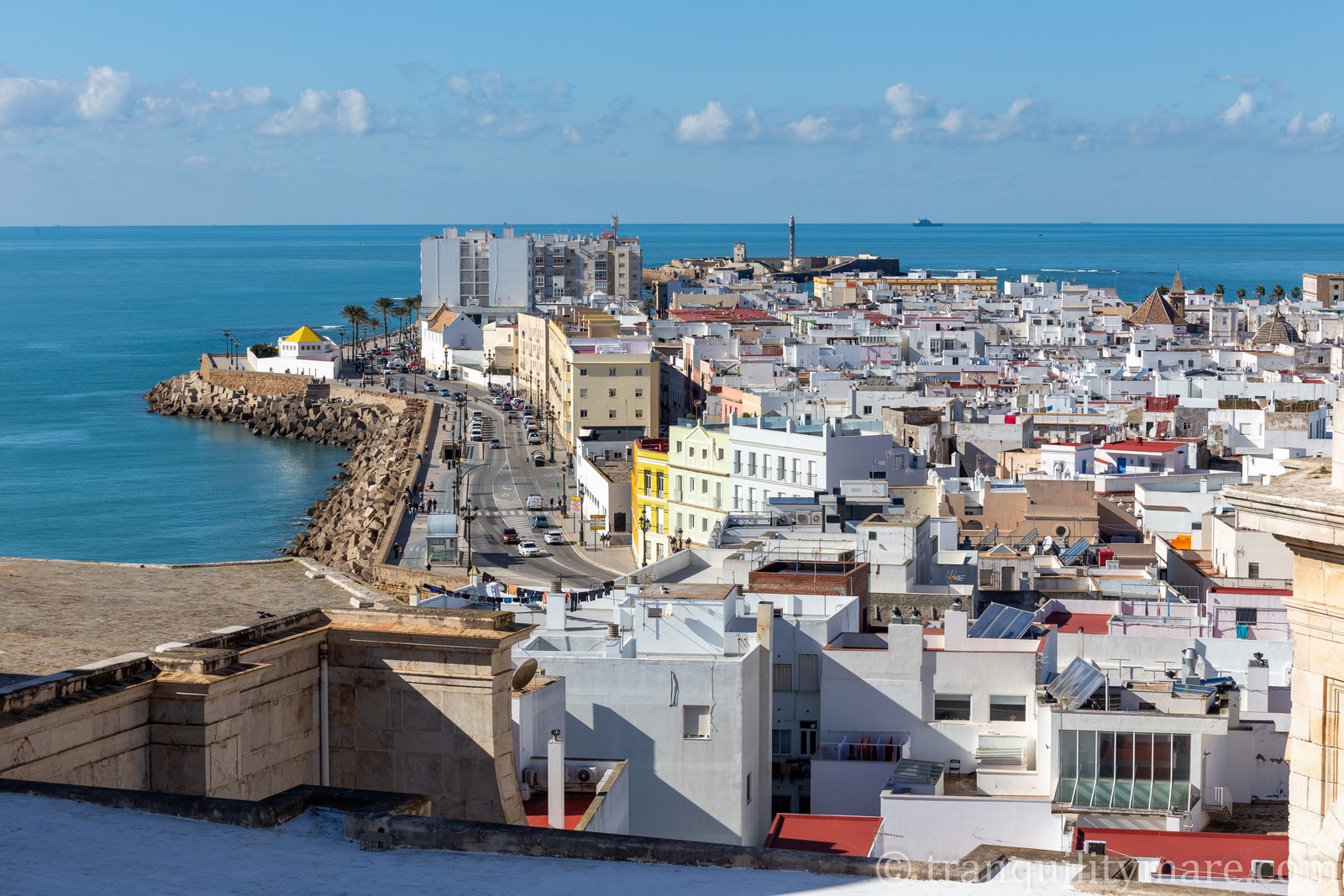
Right at the start, we unexpectedly come across a tsunami drill, which is taken very seriously here due to the real risk of such events. As usual, we join a walking tour, and one of the evenings we spend at yet another flamenco show — not our first one in Spain, but still just as atmospheric.



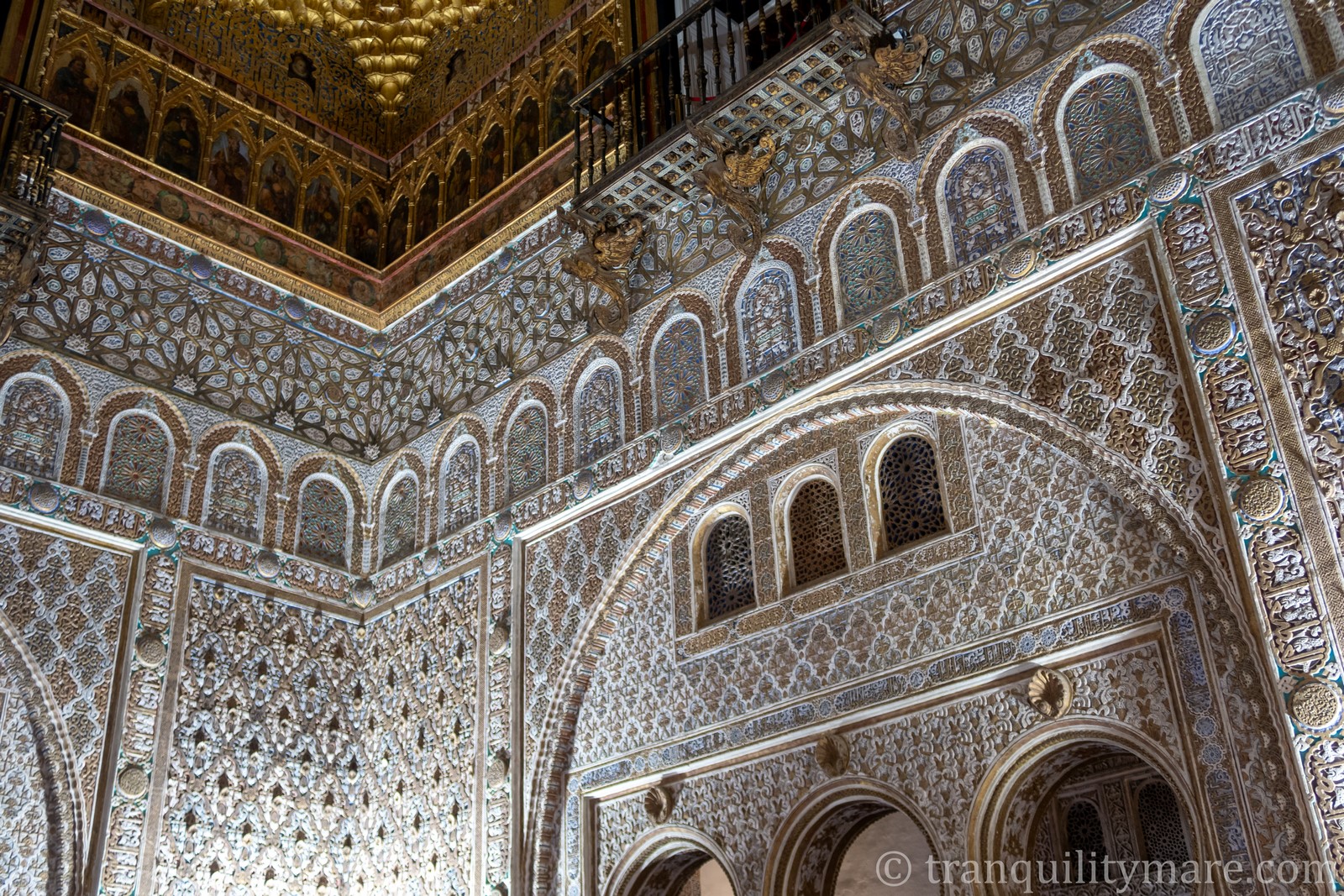
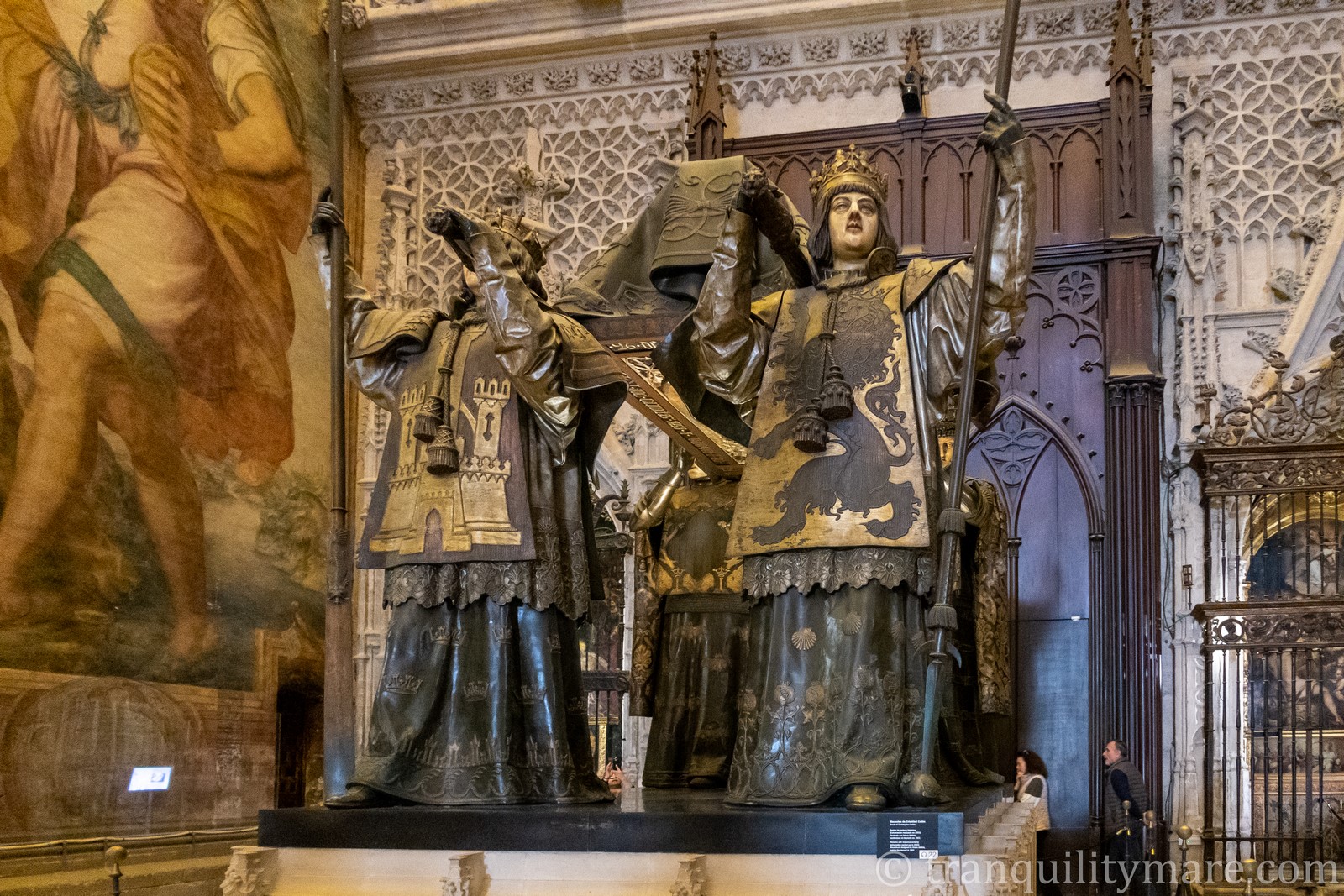
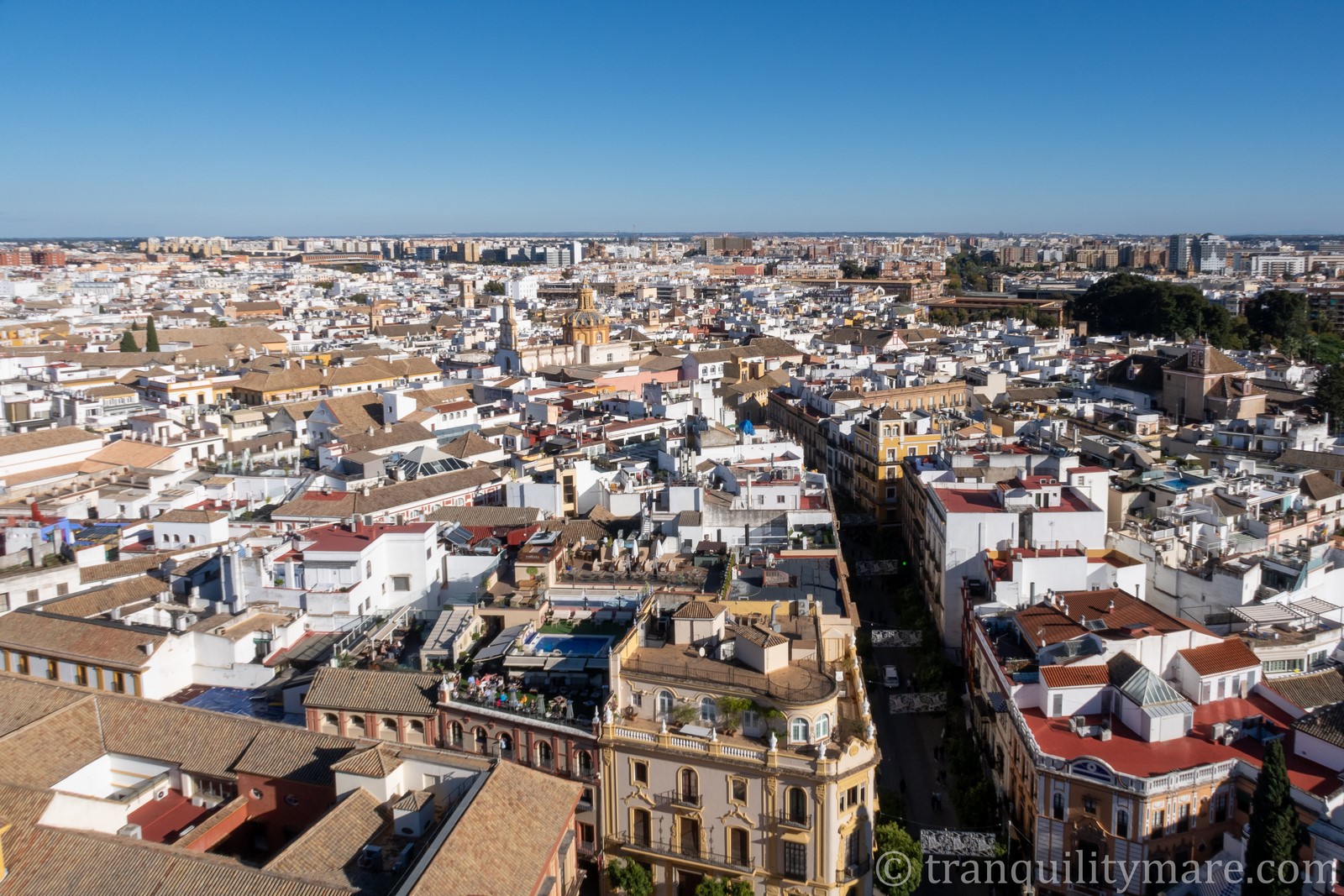
Seville doesn’t disappoint either. Despite the low season, it’s still full of tourists, but we manage to get tickets to both the Alcázar of Seville and the Cathedral of Saint Mary of the See.
The Alcázar, built in the Mudéjar style — blending Christian and Islamic influences — is impressive, although not quite on the level of the Alhambra in Granada. The cathedral, on the other hand, stands out for a different reason — it houses the tomb of Christopher Columbus.
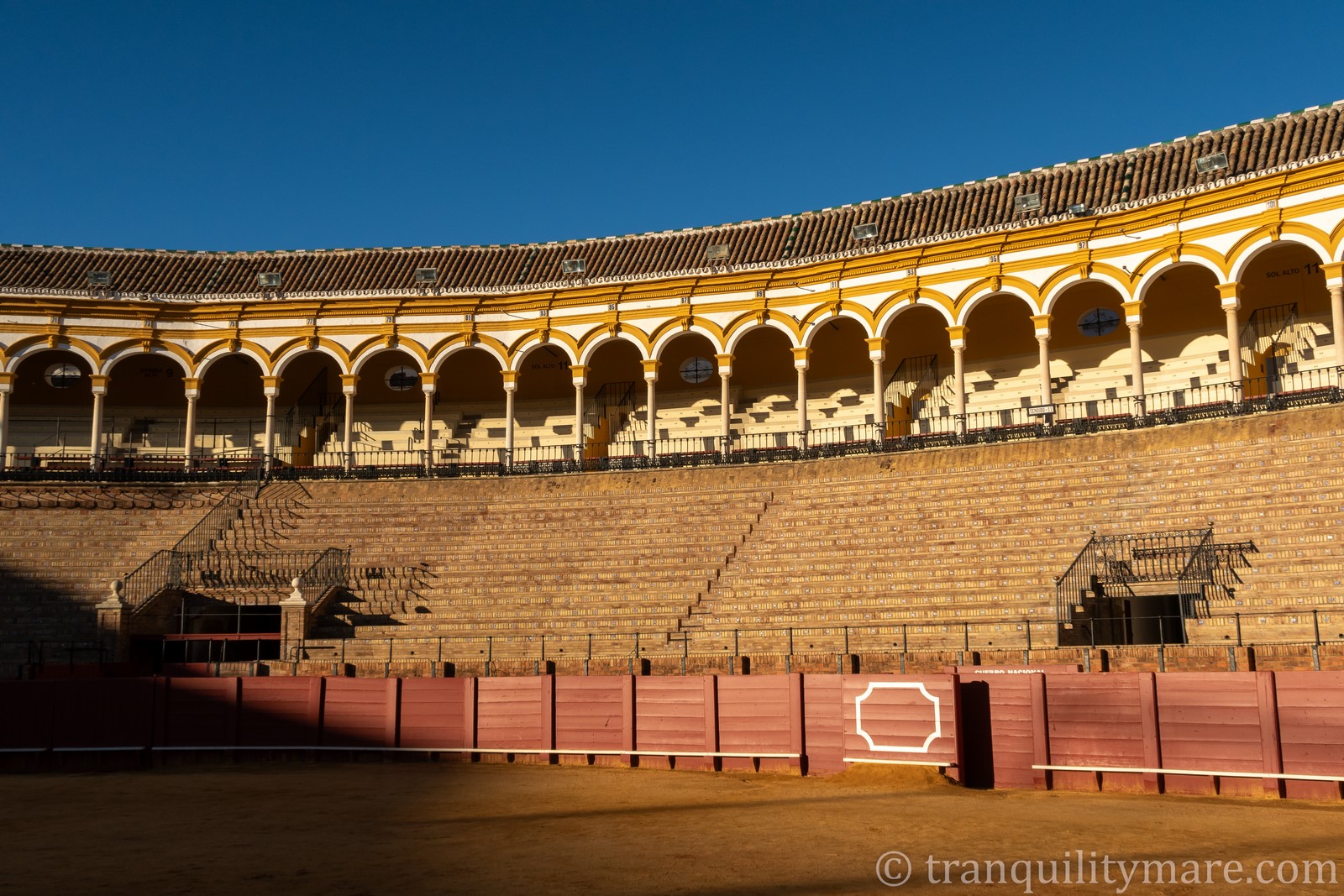
We also visit the bullring, Plaza de Toros de la Maestranza, along with its museum. It’s an interesting experience, but one that ultimately confirms our decision — watching a bullfight live is not something we plan to do.
Final Stretch
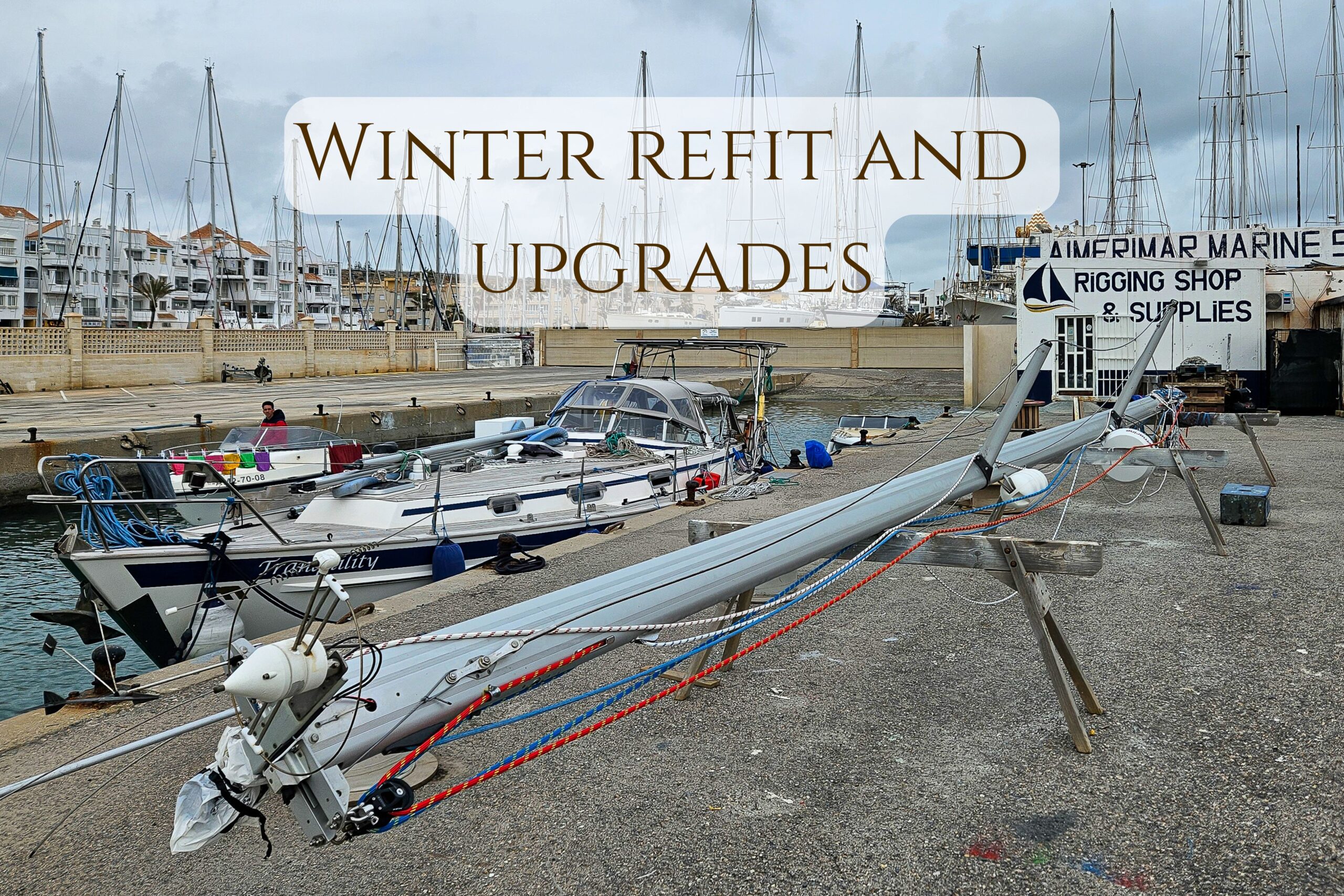
The final leg follows a familiar route — from Cádiz, via Barbate, to Gibraltar. Despite the original plan to reach Almerimar, the marina where we started our journey in 2025, we decide to leave the boat for the winter in La Línea marina, on the Spanish side of Gibraltar.
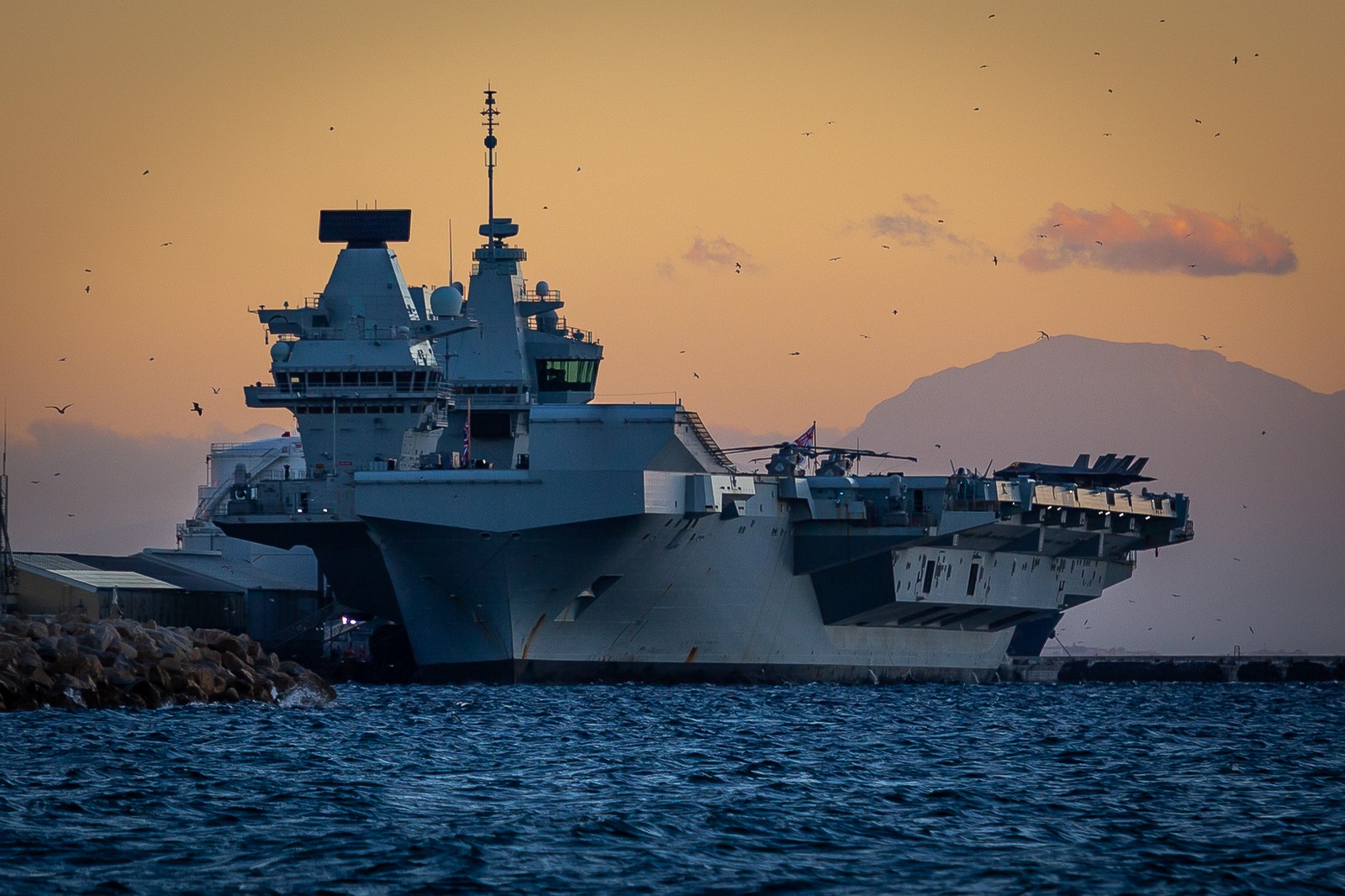
As we arrive, we’re greeted by the sight of… a British aircraft carrier with F-35 jets on deck. Anchoring in that kind of company is not something you see every day.
Sailing Norway to Spain – Summary
The 2025 season, sailing Norway to Spain, was full of adventures right up to the very last day — something the length of this summary probably makes quite clear. What we take away from it is a complete fascination with the north and higher latitudes — places we’re already thinking about returning to.
Many of the locations we mentioned here will be described in more detail in separate, practical guide-style posts. That’s where we’ll share more specifics, recommendations, and useful tips.
Without stretching this any further — we hope this story managed, even for a moment, to take you to green Scotland, where orcas swam alongside our boat and puffins proudly showed off their colorful beaks.

![🌿 São Jorge, Azores
[🇵🇱 Język polski w pierwszym komentarzu👇]
After an intense summer season, we’re finally catching up on our photos — and there are quite a few waiting to be shared. 📸
So, continuing our Azores story, here’s São Jorge — one of the islands of the Central Group, together with Faial and Pico.
Much less touristy and noticeably wilder, São Jorge has a distinctive long, narrow shape, with a mountainous ridge running along the island. We stayed in the marina in Velas, which quickly became our favourite in the Azores. Maybe because the dramatic cliffs rising above it reminded us so much of last season in Norway and Scotland. 🌊
The cliffs were home to Cory’s shearwaters, whose strange, haunting calls gave us an evening concert every night. 🐦
At the foot of the cliffs lie the famous fajãs — small, flat and incredibly fertile areas, formed mainly by landslides and volcanic processes. Many of them are still difficult to reach today, but their fertile soil and sheltered, relatively flat terrain have attracted people for centuries. 🌱
As always, we rented a car and spent our time exploring the island, hiking through the mountains and discovering its wilder corners. 🚗🥾
Here’s a little photographic glimpse of São Jorge. 🌿🌊📷
#saojorge #azores #sailingazores #marinavelas](https://tranquilitymare.com/wp-content/plugins/instagram-feed/img/placeholder.png)
No responses yet