
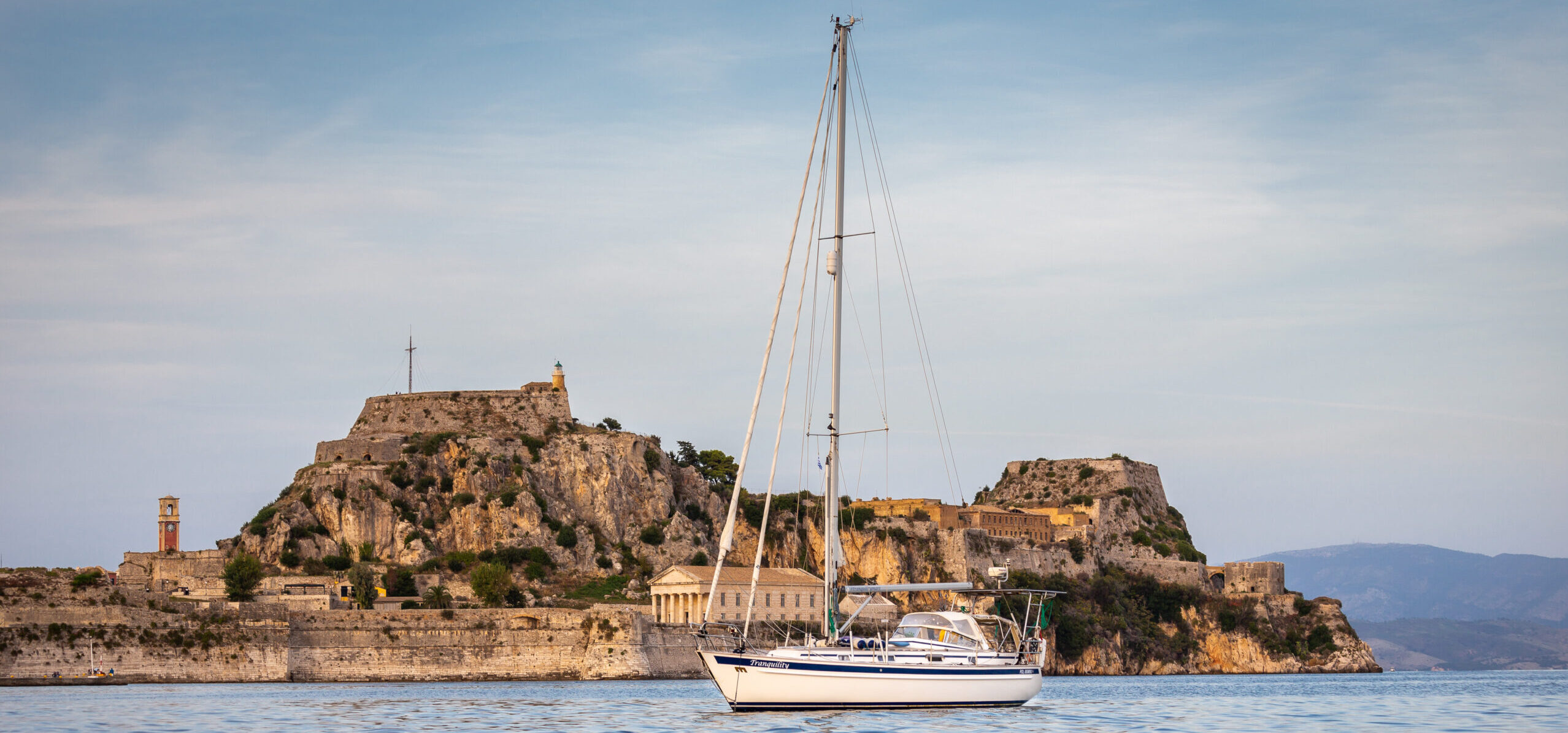
Hi! With a slight delay — because it’s already February 2026 — the time has finally come to sum up the past season sailing Spain to Norway and back. It was the third year we spent aboard our yacht Tranquility, sailing full-time.
What was the 2025 season like?
The 2025 season was exceptional in every way — definitely the best so far. Unlike in previous years, it’s hard to pick out the most beautiful moments or the tougher ones, organize them, and describe them, because we feel that virtually every single day of that year was worth remembering. We fulfilled many of our travel and sailing dreams, reached new cruising grounds, discovered unknown places, and also returned to those we already know and where we feel at home. Of course, there were more challenging moments at sea as well, but that was a small price to pay for everything we experienced thanks to this journey.
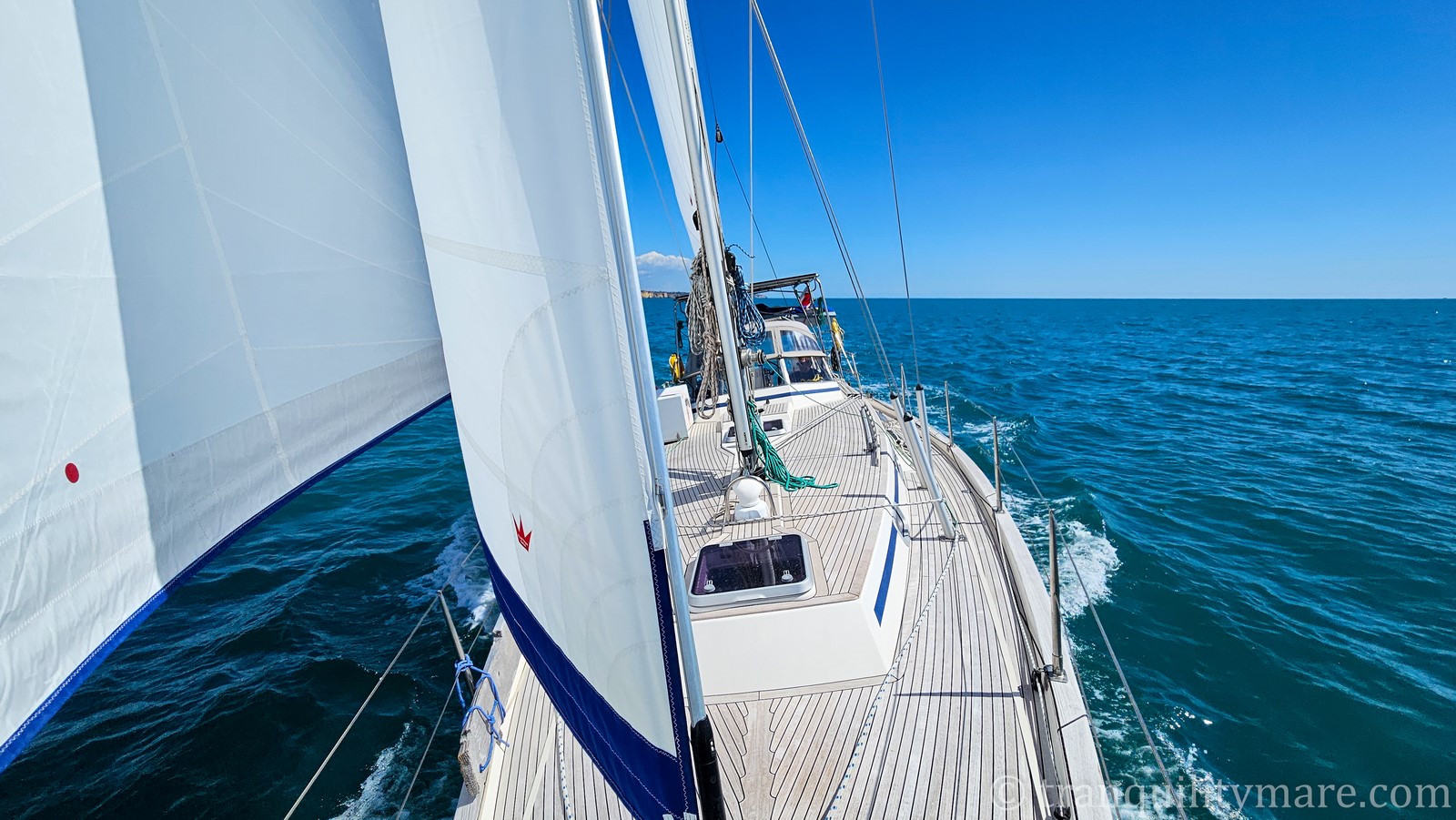
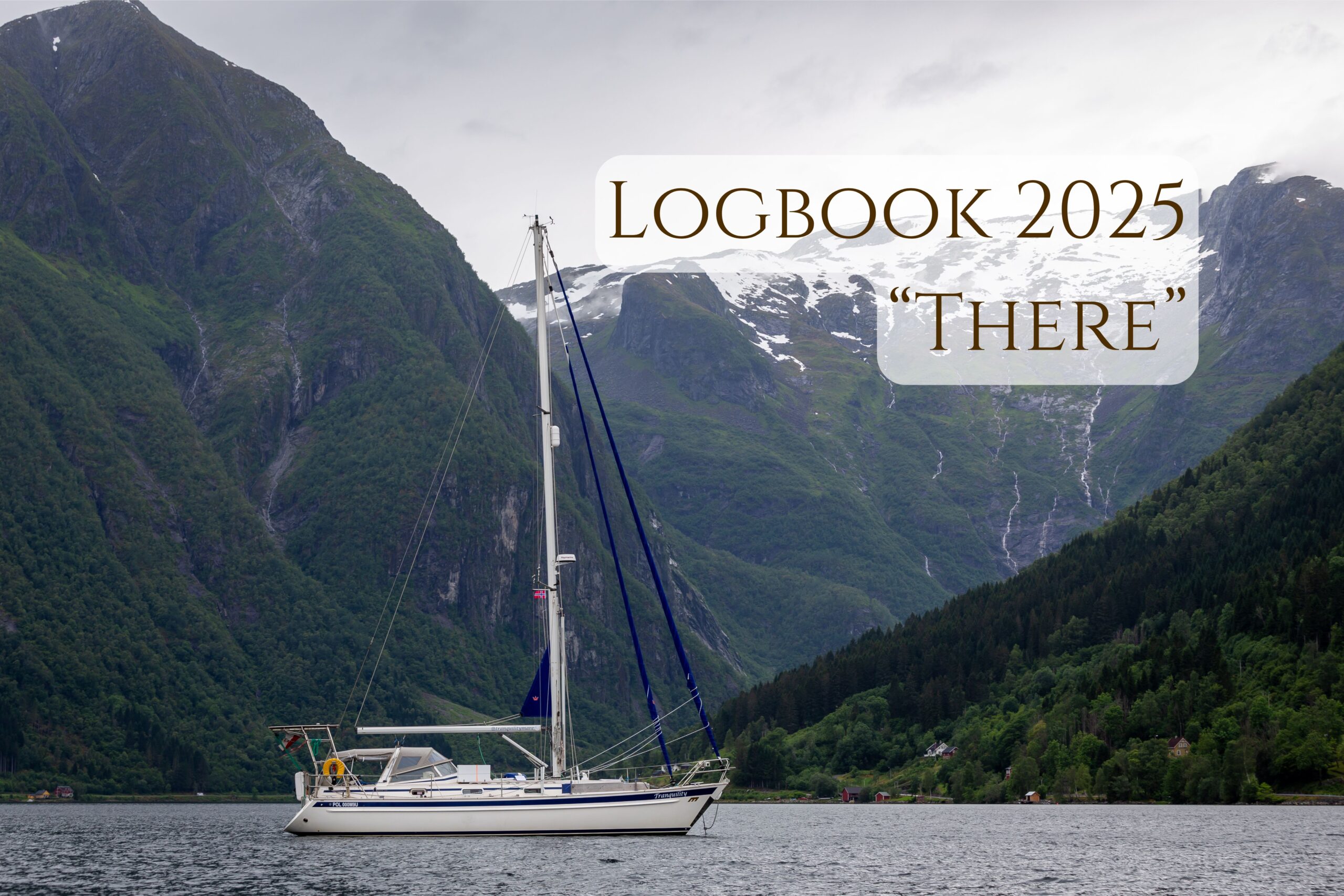
In this summary, we won’t — as we did in similar posts in 2023 and 2024 — list individual places or events. This time, we’ll simply tell the story of our voyage. We invite you to read part one, “There”, where we take you sailing Spain to Norway, the northernmost point of our route.
Summary of Previous Years
For those of you who’d like to revisit our earlier seasons aboard, you can find them here:
Sailing in Europe – Boat Life reflections of 2023
Sailing Mediterranean 2024: Highlights and Lessons from a Year at Sea
What did we plan for 2025?
In 2025, we planned a voyage north. “North” is a broad idea, of course, but we deliberately didn’t tie ourselves to a specific destination. We knew that sailing from southern Spain to colder regions and back would be a long and demanding route, largely dependent on unpredictable weather.
In the most optimistic scenario, we might have reached all the way to the Lofoten Islands in Norway. Still, we tried not to focus on that too much — mainly to avoid disappointment if we didn’t make it.
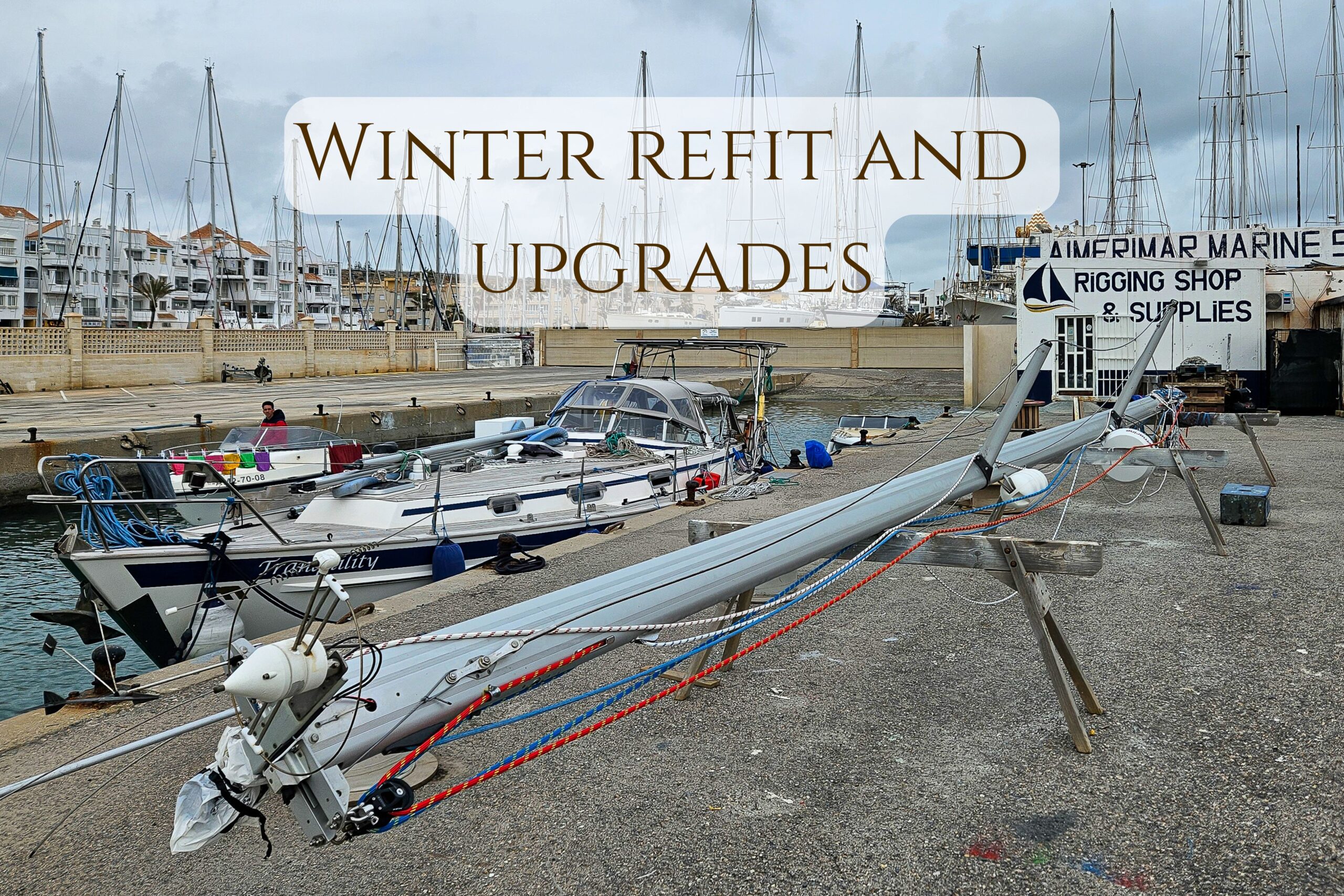
After returning from Poland, where we had spent the winter, we pushed hard to finish the work we’d scheduled in Almerimar so we could be ready to set off as soon as possible.
Gibraltar — So Begins The Adventure
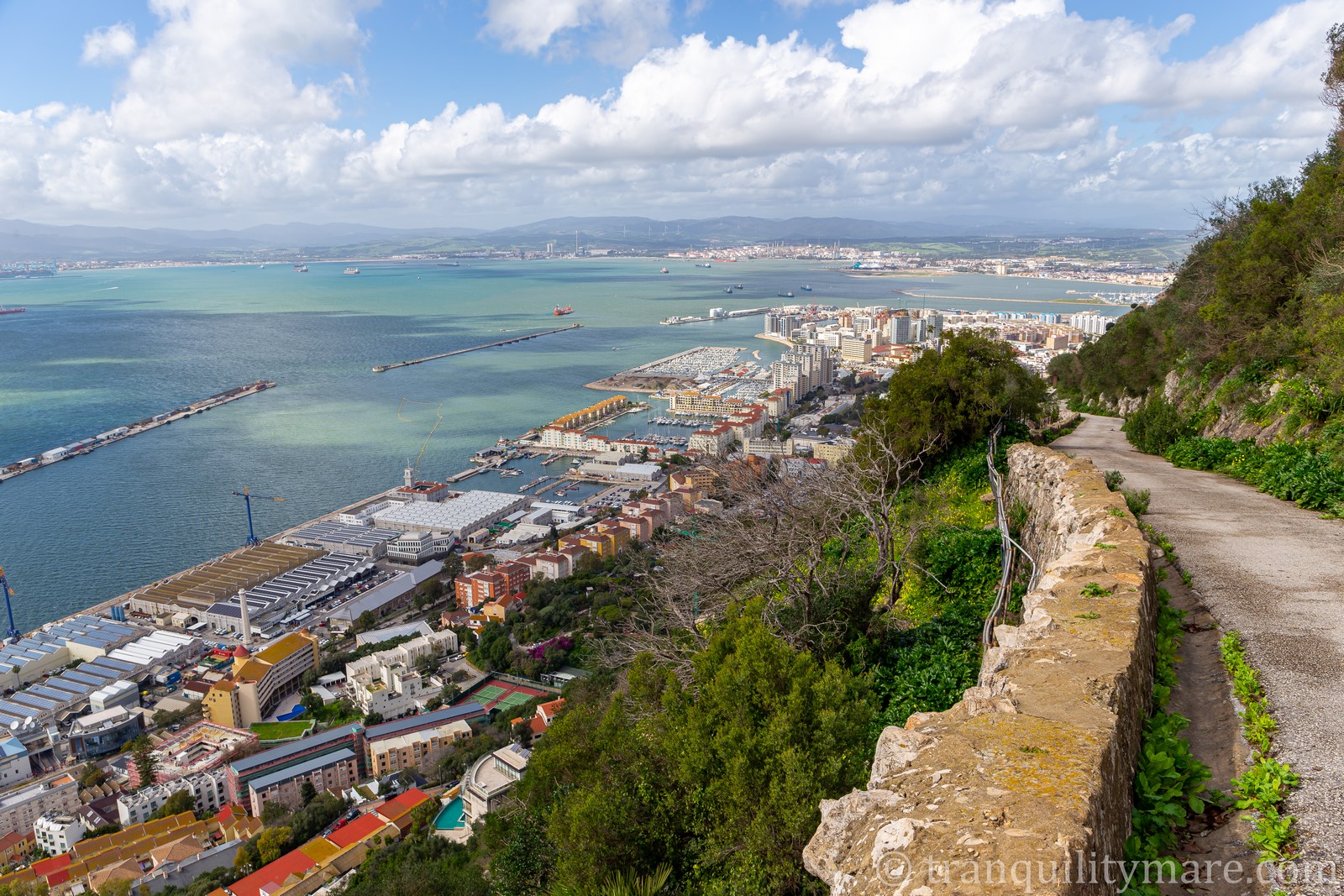
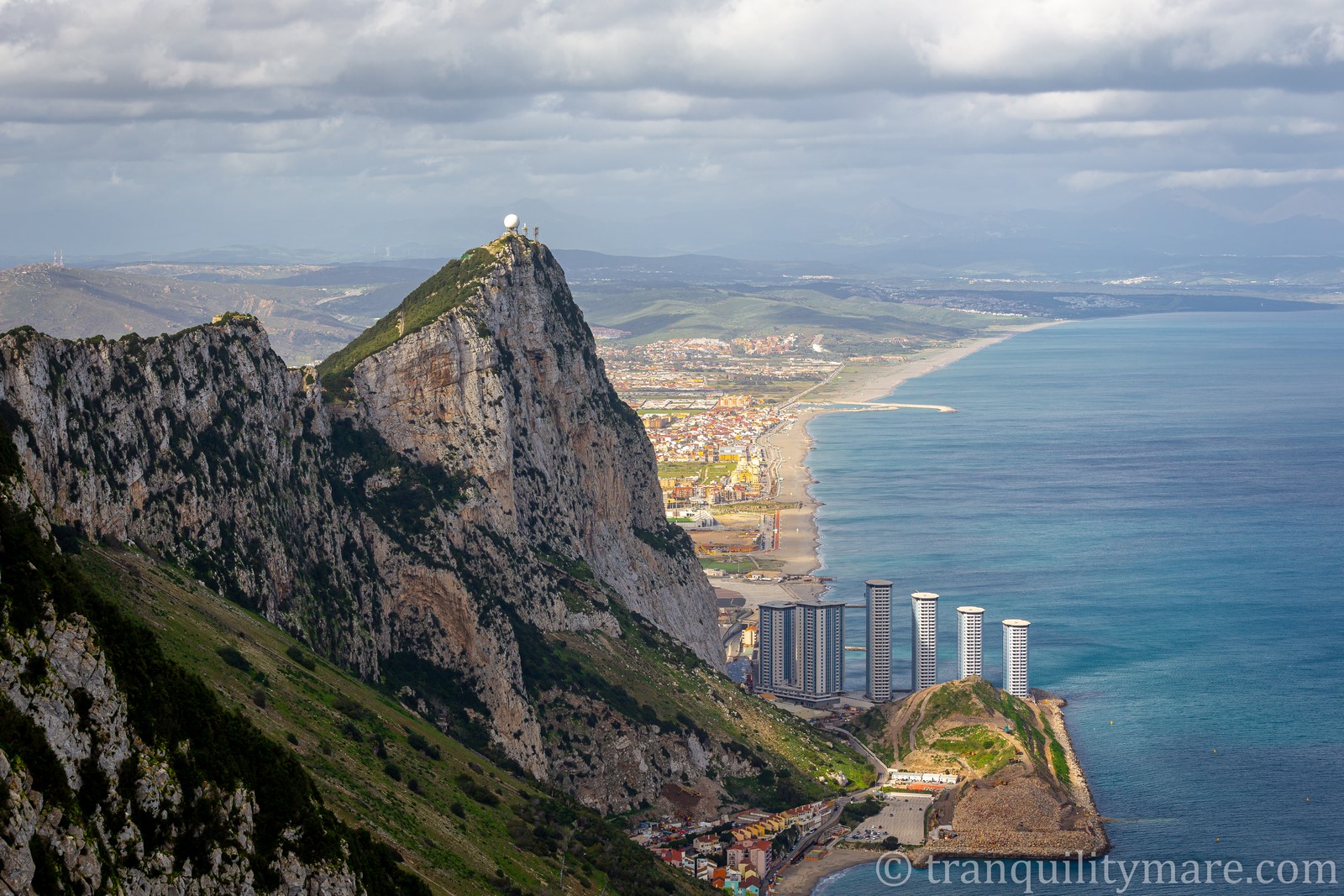
On March 6, we left the Almerimar Marina and, in early-spring’s unstable weather, slowly made our way west and then north. Along the route, we stopped at the usual ports for this passage — Gibraltar and Barbate. This time, though, after many previous visits to Gibraltar, we finally managed to explore it properly. Before, we had always only passed through, leaving the discovery of this place for “next time.”
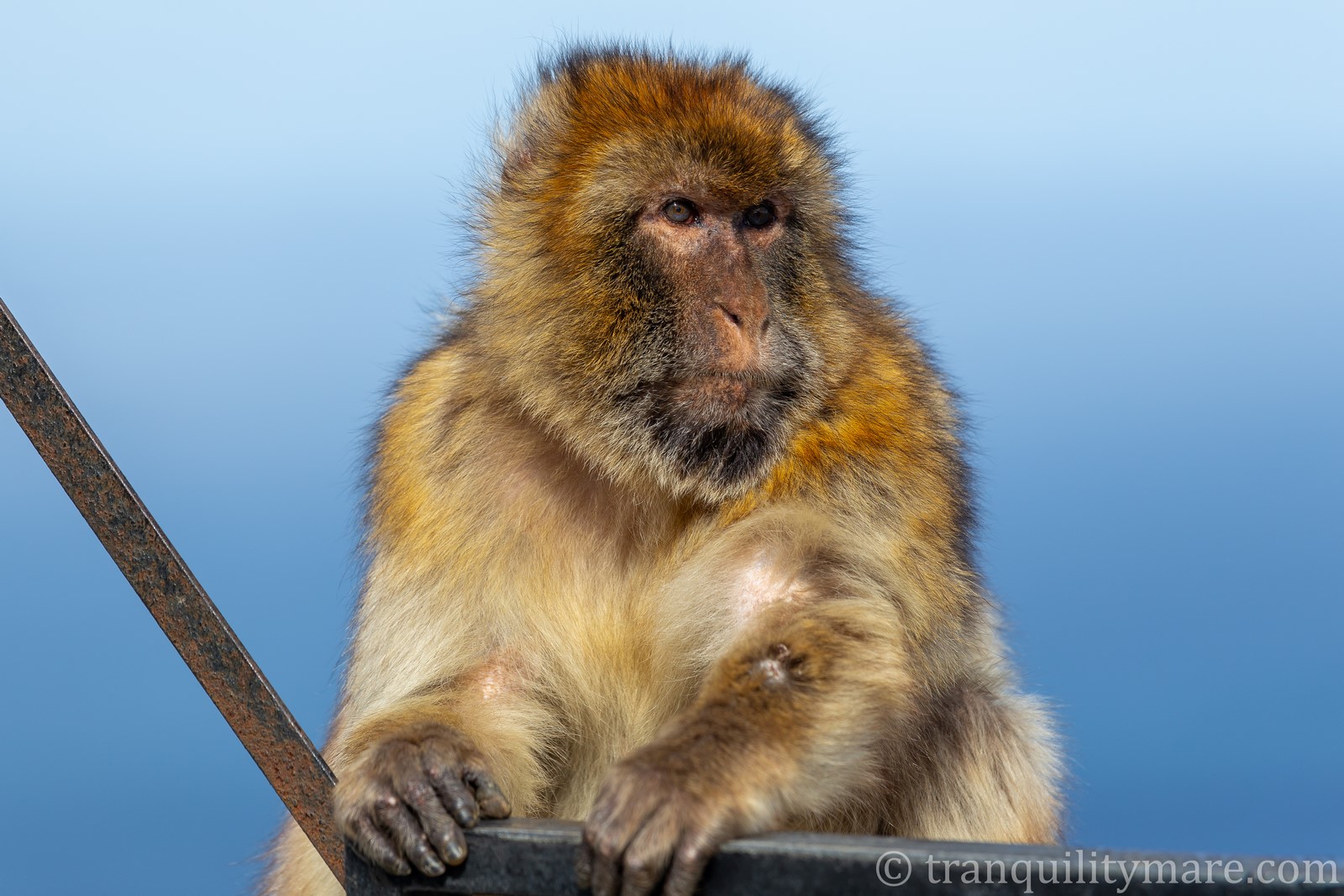
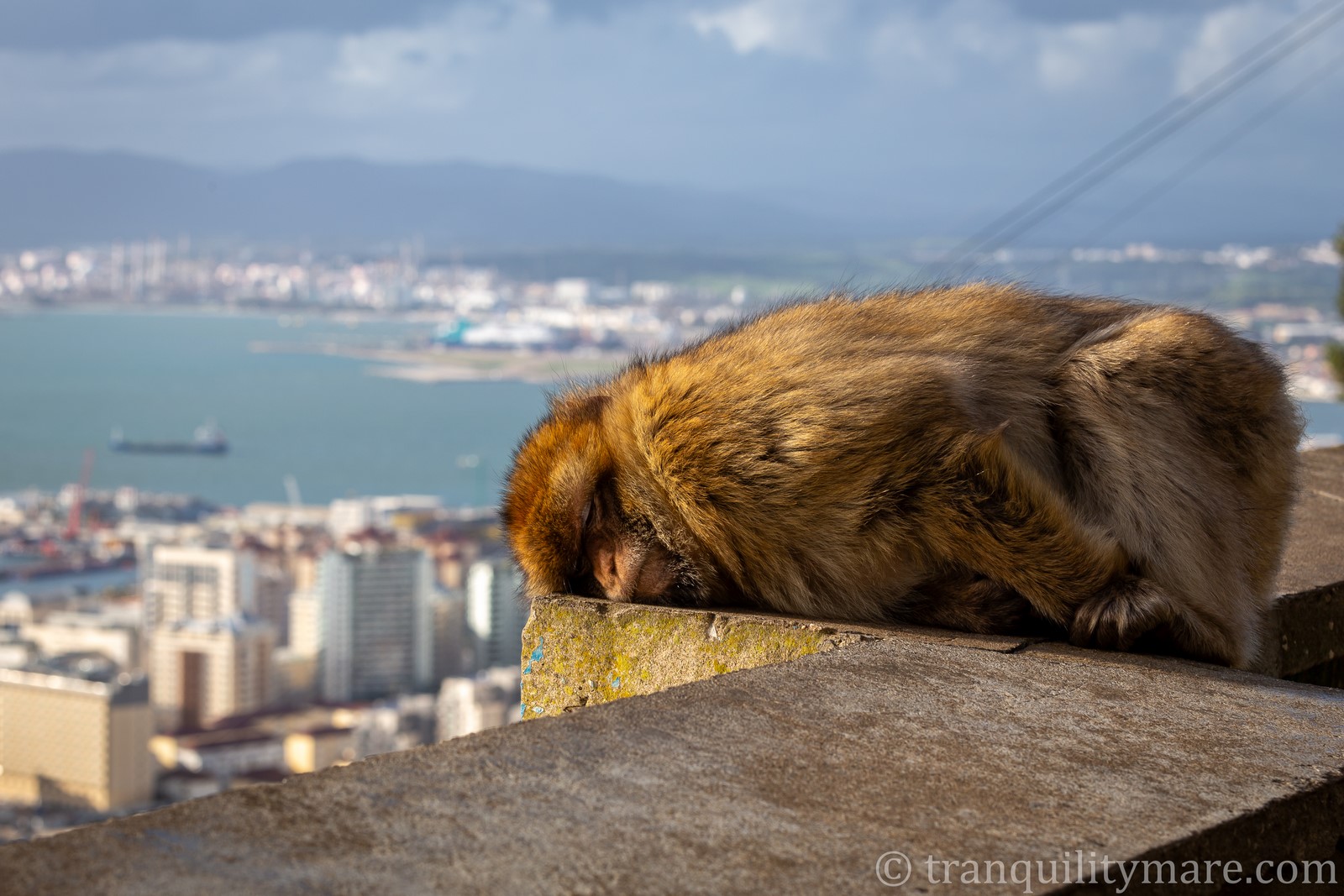
We reached Europa Point, the southernmost tip of Gibraltar, where you can see Africa and the traffic transiting the Strait. We climbed the Rock of Gibraltar, explored the caves and World War II fortifications, and watched the adorable macaques. Gibraltar is the only place in Europe where monkeys can be seen living in the wild! We’ll definitely write a separate post about it and share our recommendations for visiting — whether you arrive by yacht or over land.
Orcas Attacking Yachts
At the beginning of sailing Spain to Norway, an old but still very real issue in this region returned — orcas interacting with yachts. As we’ve mentioned many times on the blog and on our social media, avoiding these animals means slower and far less comfortable sailing: in shallower water and much closer to shore than we would normally plan. We also avoided night passages.
Our route north and back required us to cross the risk zone twice. Did we manage to get through safely this time as well? We tell that story in the most popular post on our blog — Sailing Through Orca Territory: How to Avoid Killer Whale Attack? — and that’s where we invite you for the details.
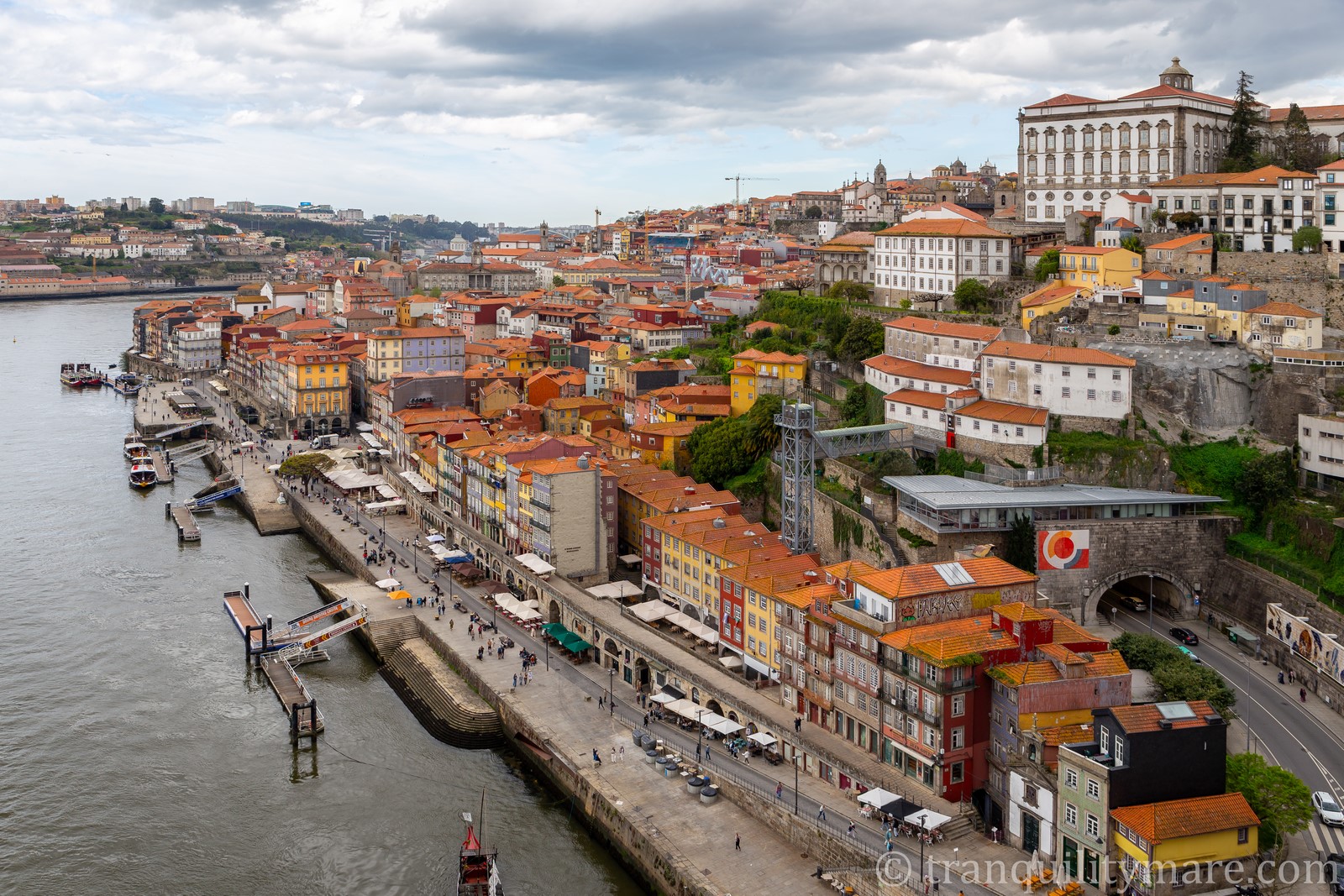
The rest of the passage north was marked by a battle with northerly winds, which dominate along the coasts of Spain and Portugal in spring. Good weather windows were hard to find, but by the end of March we had reached Cascais, and in early April — our beloved Porto. There, “land life” and two trips to Poland kept us longer than planned, and we ended up spending almost a month in the Marina Leixões. And since we have a real love for Porto (as you probably already know if you follow us), this enforced stop turned out to be quite a pleasant one.
The Bay of Biscay
An Unexpected Turn Back
When we finally set off again, our next stop — as usual on this route — was A Coruña and the nearby anchorages, where we waited for a weather window to cross the Biscay Bay. The first one appeared quite quickly. However, once we were out at sea, it became clear that conditions were deteriorating far more than even the most pessimistic forecasts had predicted. We battled headwinds and building seas for a while, but our low ground speed and the perspective of two more days in such — and likely worse — conditions led us to turn back and wait for better weather. Later conversations with crews who had decided to continue confirmed that our decision had been the right one.
Second Attempt
For several days we waited for improved forecasts at an anchorage near Ferrol. When they finally did improve, we set off for another attempt of crossing the Biscay Bay. As we were leaving the anchorage, a friendly dolphin stayed with us, clearly fascinated by the raised anchor. For a good dozen minutes he circled the yacht, swam under the hull, and… watched the chain being pulled on board. The Bay of Biscay wasn’t easy this time either, but it was definitely better than before . It seems this stretch of water always finds a way to put us to the test. We’ve actually written before about why the Biscay Bay can be so challenging, you can find it here.
Breakdown in the Bay
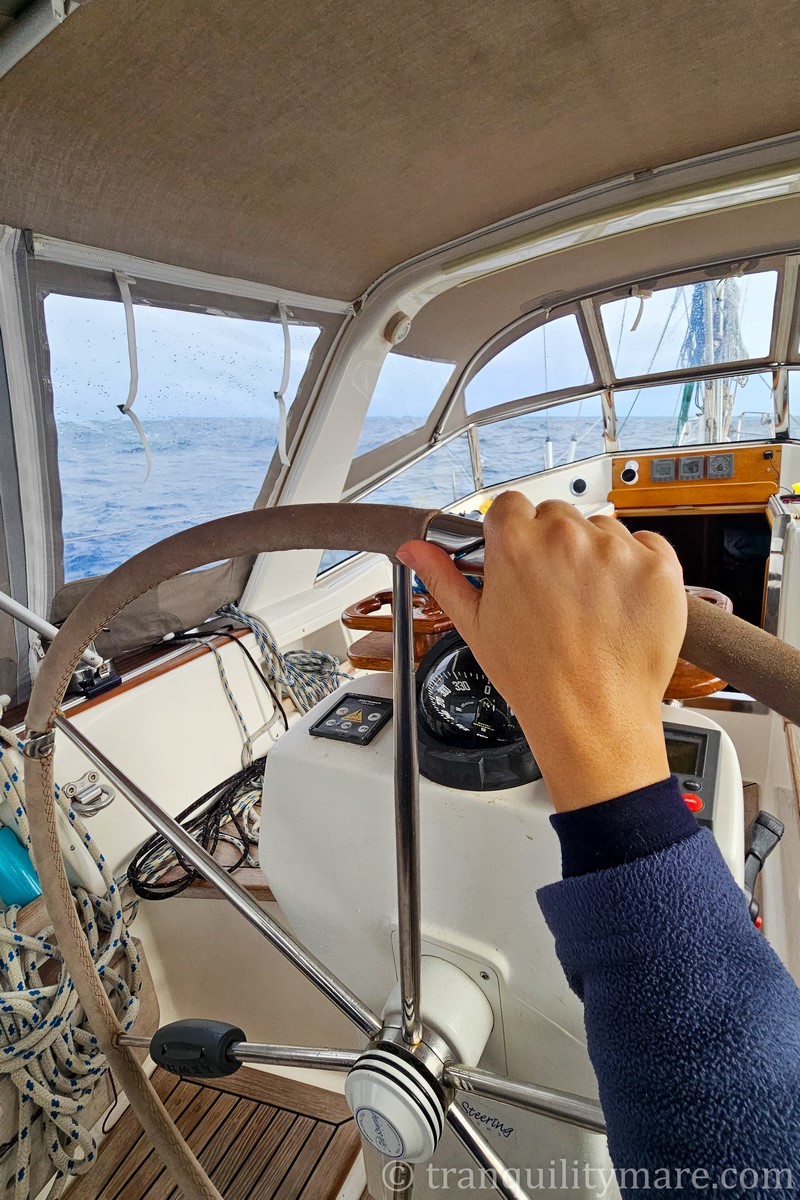
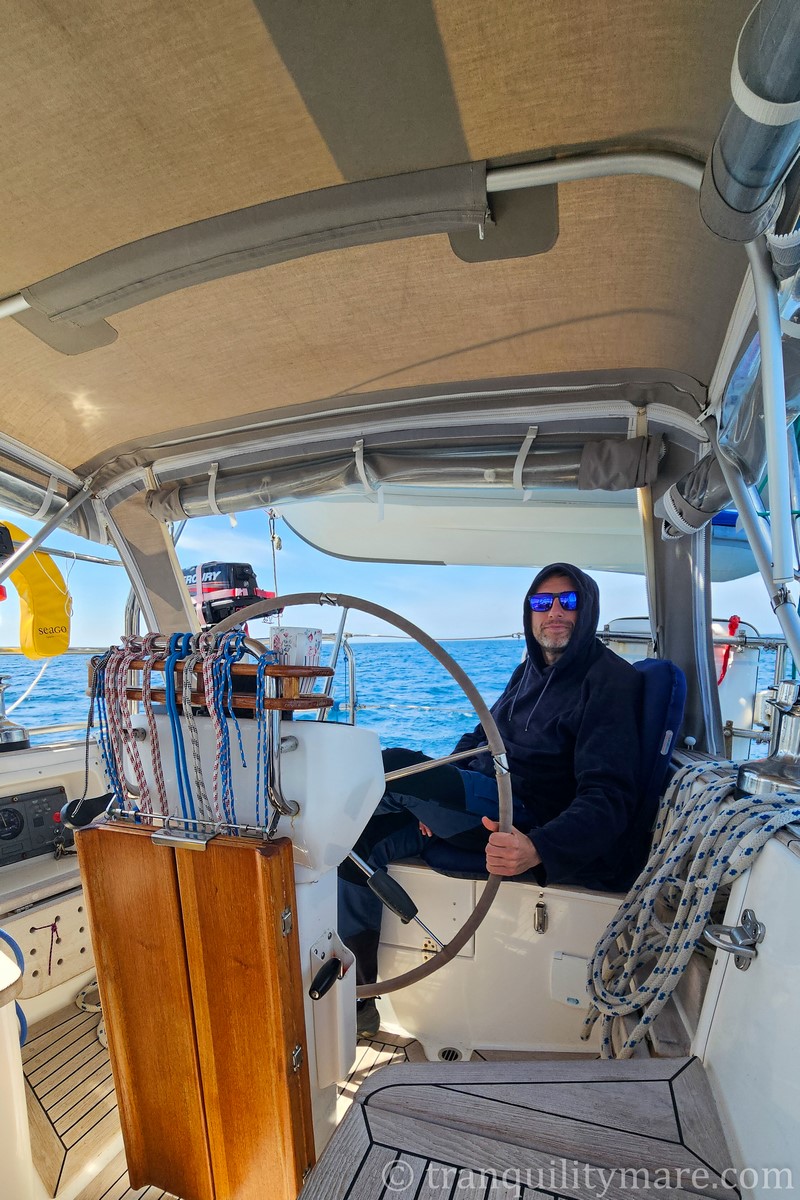
On the second day, our autopilot failed, which significantly increased the workload on board — one person had to steer manually at all times. We quickly adjusted our watch system and daily routine to match the new situation, and though more tired, we continued the passage.
Assisting Another Yacht
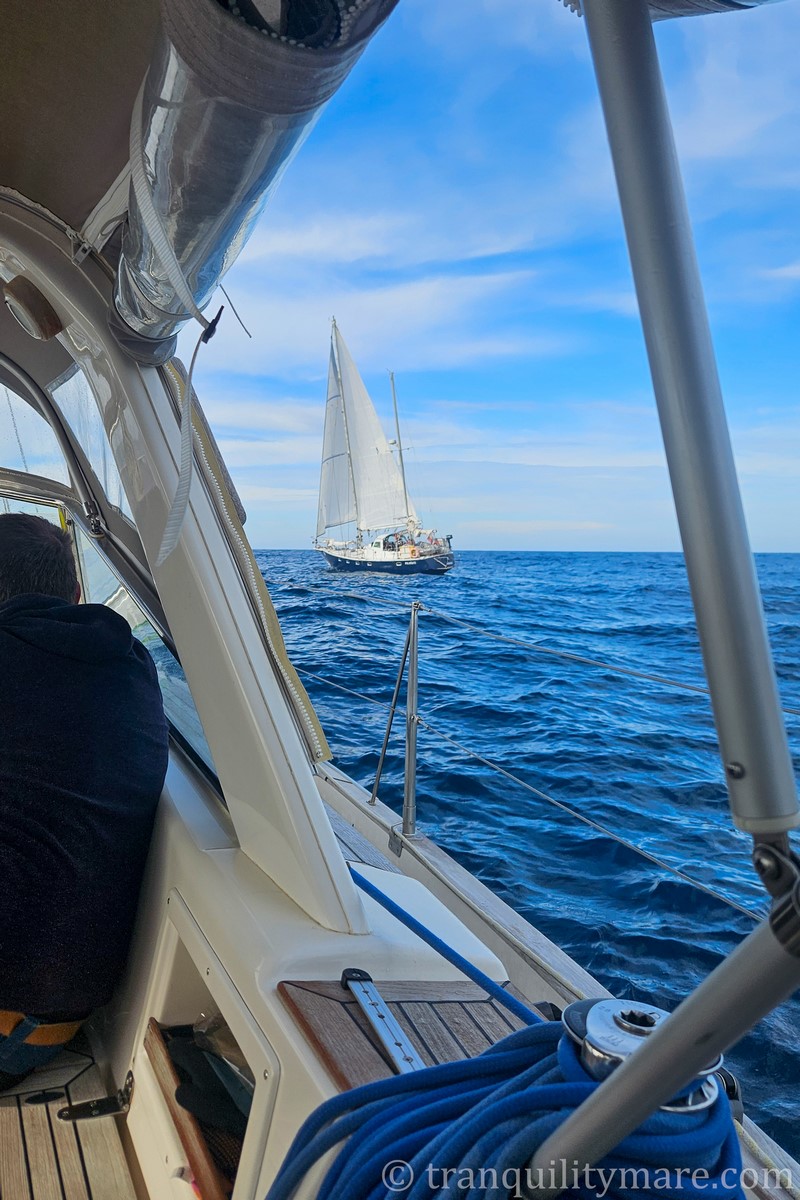
Just before sunset, one more surprise awaited us. We were asked to assist another Polish yacht with an engine problem. We left our course to help troubleshoot the issue. Thanks to our Starlink, the crew was able to connect with a mechanic via video and resolve the failure. Before nightfall, we were back on our route, and the following night and day passed uneventfully. The next afternoon, after 360 miles across the Bay of Biscay, we dropped anchor near Brest.
Brest, France
Les Ducs d’Albe
As we approached the anchorage, we were intrigued by enormous concrete blocks standing in the bay. A bit of online research revealed that the Brest area had been heavily expanded by the Germans during World War II as a base for their fleet. It turned out we were passing the very spot where the battleship Bismarck, one of the largest warships of its era, had been intended to moor.
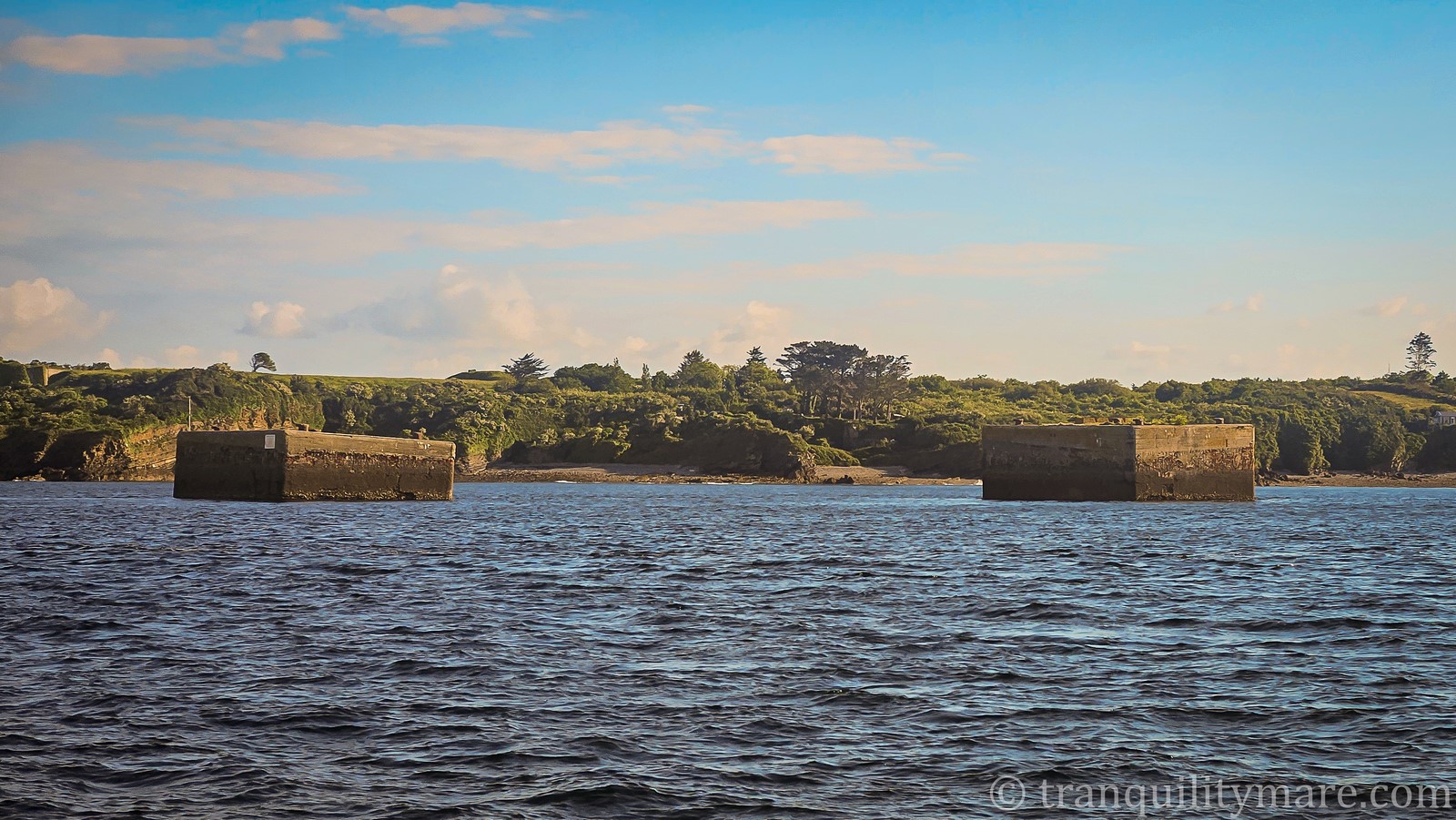
The construction of those massive mooring structures reportedly raised Allied suspicions. Spies concluded that such infrastructure suggested a major vessel was expected in Brest. Allied patrols along the French coast intensified, ultimately leading to the tracking and sinking of Bismarck while she was sailing toward Brest. She never docked beside those concrete blocks. The aircraft crew that first spotted her was later reassigned to the North Sea to hunt another German warship, Tirpitz. We would cross paths with their story once again later in the season.
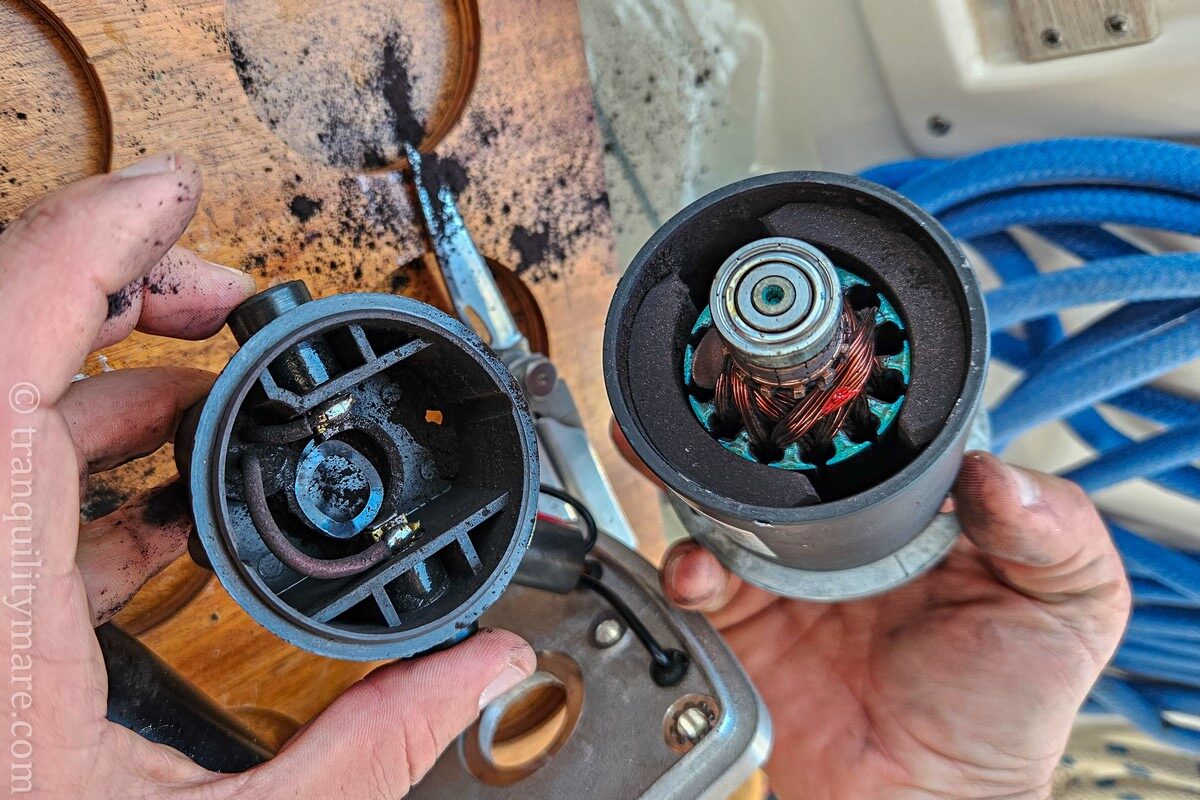
After a short rest at anchor, we moved to Marina du Moulin Blanc, located a bit further from the city center than the Château marina. However, this was where we found better access to technical stores needed to fix our autopilot. Once we dismantled its drive arm, the cause of failure quickly became clear — completely worn-out brushes in the electric motor.
Autopilot Fix
Unfortunately, the May holiday period in France meant nearly two weeks of slowdown, so ordering parts wasn’t an option. The situation was saved by a visit to a power-tool shop and a kind Frenchman who custom-shaped replacement brushes for us from a Bosch drill set. Problem solved.
Exploring Brest
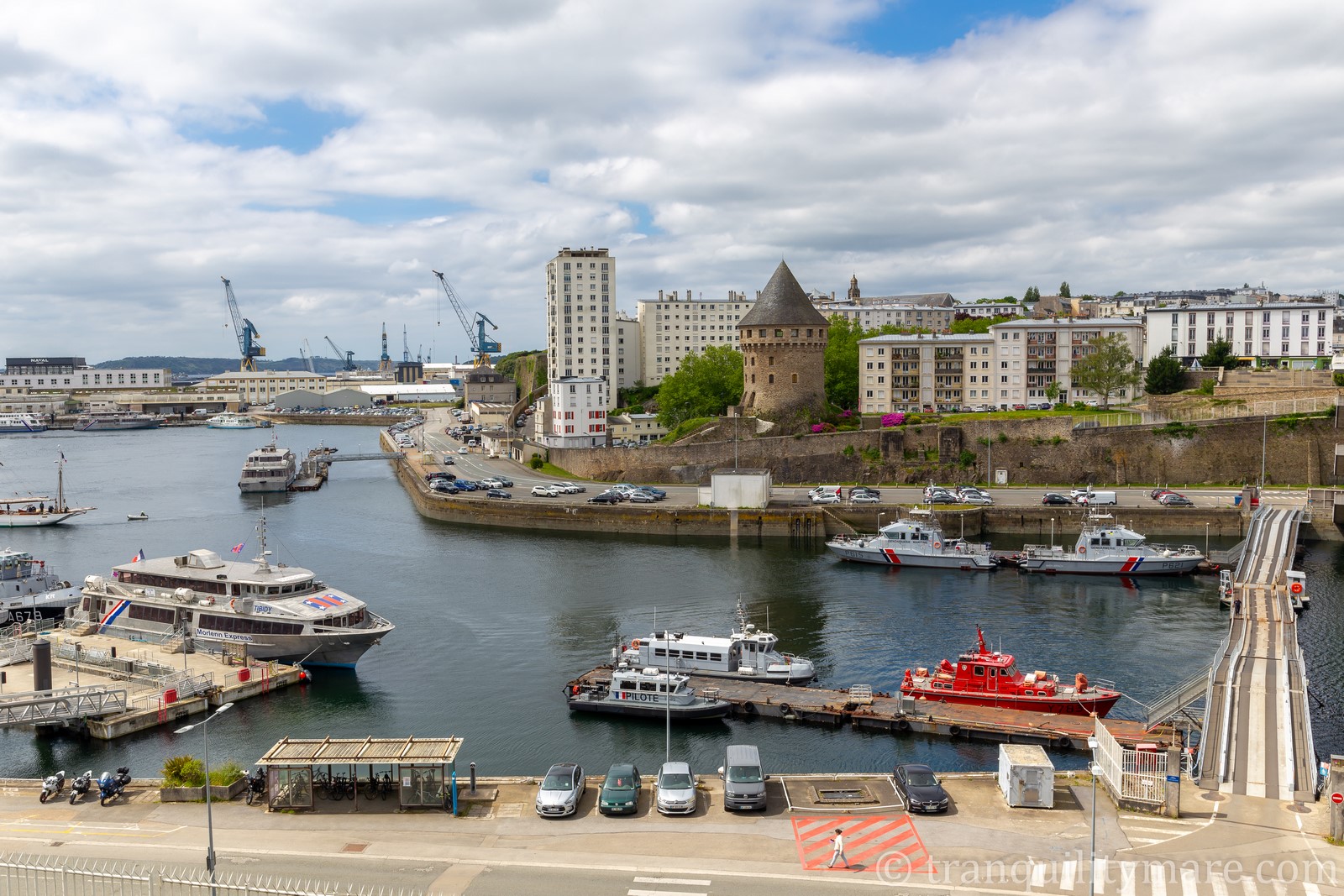
Before continuing, we explored Brest — one of the main training bases for French Olympic sailors and a frequent landing port for crews competing for the Jules Verne Trophy, the award for the fastest circumnavigation of the globe. It’s immediately obvious how strong the sailing traditions are here — the water is constantly busy, mostly with training activity.
While in Brest, we of course visited the Musée National de la Marine and admired the vast Base Navale de Brest, one of France’s most important naval installations — a huge port, shipyard, and logistics complex belonging to the French Navy.
Île d’Ouessant
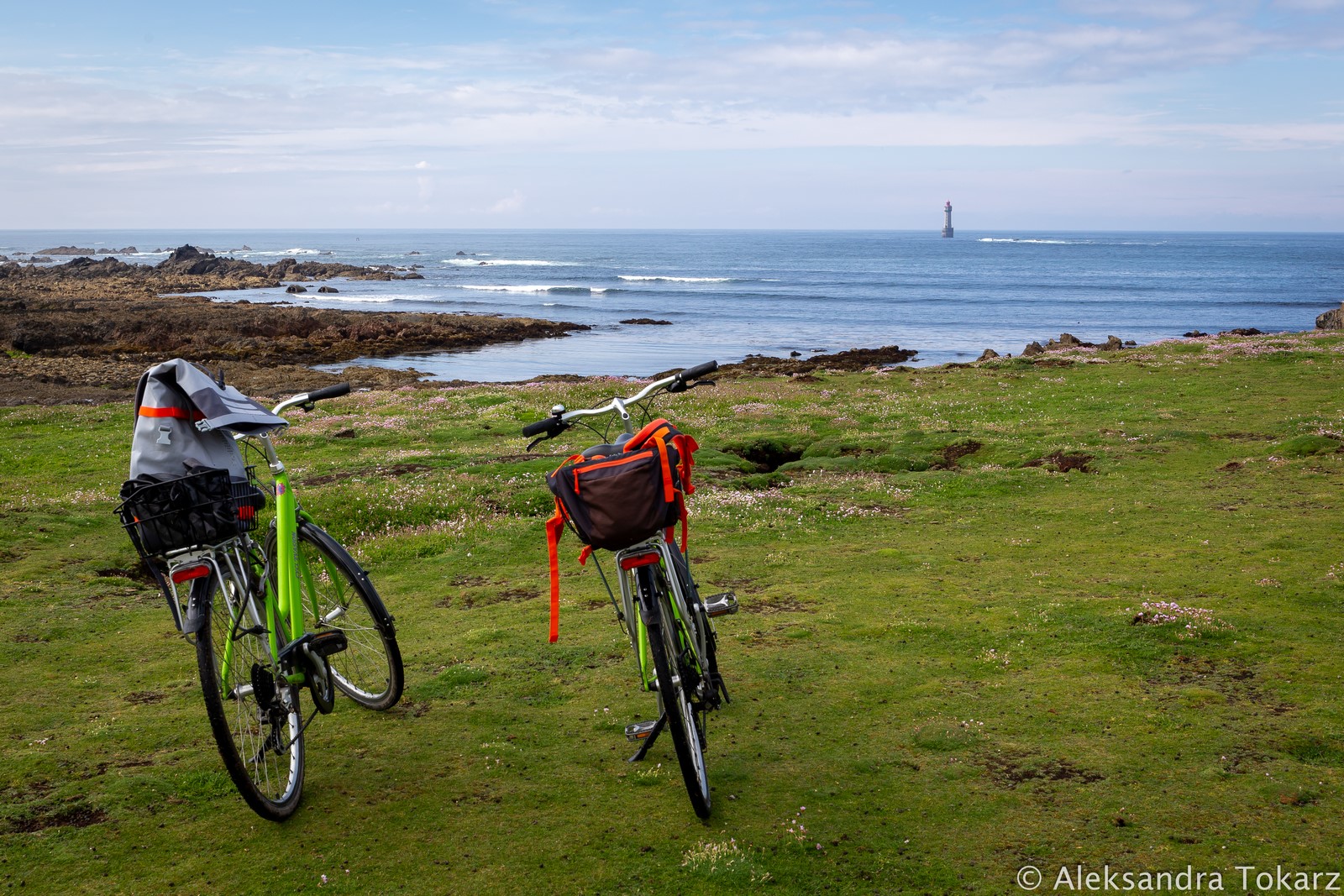
Persistent northerly winds still gave us little hope for a quick jump further north. Since we’d had enough of city life, we decided to head west and visit the less-frequented island of Île d’Ouessant off the coast of Brittany. The route led us across strong currents sweeping around the archipelago. We passed the famous Le Jument Lighthouse, then dropped anchor near the peaceful village of Lampaul. The island completely charmed us — so much so that we dedicated a separate blog post to it.
Milford Haven, Wales
Watching the forecasts, we still didn’t know where our next stop would be. The minimum plan was a hop to the Isles of Scilly off Cornwall. The maximum was a long passage all the way to the Isle of Man. In the end, we landed somewhere in between — Milford Haven in Wales.
To say that neither the town nor the bay is charming would be an understatement. A huge gas terminal, transfer installations, tanker traffic, and constant industrial noise make it far from a pleasure stop. That said, the bay, marina, and anchorages provide one of the few truly good shelters along the Welsh coast.
For the next week, we tried to push slowly north. Besides the weather, the main challenge was currents — timing them correctly often felt like solving a puzzle. Sometimes we split a single day into two shorter passages because fighting the current simply wasn’t possible. If conditions allow, we strongly recommend doing this stretch in one go and stopping only on the Isle of Man. The Welsh coast isn’t particularly rewarding for sailors, and breaking it into shorter legs can create plenty of navigational complications.
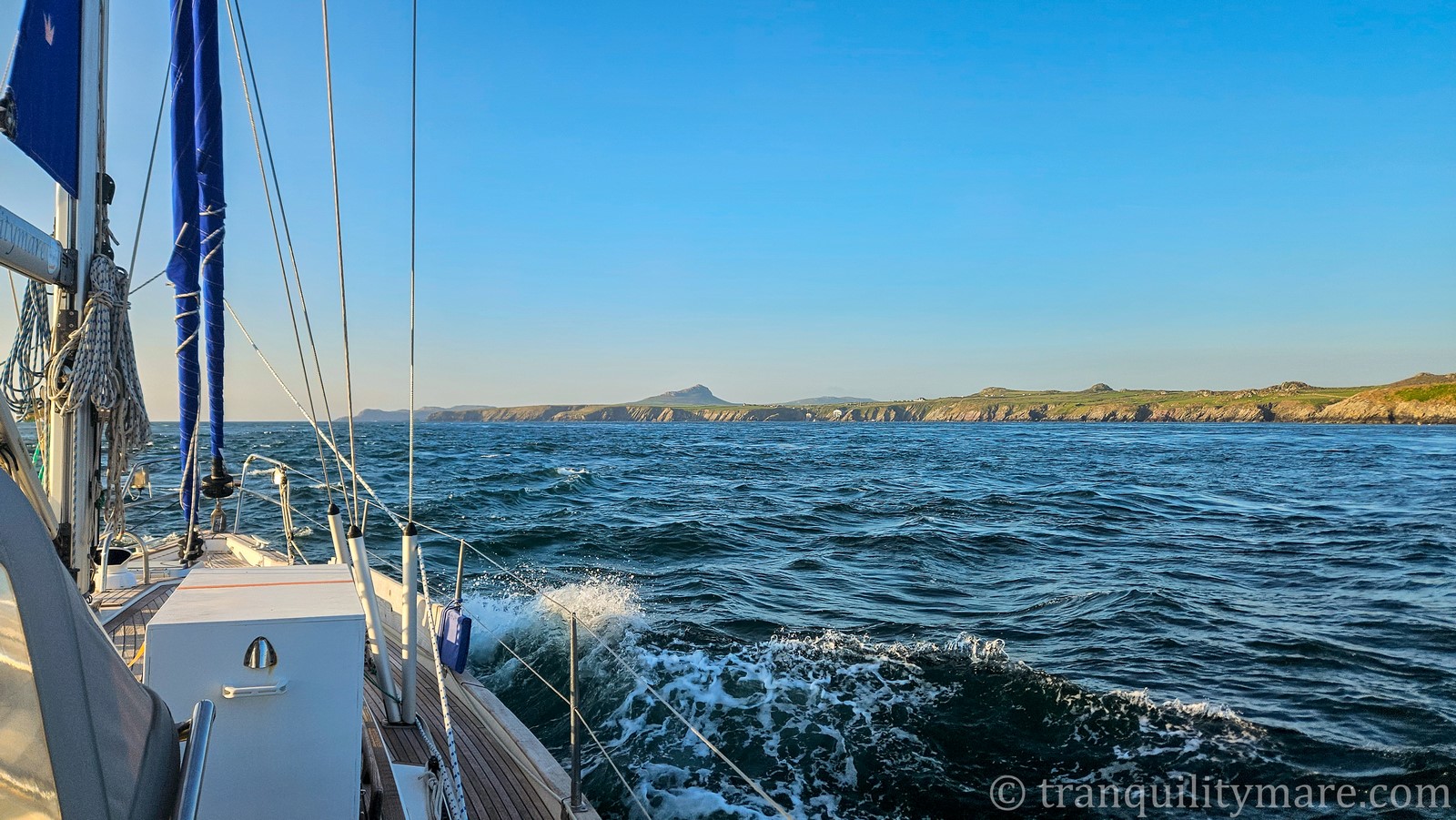
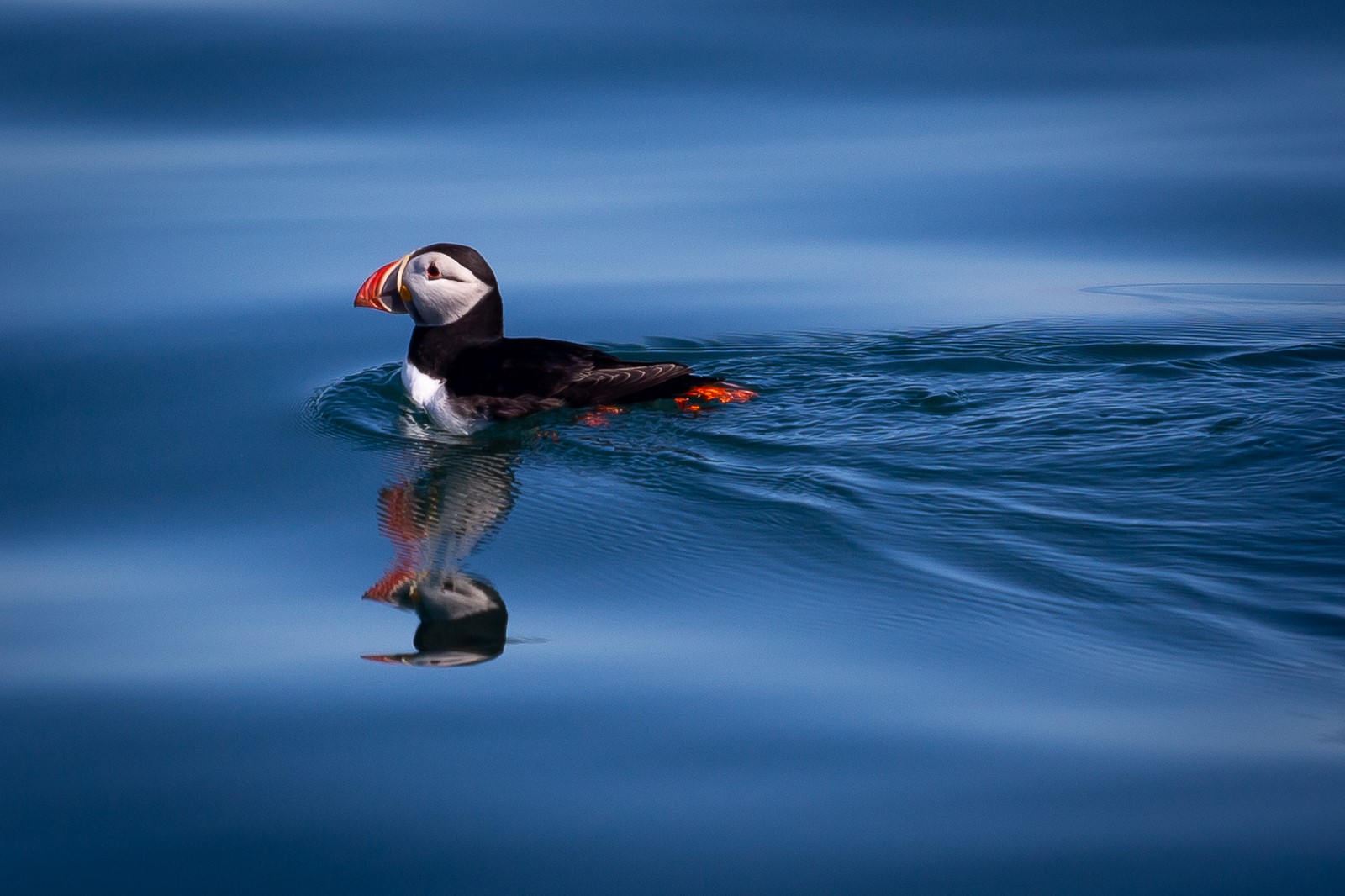
Fortunately, this demanding section brought us great joy thanks to new companions at sea — the first puffins we began spotting around the boat.
The Isle of Man
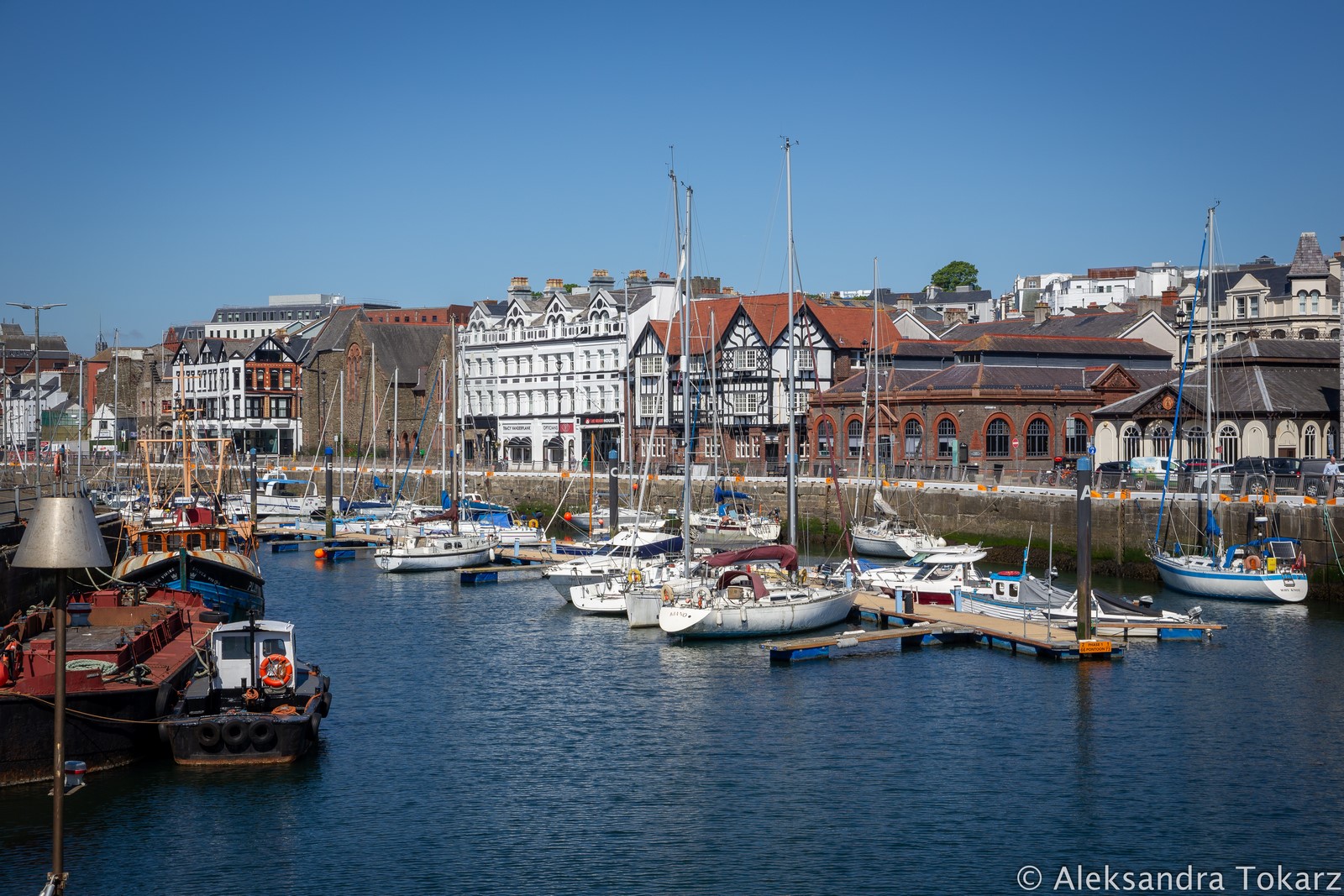
After a week of uneven battle with headwinds and currents, we finally reached the Isle of Man. We anchored off Douglas, since entry to the marina was only possible at around high tide. Because of the tides, a special flap gate there opens just twice a day at scheduled times. We spent three days on the island exploring it, and you can find the full story of our stay — along with sailing information — here.
Scotland
Destination: Scotland. With a storm approaching, we sail 40 nautical miles toward Loch Ryan on the west coast in search of a safe place to wait it out. We spend a few days there — this perfectly sheltered bay, well protected from the swell, offers a calm and secure anchorage.
Arran
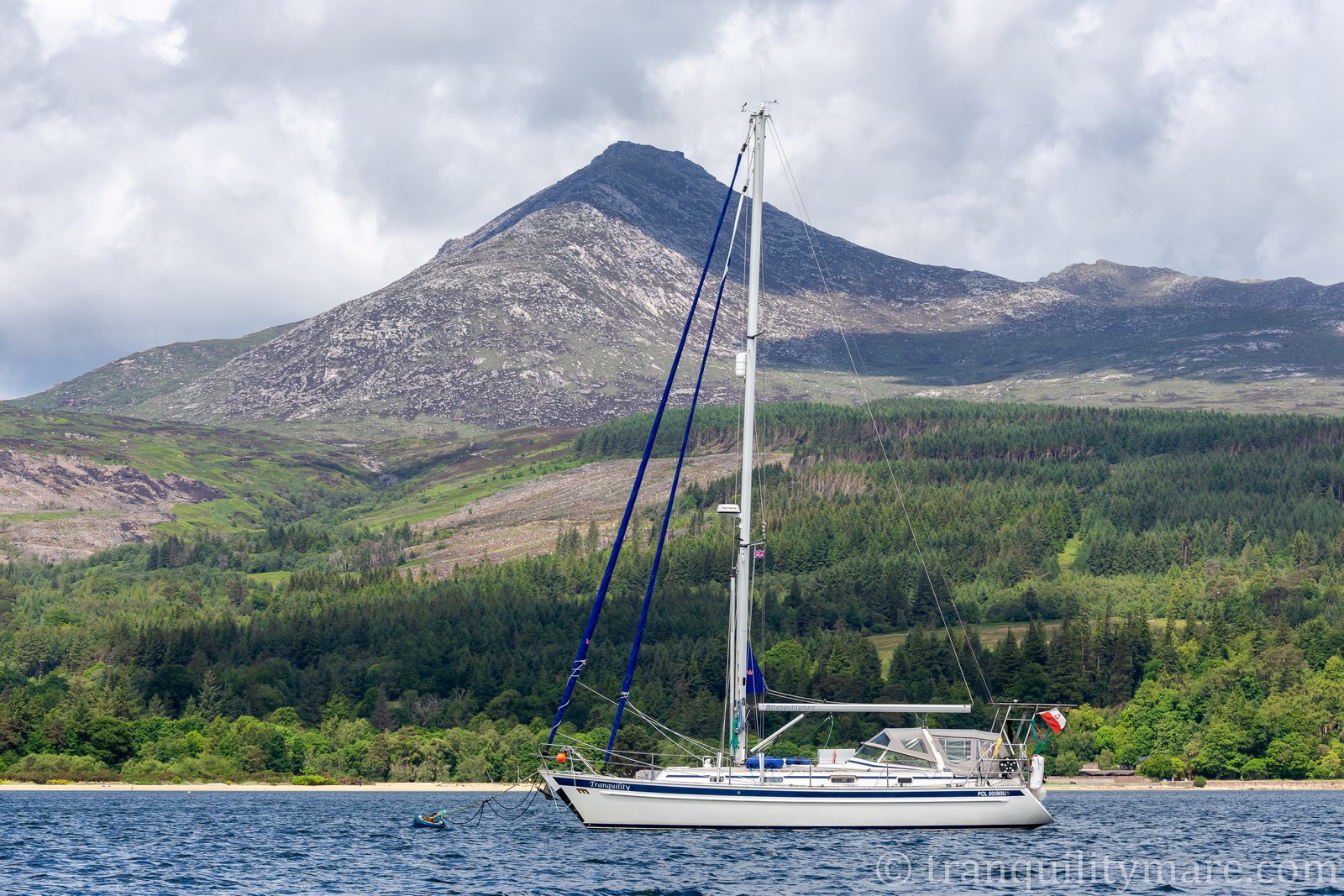
When the storm finally passes, we set course for our first Scottish island — Arran. We pick up a free mooring buoy near the main village, as the island doesn’t have a marina for yachts. From the very first moments, the landscapes leave us in awe — not yet realizing that the deeper we venture into Scotland, the more beautiful everything around us will become.
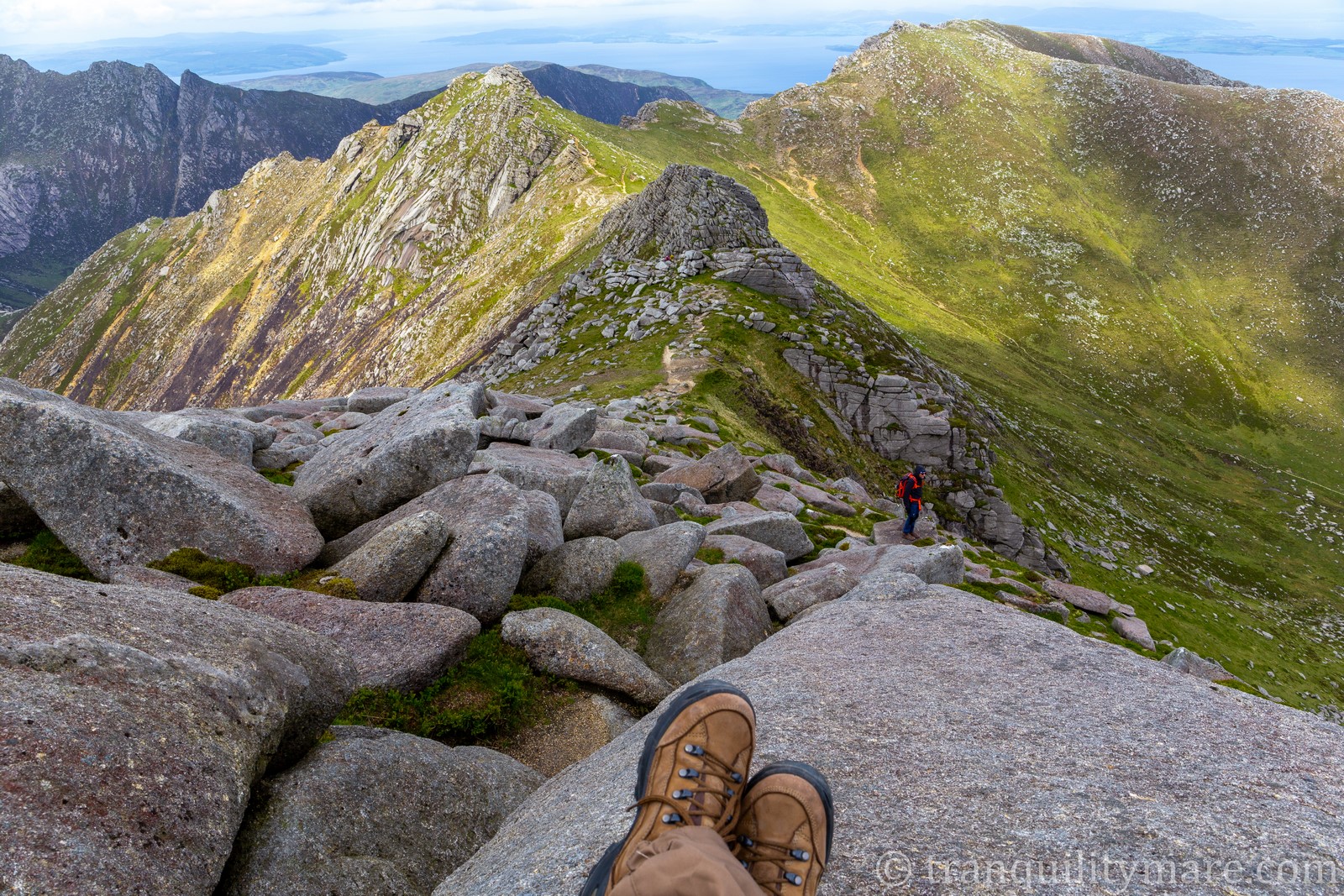
Arran is often called “Scotland in miniature” because it has everything that makes this country so special — dramatic mountains, rugged cliffs, green valleys, sheep, the sea, and peaceful silence. We climb the island’s highest peak, Goatfell, wander through the valleys, and simply soak in the island’s unique atmosphere.
Crinan Canal
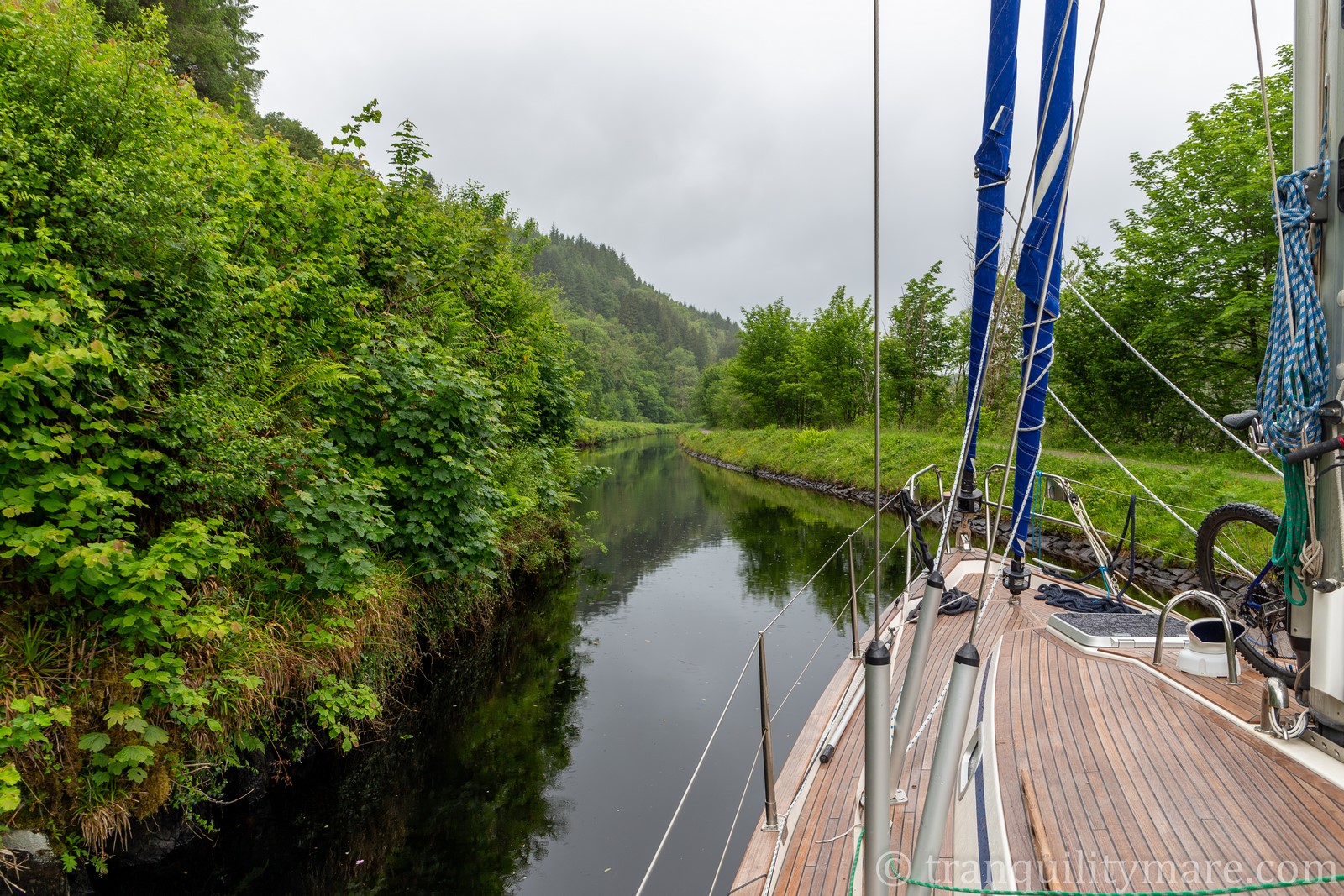
From Arran, we head straight for the entrance of the first of two canals we plan to navigate this season. The Crinan Canal is known as the most beautiful shortcut in the United Kingdom — it lets sailors avoid the challenging waters around the Kintyre Peninsula, while being an attraction in its own.
We almost had to skip it altogether. Due to drought in Scotland, the maximum permitted draft was temporarily reduced from 2.2 to 2.0 metres — and we were close to the limit.
You can read all about our Crinan Canal adventure in a separate post here. There, we share detailed sailing information, practical tips, and a few fascinating local insights. As it turns out, this is one of the most historically rich regions of Scotland. And yes, we also answer the question that has probably just crossed every sailor’s mind: was the 2.0 m draft limit enough for our yacht… or not?
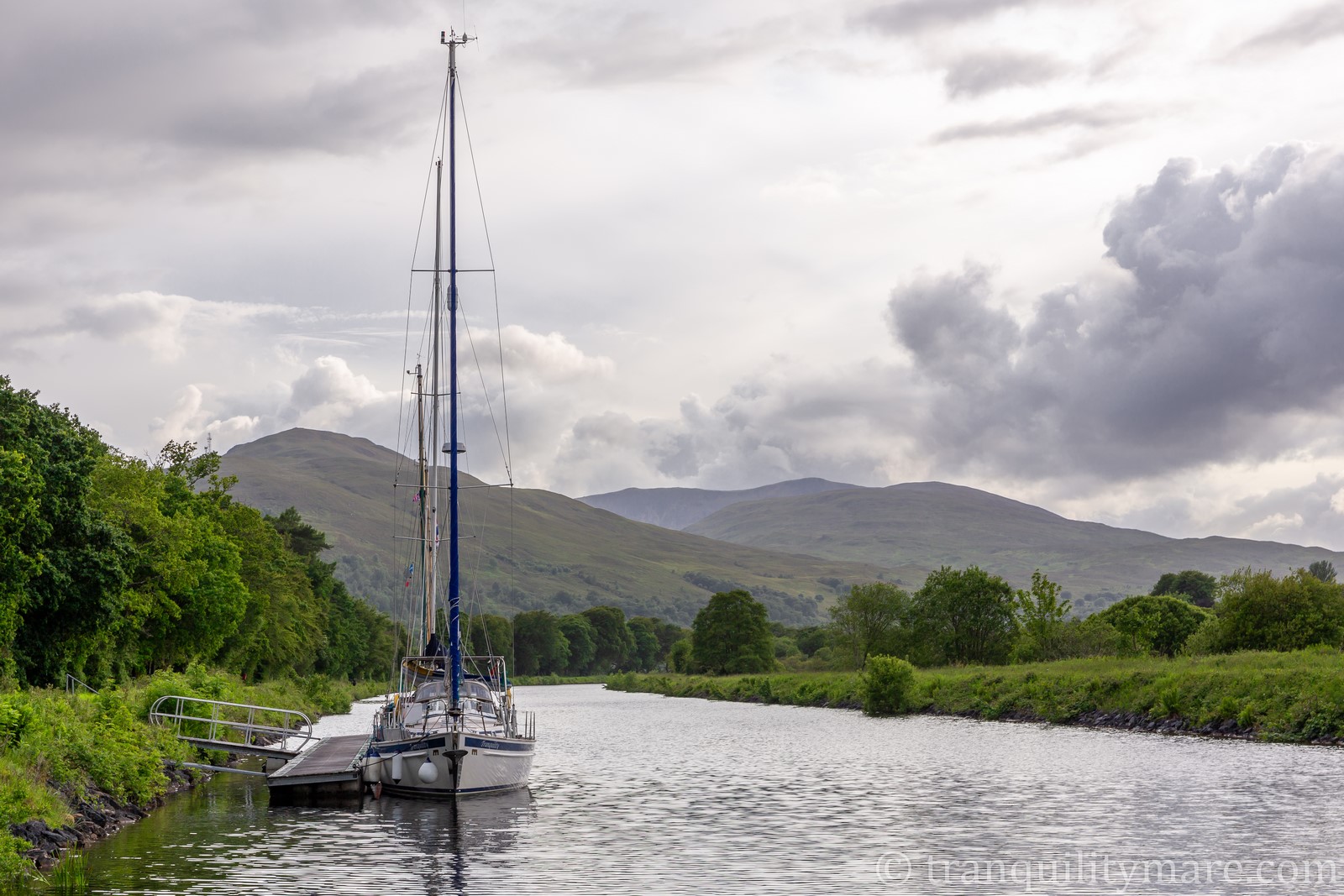
Caledonian Canal
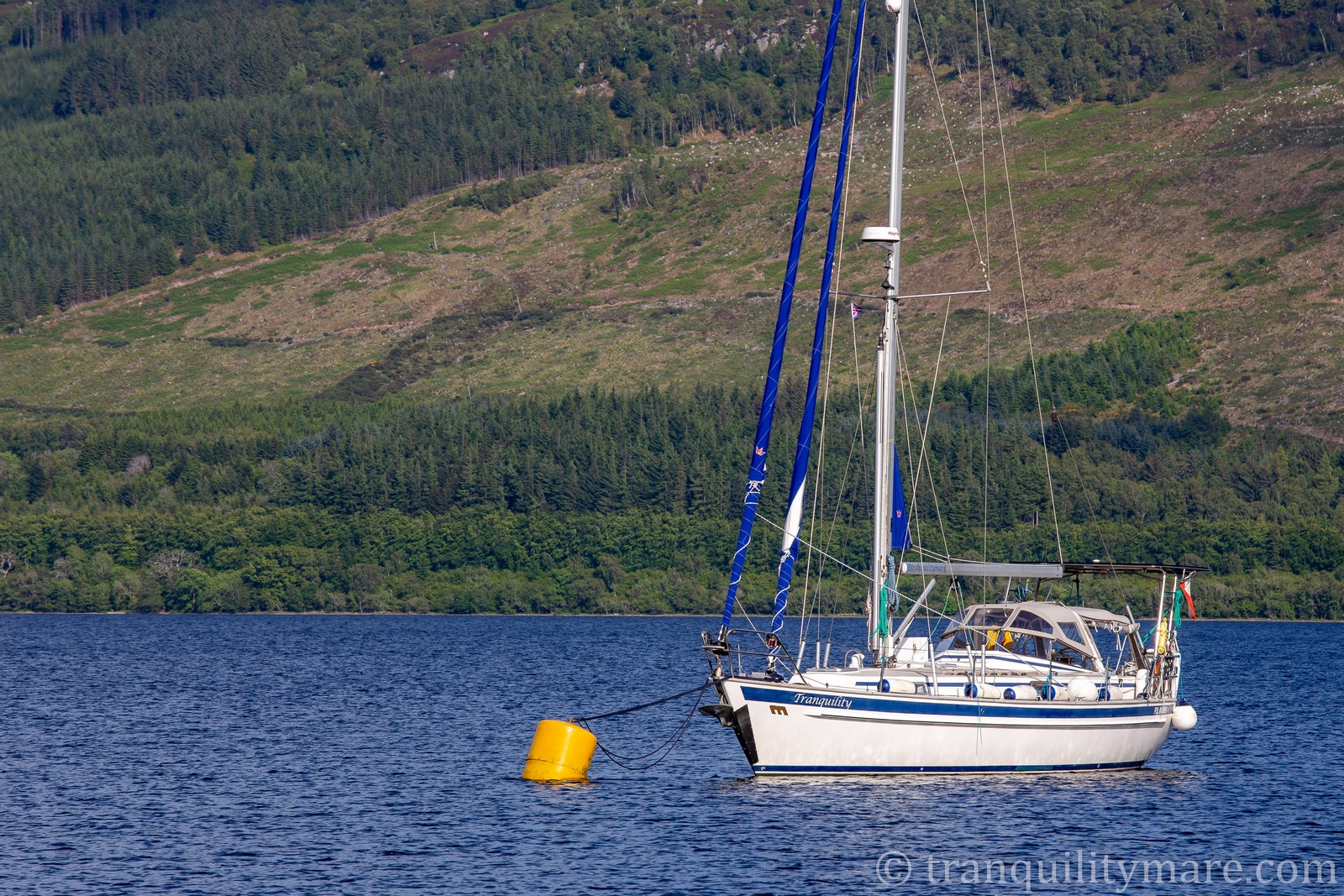
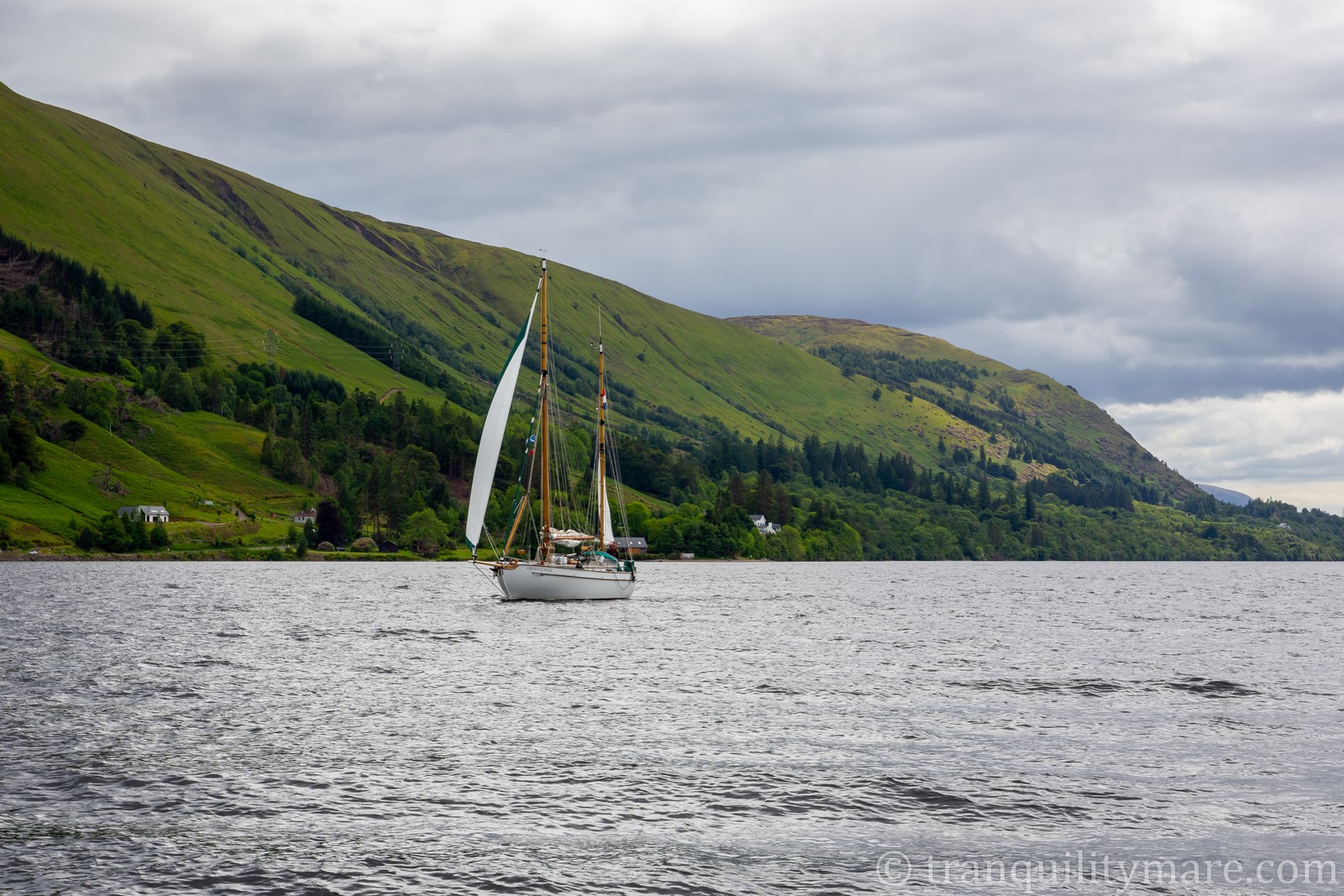
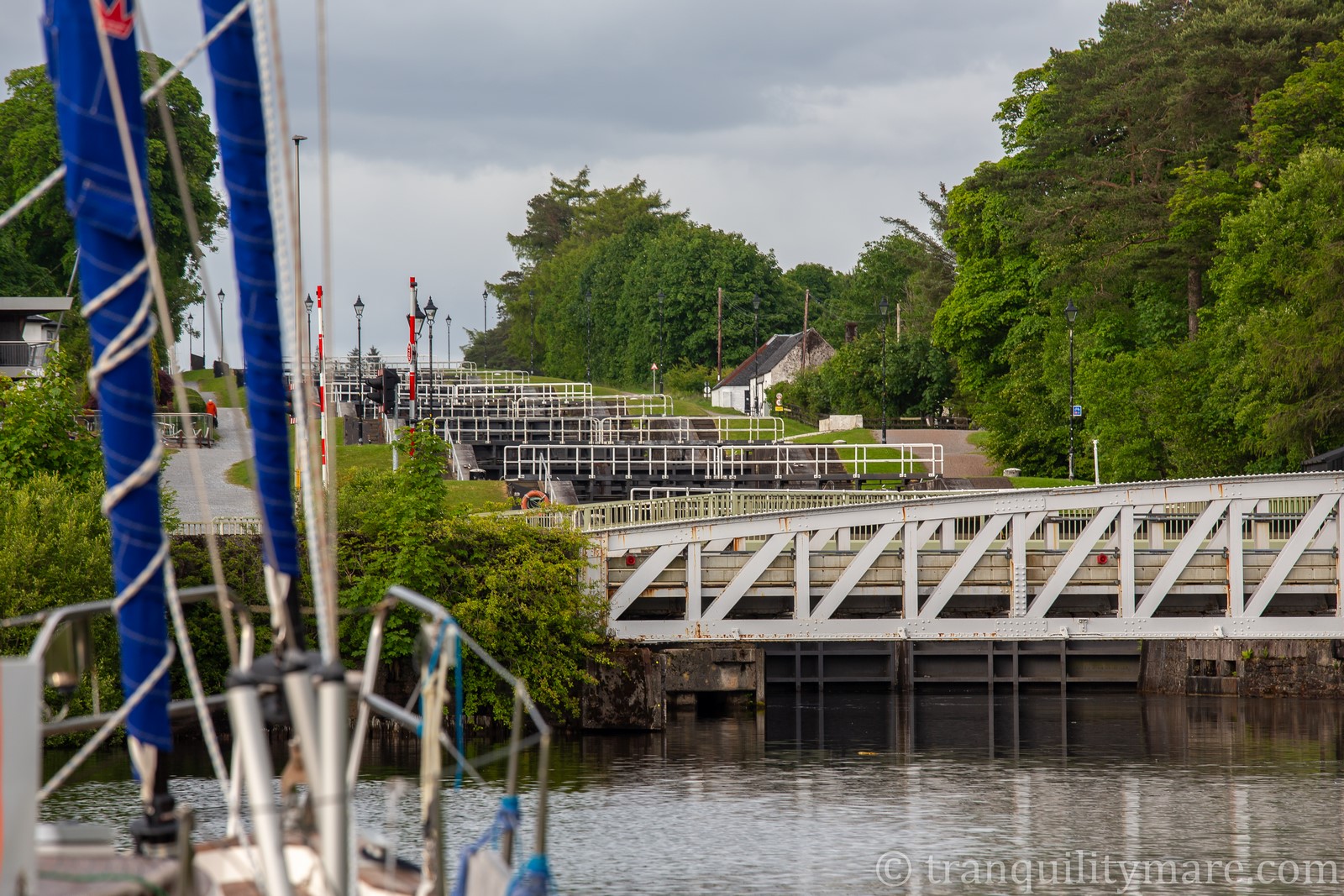
After leaving the Crinan Canal, we waste no time and set course for the Caledonian Canal, which cuts across Scotland from west to east. We transit both canals under a single 14-day license. You’ll find detailed information about the formalities involved in purchasing it — along with tips on how to save a bit along the way — in our first post dedicated to the Canal. The first and second part of our Caledonian Canal passage, in turn, are not just a story of our route but also a ready-made cruise plan, complete with recommended stops and practical advice.
Beyond the sailing (and lots of locking), our time on the canal is filled with hikes in spectacular mountains and — of course — keeping watch for the famous Nessie. The passage through Loch Ness is without a doubt one of the highlights of the entire season, although sadly its most famous resident chooses to remain hidden in the depths.
Shetland
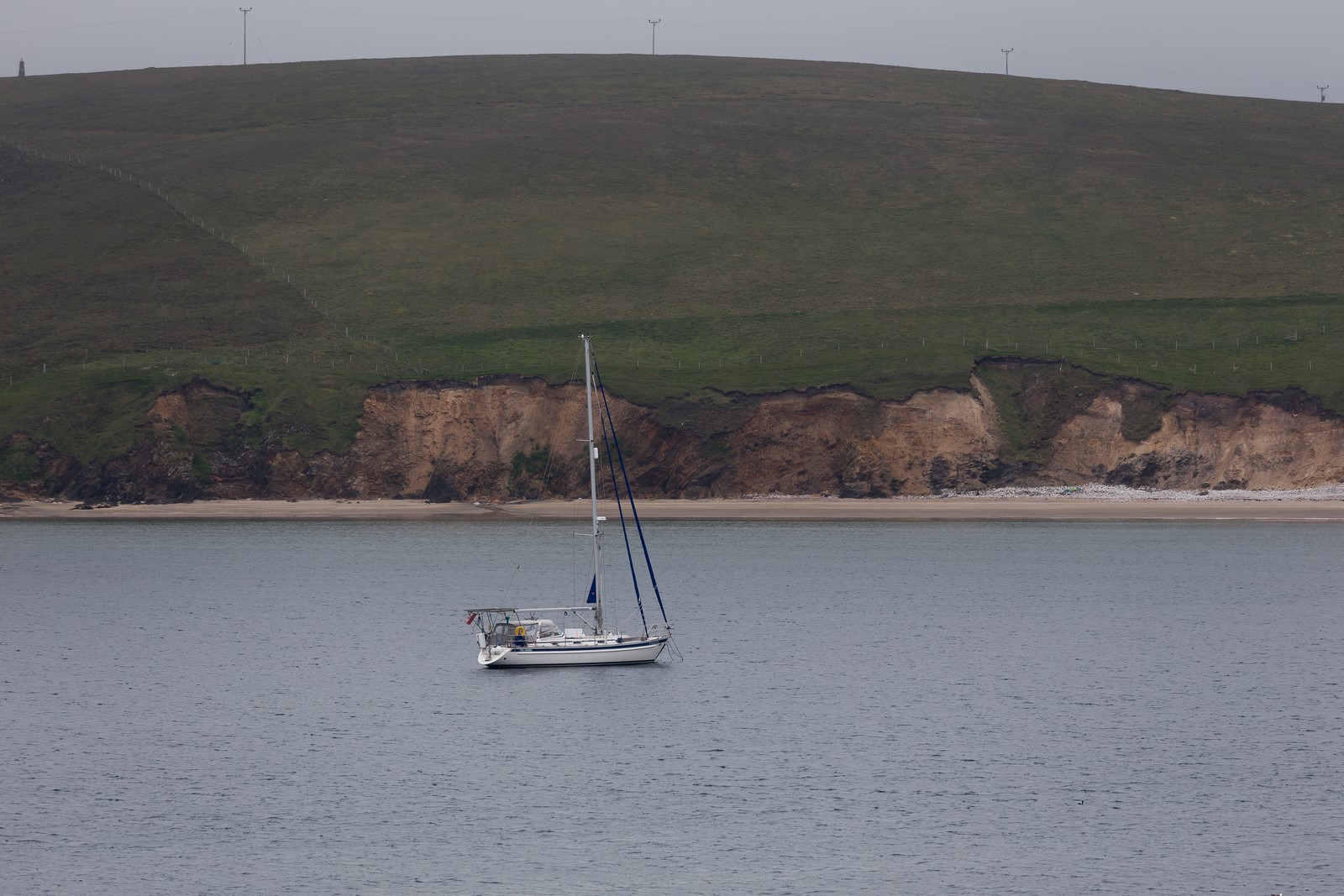
From Inverness on Scotland’s east coast, we wait for a weather window to cross the North Sea to Shetland. From the very first moments, Shetland captivates us even more than the Scottish Highlands. Over the following days, we move along the east coast, visiting wild islands and remote bays, admiring the landscapes and wildlife (especially puffins), walking along dramatic cliffs, exploring mysterious brochs (circular stone structures dating back around three thousand years), and discovering the region’s Viking heritage.
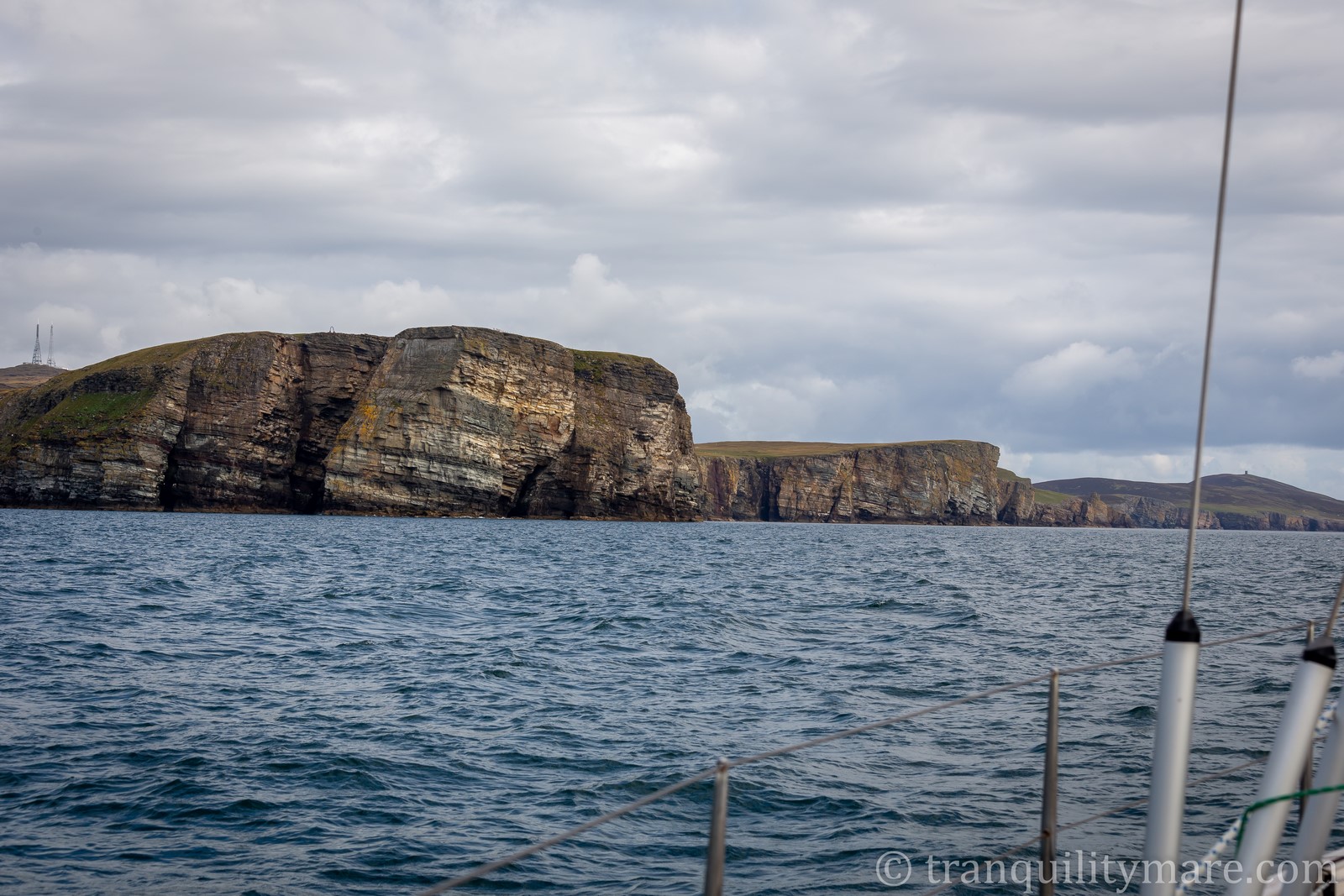
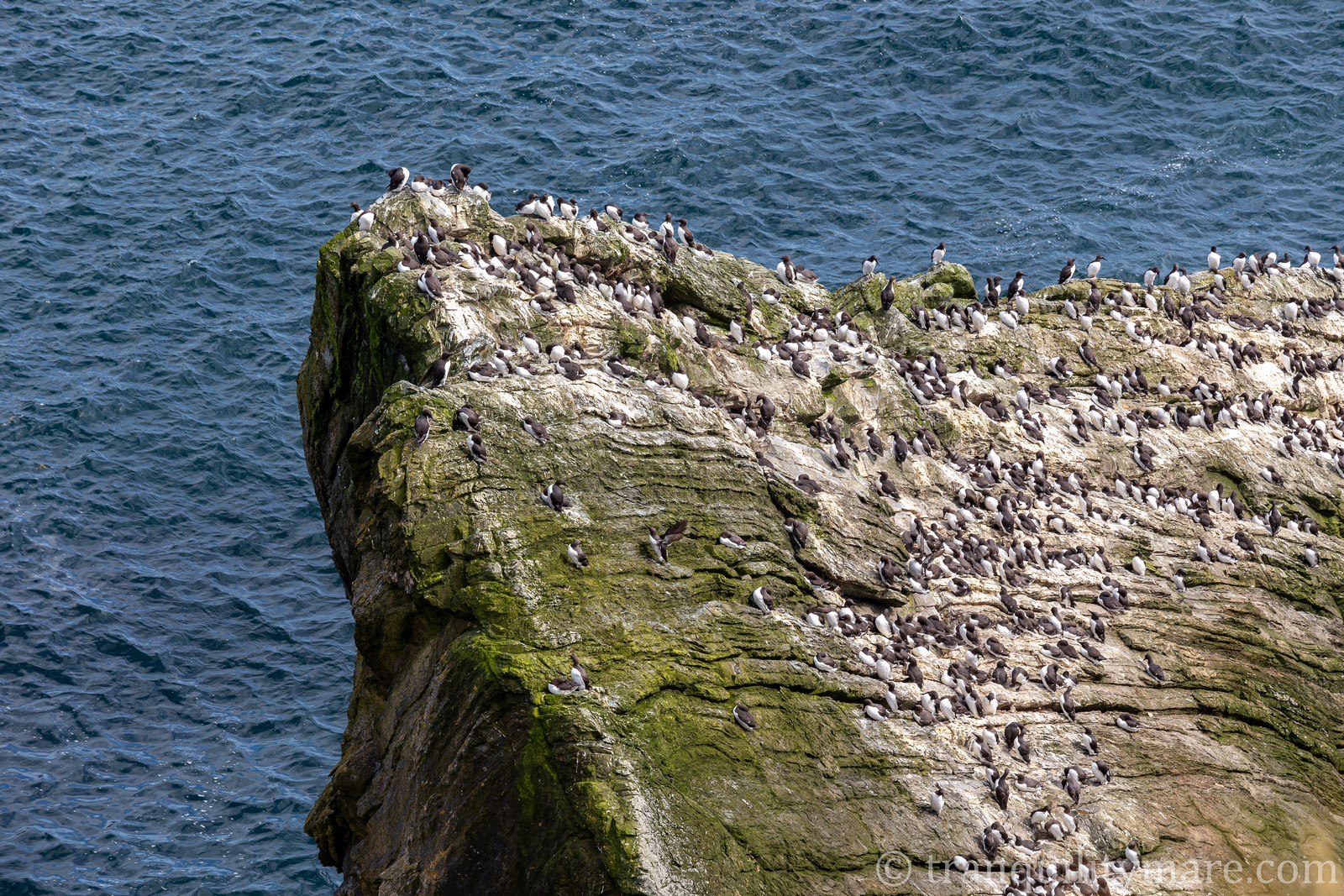
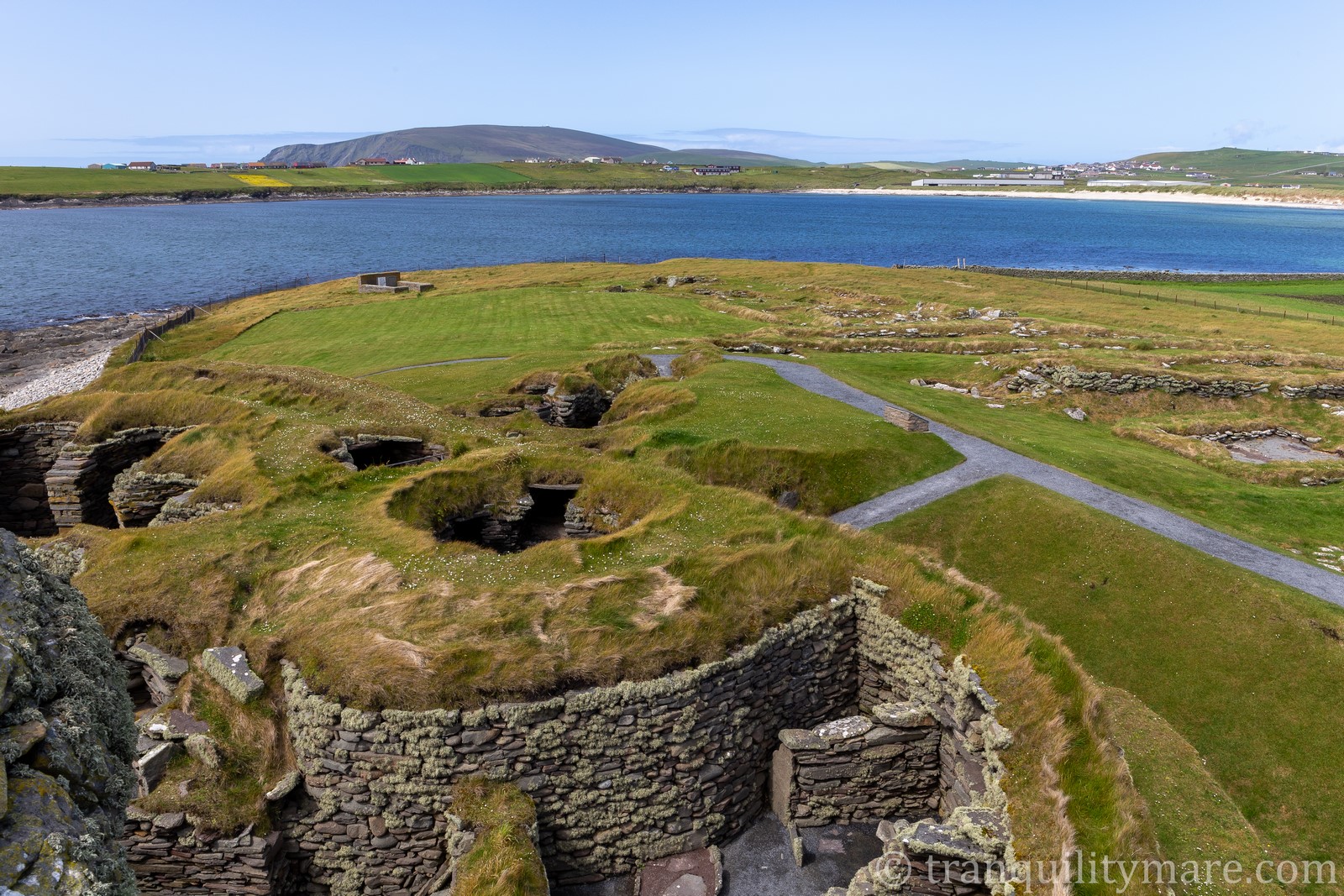
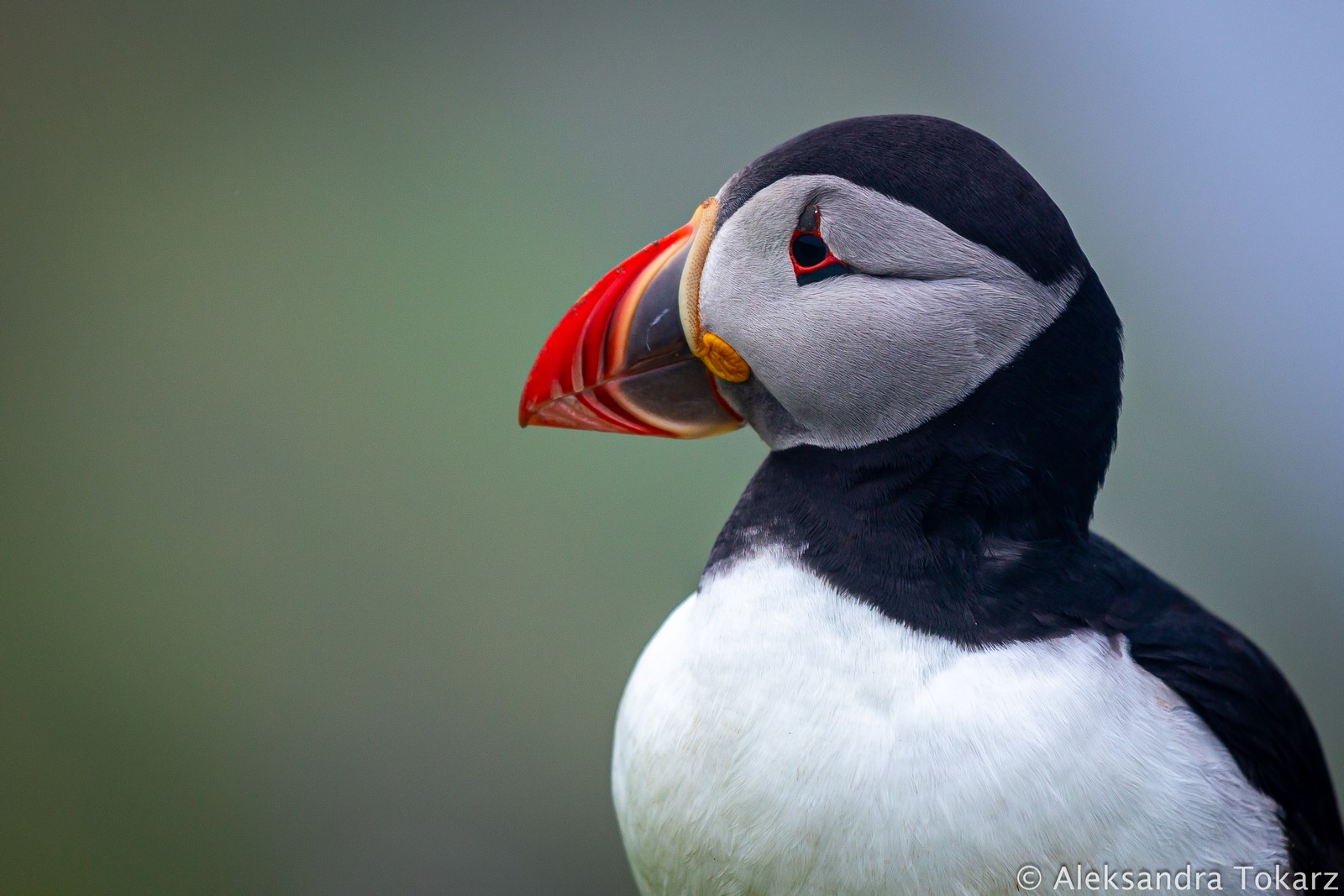
We fall for Shetland so completely that from the moment we first drop anchor, we know we’ll stay longer than originally planned. In our minds, we even begin crossing Norway off our route — just to spend more time in Shetland. As I sometimes mention on the blog, everyone has places in the world where they simply feel at home. Shetland has undoubtedly made it onto our list.
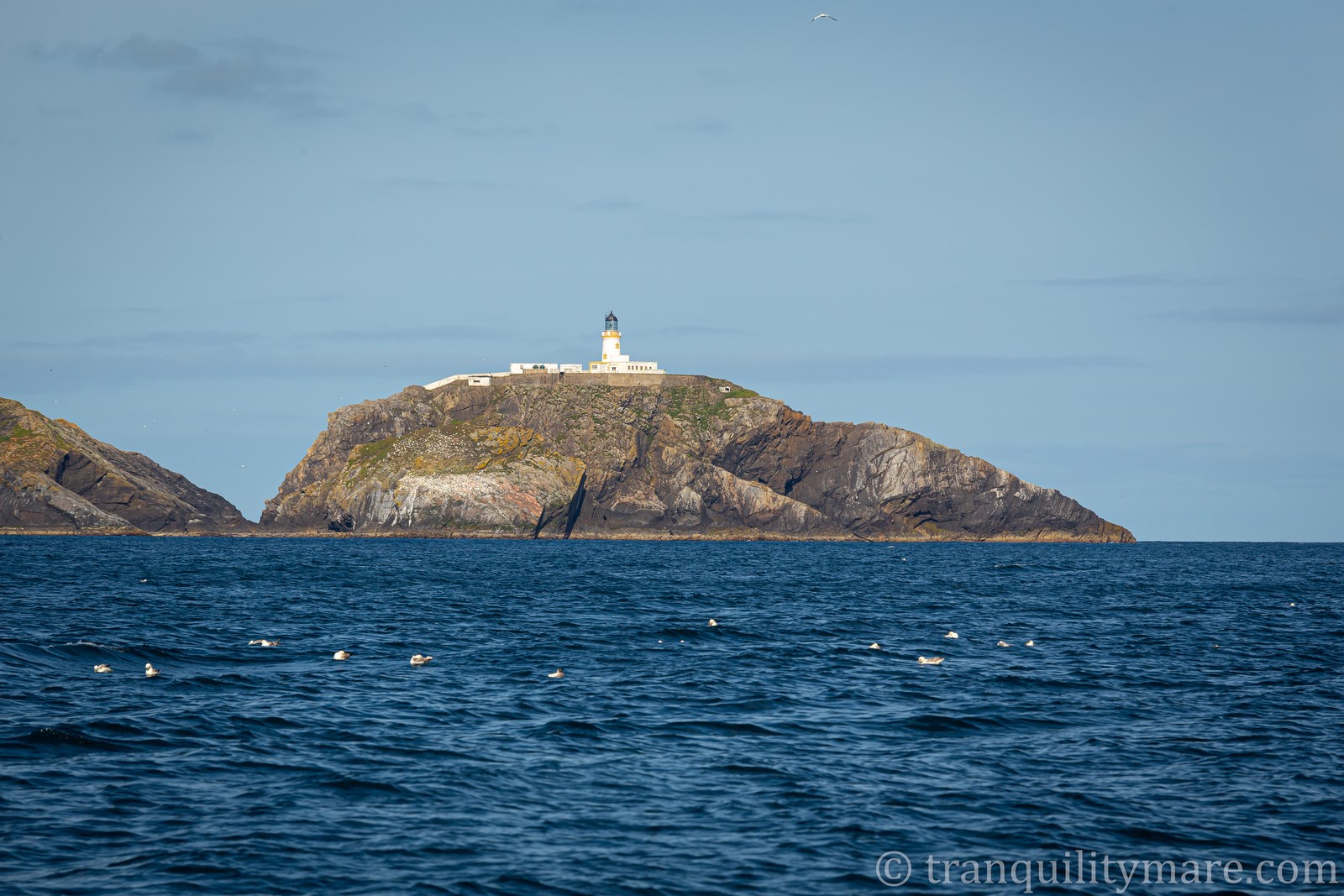
After reaching the northernmost point of the British Isles — the iconic Muckle Flugga lighthouse — we have to make a final decision about what to do next. To the north, in a straight line, lies only the Arctic, and we wrestle with the question of whether to stay in Shetland or sail on to Norway. Just as we are about to give up and stay, a perfect weather window appears — and we decide to go after all.
We know that although we have enough time to reach the Lofoten Islands, we would have very little time left there for exploring the islands and hiking in the mountains. So we activate Plan B — Norway, but closer. Our choice falls on Sognefjorden, the longest fjord in Europe, located north of Bergen.
Norway
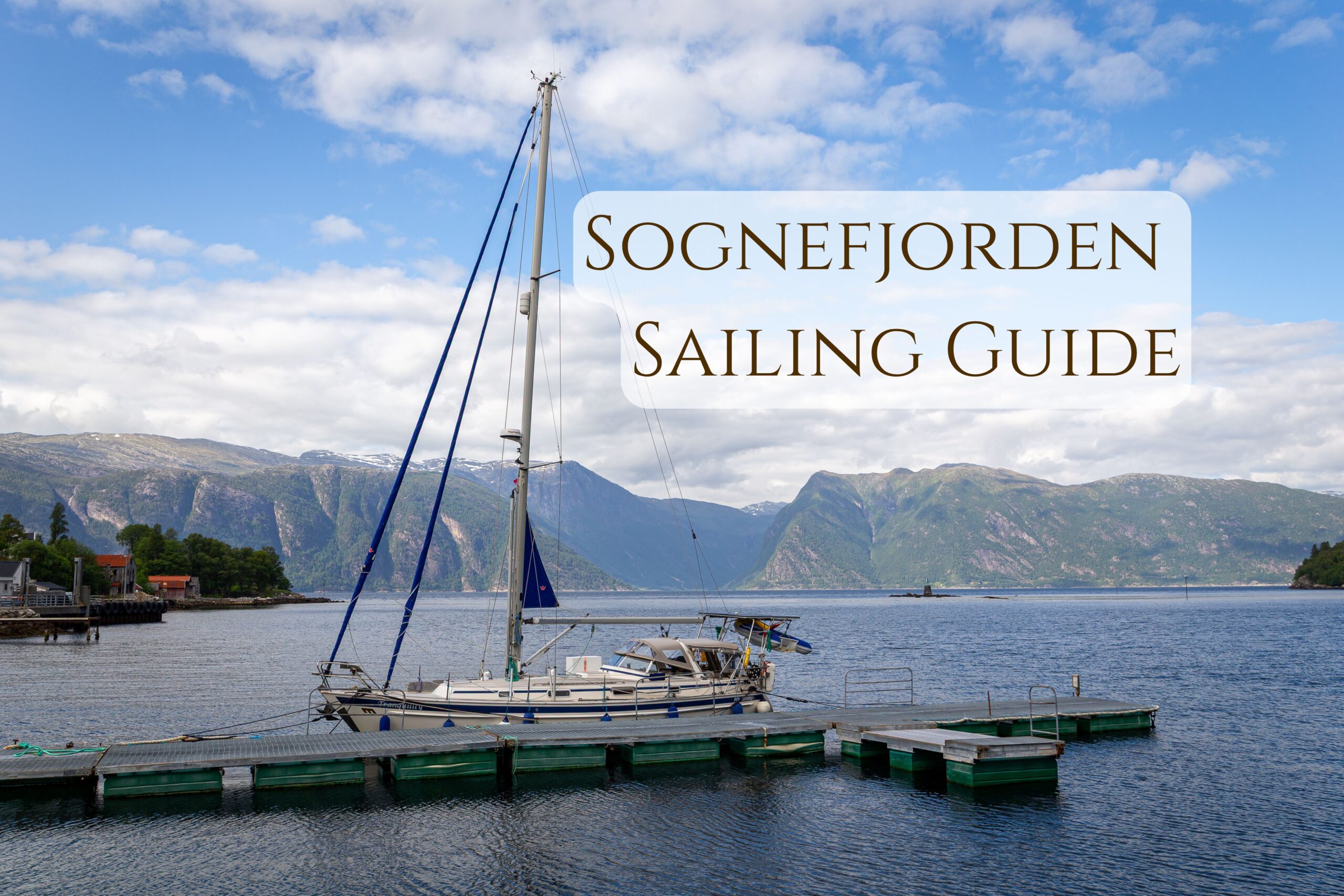
The 190-mile passage from Shetland to the Norwegian coast is spent mostly weaving our way between offshore platforms. But the moment we see the outline of land on the horizon, we know immediately that coming here is the right decision. Sognefjorden turns out to be a perfect choice — spectacular thousand-metre cliffs plunging straight into crystal-clear turquoise water, glaciers, lush greenery, and rural Scandinavian architecture leave us in awe once again.
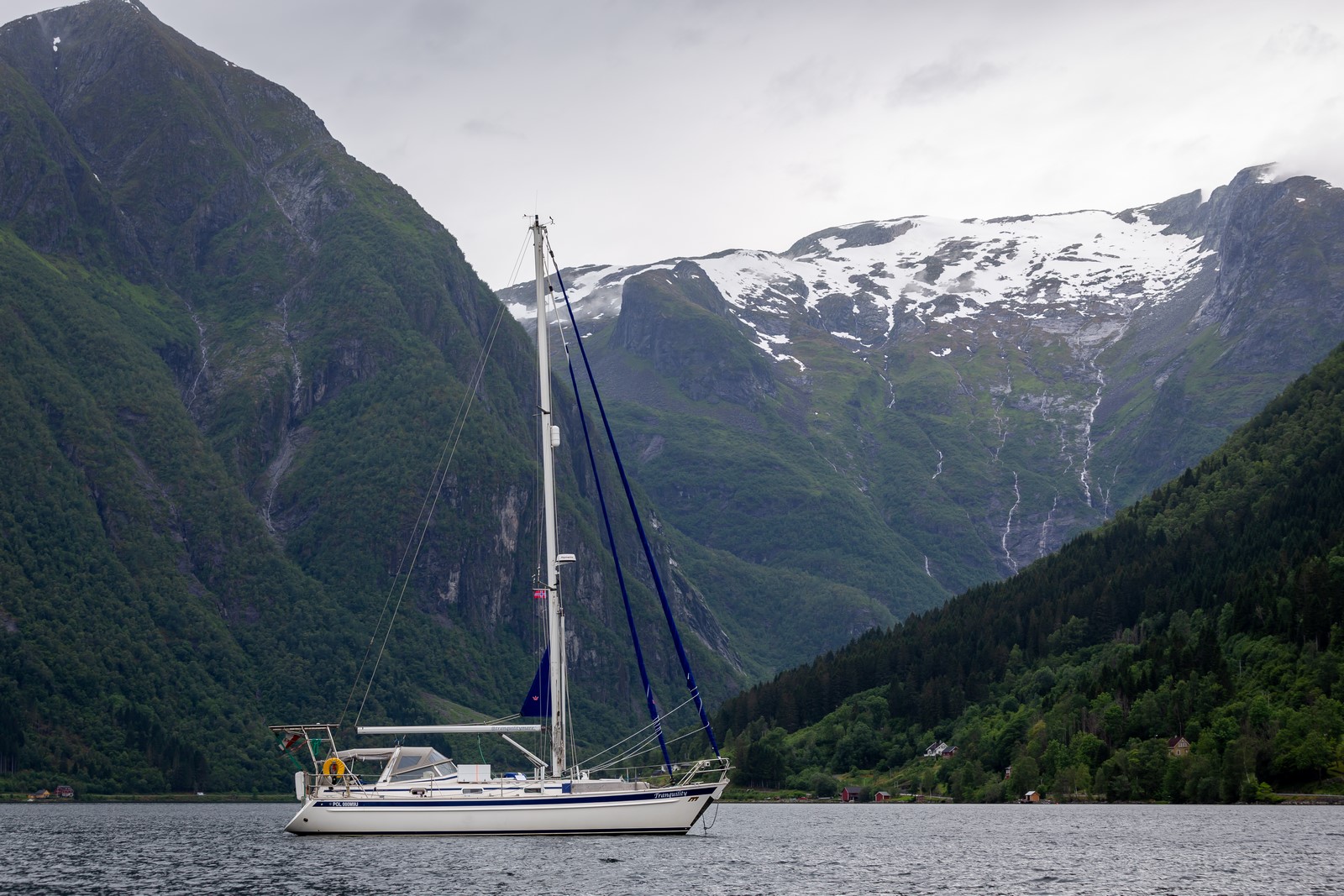
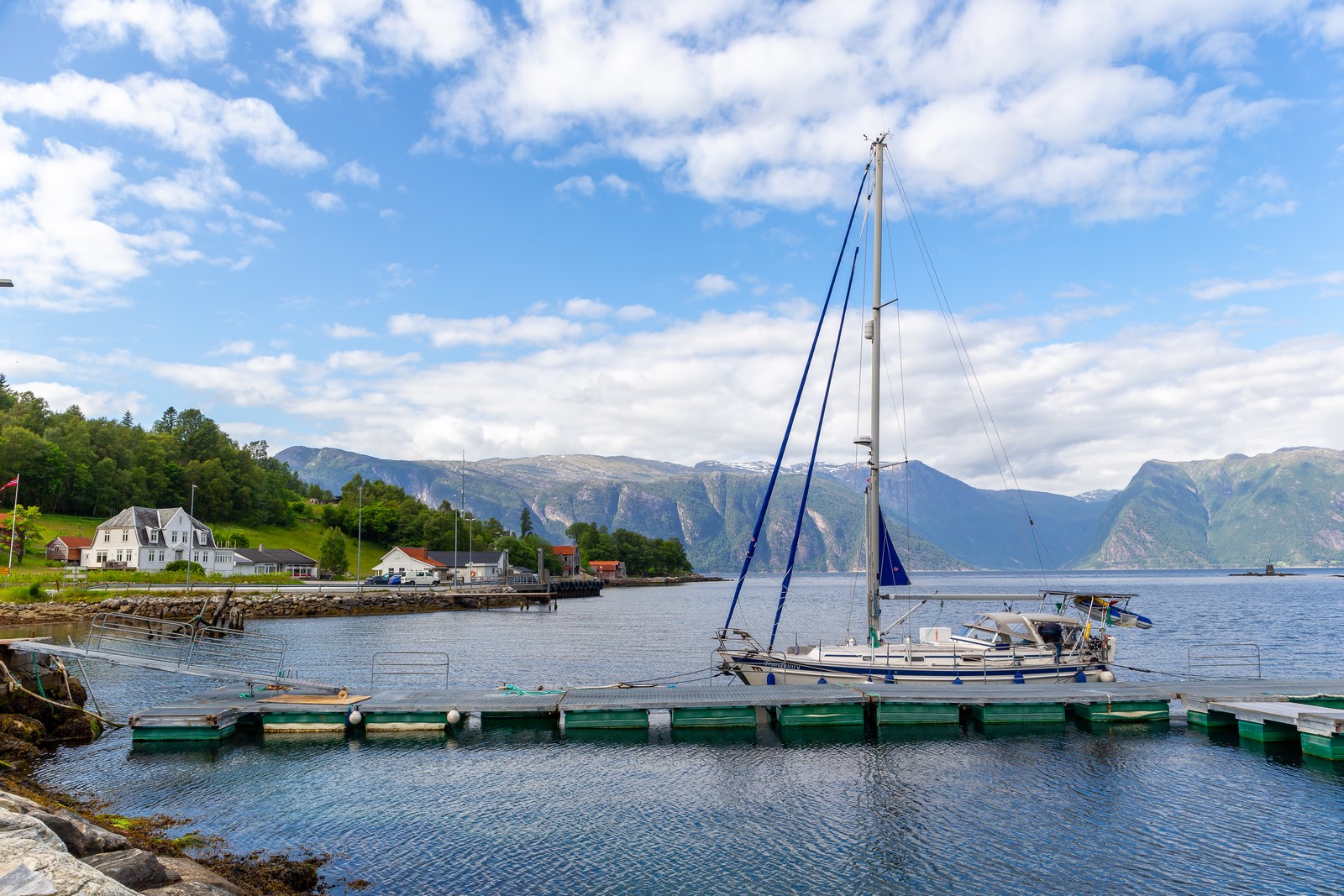
What’s more, compared to the crowded Lofoten Islands at this time of year, here we are almost completely alone — often we are a bigger attraction at a small village jetty than the village itself is for us. We combine the two things we love most: sailing and mountains. From our floating home we watch glaciers, only to hike them the next day. We also set off on a two-day trek with an overnight stay in a mountain hut. Each new anchorage is more spectacular than the last.
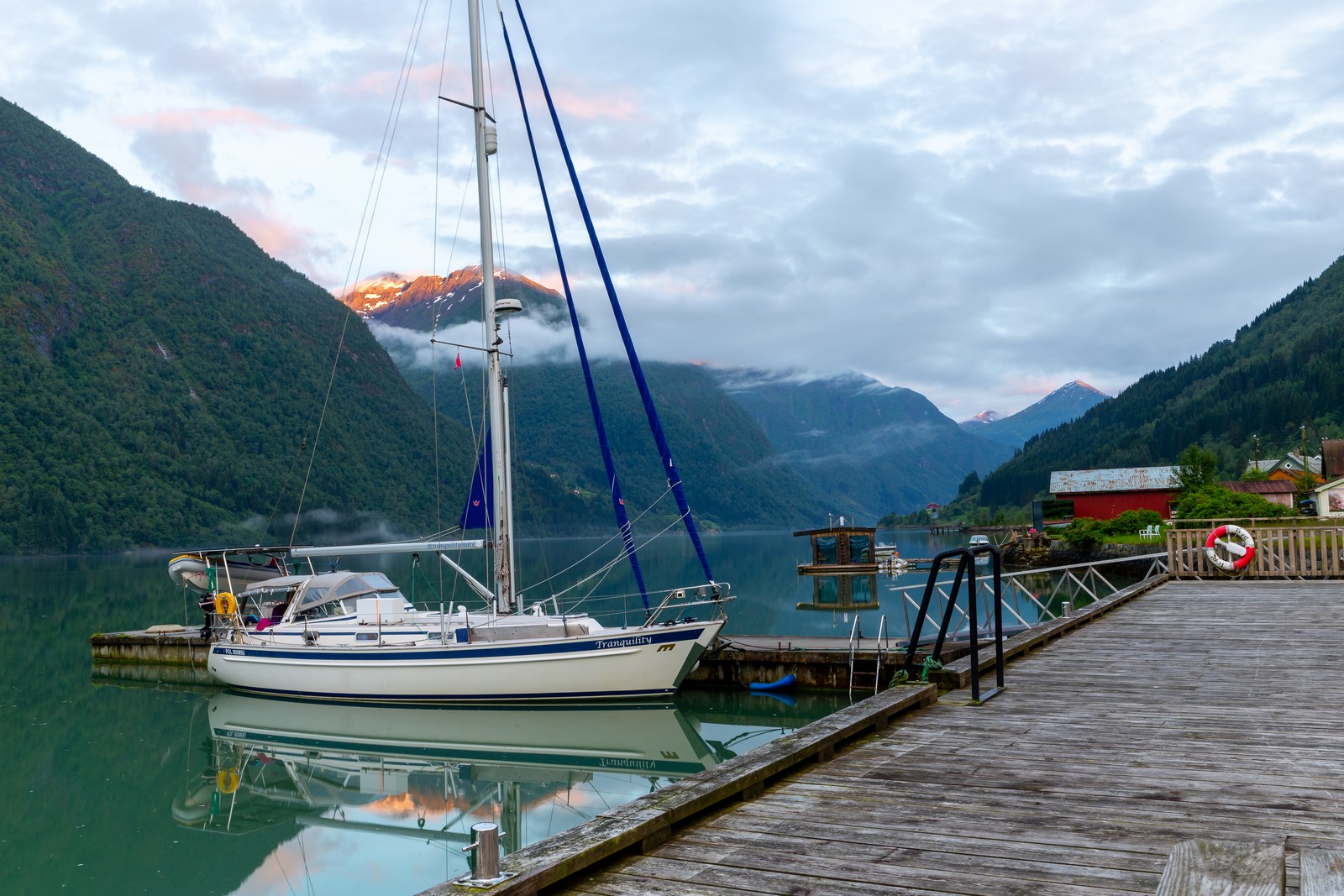
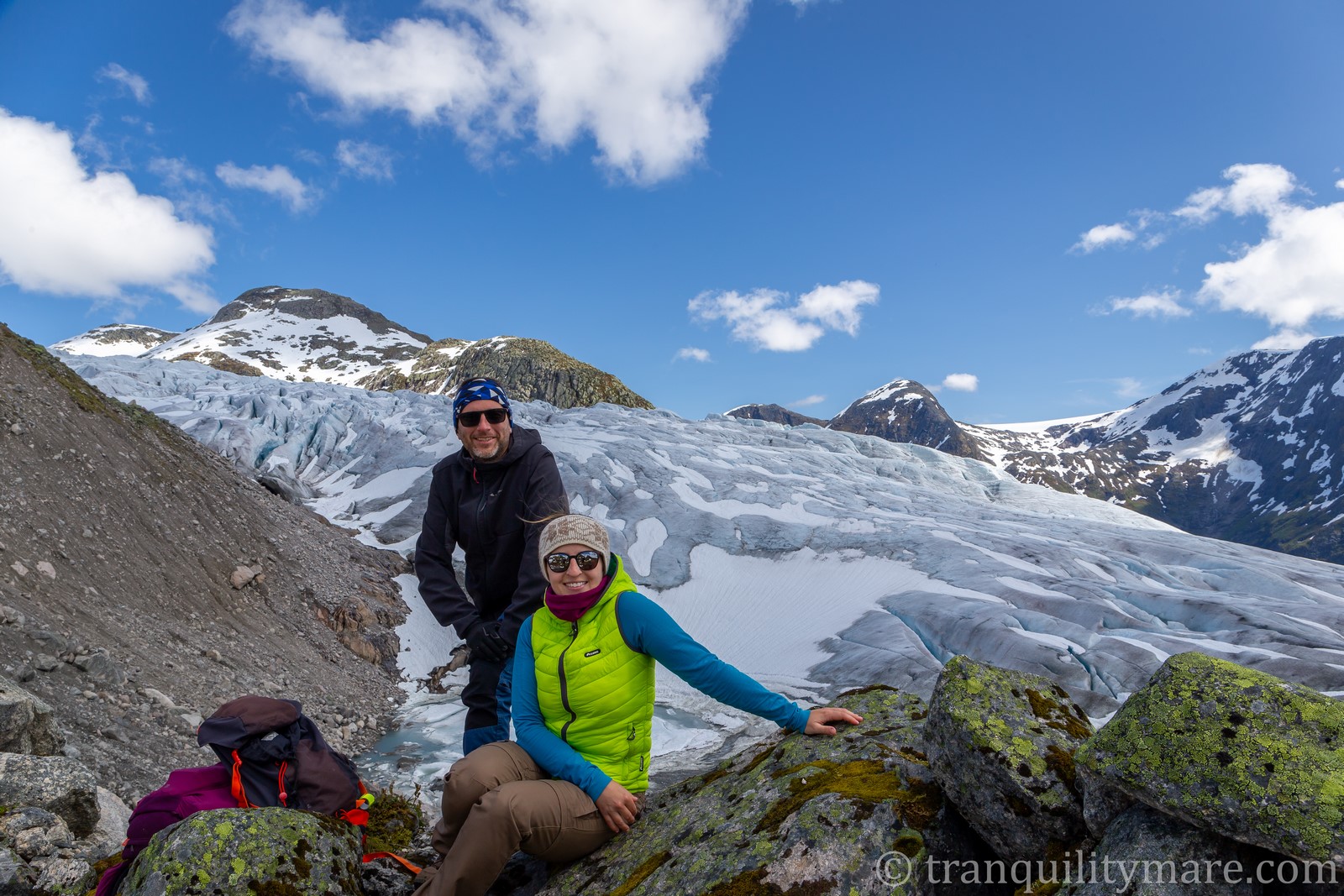
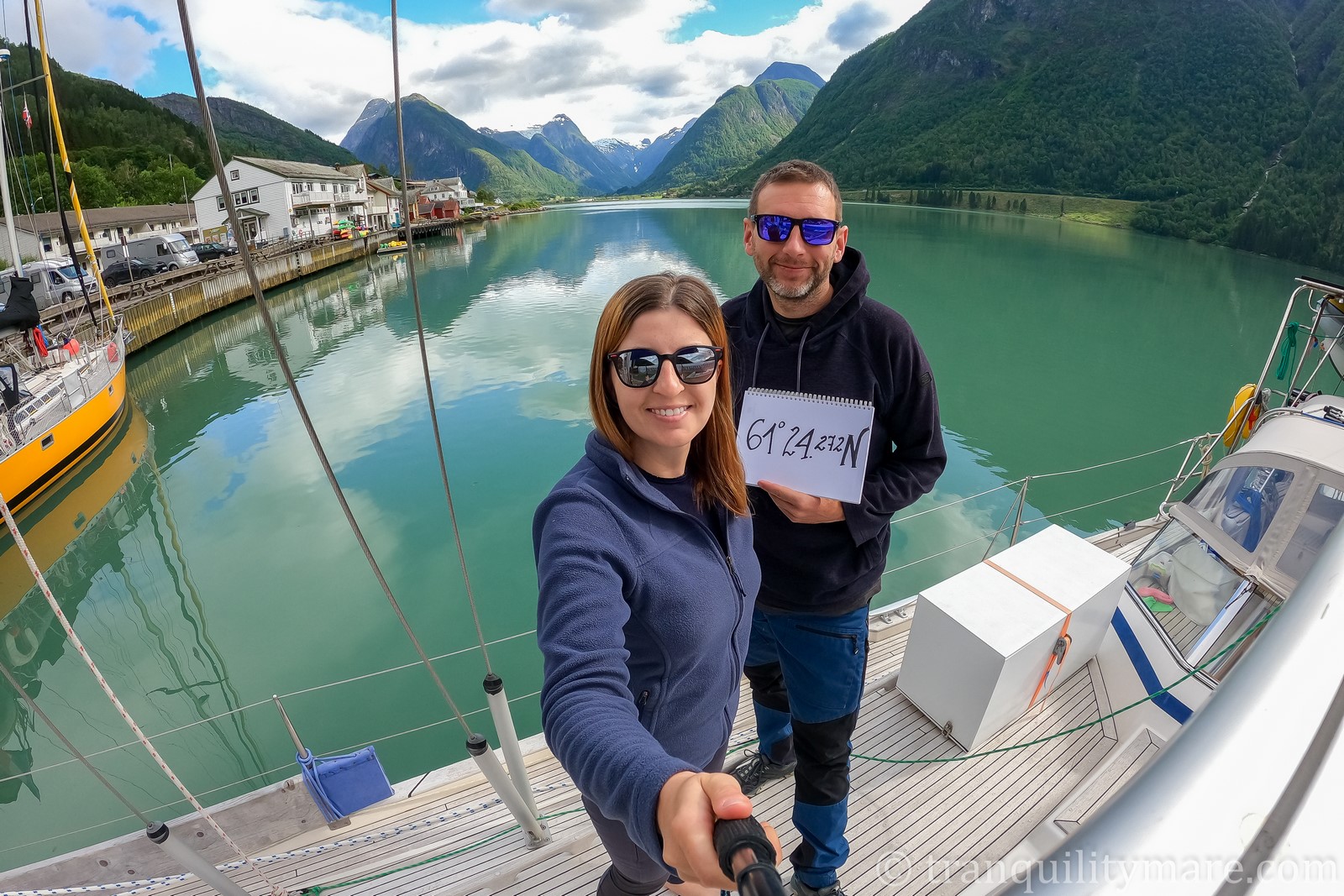
It is here that we reach the northernmost point of our journey. Fjaerland — a small settlement tucked into a branch of the main fjord — becomes the furthest north we travel: 61°24.272’N. The place looks like a postcard: Tranquility alone at a small pier, a glacier in the background, the setting sun lighting up the mountain peaks… and a sauna from which we can admire it all.
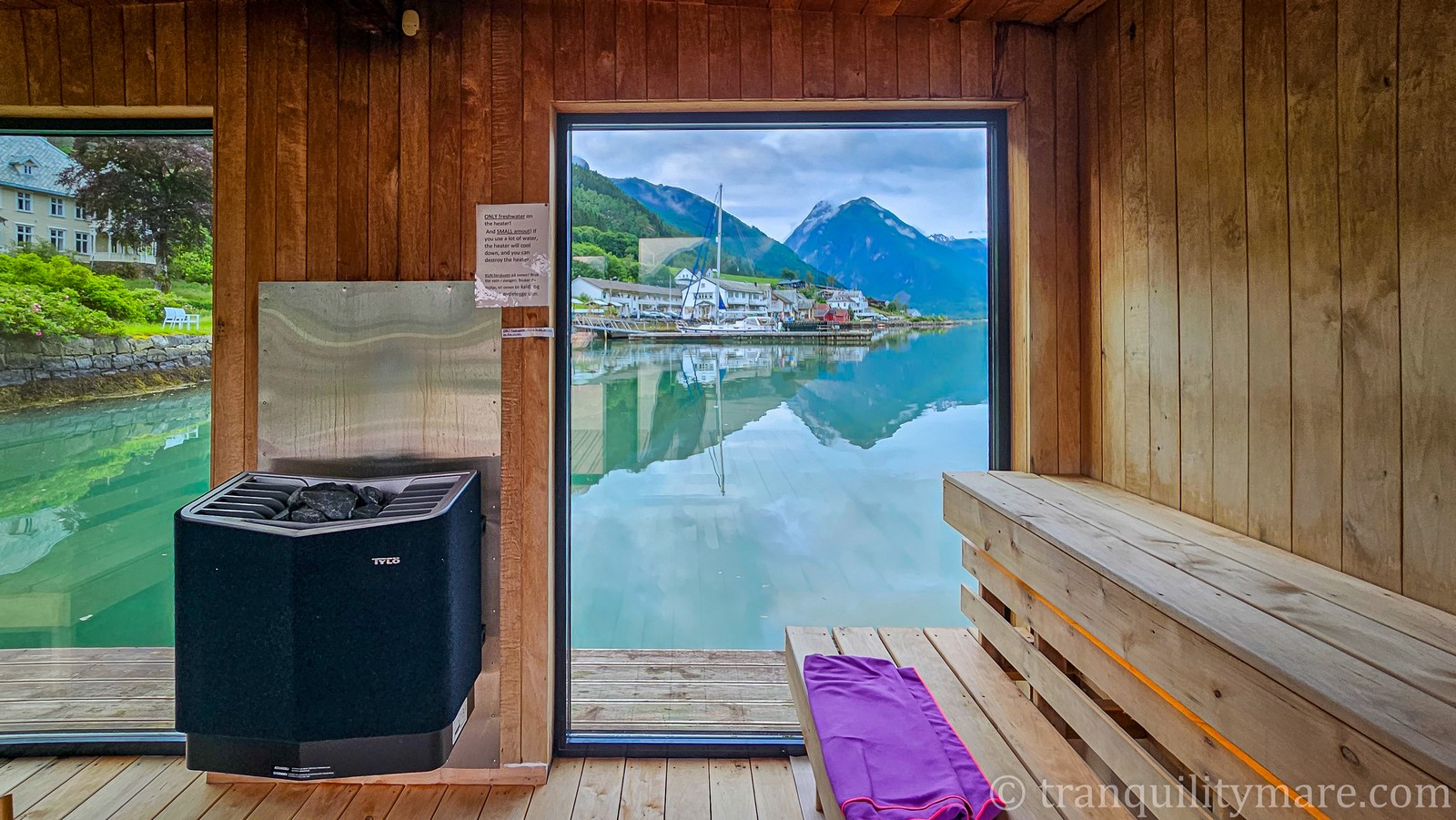
The Last Shore
Perhaps the latitude we reach isn’t particularly impressive on its own. For us, however, what matters more than symbolically “ticking off” the Arctic Circle is how much time we can truly spend in a place. We wouldn’t trade two weeks in Sognefjorden for a quick stop in the Lofoten Islands. Staying closer turns out to be one of the best decisions we could have made.
At this northernmost point, we bring the first part of our 2025 season story, “There” to an end. In the upcoming blog post, we’ll share our journey “Back Again” from Norway to Spain — a route no less exciting than the voyage north. Stay with us!

![🌿 São Jorge, Azores
[🇵🇱 Język polski w pierwszym komentarzu👇]
After an intense summer season, we’re finally catching up on our photos — and there are quite a few waiting to be shared. 📸
So, continuing our Azores story, here’s São Jorge — one of the islands of the Central Group, together with Faial and Pico.
Much less touristy and noticeably wilder, São Jorge has a distinctive long, narrow shape, with a mountainous ridge running along the island. We stayed in the marina in Velas, which quickly became our favourite in the Azores. Maybe because the dramatic cliffs rising above it reminded us so much of last season in Norway and Scotland. 🌊
The cliffs were home to Cory’s shearwaters, whose strange, haunting calls gave us an evening concert every night. 🐦
At the foot of the cliffs lie the famous fajãs — small, flat and incredibly fertile areas, formed mainly by landslides and volcanic processes. Many of them are still difficult to reach today, but their fertile soil and sheltered, relatively flat terrain have attracted people for centuries. 🌱
As always, we rented a car and spent our time exploring the island, hiking through the mountains and discovering its wilder corners. 🚗🥾
Here’s a little photographic glimpse of São Jorge. 🌿🌊📷
#saojorge #azores #sailingazores #marinavelas](https://tranquilitymare.com/wp-content/plugins/instagram-feed/img/placeholder.png)
No responses yet