
Far to the north of the Scottish mainland, where the North Sea meets the Atlantic, lies the Shetland archipelago—a place both harsh, beautiful, and demanding. For sailors, it is not just another holiday cruising ground, but a true test of skill and character. Strong winds, changeable weather, and a wild, rugged coastline make Shetland sailing an adventure that lingers long in the memory.
Shetland – General Information
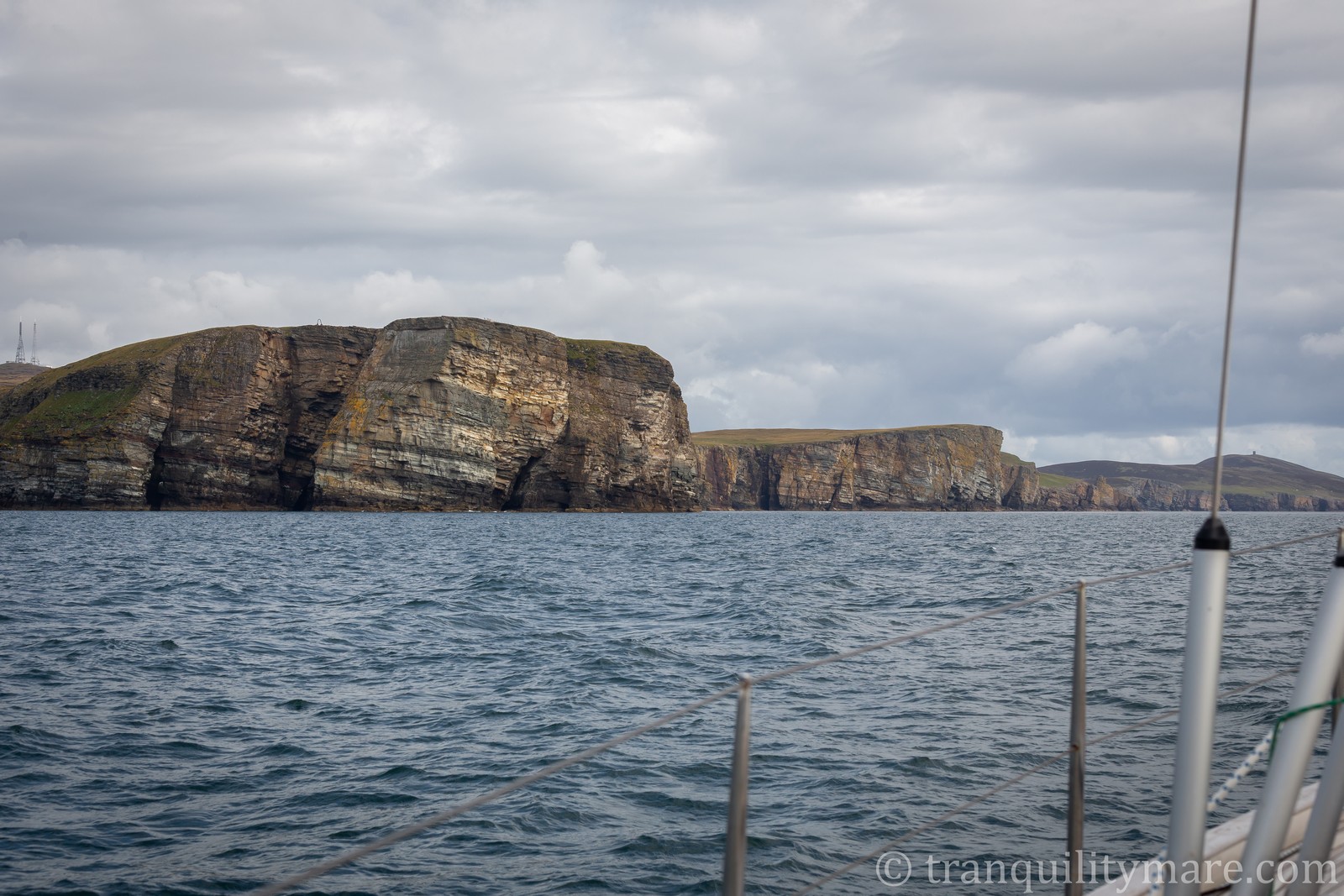
Shetland is an archipelago of over a hundred islands and islets, of which only sixteen are inhabited. Its wild, deeply indented coastline—strewn with rocks, reefs, and steep cliffs—does not make navigation easy. It demands constant vigilance and precise seamanship. In return, however, it offers something invaluable: numerous “voes”, narrow, fjord-like inlets where safe shelter can be found even in more challenging conditions.
At the heart of the archipelago lies Lerwick—a small yet vital town for sailors, with a well-sheltered harbour. While the infrastructure here is solid, the number of berths available for recreational yachts remains limited, further reinforcing the rugged and largely non-commercial character of these islands.
Shetland sailing is for those seeking authenticity and a close encounter with raw nature, rather than the comfort of Mediterranean marinas. We definitely belong to that group, which is why we chose archipelago as one of the key stops on our 2025 voyage from Spain to Norway. Initially, it was meant to be just a stopover, but upon arrival it quickly became clear that Shetland is a destination in its own right. We stayed longer, significantly scaling back our Norwegian plans.
In return, we were rewarded with spectacular, almost Arctic landscapes—harsh and unspoiled—vast open spaces, and a rare sense of emptiness that is increasingly hard to find. Shetland is also a place steeped in history, rich in prehistoric settlement sites and deeply connected to Viking heritage. Culturally, it often feels closer to that world than to mainland Scotland itself.
Weather – Shetland Sailing
The weather in Shetland is one of the main characters of any voyage—unpredictable, raw, and unmistakably oceanic. It largely defines what sailing here feels like, demanding flexibility and careful planning at every step.
Summer
Even in summer, considered the mildest season, conditions are far from what most would call “holiday weather.” Temperatures usually hover between 10 and 15°C, and very warm days are rare. Winds are most often from the west and southwest, carrying moist Atlantic air, typically blowing at 4–6 on the Beaufort scale. Stronger days are far from unusual.
What really stands out, though, is how quickly things change. Sunshine, clouds, and passing showers can cycle through within a few hours. It’s rare to get a full day of stable conditions. Fog is also common and can at times reduce visibility significantly. The sea state can be short and steep, especially when wind opposes tide, adding another layer of challenge to navigation.
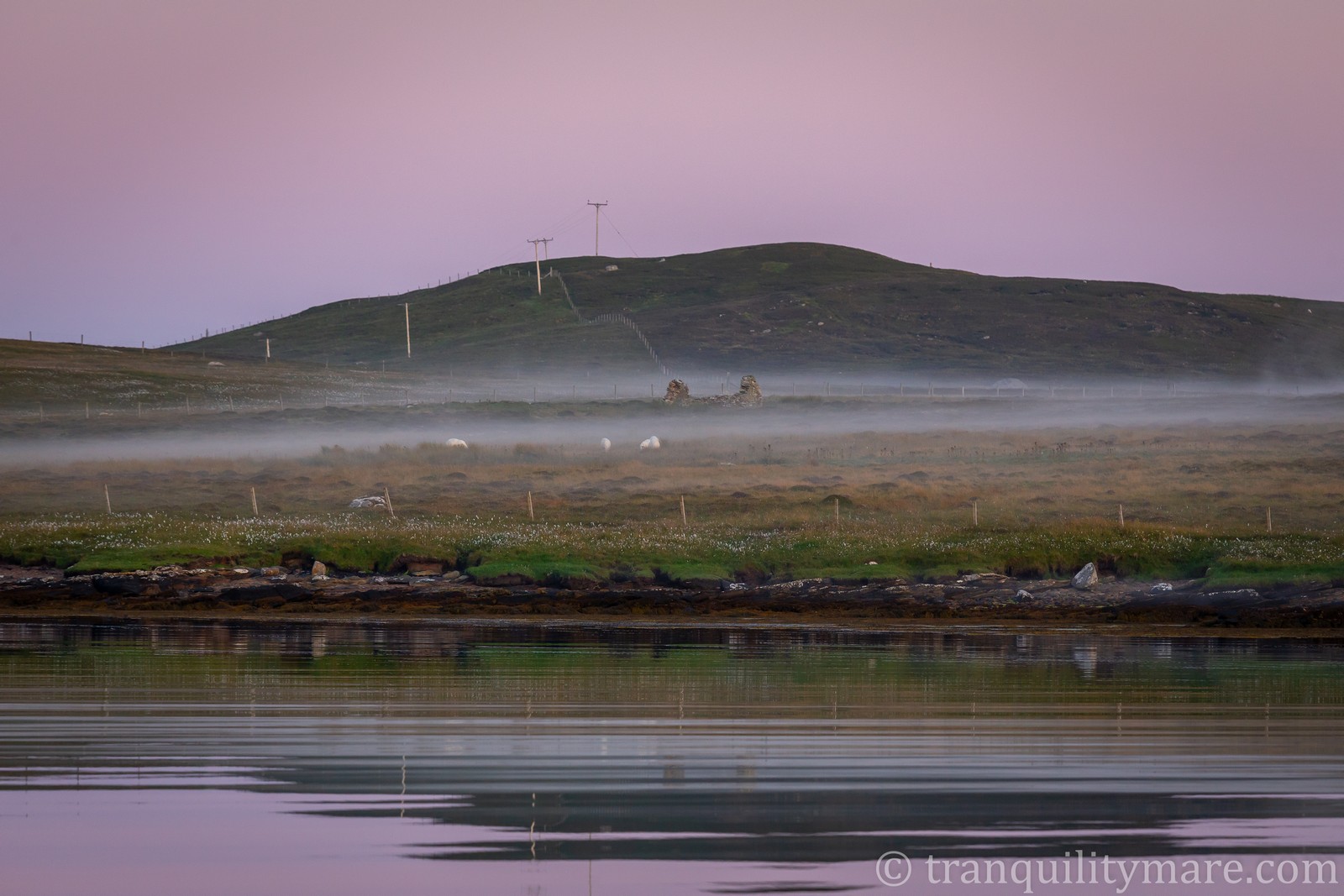
In return, summer offers something special: incredibly long days. In June, night barely falls at all. Lingering daylight gives sailors a huge amount of freedom when planning Shetland sailing.
Winter Shetland Sailing
Winter, on the other hand, shows a very different face of the islands. Frequent storms, strong winds, and short days make it a season suited mainly to the most persistent sailors. Even when temperatures stay a few degrees above freezing, the damp air and persistent wind can make it feel biting cold.
In Shetland sailing, the weather isn’t just a backdrop—it’s something you work with. And if you do, it rewards you with sailing in one of the most raw and authentic corners of Europe.
Tides and Currents
Sailing between the islands also requires a good understanding of tides and currents. They can reach several knots and don’t always behave exactly as the tide tables suggest. In some narrow sounds, their power is even harnessed. Bluemull Sound is home to an experimental tidal energy installation, a reminder of just how much force moves through these waters.
Wildlife
Shetland is, above all, a place of raw northern nature where humans are very much just visitors. The cliffs and coastlines are alive with seabirds. Puffins, guillemots, kittiwakes, and fulmars are nesting almost within arm’s reach, forming noisy colonies perched above the ocean. In the surrounding waters, orcas and dolphins are regular visitors. With a bit of luck you might also spot whales crossing the Atlantic—from fin whales to humpbacks.
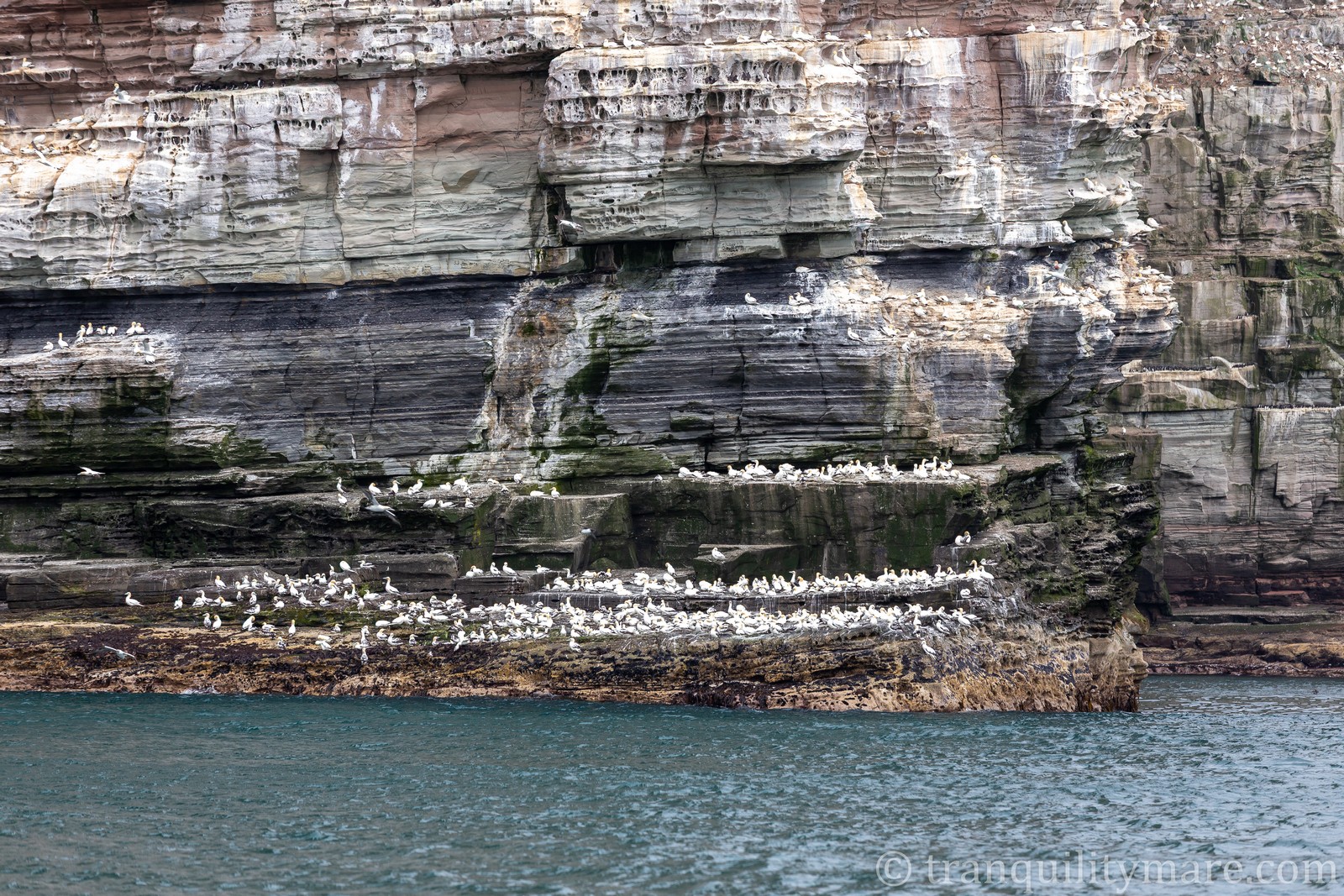
The islands are also an important stopover for migratory birds travelling between the Arctic and Europe. At the right time of year, rare and unexpected species appear, drawing birdwatchers from all over the world. The harsh climate, strong winds, and constant presence of the ocean shape a natural environment that is both fragile and resilient—wild, untamed, and still remarkably authentic. It’s this combination that makes every day on the waters around Shetland feel like it could bring something completely unexpected.
So today, we’re taking you on a Shetland sailing journey through what we consider the most interesting spots. With the prevailing westerly winds in mind, it makes sense to plan your route along the eastern coast of the archipelago. This is where you’ll find the greatest number of bays and anchorages, as well as Lerwick—the natural starting point for our short guide.
Lerwick
Lerwick is the capital and main hub of life in Shetland. Its name comes from Old Norse and means “Muddy Bay.” The town sits on the archipelago’s main island—Mainland—and is sheltered from frequent storms by the island of Bressay. For most sailors arriving in Shetland, Lerwick is the natural first point of reference.
Despite its small size—home to only around 7,500 people—it has a distinctly maritime feel. The waterfront is lined with fishing boats, ferries, and yachts, and daily life moves to the rhythm of weather, tides, and ferry schedules. It’s the place to restock, find shelter from rough conditions, and briefly reconnect with civilization before heading back out into the demanding waters around the islands.
Berthing In Lerwick Harbour
Before entering the harbour, all vessels should call “Lerwick Port Control” on VHF channel 12 while transiting the channel between Mainland and Bressay.
Yachts typically berth in the Small Boat Harbour, on the southern side of Victoria Pier. Space on the small floating pontoon is limited—usually enough for just 3–4 boats—so rafting up is common. Larger yachts are directed to Albert Dock. Berthing on the northern side of Victoria Pier is only possible when it’s not in use by tenders serving cruise ships. Current information is posted directly on the pier.
Floating pontoons in these areas are available from April to September. Outside this period, you’ll need to moor directly alongside the concrete quay.
Tip: It’s worth checking berth availability in Lerwick via the live harbour webcam. There’s no reservation system, and summer regattas can fill the harbour quickly. If you’re looking for a quieter stay, keeping an eye on the live feed can give you a heads-up on what’s happening.
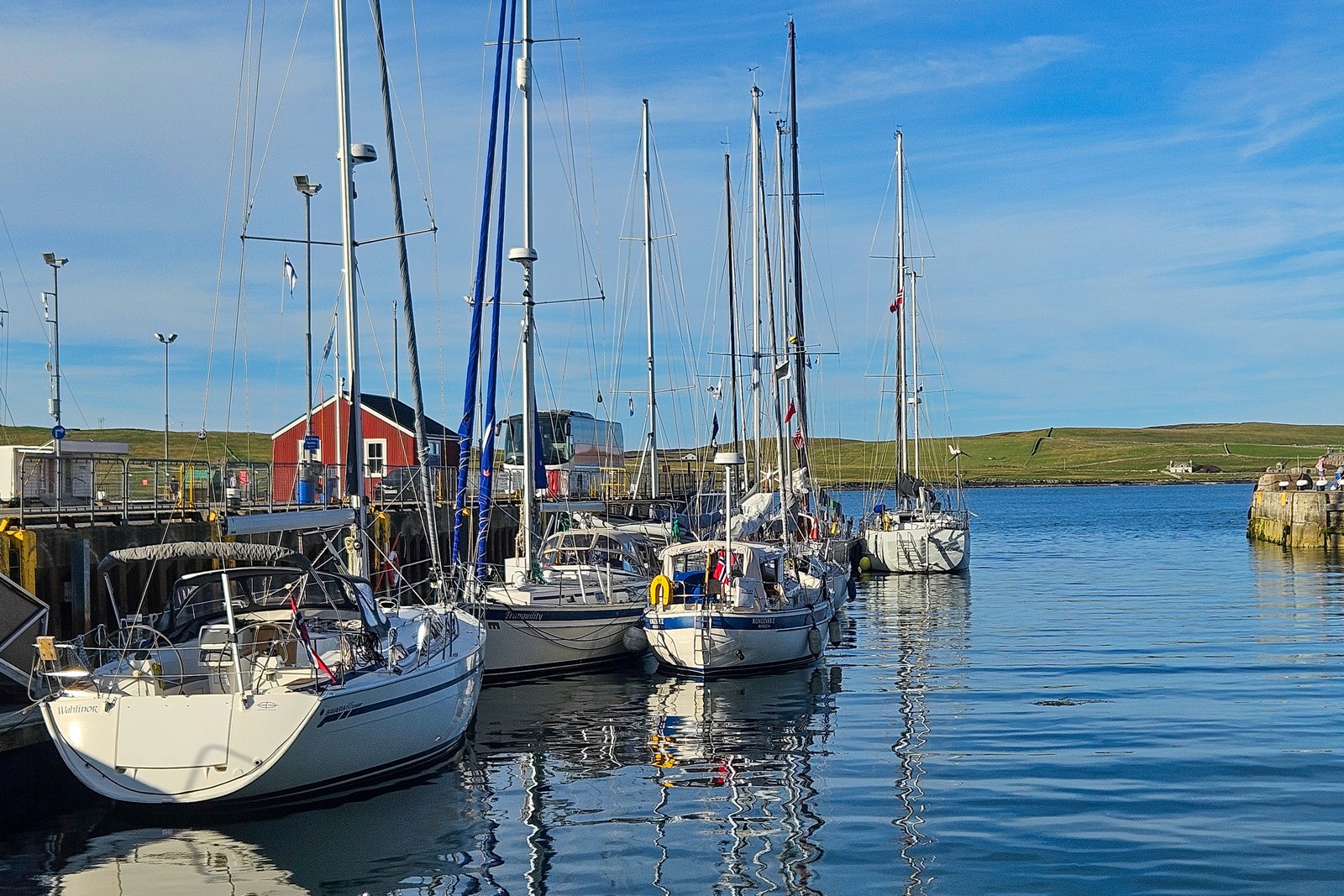
Facilities In Lerwick Harbour
Lerwick is the place where, after a demanding Shetland sailing, you can finally catch your breath and take care of everything ashore. Formalities are straightforward, supplies are easy to restock, and there’s solid technical support available—from chandlers and supermarkets to a shipyard and professional repair services if needed. It’s a well-equipped port where help is never far away.
Just a few steps from Victoria Pier, you’ll find the Lerwick Boating Club—a great spot for crews in need of a bit of comfort. Hot showers, laundry facilities, and a relaxed space to sit down with a drink overlooking the harbour make it well worth a visit. Access to the club is usually arranged through the Lerwick Port Authority office, located in the Albert Building on the Esplanade.
Exploring Lerwick
Shetland Museum & Archives
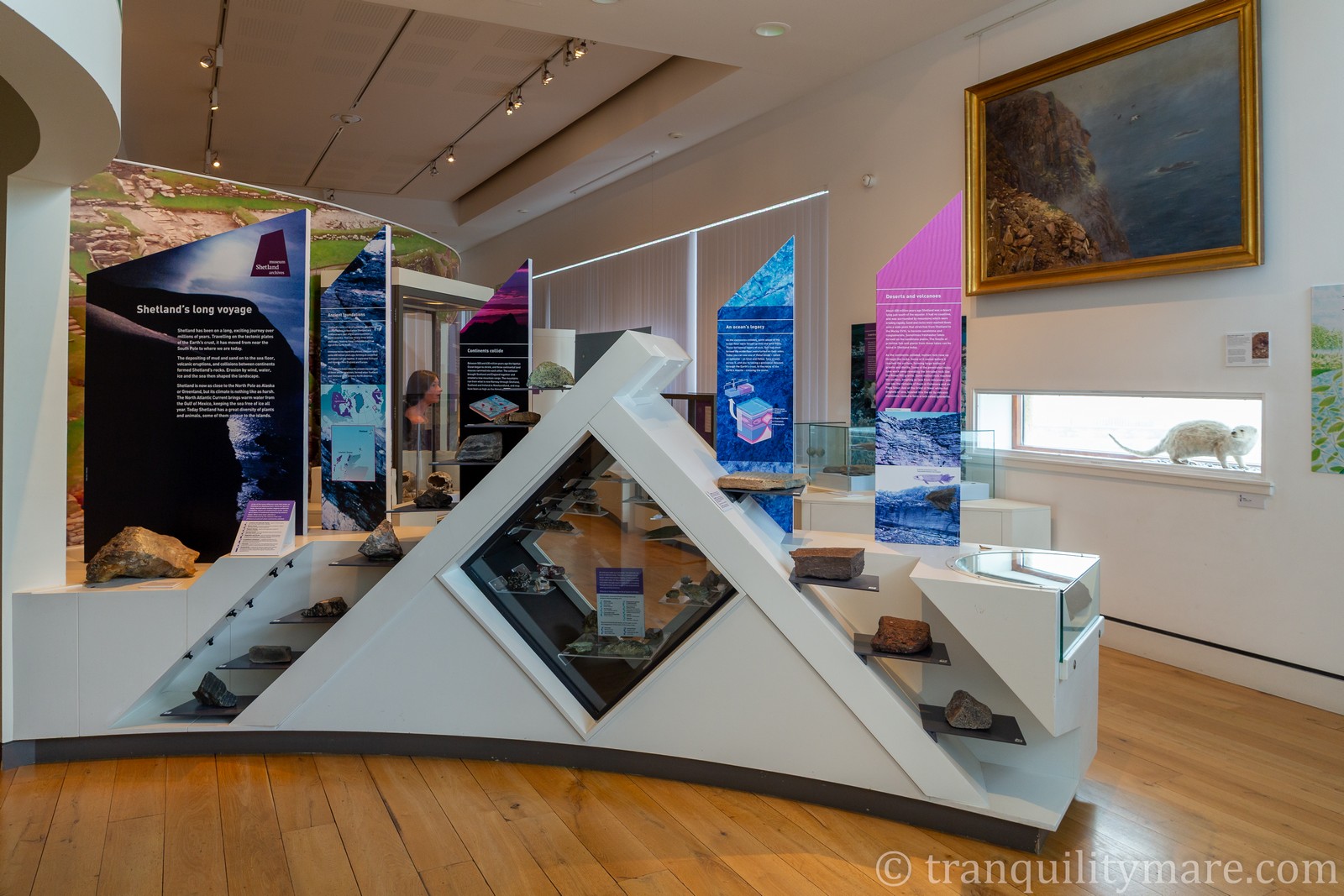
Once you’ve restocked and the crew has had a chance to recover, it’s well worth spending a day exploring the town. A highlight is the Shetland Museum & Archives, which does an excellent job of bringing the islands’ history, wildlife, and way of life to life. It’s a great place to better understand Shetland’s maritime culture and strong Viking heritage—and a perfect introduction before heading further out into the archipelago. As a bonus, entry is free.
Shetland Textile Museum
If you’re interested in Shetland’s textile heritage—especially its famous wool—this small museum is well worth a visit. It showcases the islands’ rich knitting traditions and craftsmanship developed over generations. You can see how the iconic Shetland sweaters are made and learn how important they once were in everyday island life. If you don’t make it there, don’t worry. You’ll find similar products in many shops along Commercial Street, the town’s main shopping street.
Nature
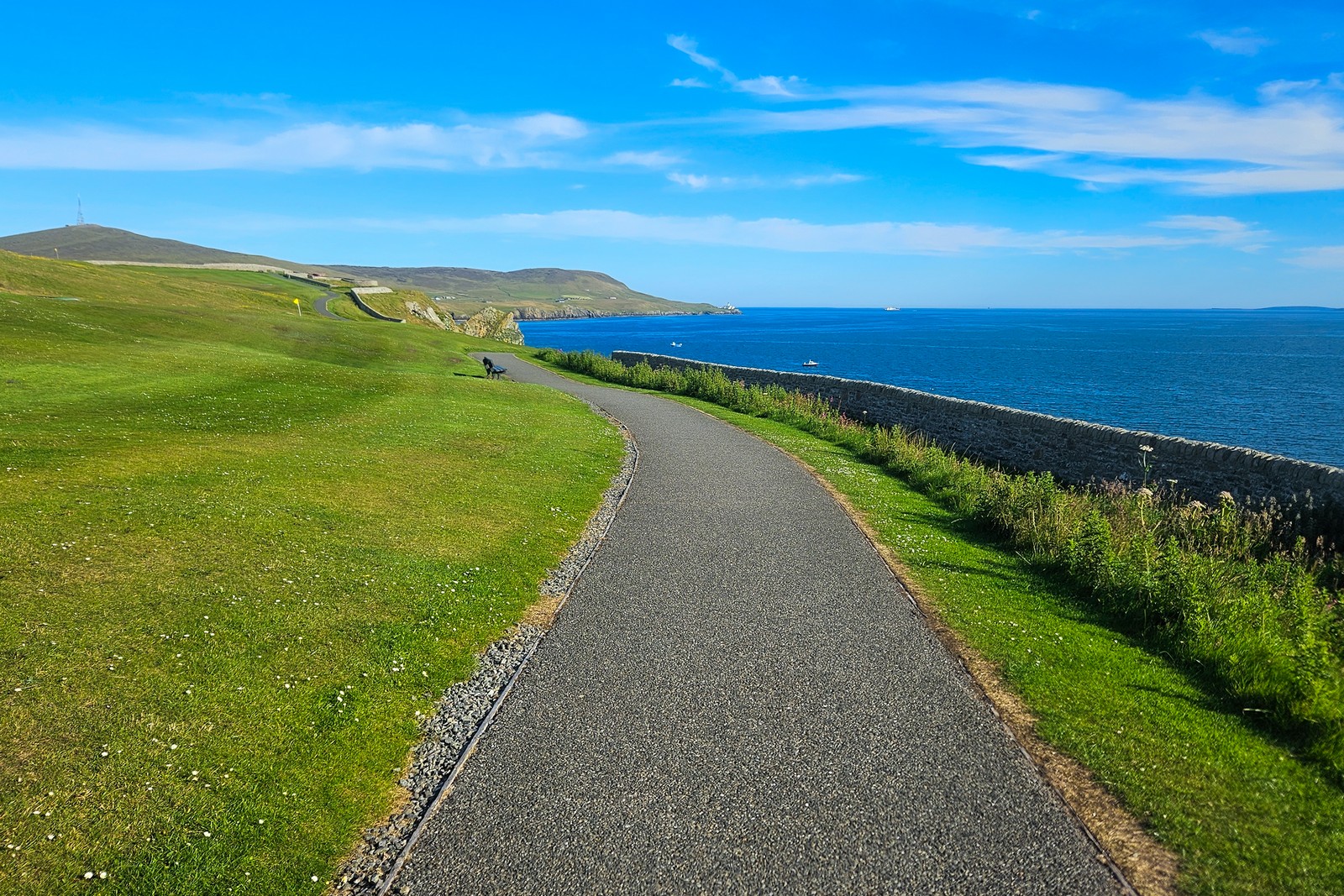
Just south of Lerwick, a network of walking paths follows the cliffs, offering great views over the rugged coastline and Bressay Sound. This is where locals come to unwind—reading on the grass or sitting on one of the many benches overlooking the sea.
With a bit of luck, you don’t even have to leave town to experience Shetland’s wildlife. Orcas and smaller whales occasionally enter the sound, and seals swimming right in the harbour are a common sight.
For a short walk, head to The Knab, but if you have more time, it’s worth continuing all the way around Breiwick Bay to the headland at Ness of Sound. Alternatively, a walk up Staney Hill offers a great panoramic view over the harbour and town.
Broch of Clickimin
You can also combine a coastal walk with a visit to the Broch of Clickimin. Brochs are distinctive round stone towers unique to northern Scotland, built during the Iron Age around 2,000 years ago. Constructed without mortar, they featured thick double walls, internal passages, and stairways, and could reach heights of over 10 meters. Their exact purpose remains uncertain—they may have served defensive, residential, or even symbolic roles within local communities. Over 500 have been identified across Scotland, many of them in Shetland, where they form one of the most iconic elements of the ancient landscape.
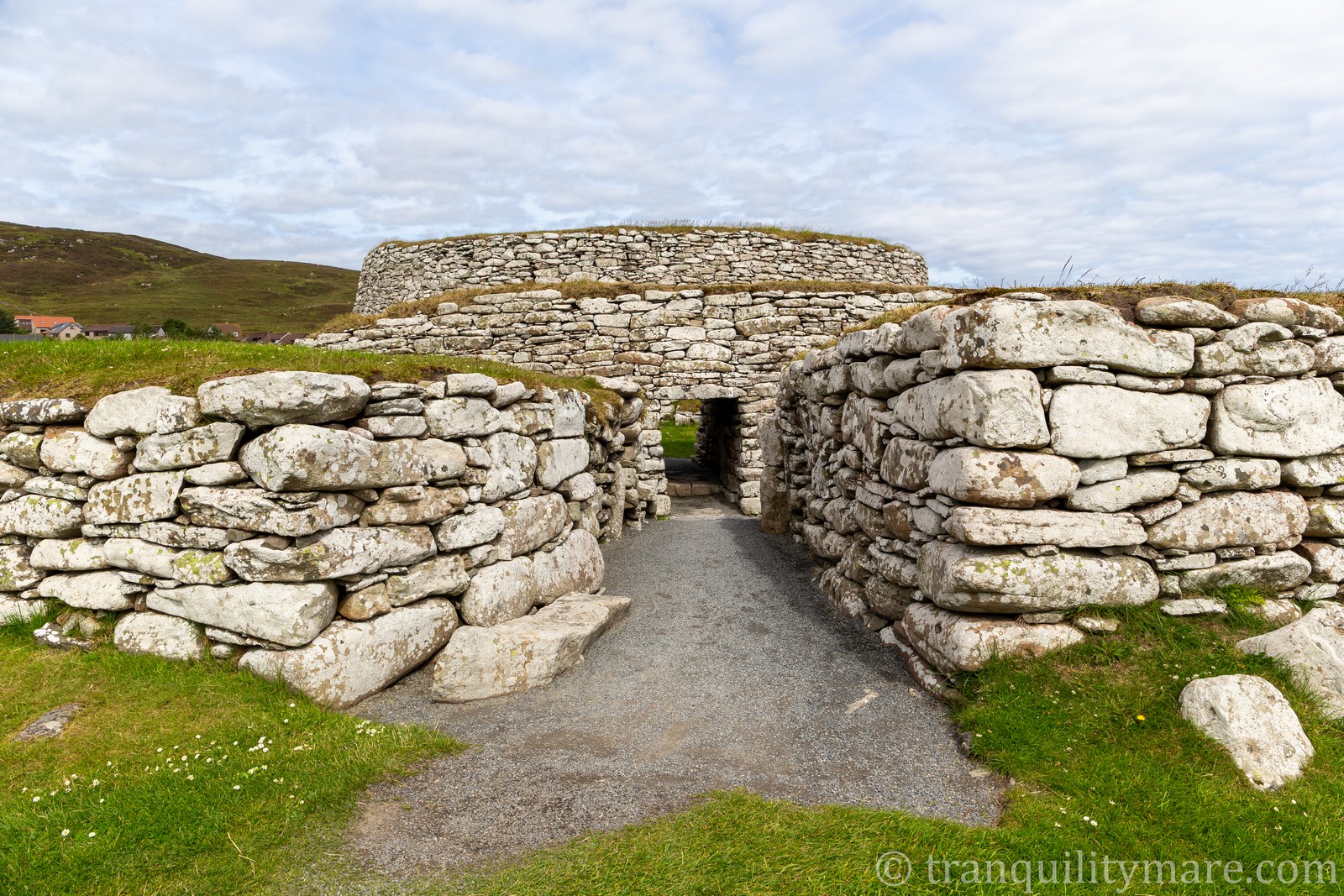
The Broch of Clickimin is one of the best-known examples in Shetland, located on a small islet in a loch just outside Lerwick. It stands out for its unusual layout—with additional defensive walls and traces of later structures surrounding the main tower. While it’s not as well preserved as some other brochs. Its easy access makes it one of the most visited and gives a good sense of their scale and purpose.
It’s definitely worth a visit while in Lerwick, though later in this guide we’ll point you to a broch that’s preserved far better—possibly the best in the entire British Isles. Unfortunately, Clickimin’s proximity to settlement meant it was gradually dismantled over the centuries, with its stone reused for building. Many other brochs shared a similar fate. Those that survived are usually the ones in more remote, harder-to-reach locations, where transporting stone was simply not worth the effort.
Scalloway
Before continuing along the eastern coast of the archipelago, it’s well worth visiting Shetland’s second-largest settlement—Scalloway. In our view, the easiest way to explore it is as a day trip from Lerwick. It’s only about 10 km from the capital, with regular bus connections making it quick and straightforward to reach.
Getting there by yacht is a different story and comes with more complicated logistics. Scalloway sits on the western, windward side of the islands, where favourable sailing conditions are relatively rare. On top of that, most of Shetland’s anchorages, bays, and key points of interest are on the eastern side, so heading west just for Scalloway is something we’d reserve for the more determined. The route itself runs through narrow sounds between small islands and scattered rocks. The small pontoon at the local sailing club has space for only two yachts.
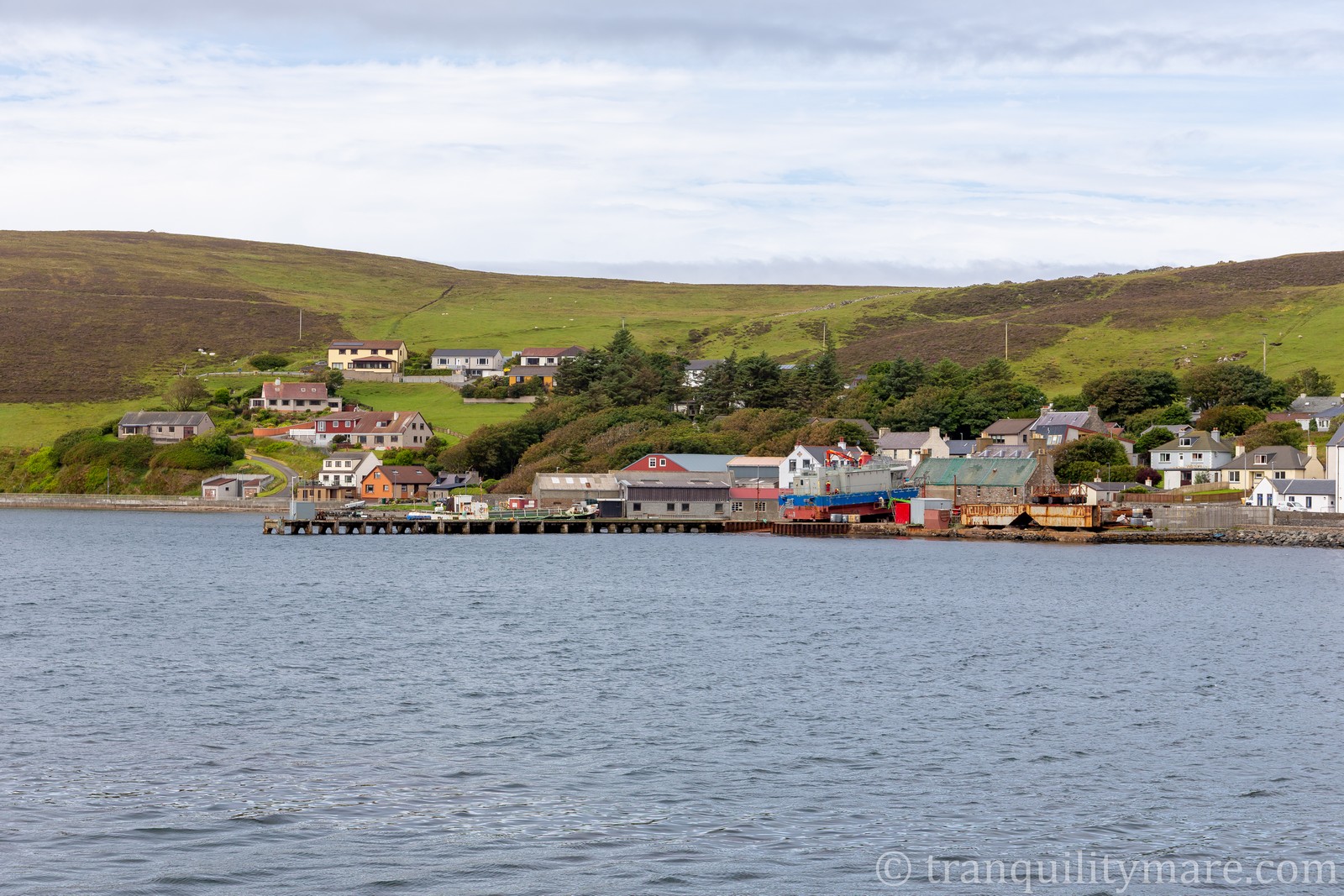
Taking all that into account, we’d definitely recommend hopping on a bus from Lerwick and visiting Scalloway by land.
What to see in Scalloway
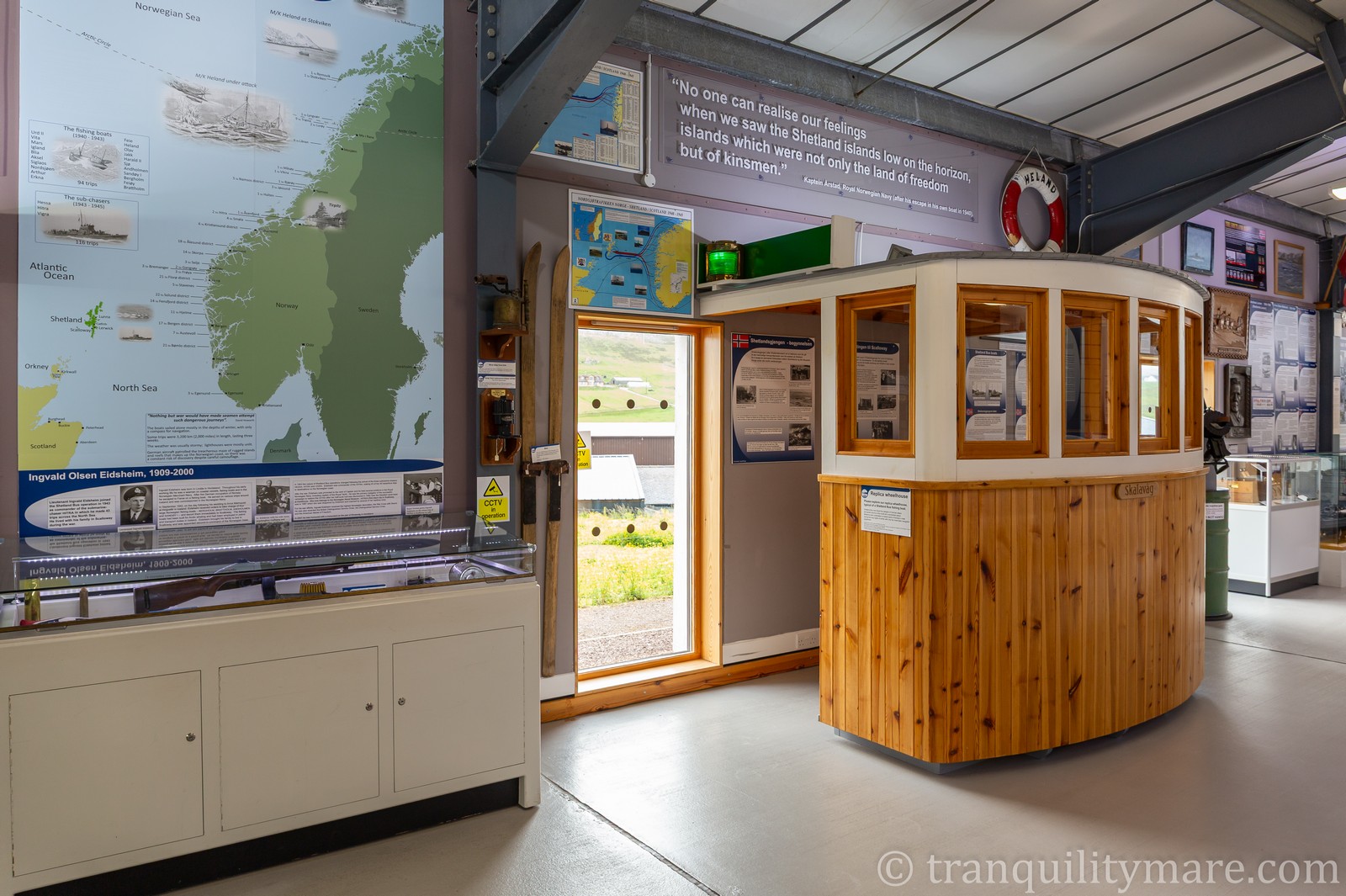
Once there, take some time to stroll along the waterfront, where the town’s past as Shetland’s former capital is still very much alive. Along the way, you’ll come across places like Prince Olav’s slipway and sites connected to the famous Shetland Bus—a secret World War II operation in which small vessels ran missions between Shetland and occupied Norway. Scalloway served as their main base.
The best place to dive into this heroic story is the Scalloway Museum, located right next to the castle. It features a compelling exhibition dedicated to the Shetland Bus crews, capturing both the risks they took and the importance of their missions.
While you’re there, it’s also worth visiting the nearby ruins of Scalloway Castle. It’s one of the most distinctive landmarks in this part of the islands.
Sumburgh
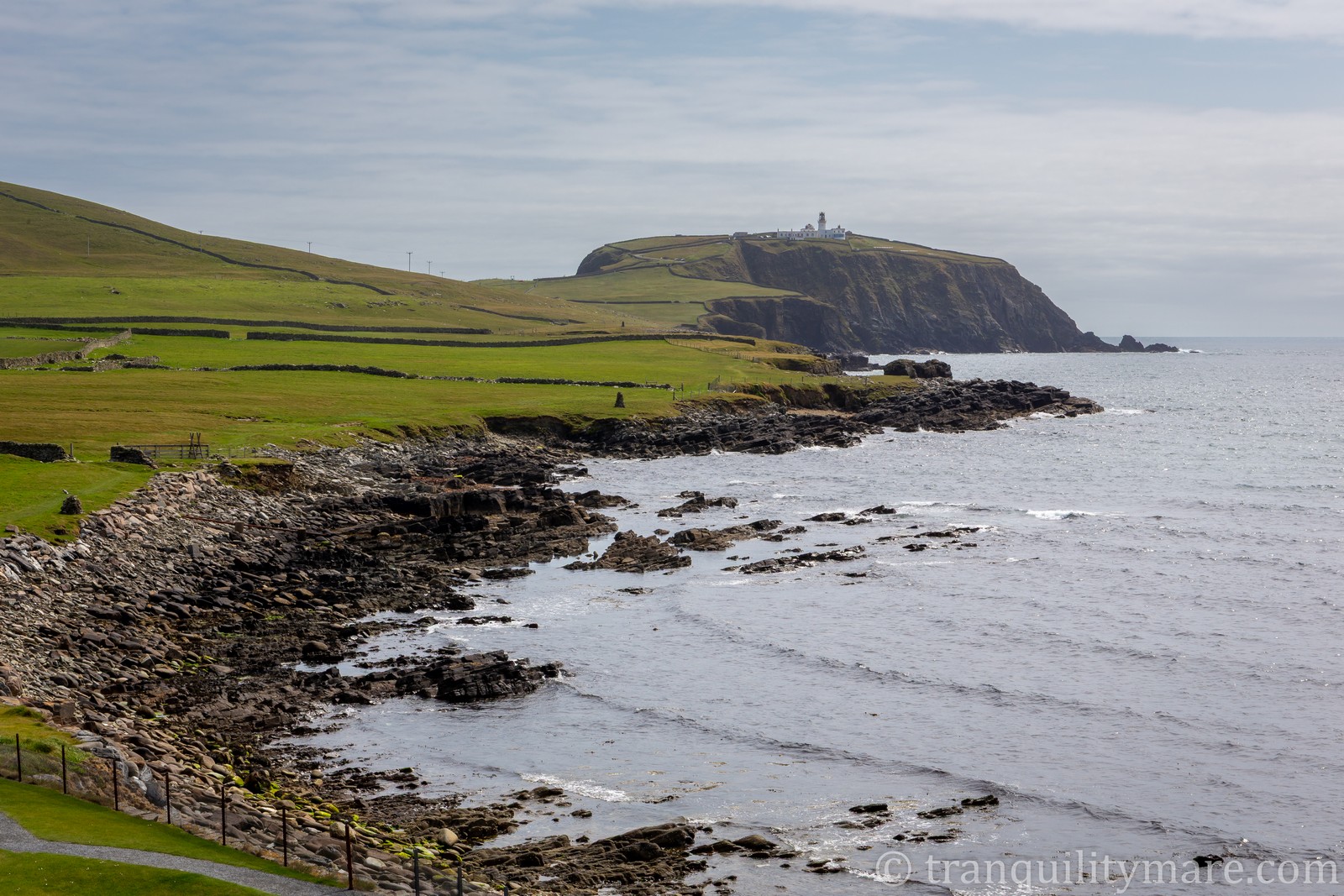
Sumburgh marks the southern tip of the Shetland archipelago. From our experience, it’s also a very practical first stop if you’re arriving from the British Isles.
Grutness Voe
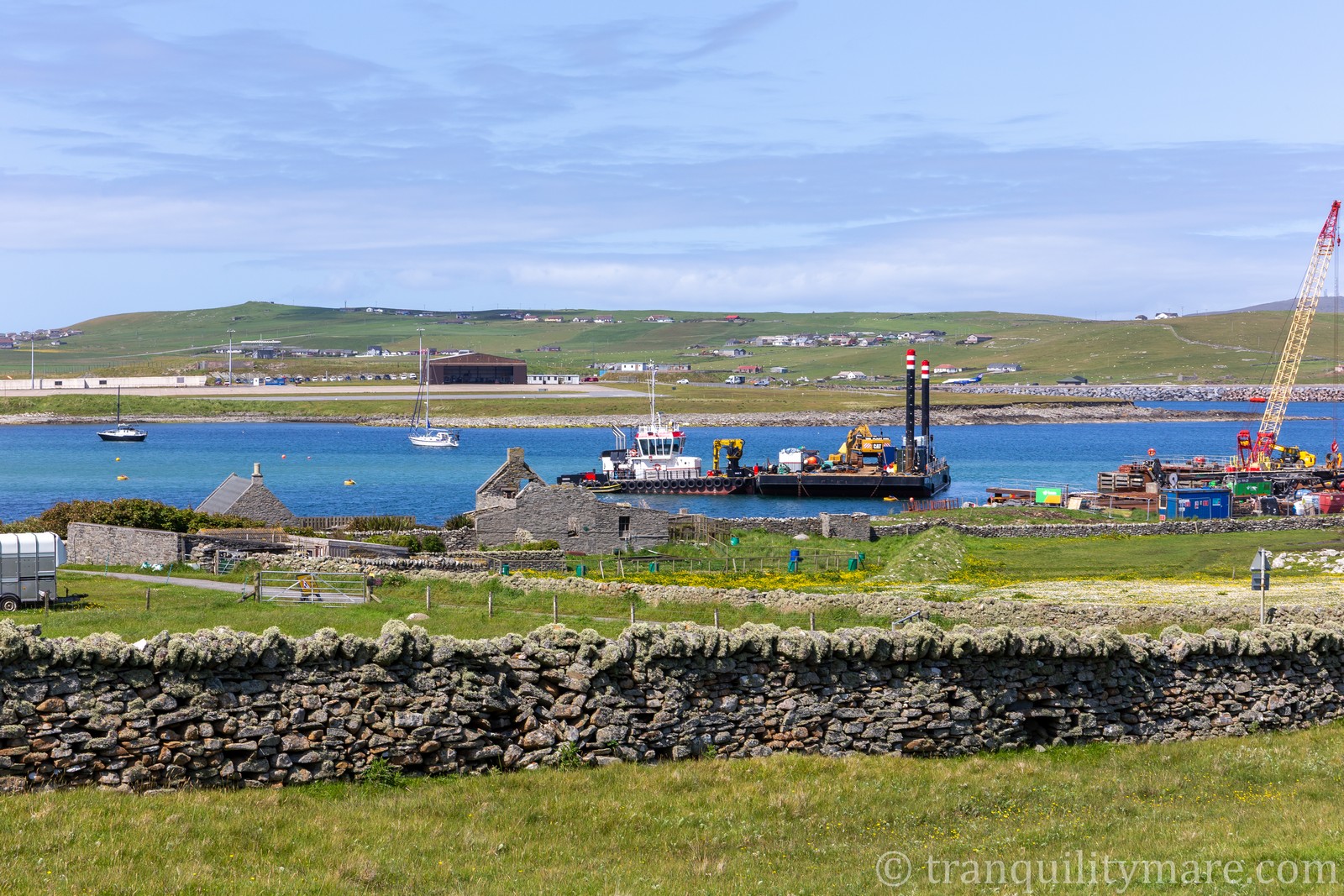
The anchorage at Grutness Voe, on the western side of the peninsula, offers shelter in winds from NW through SE. At the time of writing, ferry infrastructure is still being expanded as part of a project to improve connections with Fair Isle. This includes extending the pier and improving harbour protection, with completion planned for 2026.
As a result, anchoring space is currently limited, and construction noise can sometimes make it harder to rest. Add to that the nearby Sumburgh Airport—the main air link to mainland Scotland—and it can get quite lively. The airport also serves helicopter traffic transporting workers to offshore oil platforms in the North Sea, so air traffic is frequent.
Exploring Sumburgh
So why stop here at all? Because Sumburgh is one of the most historically significant places in Shetland.
Jarlshof
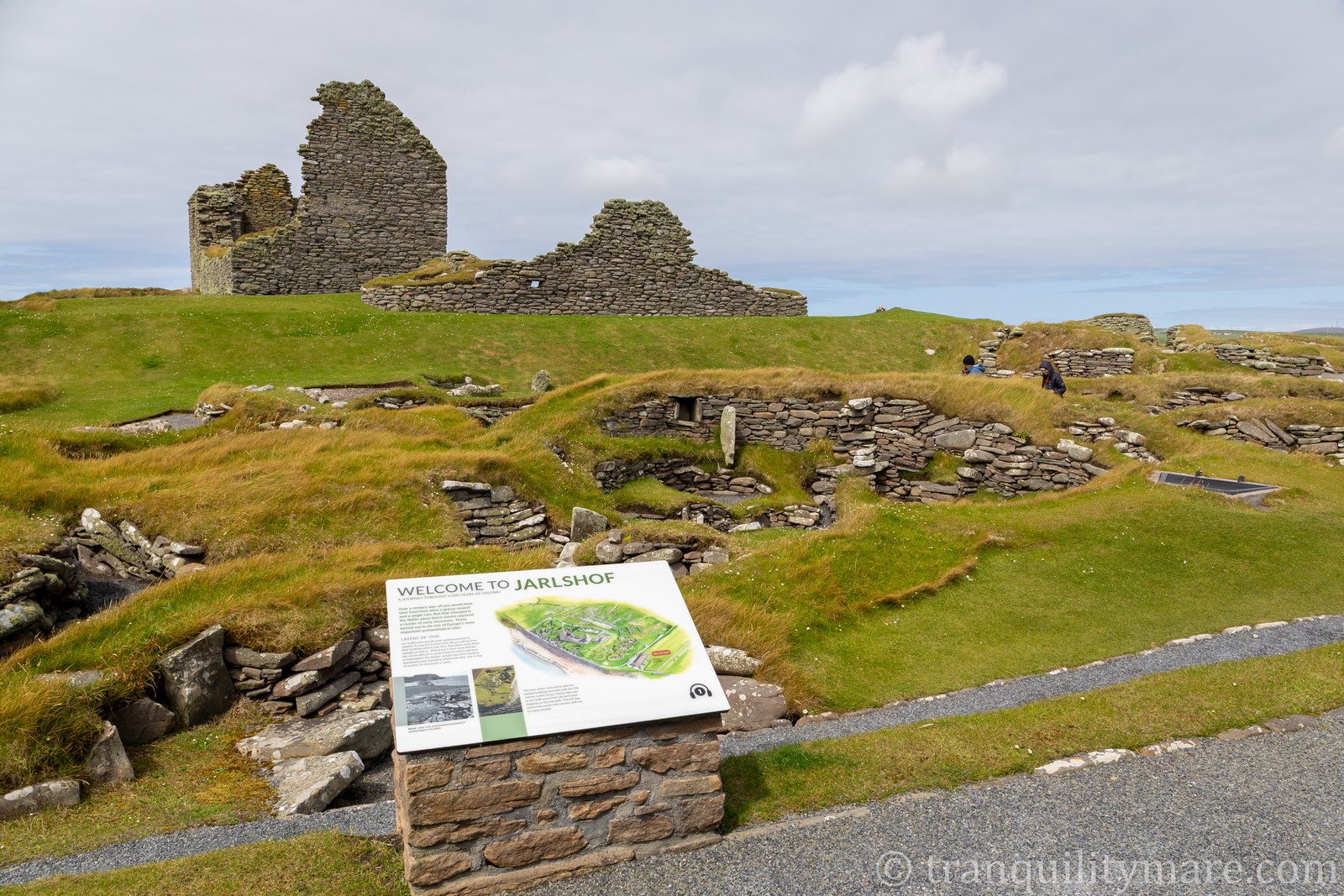
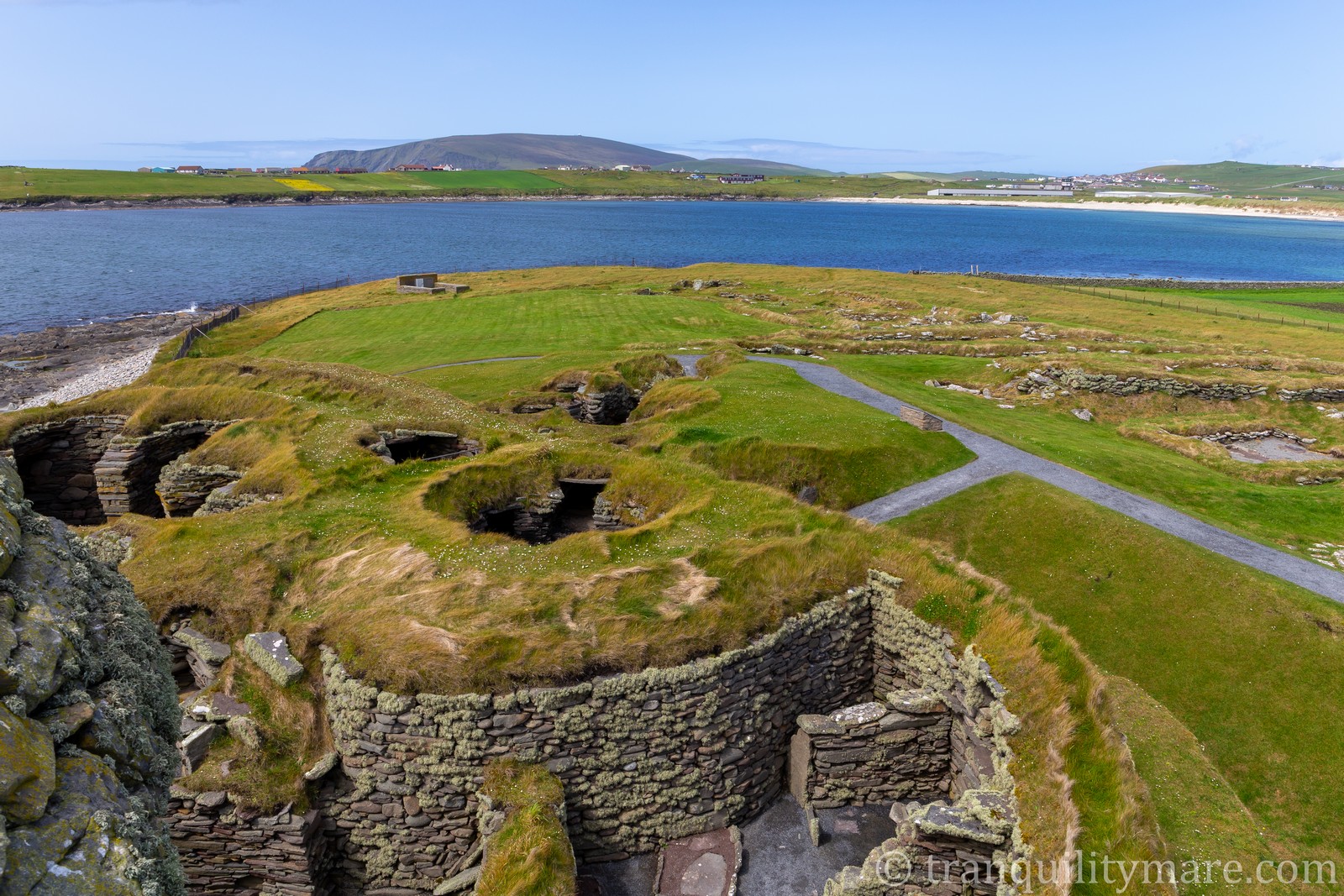
This remarkable archaeological site layers thousands of years of history in one place—from the Bronze Age through Pictish and Viking periods to medieval times. Walking through the ruins feels like moving across eras, with remains of houses, Viking longhouses, and defensive structures all visible side by side. It offers a rare sense of the continuity of settlement on these remote islands. Visiting Jarlshof is also a chance to see another broch. Entry is paid—around £7.50 online or £8.50 on site.
Old Scatness Broch & Iron Age Village
Another fascinating site is Old Scatness, where you can explore not only the remains of yet another broch but also a reconstructed Iron Age village. The site brings history to life, showing how people lived here over a span of more than 2,000 years. Visits are guided only, which adds a lot of depth and context.
It’s open seasonally—typically from May to September or October. In practice (as of 2026) access can be quite limited, only on specific days and times. This can make it tricky to fit into a Shetland sailing schedule, but if you’re particularly interested in archaeology, it’s well worth planning ahead. Tickets usually cost between £5 and £8, and the guided tour makes it excellent value.
Sumburgh Head Lighthouse
Standing for over 200 years, Sumburgh Head Lighthouse has guided ships safely past the southern tip of Shetland. Perched high on dramatic cliffs, it’s one of the most iconic landmarks in this part of the archipelago. Today, you can step inside a small museum and get a feel for what life was once like for lighthouse keepers.
The lighthouse didn’t just help ships navigate these waters. It also played a key defensive role during World War II. In 1939, a radar station was installed here, and in April 1940 it detected an incoming German air raid targeting Scapa Flow in Orkney. Thanks to this early warning, the British fleet had time to prepare, helping to repel the attack and avoid serious losses. It’s a striking example of how critical coastal infrastructure like this could be—not just for navigation, but for the security of an entire fleet.
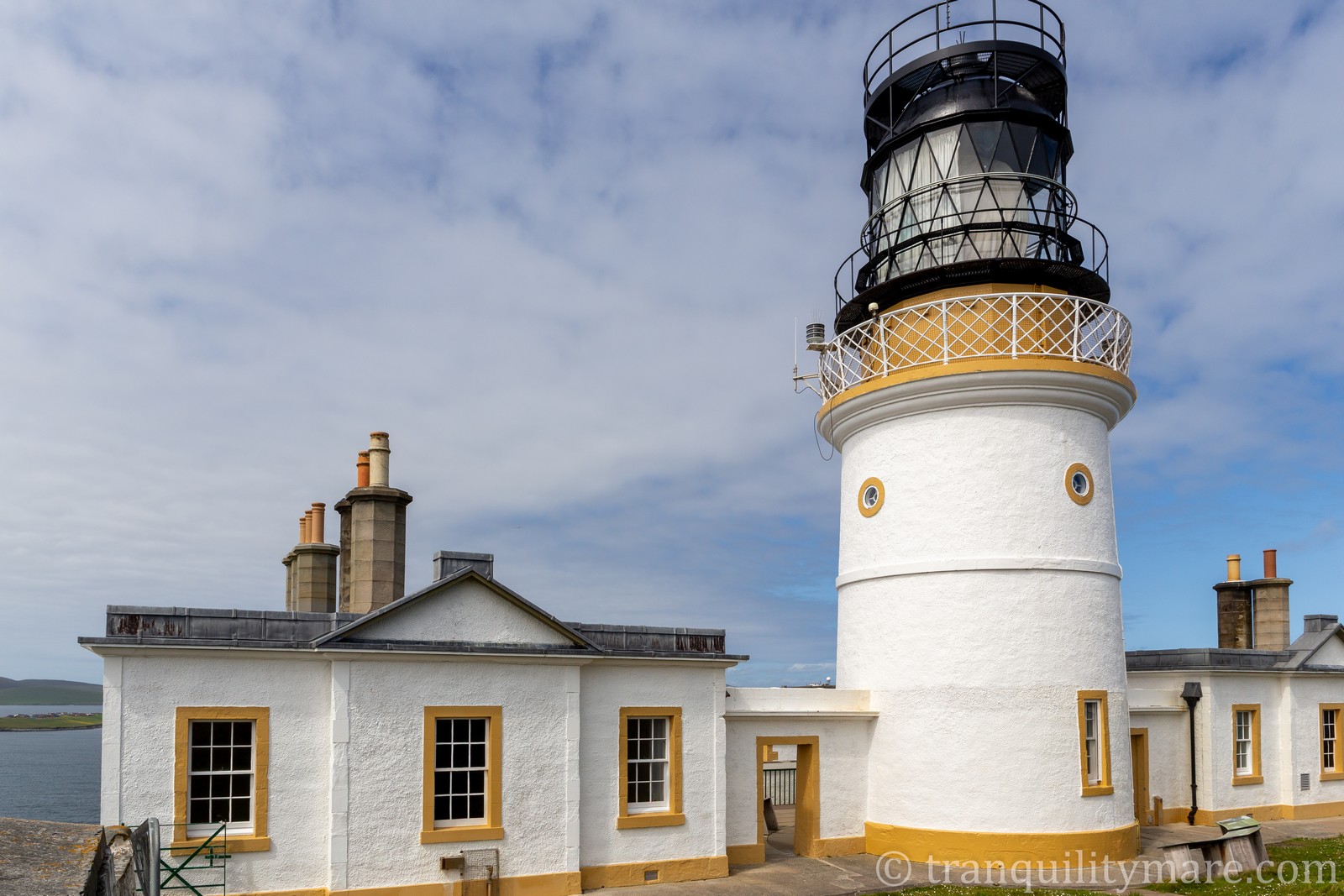
The lighthouse is open seasonally, typically from 10:00 to 17:00 (closed Tuesdays and Wednesdays). Admission is £6.
Sumburgh Cliffs
If history isn’t your main focus, Sumburgh offers just as much on the nature side. The cliffs here—like elsewhere in Shetland—are home to vast colonies of seabirds. The real stars are puffins. Small, slightly comical-looking birds that turn out to be incredibly skillful both in the air and underwater. More about them later into the read.
From the many viewpoints along the cliffs, patient observers may also spot whales or orcas passing through the waters around the peninsula.
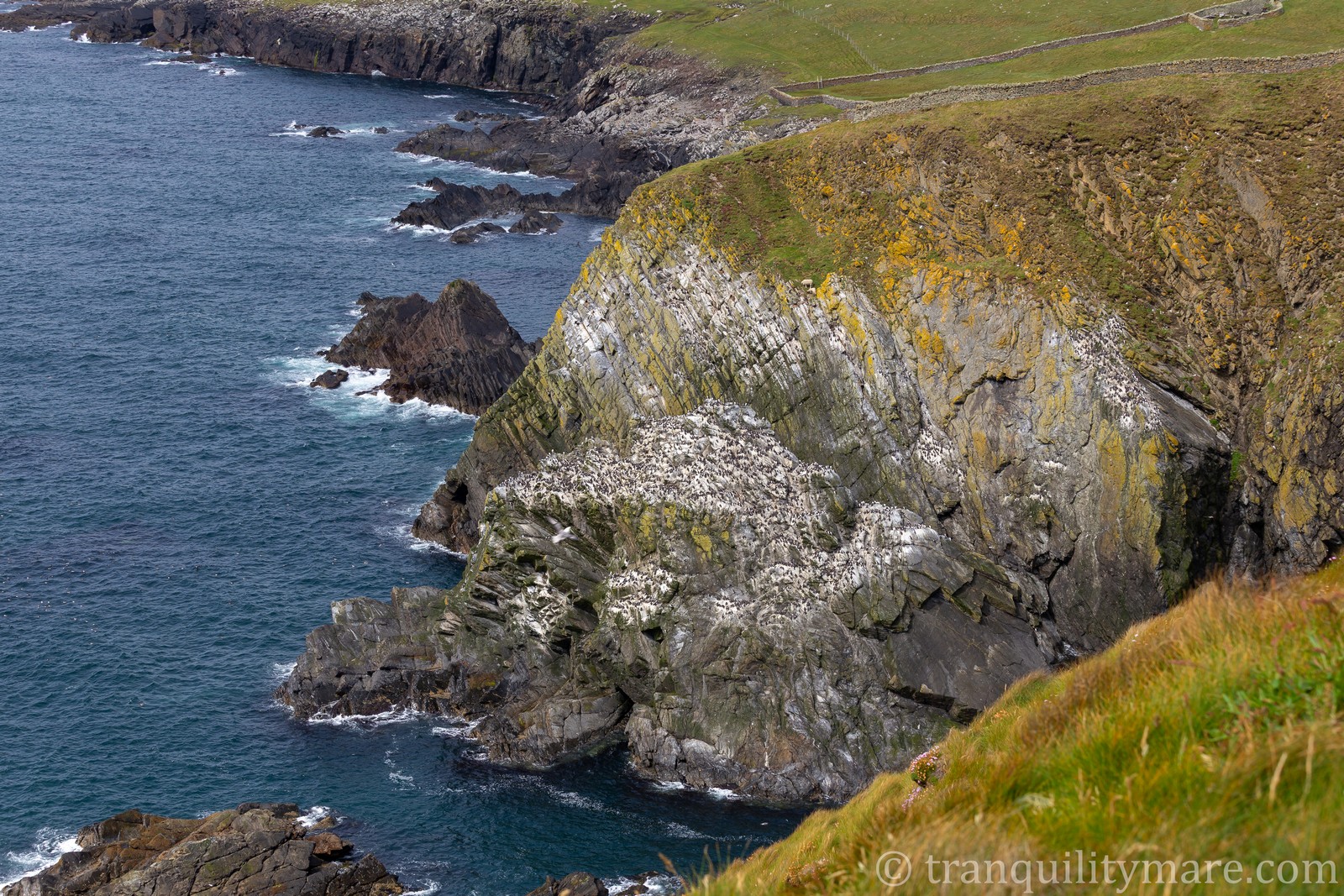
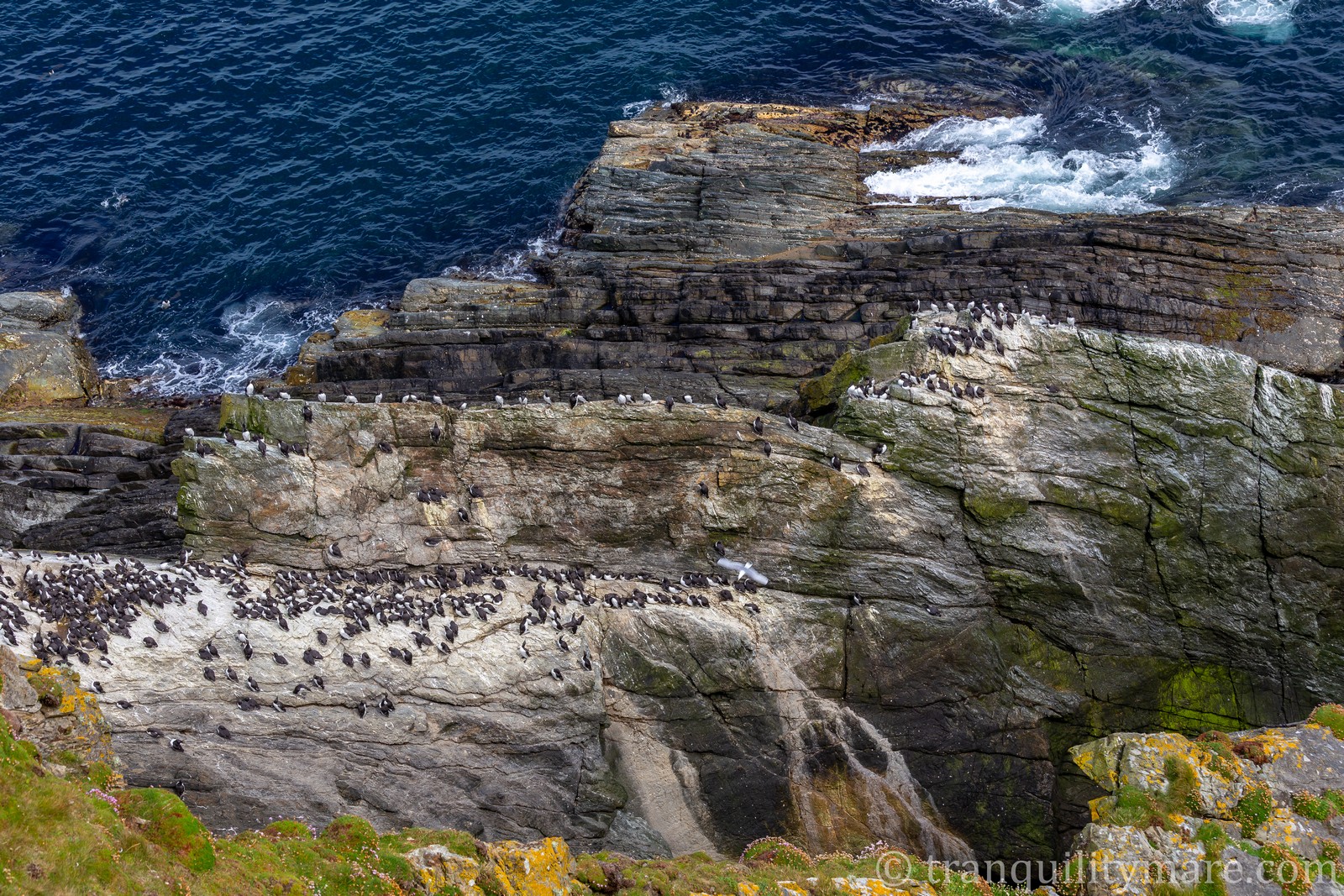
All of these attractions are within walking distance of the Grutness Voe anchorage. Until the new ferry pier is completed, the only way to get ashore is landing on the beach.
Channerwick
If the noise in Grutness Voe starts to wear you down, a better place to rest is the bay at Channerwick, a few miles to the north. It’s quieter and works well as an overnight alternative to the southern tip of the peninsula. However, Channerwick isn’t ideal as a base for exploring the peninsula, as the beach makes dinghy landings difficult.
So if construction is ongoing, helicopters are buzzing overhead, and a peaceful night in Grutness Voe proves elusive, a good approach is to explore Sumburgh during the day and then sail north to Channerwick for a calmer overnight stop.
St Ninian’s Isle
Just west of Sumburgh, there are two anchorage options between the island of St Ninian’s and the mainland. Unfortunately, in practice they are often unusable due to the prevailing westerly winds in the area. Depending on wind direction, it is possible to anchor either to the north or south side of the causeway leading to the island.
This causeway is a tombolo. It’s a natural strip of sand and finely broken shell that connects the island to the mainland. Its bright, almost white colour stands in striking contrast to the otherwise dark and rugged Shetland landscape. It is widely considered one of the most beautiful natural spits in the UK. On the island itself, you’ll find the ruins of a medieval chapel and the site where the famous Pictish treasure hoard was discovered. Landing on the beach is straightforward.
Mousa Broch
Continuing Shetland sailing north along the eastern coast, it’s well worth stopping at the island of Mousa. This is home to Mousa Broch—the best-preserved broch in Scotland and one of the tallest of its kind in the world, standing at around 13 metres.
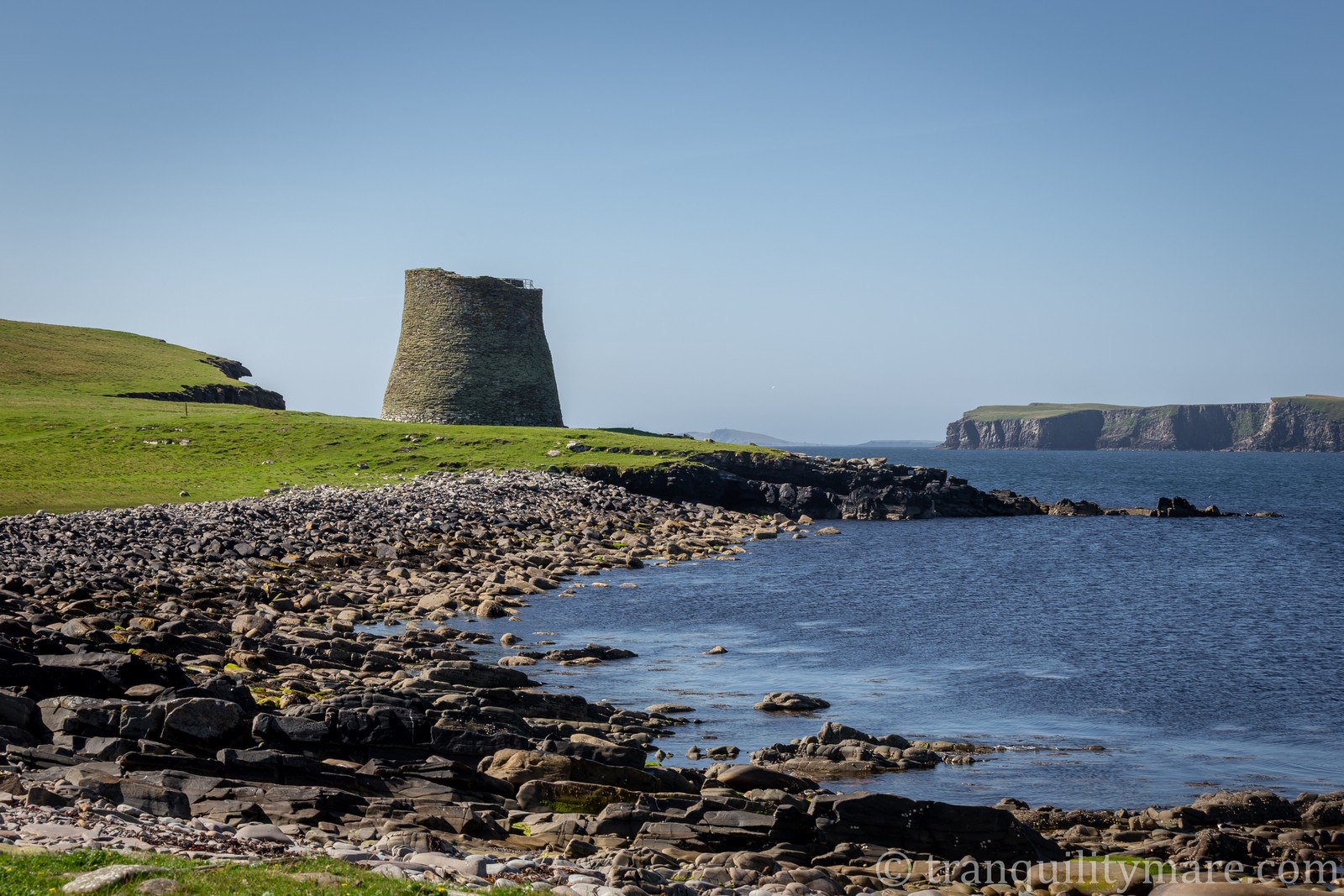
Its isolated location is the main reason it has survived almost intact, while many other brochs were dismantled over time and reused as building material. The structure can be entered, and a narrow spiral staircase hidden within the double walls leads to the top—an impressive example of Iron Age engineering.
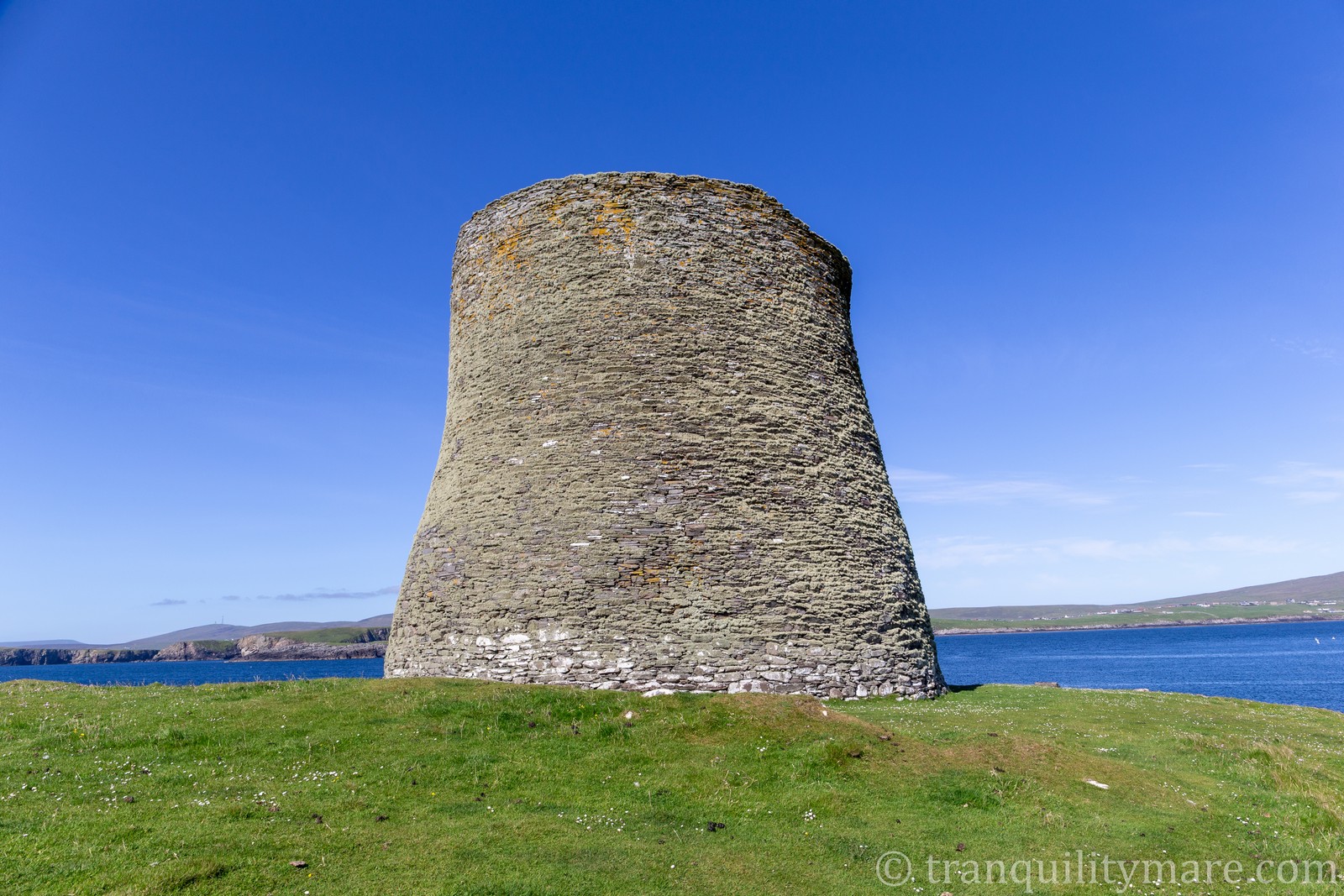
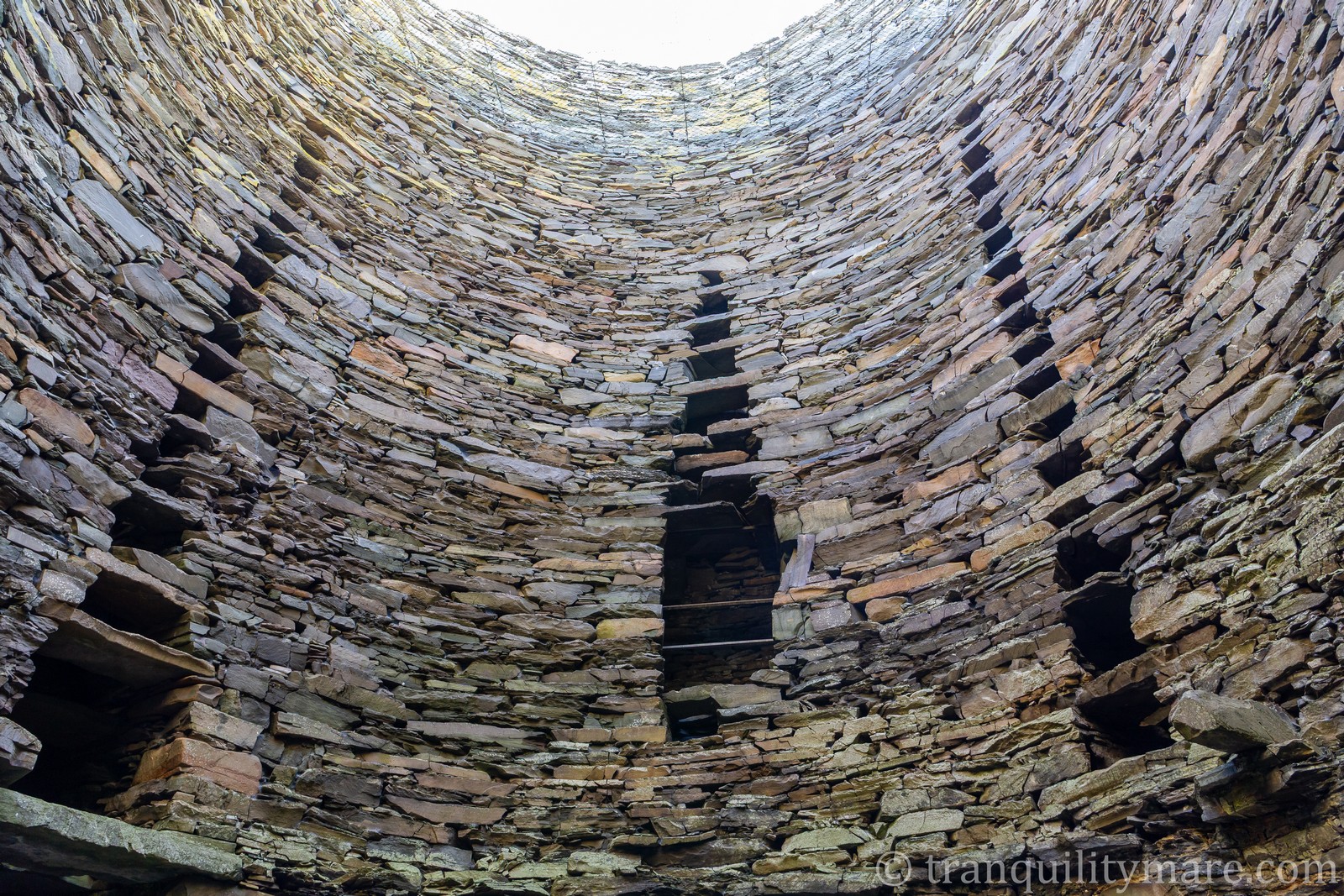
If you have more time, a roughly 3.5 km walking trail circles the island and is highly recommended after visiting the broch.
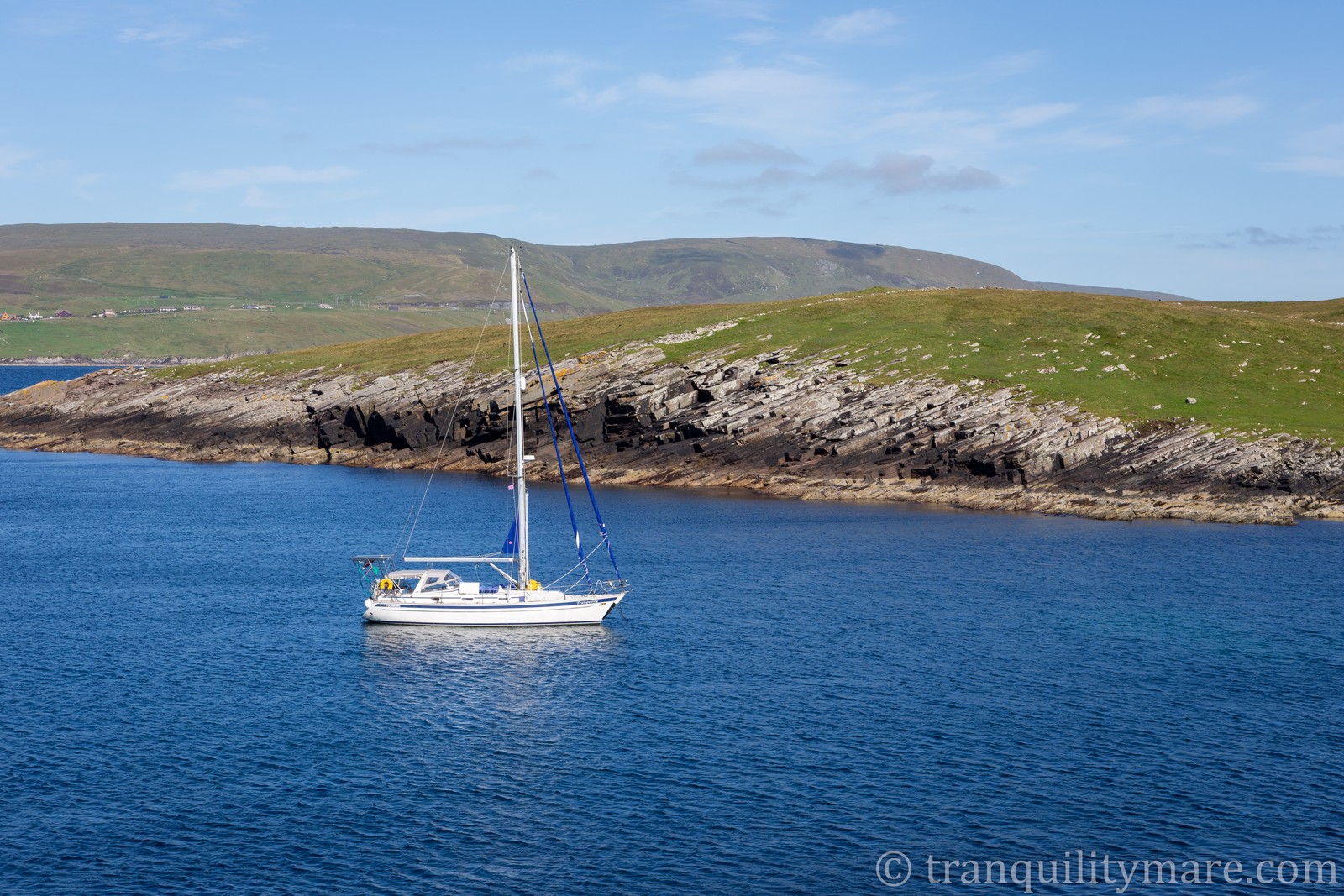
The only anchorage, on the western side of the island, is far from ideal. Small, rocky, and offering only limited holding on a patch of sand visible in satellite image. In our view, it only makes sense in very calm conditions and is not really suitable for an overnight stay. Fortunately, that’s not a major issue. The broch is close enough that even a short stop of about two hours is more than enough to visit and soak in the atmosphere.
During the day, a small tourist ferry also comes here a few times, so it’s important not to block the landing area with a dinghy. When the boat arrives, a small souvenir shop also opens on the island.
Noss & Bressay
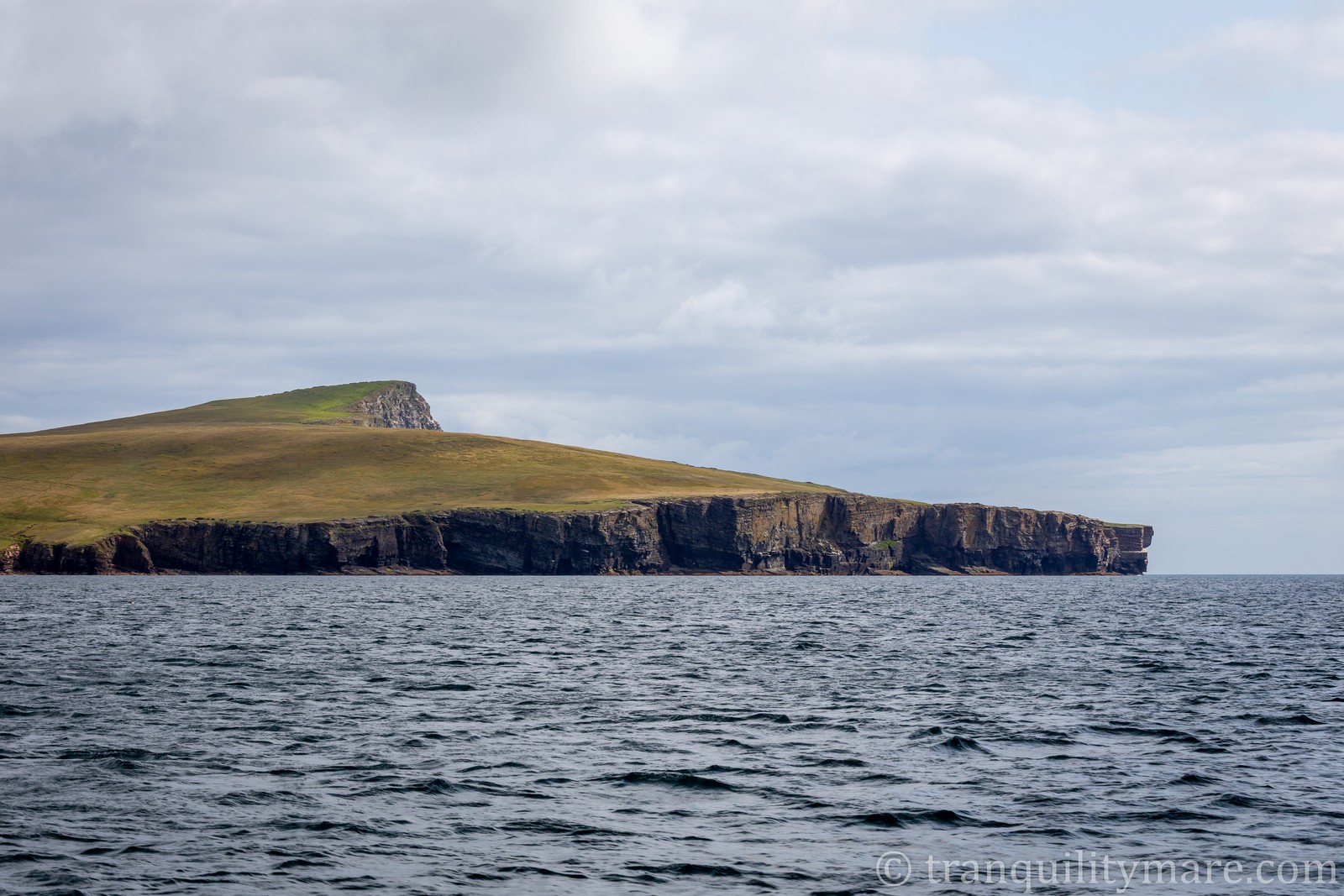
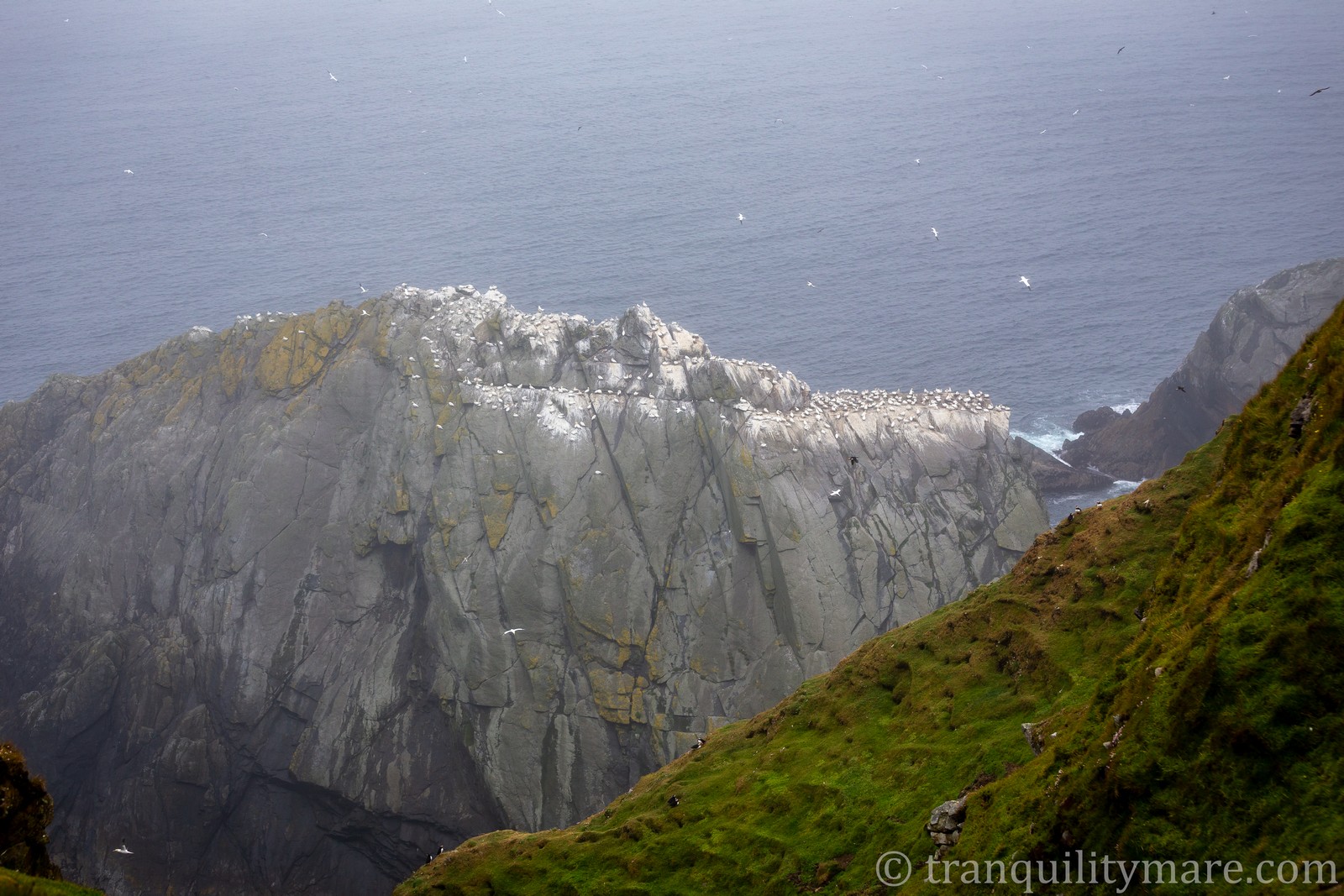
If you’re not planning to enter Lerwick, it’s well worth rounding the island of Bressay from the east and making a stop at Noss. This is one of Shetland’s most important seabird reserves, famous for its dramatic cliffs rising almost 200 metres straight out of the sea. Thousands of birds nest here—gannets, fulmars, and puffins among them.
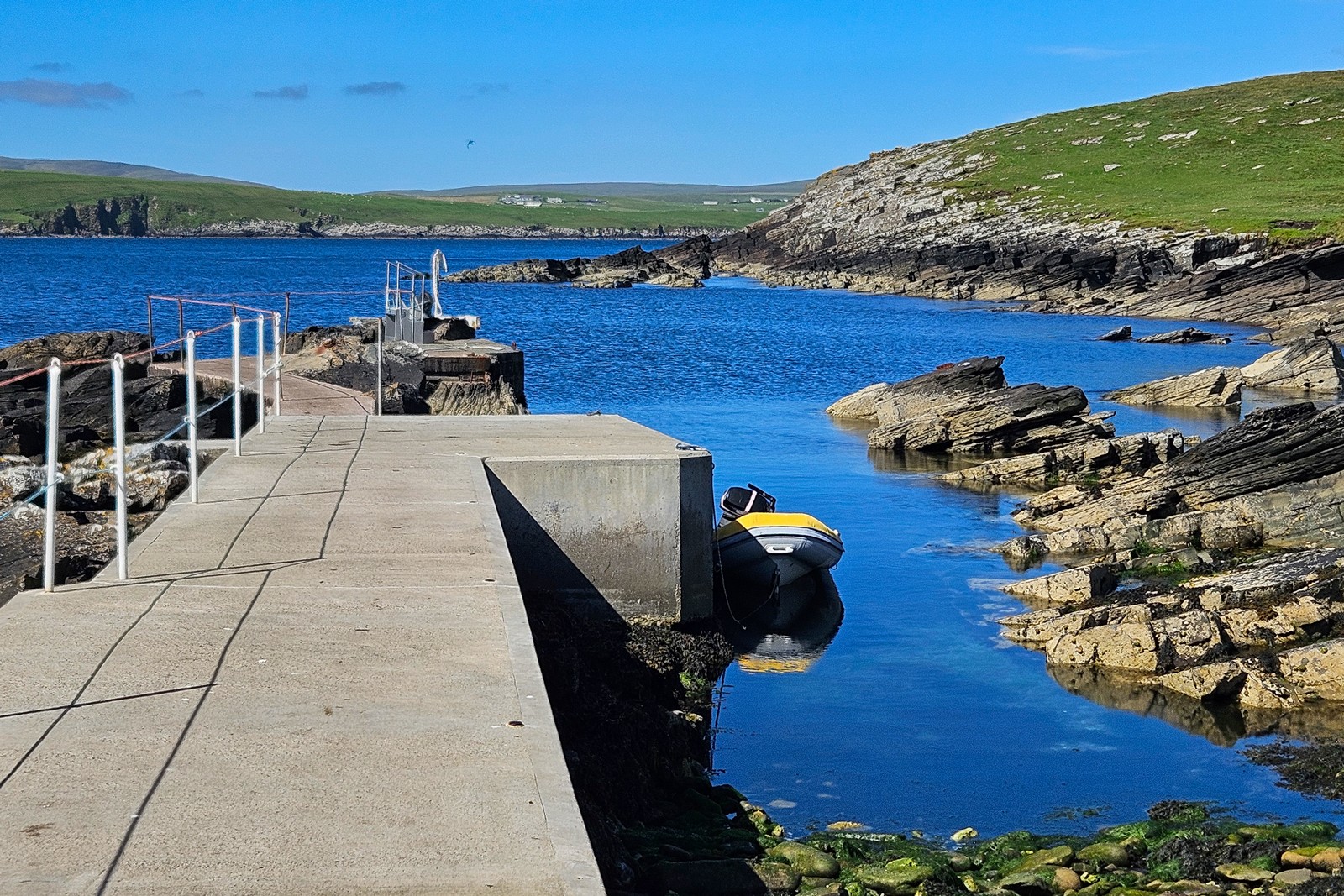
Anchoring, much like at Mousa, is only really possible in very calm conditions. The two small bays on the north-western side of Noss are tight, surrounded by rocks. Holding ground can be unreliable, with reports of uncharted hazards. If conditions allow a safe landing, it is possible to come ashore by dinghy at a small, rather inconspicuous jetty from the Noss Sound side. The first step after landing is to report to the reserve wardens, who provide up-to-date guidance on visiting the island.
If weather or personal comfort doesn’t allow anchoring, there is another way to experience the area. In our opinion, it may even be better – from the water. From above, you often only catch a fragment of the edge, but from below you take in their entire vertical impact. Sailing along the eastern side of Noss reveals spectacular scenery, with seabirds swirling around the boat in numbers. That can feel almost overwhelming. It’s a bit like sailing through Jurassic Park—just with better lighting and fresher air. Interestingly, there’s surprisingly little mess left on deck afterwards, which suggests Shetland’s birds are remarkably well-behaved.
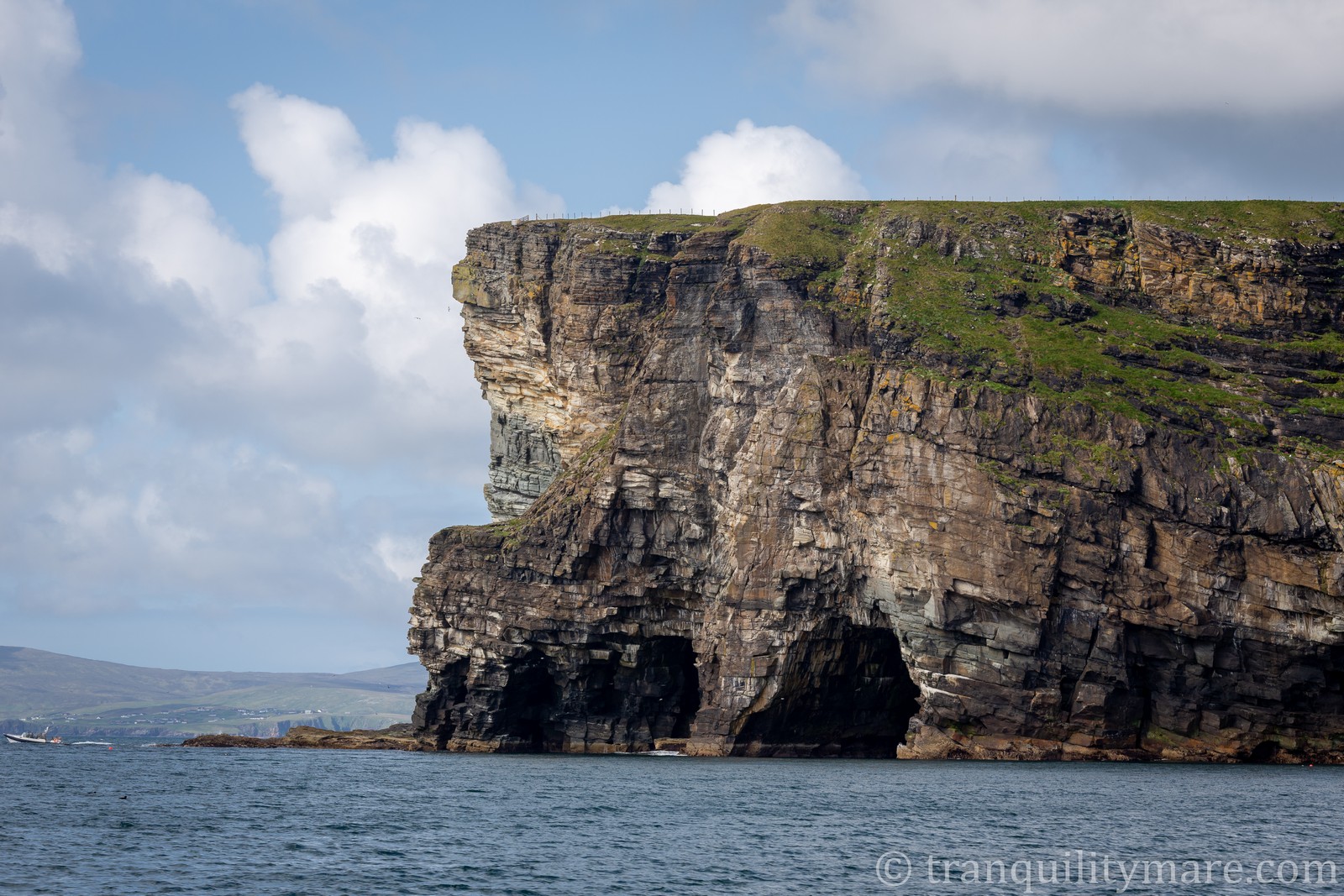
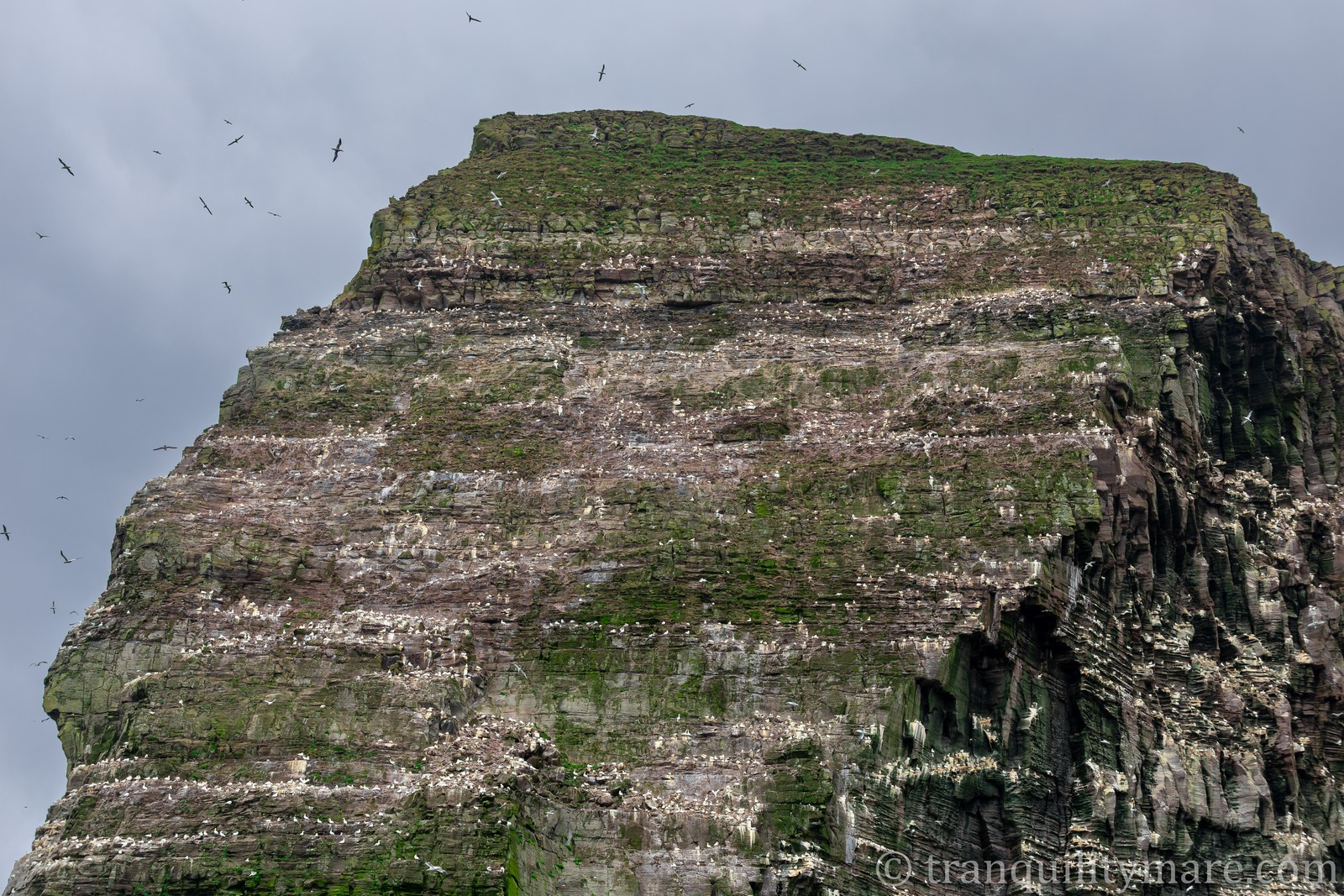
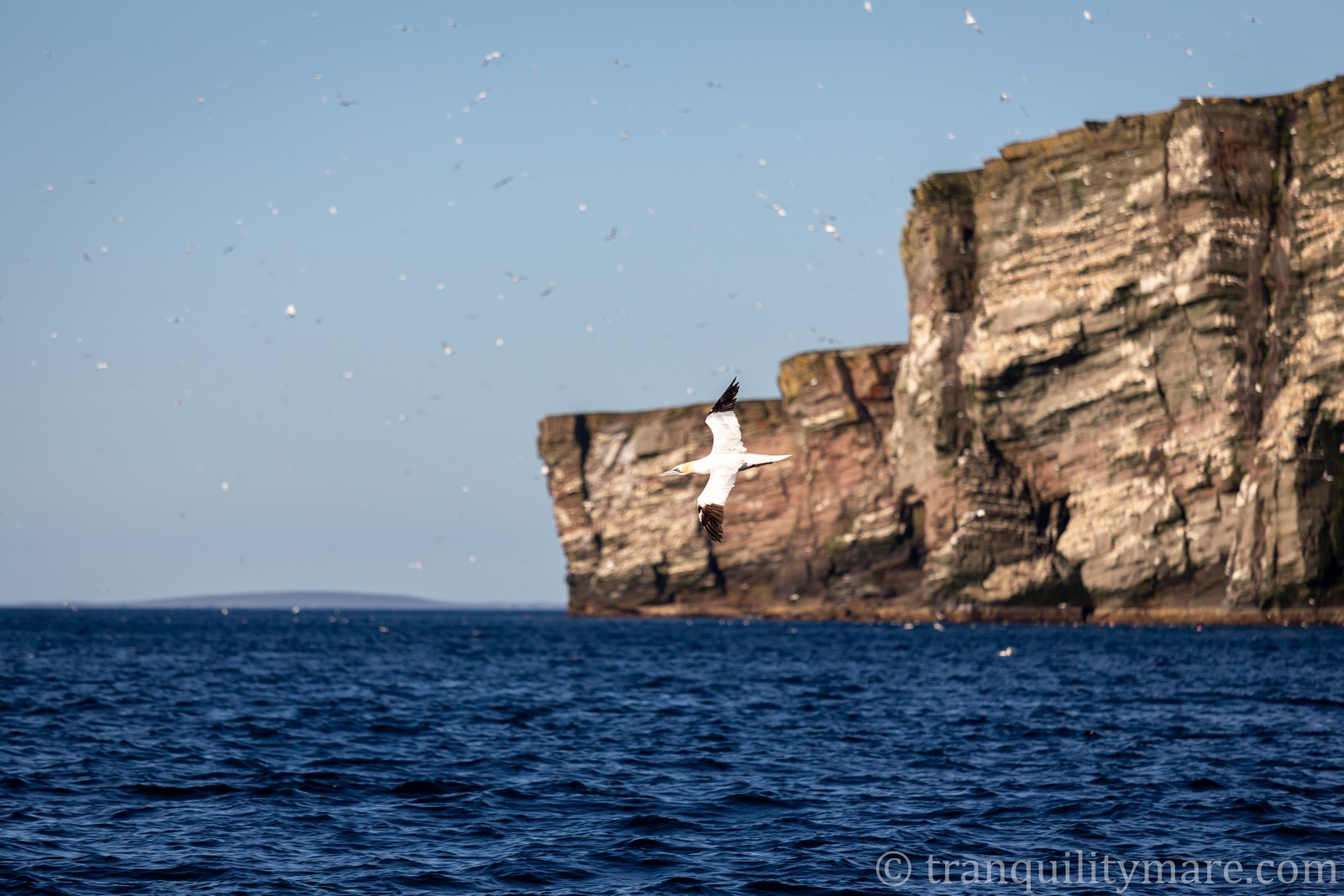
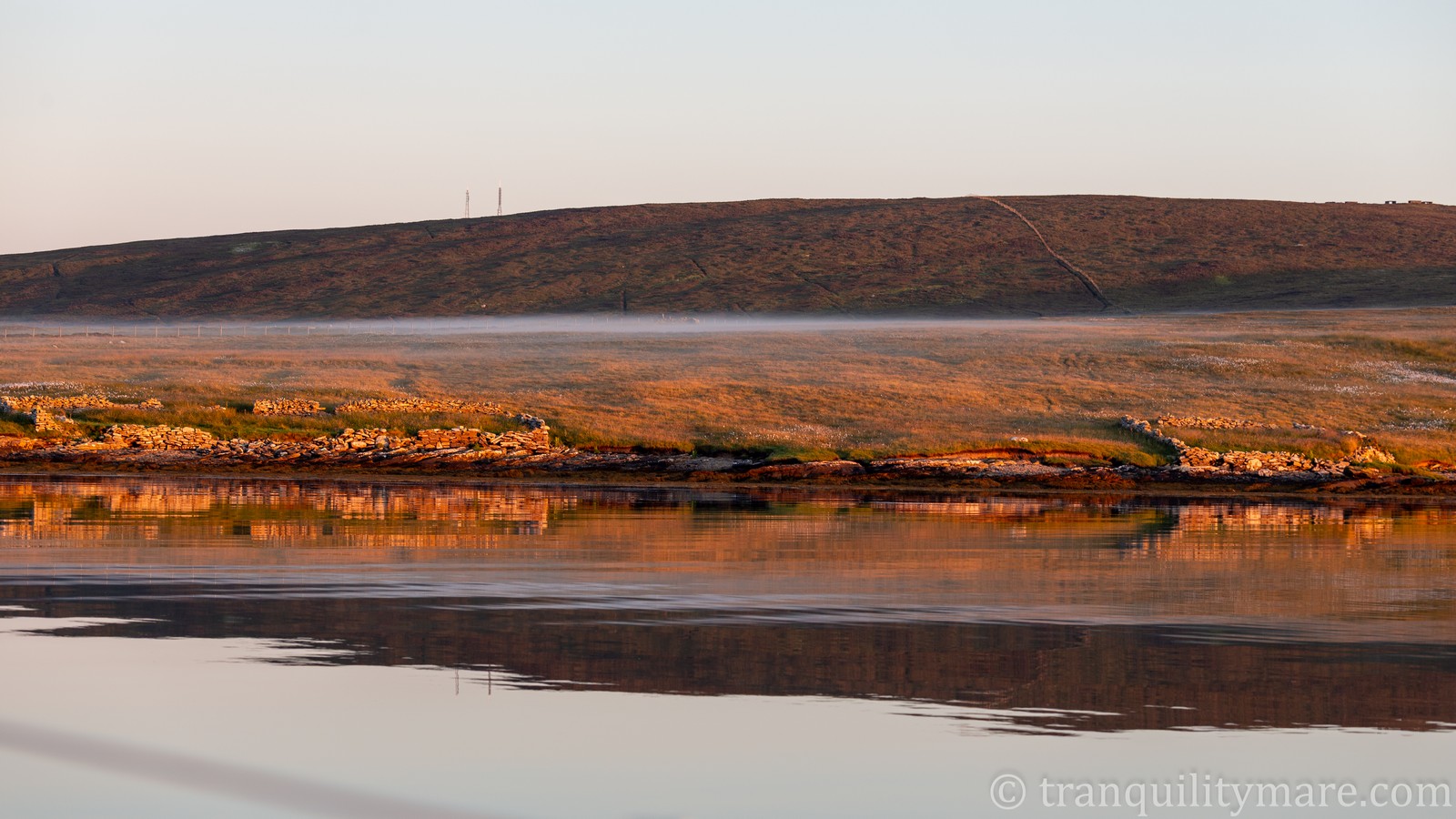
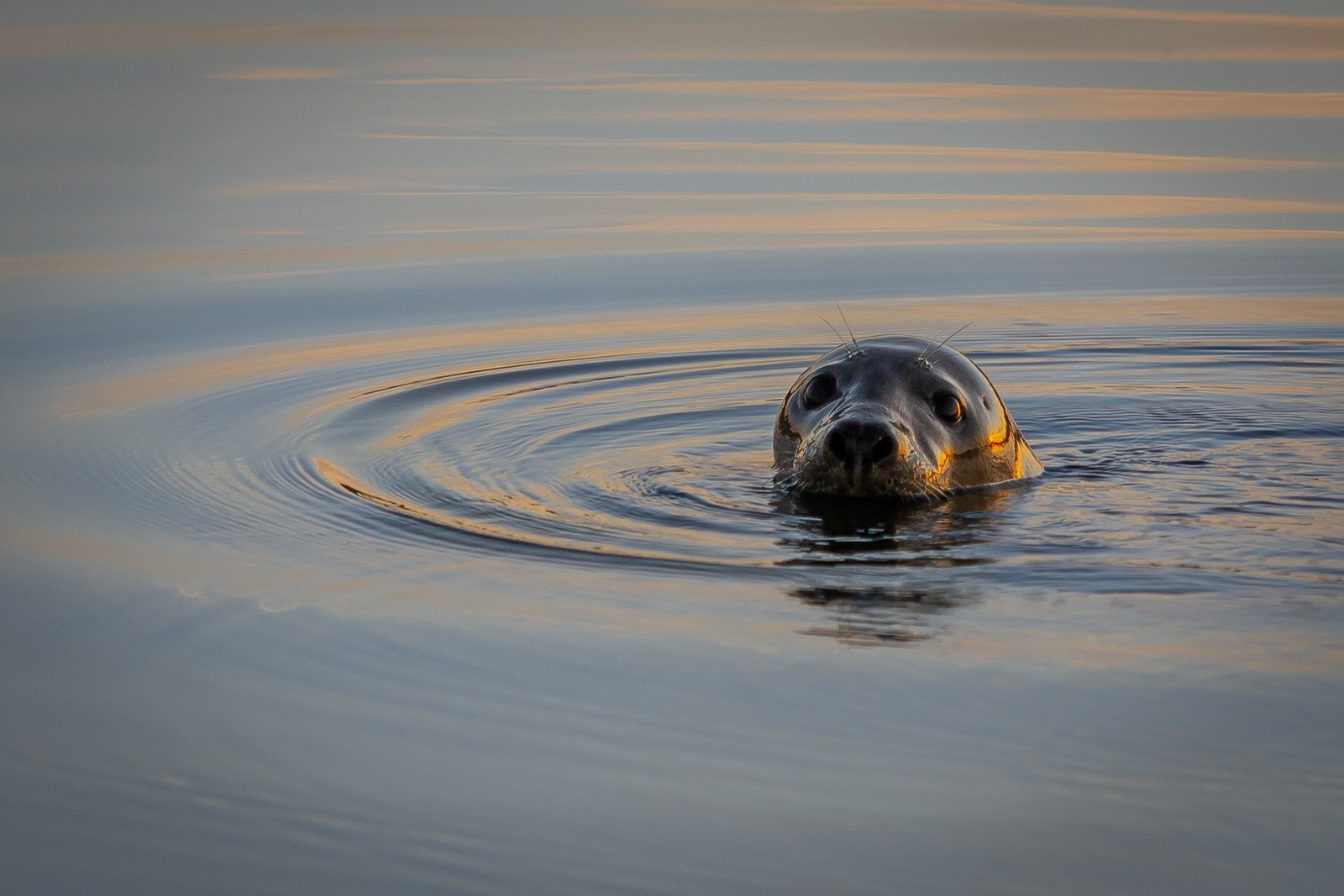
Since neither of the anchorages on Noss is suitable for an overnight stay in our view, it’s best to head north to Bressay for the night. There you’ll find Gunnista Bay—a quiet, wild, and well-sheltered anchorage where seals often come curiously close to anchored boats in the evening.
Mainland
Continuing Shetland sailing north along the coast of the main island—known as Mainland—you pass a series of narrow voes, fjord-like inlets cutting deep into the land. Many of them offer excellent shelter, especially when strong westerly winds make it necessary to stay put for a few days. Caution is needed, however, as parts of some bays are occupied by mussel farms. Apart from a few scattered settlements and remnants of old farming activity, the coastline remains largely wild and untouched. Even the presence of oil industry installations in the central part of the island does little to disturb the raw character of the landscape.
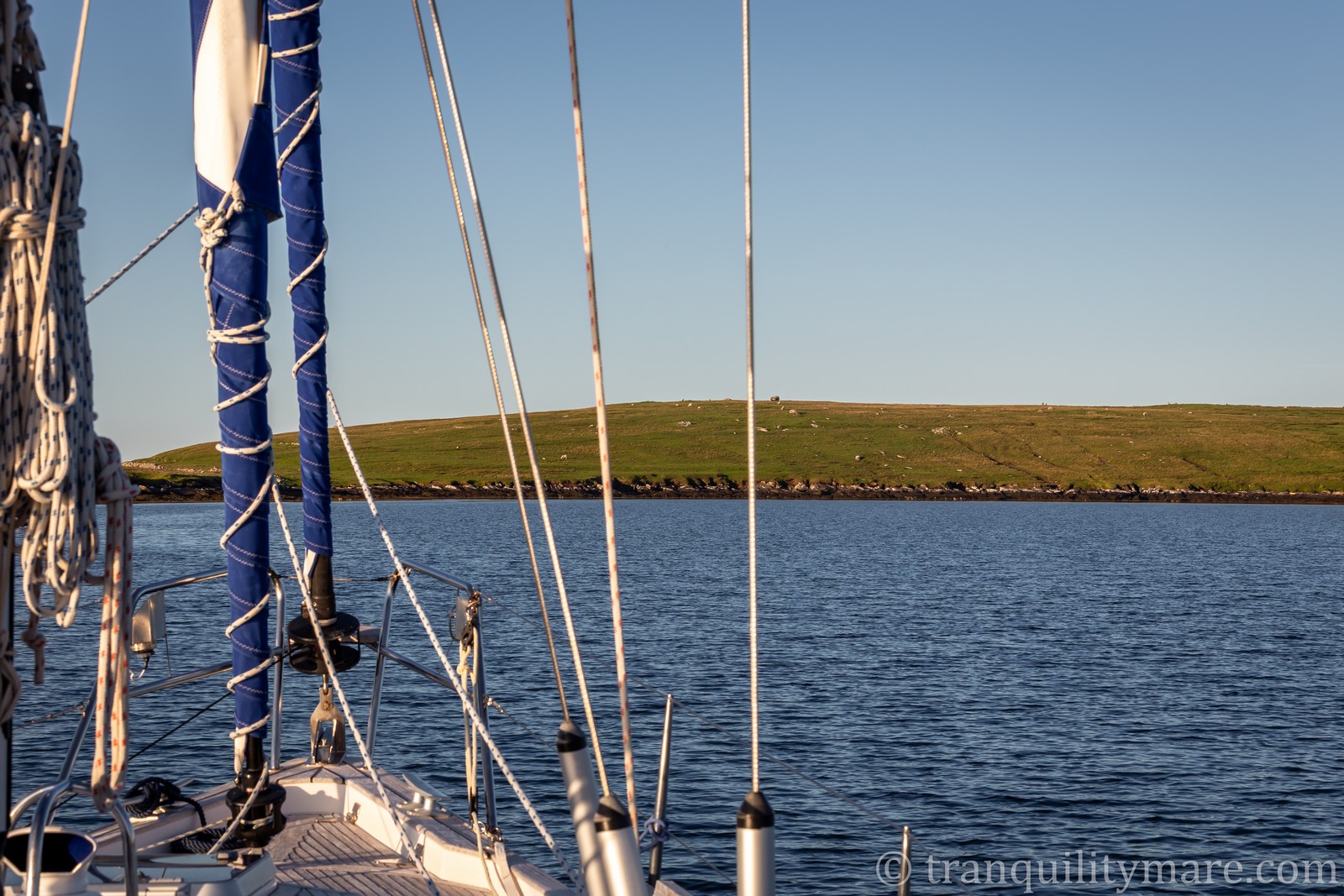
One of the best-protected anchorages is Catfirth, which works in almost any wind direction. A large part of the bay is taken up by a clearly marked mussel farm, but there is still enough space for anchoring beyond it. The anchor is typically dropped behind the farm in depths of around a dozen metres. There is no access to shore from the anchorage.
A number of smaller, scenic inlets can also be found on both the northern and southern sides of the Eswick peninsula. Due to their limited size and exposed surroundings, they are best visited only in calm conditions and with extra caution—the rocky coastline here leaves little room for error.
Yell
Burravoe and Hamna Voe
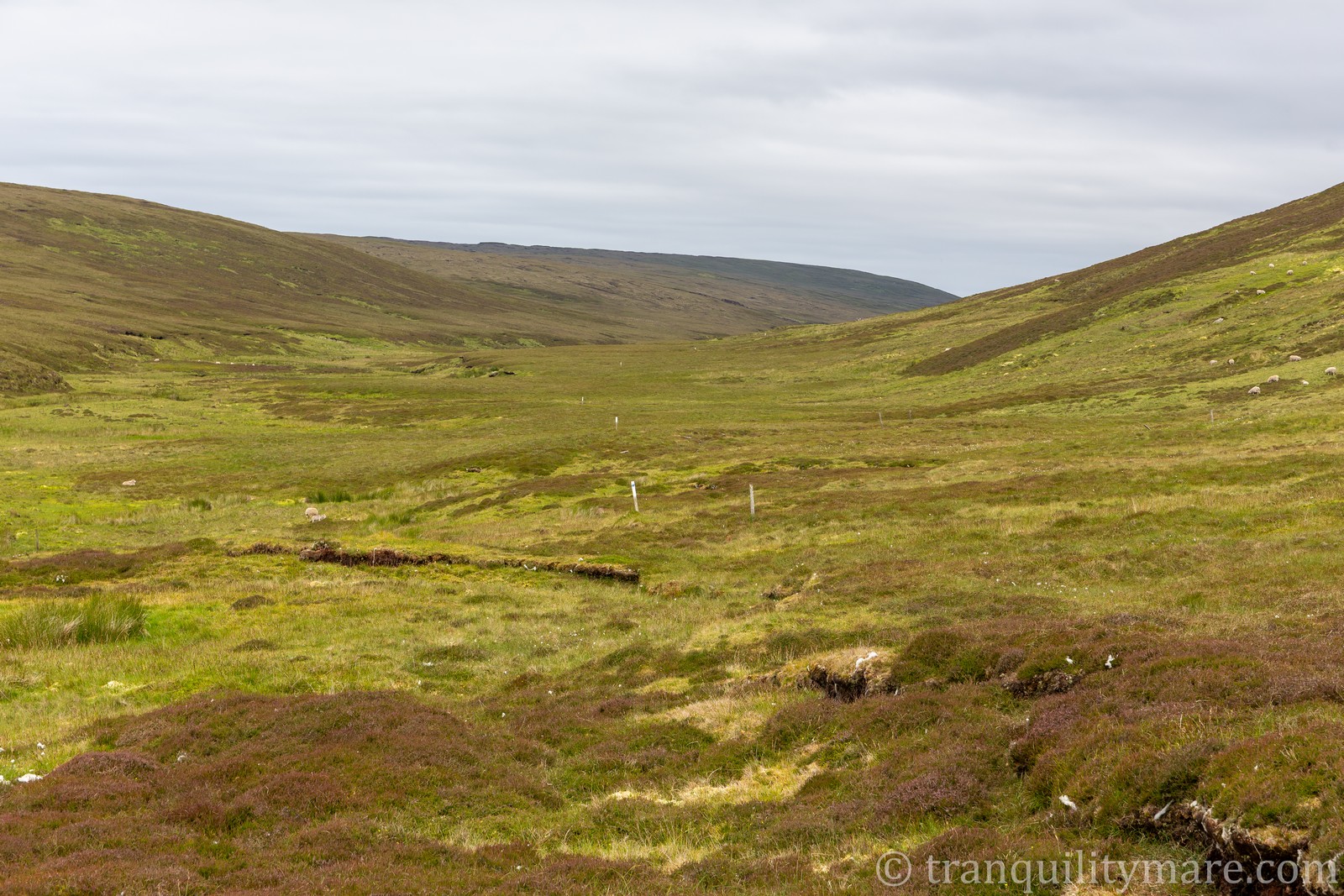
We now arrive at the island of Yell. On its southern coast lie two small anchorages. Burravoe, closer to the settlement of the same name, and the slightly more remote Hamna Voe. Yell is, above all, a vast landscape of moorland and peat bogs. Already from the deck of the yacht you can clearly feel that you are moving further away from civilisation.
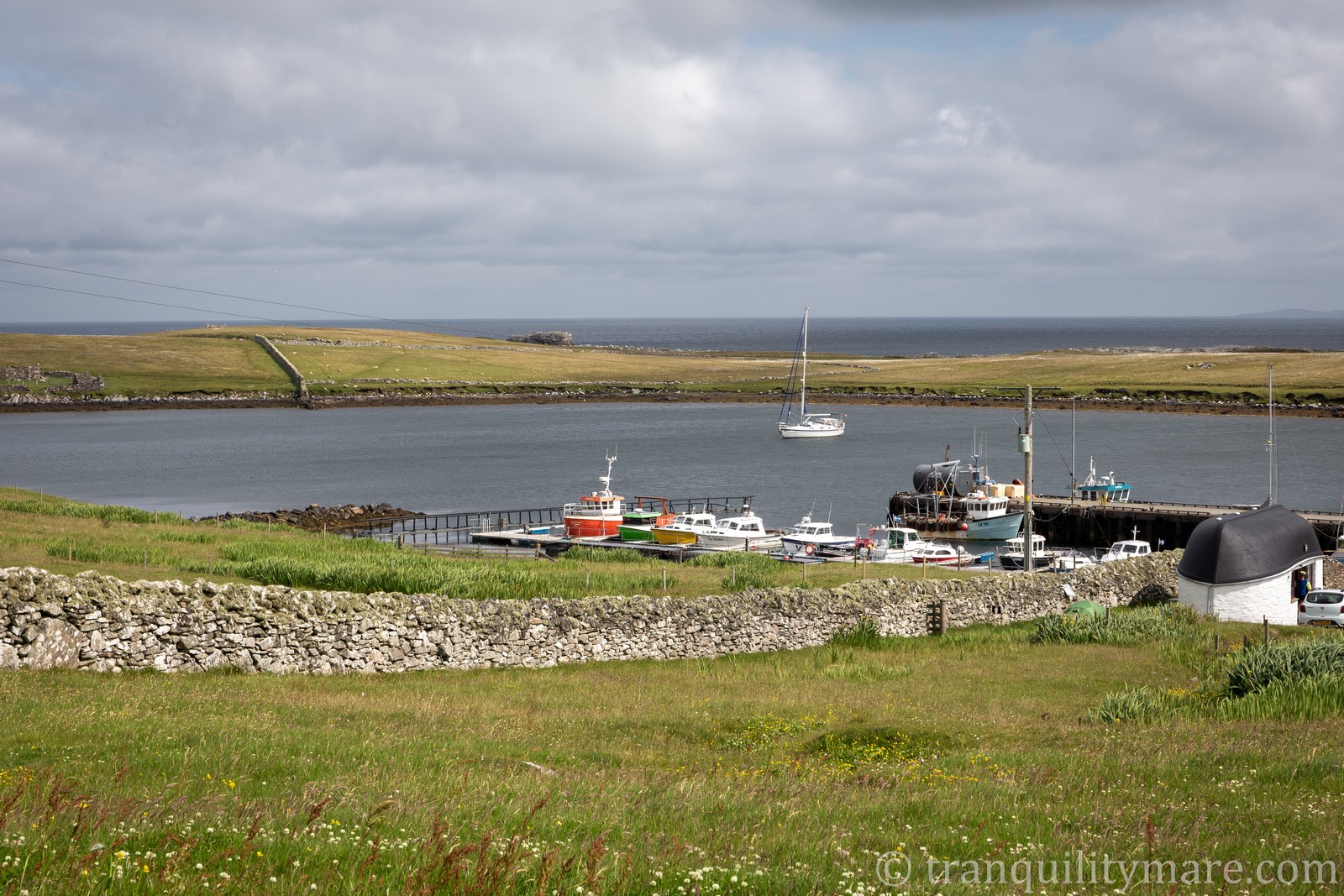
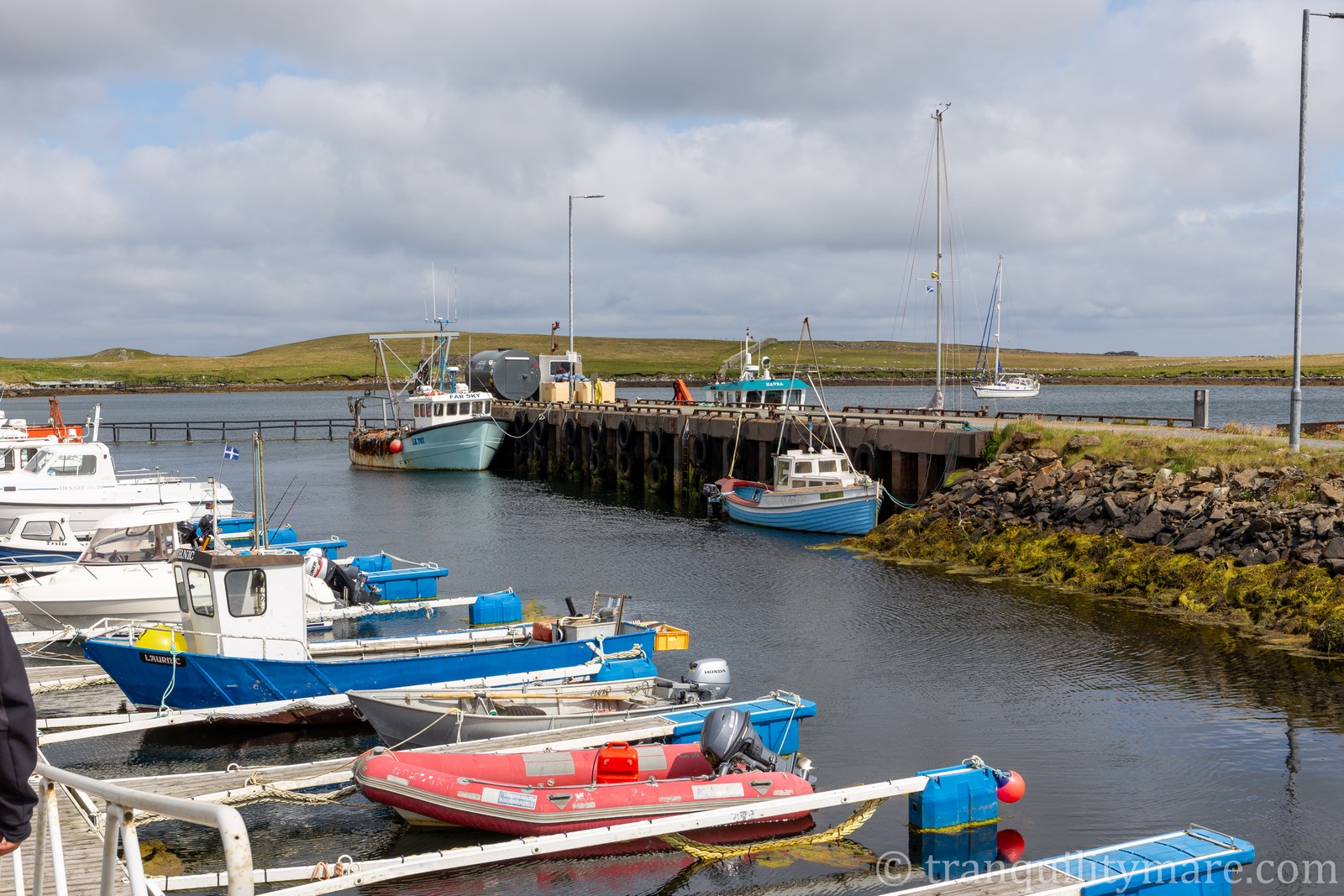
The entrance to Burravoe is narrow and shallow, though marked with buoys. For safety, we chose to enter at high tide. There is a small marina and quay in Burravoe, but after a reconnaissance by dinghy we decided to stay at anchor. However, it’s perfectly fine to leave your dinghy in the marina.
Catalina crash site
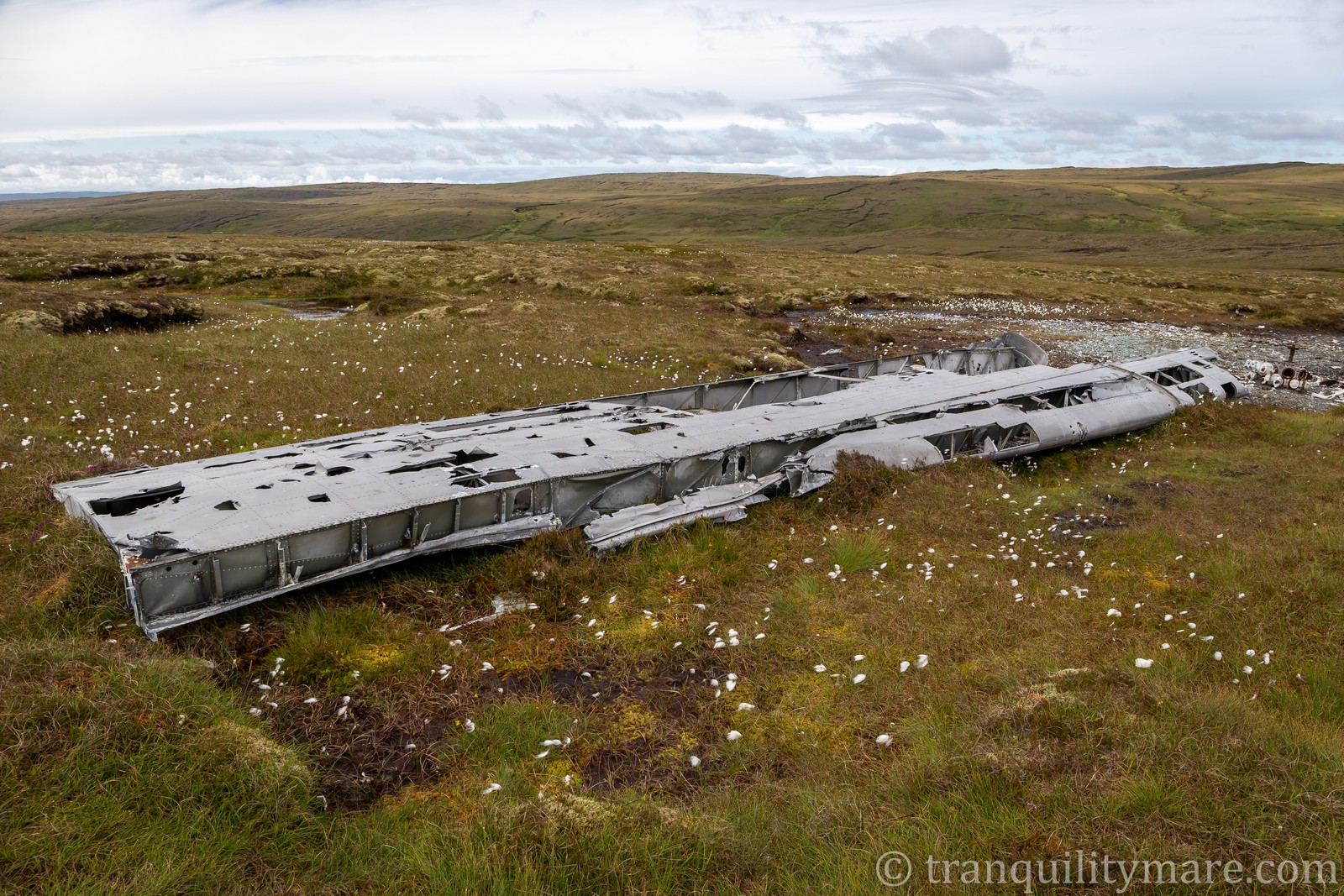
From both anchorages it is possible to set out on a several-kilometre hike across waterlogged peatlands to the crash site of a Catalina flying boat. The wreck of the aircraft, which once patrolled the North Sea in search of the German battleship Tirpitz, still lies in the central part of the island.
The route is fairly demanding due to poor signage and the extremely boggy terrain. Wet boots are guaranteed—though, to be fair, that’s a fairly standard when hiking in Scotland. The faint path is occasionally marked with wooden poles, but it is very easy to lose. You’ll know you’ve reached the site when you see a metal cross rising above the peat bog.
And as for how our path crossed with the Catalina crew for the second time this season—you can read about that in Logbook 2025, where we summarise our sailing year.
Old Haa Museum
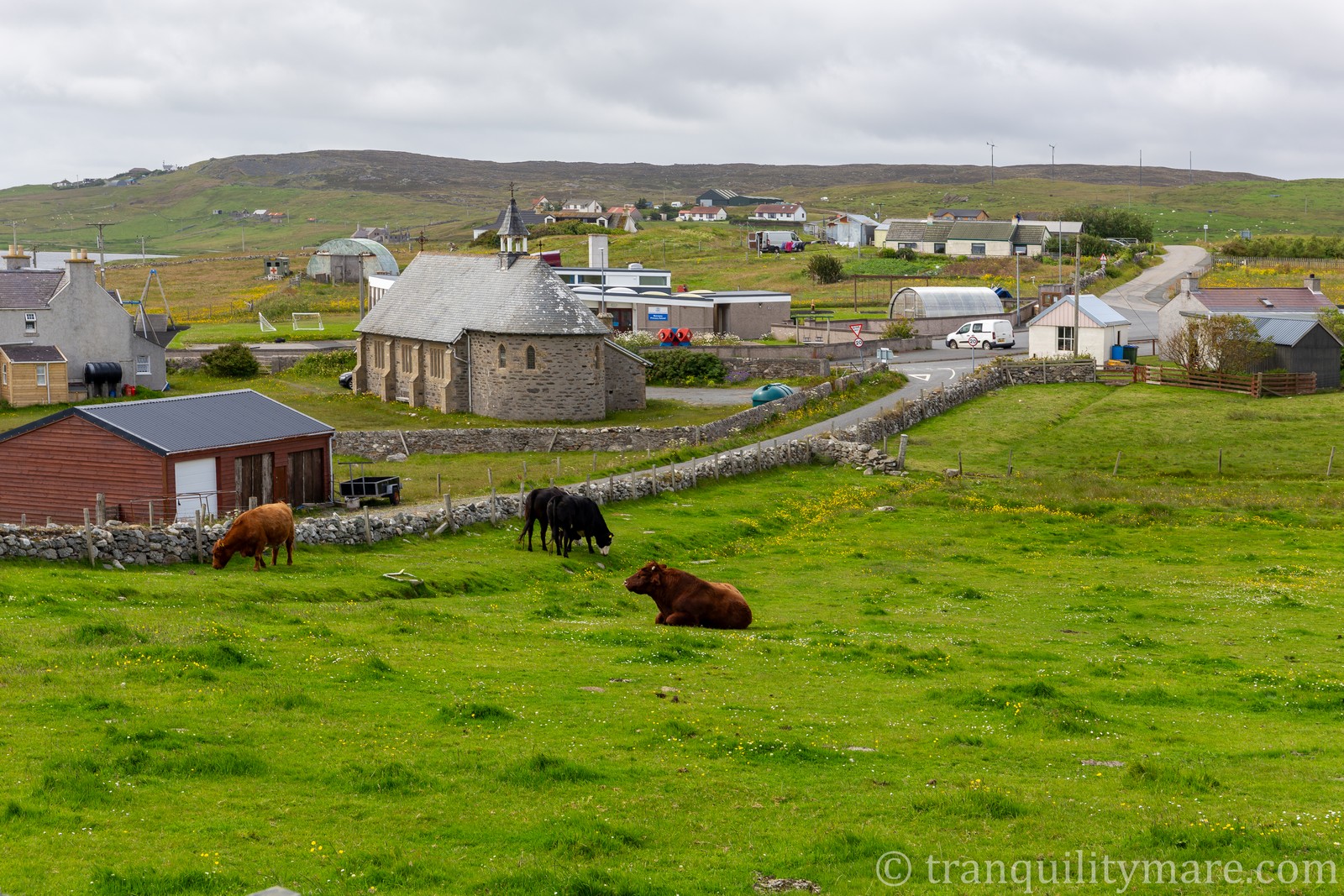
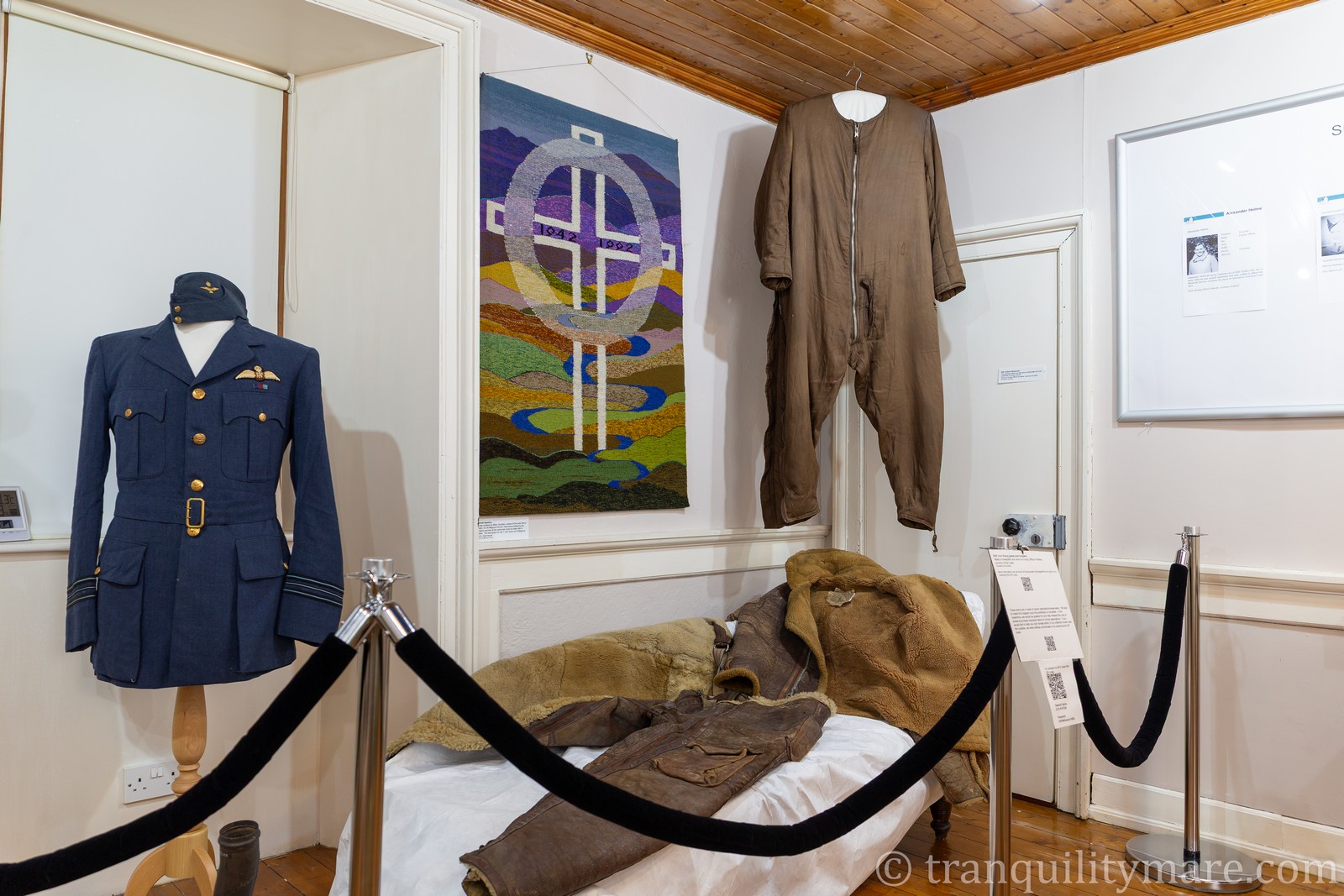
After visiting the crash site, it’s well worth heading into the settlement of Burravoe. The small Old Haa Museum features an exhibition dedicated to the Catalina accident as well as the wider history of the island. And, just as importantly after a long and wet walk, it also has a café. Very much appreciated in this part of the world.
Mid Yell
Another well-sheltered and safe anchorage is Mid Yell, located roughly halfway up the island. There is a small settlement here with even a tiny shop for basic supplies.
Anchoring is possible on the southern side of the bay. The northern part is occupied by mussel farms. Care must be taken not to block the access channel used by the ferry when it calls in. Extra attention is also needed on entry, as the mussel farms are installed there too.
Fetlar
To the east of Yell lies Fetlar, an island inhabited by only a few dozen people. Anchorages on its northern and southern sides—depending on wind direction—make for convenient stops along the way.
They are particularly useful for sailors arriving from Norway who want to stay in the northern part of the archipelago without having to descend as far as Lerwick.
Unst
We’ve now reached the very north of Shetland—and of the entire United Kingdom. This is Unst. Beyond it lies only open ocean stretching towards the Arctic.
This place left the strongest impression on us—not just in Shetland, but across the entire 2025 season. The sense of remoteness and rawness reaches its peak here, and the feeling of standing at the edge of the world stops being just a figure of speech. If your time of Shetland sailing is limited, this is the island to prioritise.
Baltasound
The first stop is Baltasound—a long, narrow voe cutting deep into the land. Despite numerous fish farms, there is still plenty of space for anchoring. Holding is good, as we confirmed while waiting out strong westerly winds.
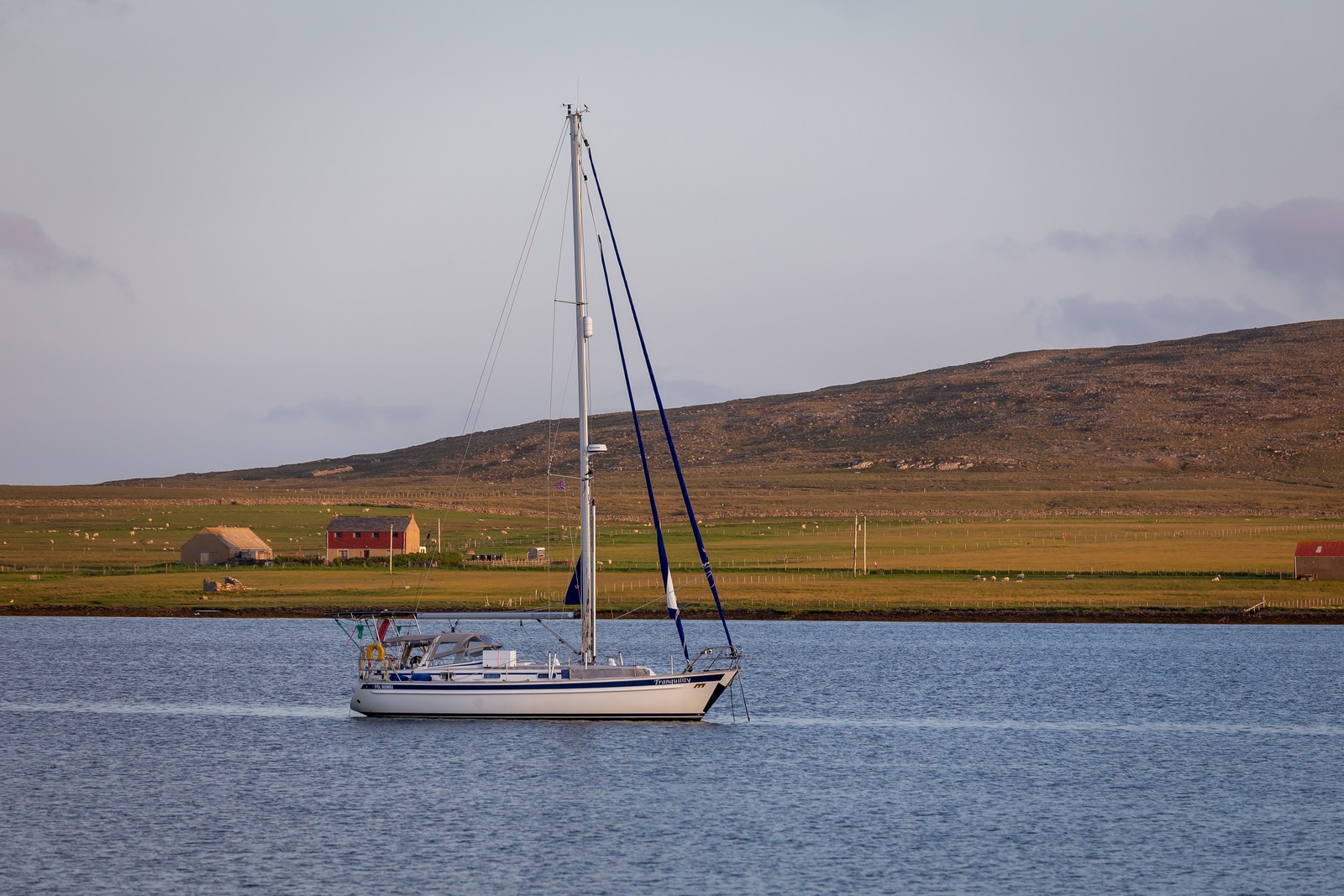
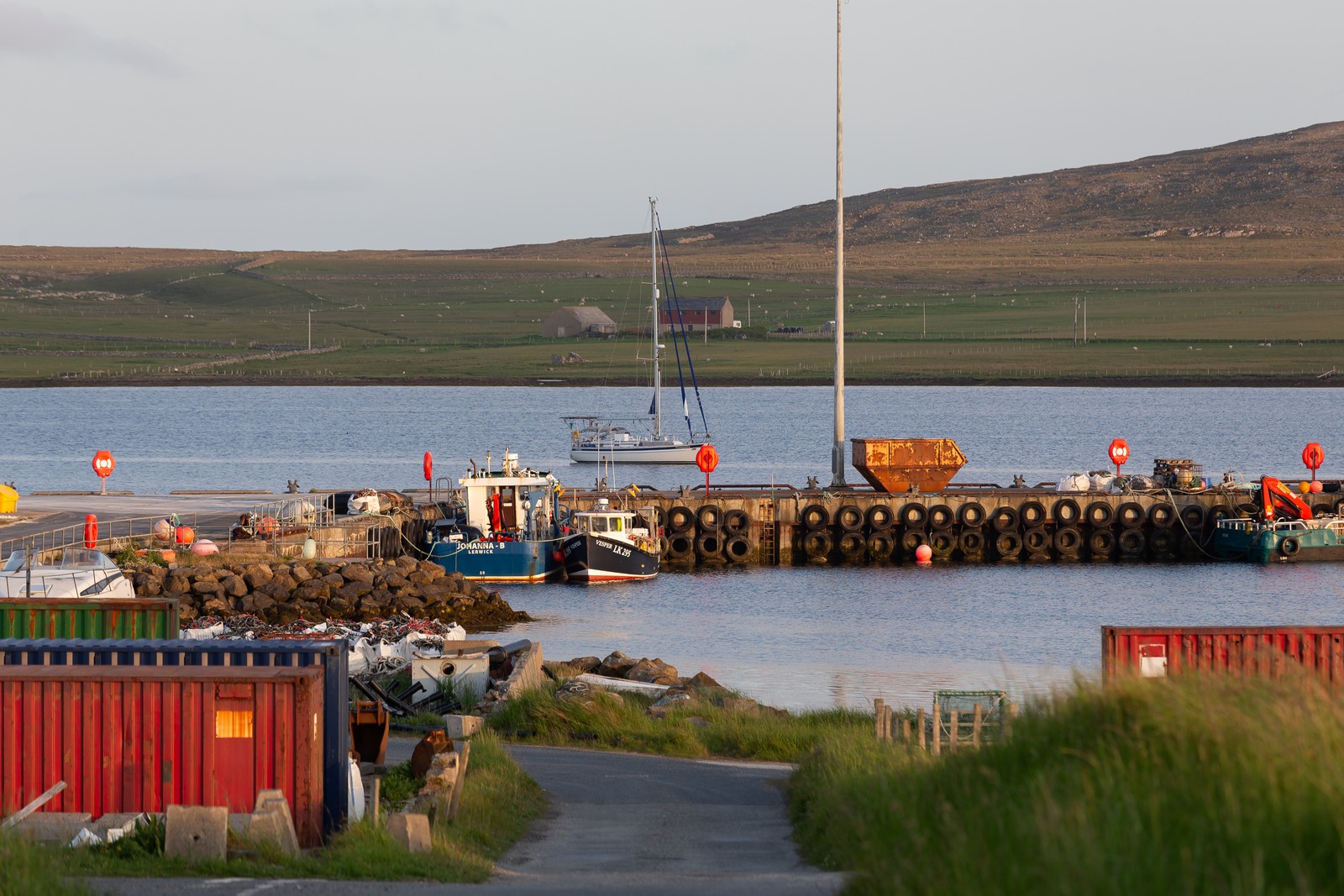
The small pier described in pilot books is, in our view, not suitable for yachts. Often occupied by fishing vessels, with concrete quay that don’t inspire confidence for alongside mooring. Although we know yachts do occasionally use it.
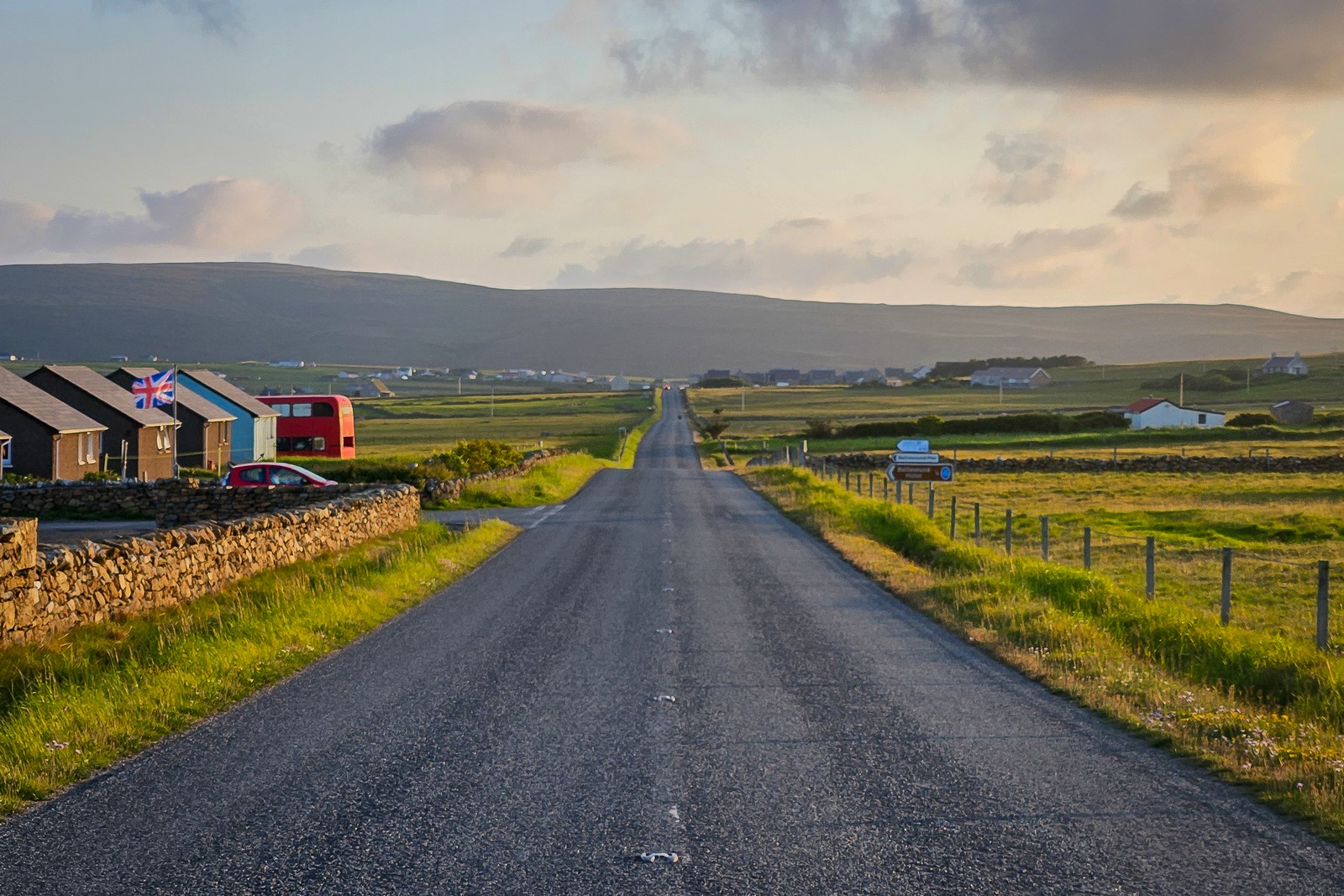
The surrounding landscape feels like something out of Northern Exposure series. A tiny settlement made of containers, a single small shop, a straight road through empty land, and… the northernmost pub in the British Isles, of course also housed in a container.
Haroldswick
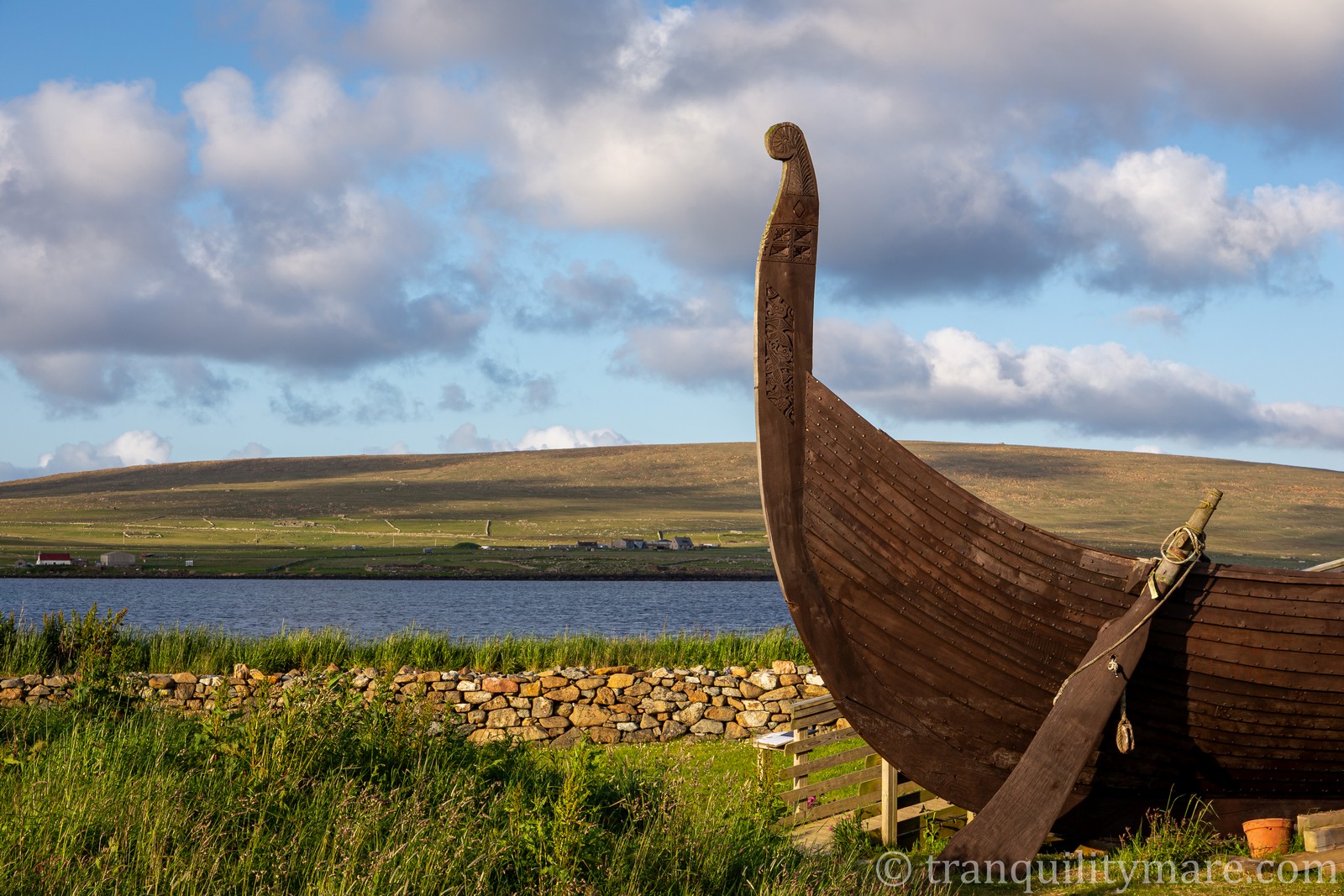
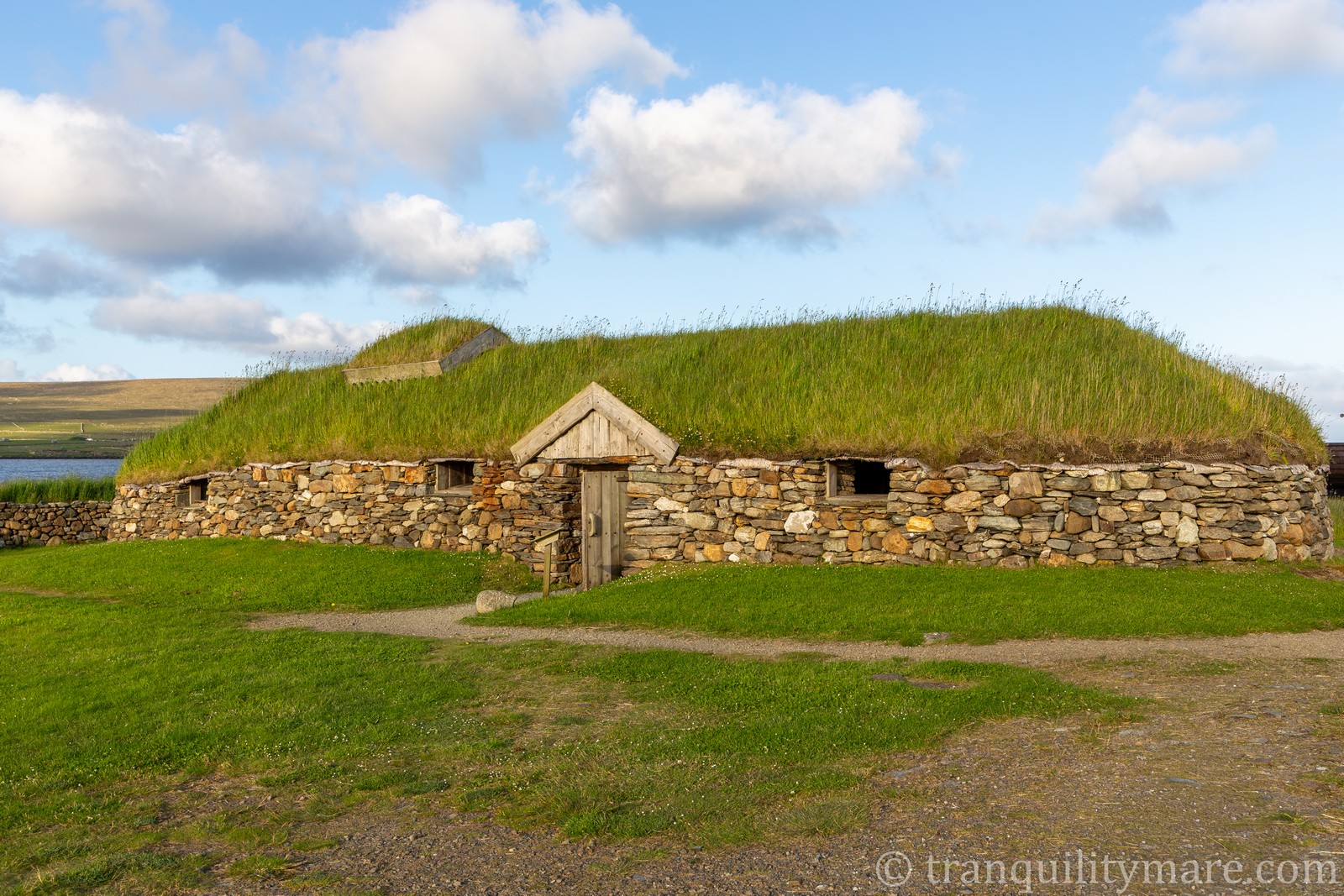
The next bay to the north is Haroldswick. One of its curiosities is a replica Viking longship displayed on the shore. It is in this part of the archipelago that the first Vikings are believed to have set foot on Shetland, shaping its character in a way that is still strongly felt today. The Viking boat can also be reached on foot from Baltasound via a walk across the island, although much of the route follows a fairly busy road.
Burrafirth
We end with one of the most spectacular locations—Burrafirth. This is a north-facing open fjord, at the entrance to which lie the very last fragments of British land: the iconic lighthouse of Muckle Flugga Lighthouse and the surrounding rocky islets.
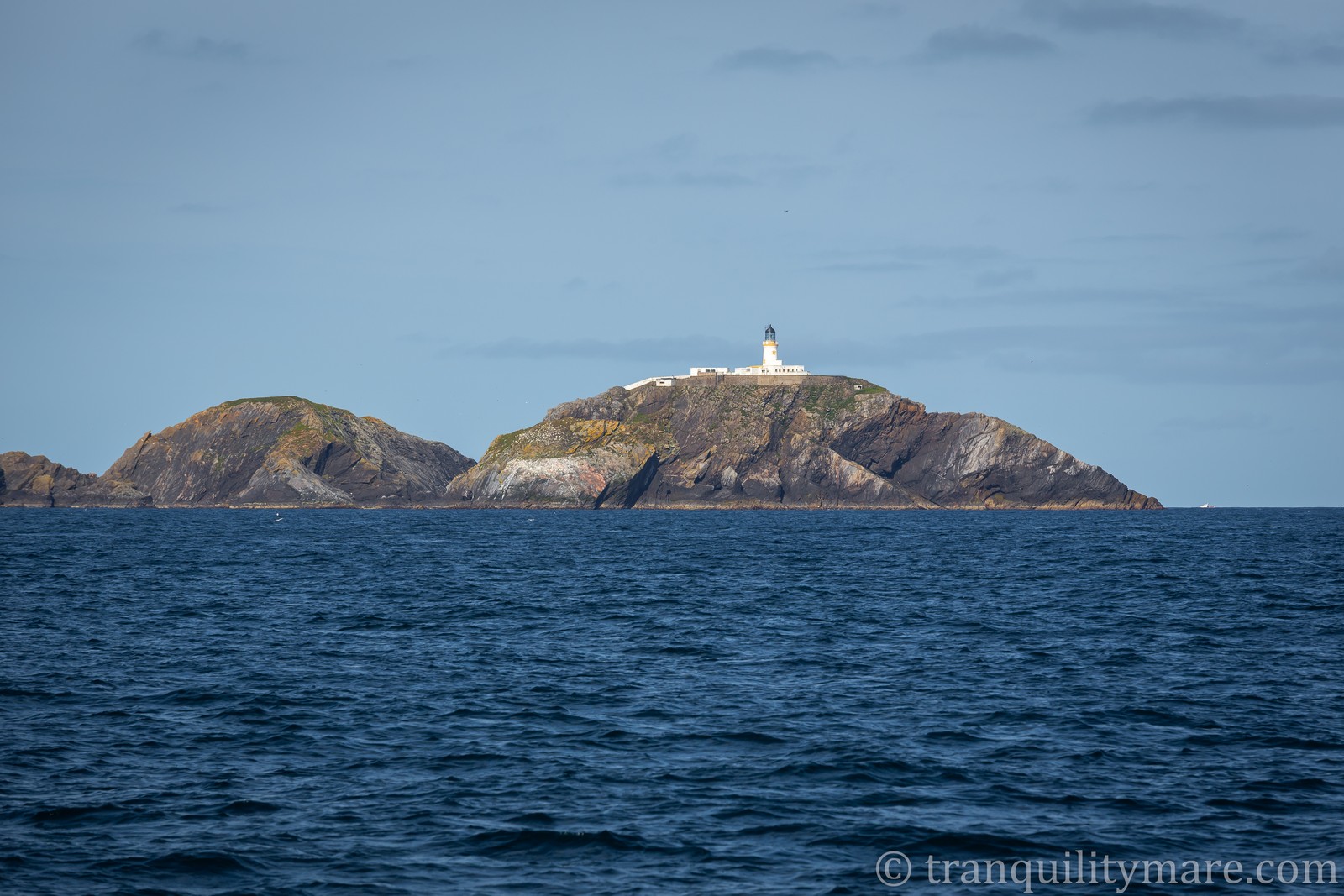
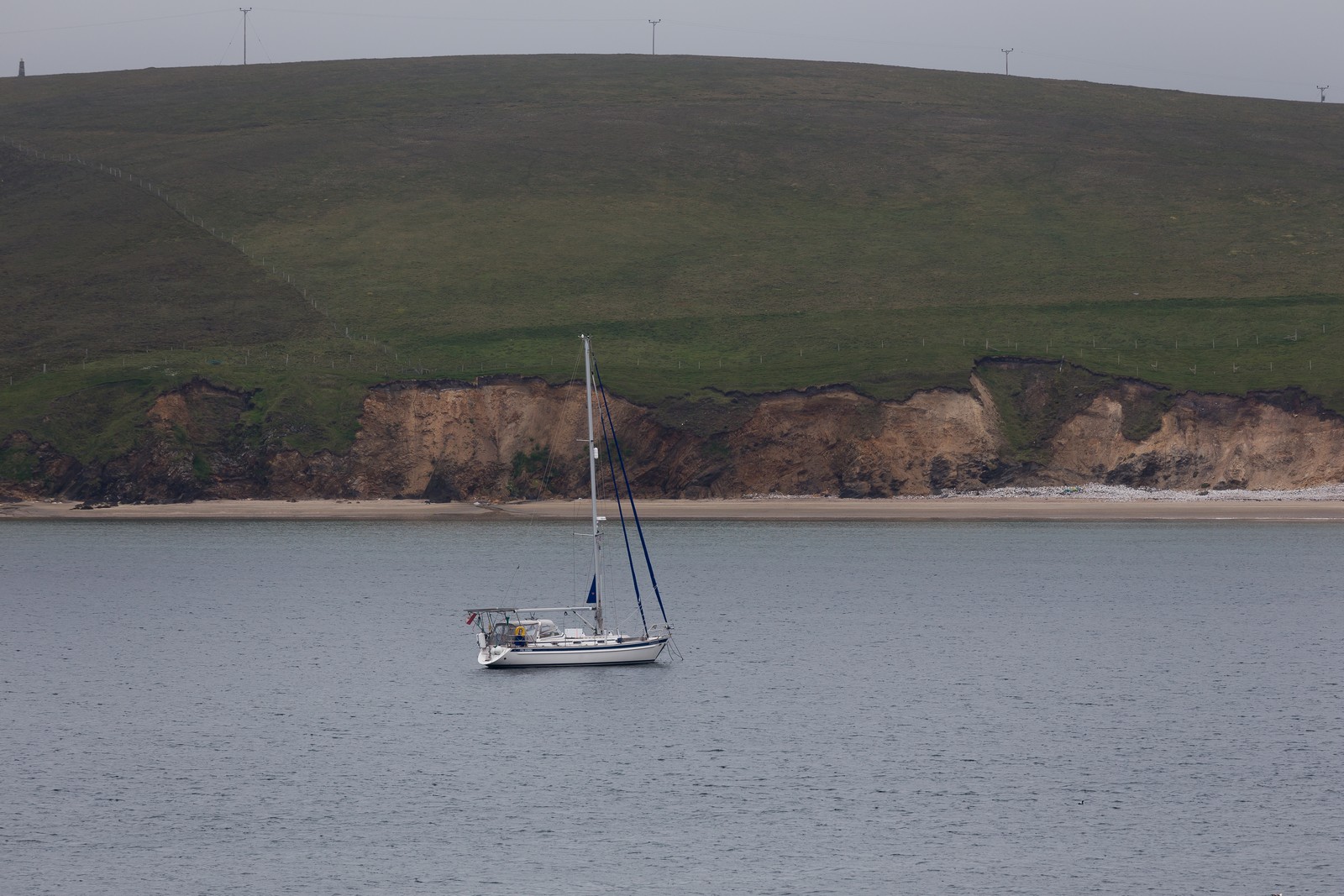
The bay offers very good shelter in southerly winds, but with any northerly component it is not a suitable place to stay. Dinghy landing is possible at the slipway on the western side of the bay or directly on the beach.
Hermaness Nature Reserve
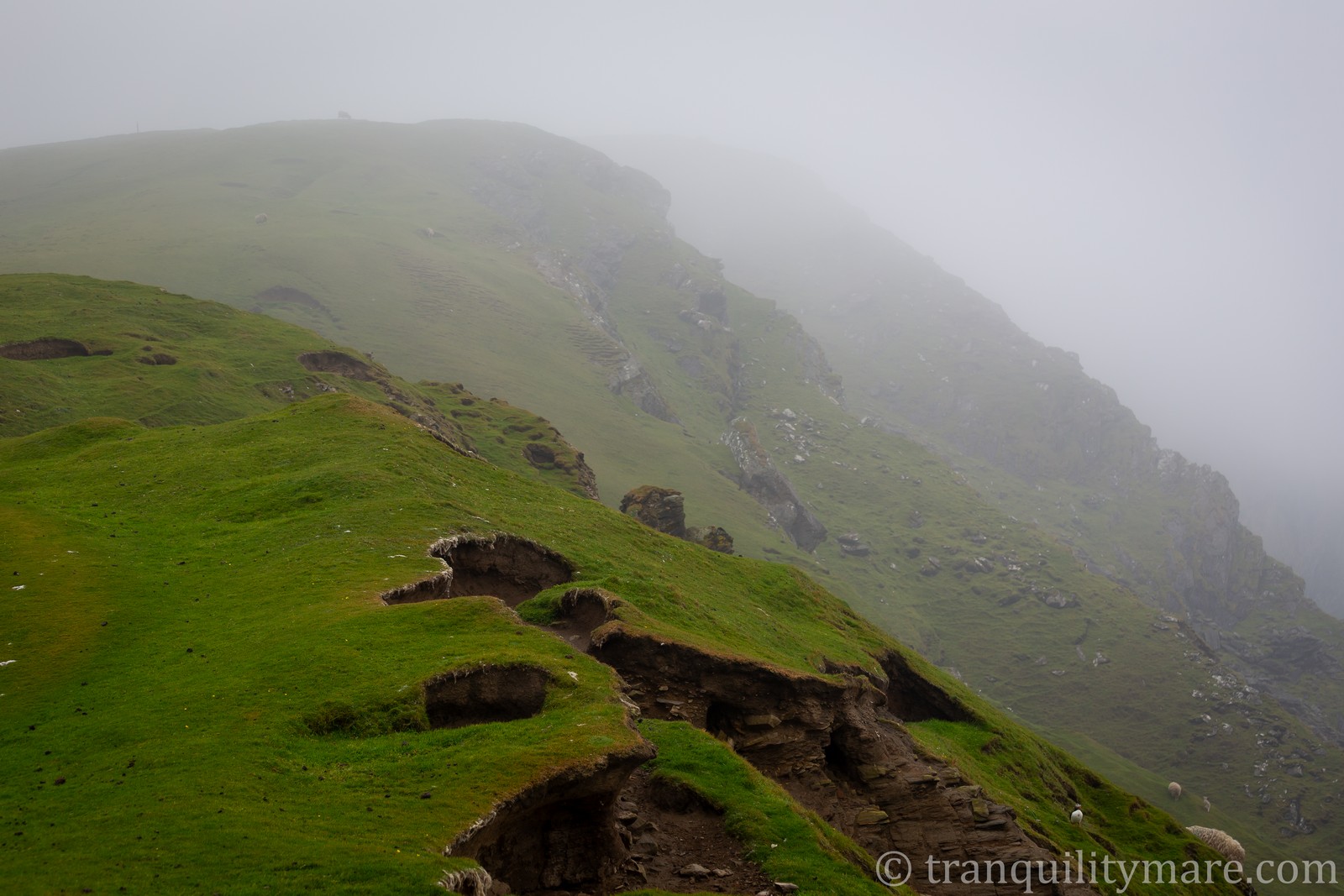
On land lies the Hermaness Nature Reserve, home to some of the most dramatic cliffs in Shetland. This is an absolute must-see. Thousands of seabirds, puffins among them, create a spectacle that is hard to compare with anything else. Even rain and fog don’t diminish its appeal; if anything, they add a raw, almost mystical atmosphere. Several walking trails of varying length allow you to either take a quick look at the coastline or spend much longer exploring the area.
Puffins
One striking thing here is how little the birds seem to fear people. Puffins can often be observed from very close range—sometimes literally within arm’s reach. They are so captivating that it’s easy to spend hours just watching their behavior and routines. Despite their comical appearance, they are impressive performers: capable of flying at speeds of up to 88 km/h and diving to depths of around 60 metres in pursuit of small fish, mainly sand eels and herring.
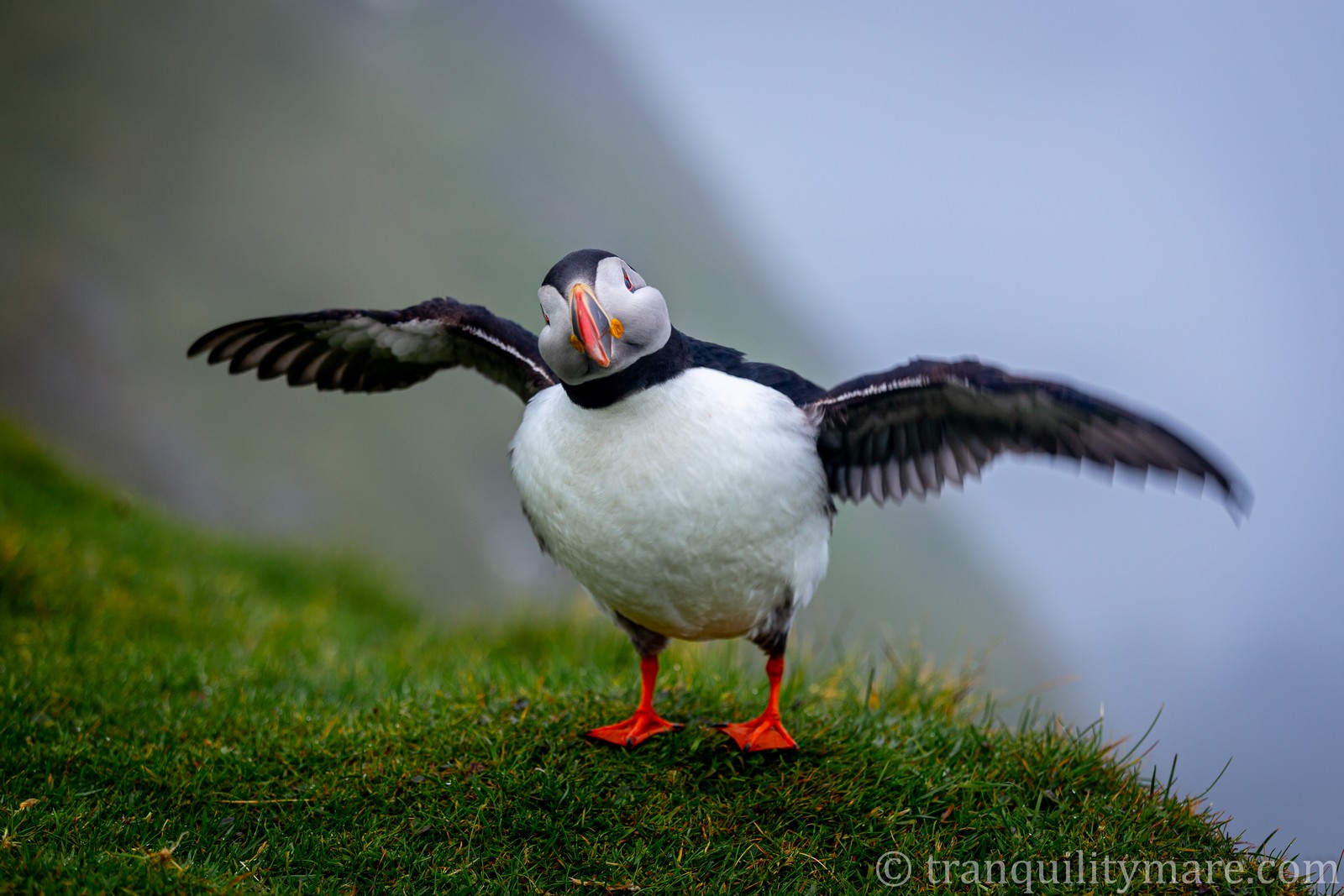
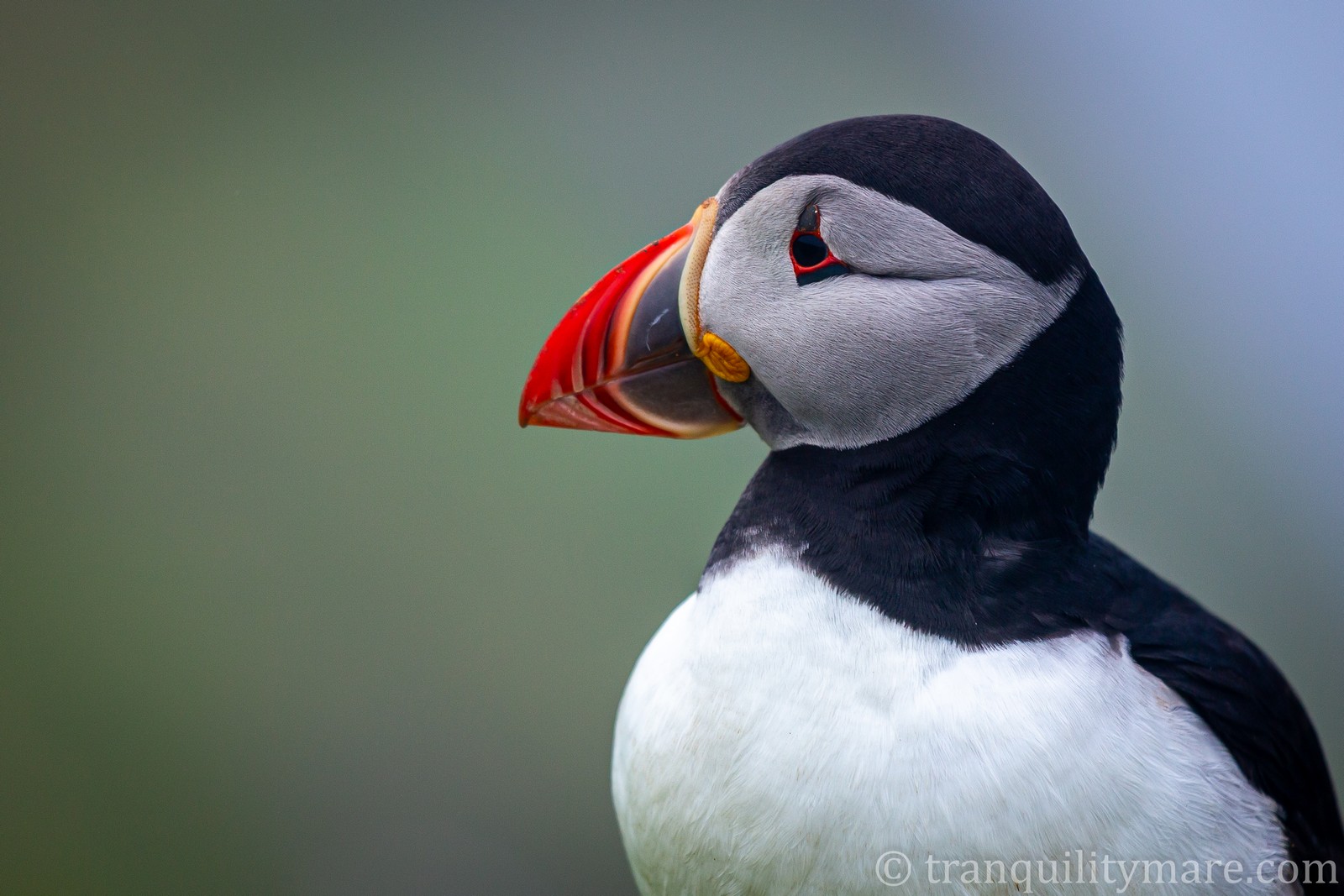
Puffins are also long-lived birds—the oldest known individual reached 41 years of age. They return to the same burrow and often the same partner each year, making them remarkably faithful inhabitants of the cliffs. They spend the winter out on the open Atlantic, completely disappearing from land. During the breeding season, their beaks become vividly coloured, almost fluorescent, before fading again once the season ends. The breeding period lasts from April to early August. That’s when Hermaness transforms into one of the most extraordinary bird theatres in northern Europe.
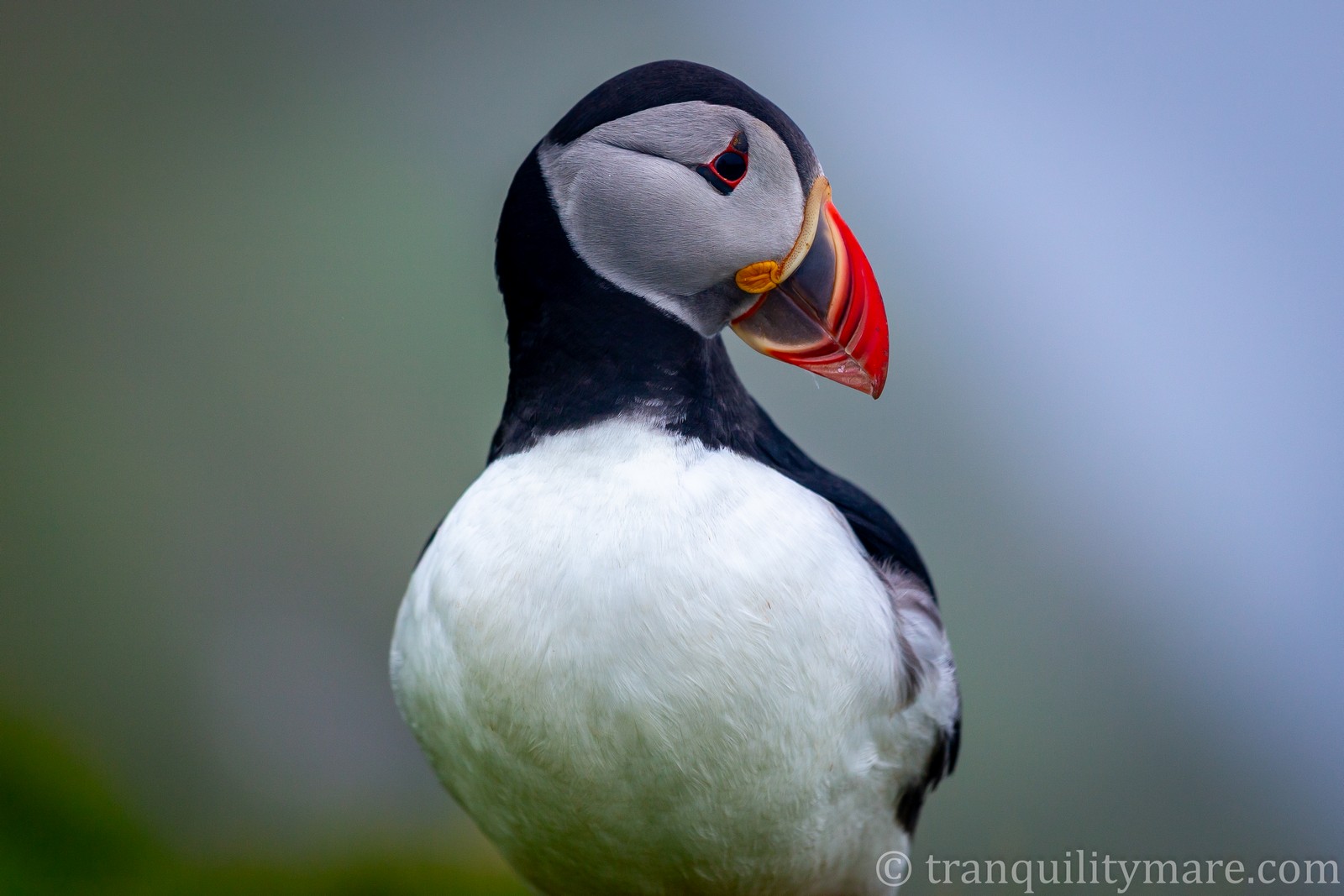
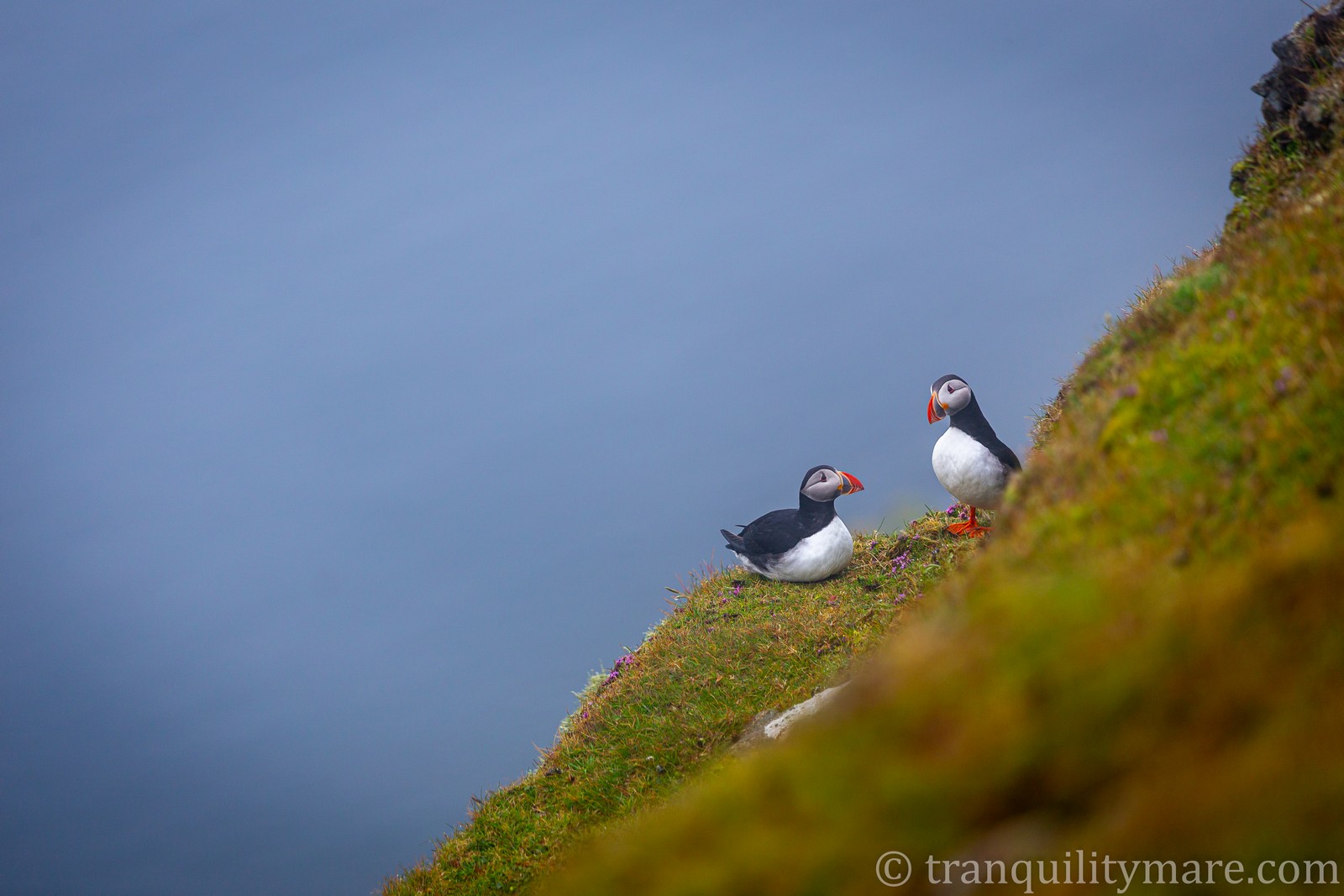
Across Hermaness and Shetland as a whole, over 300 bird species have been recorded. Still, it’s fair to say that puffins are the undisputed stars of the show, especially for those who are not dedicated birdwatchers. Their presence captures the attention of almost every visitor to the cliffs.
Ornithologists, however, will find much more here—rare and elusive species, as well as numerous sightings of migratory birds stopping over during their journeys. It is this diversity that makes Shetland so special and has long attracted researchers from across Europe.
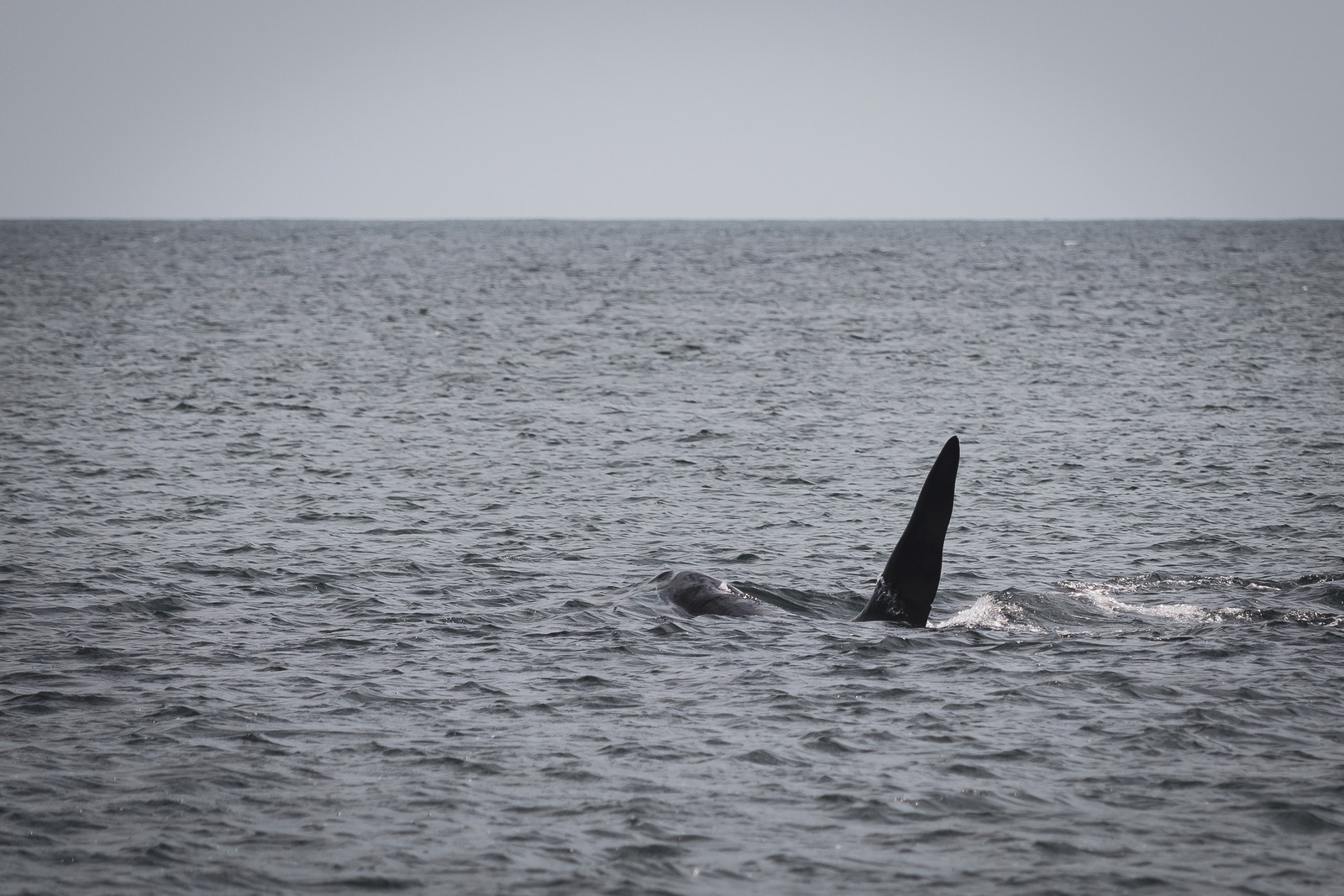
Encounter with Orcas In Shetland
This account of our voyage wouldn’t be complete without mentioning one of our long-held nature dreams that finally came true here. While Shetland sailing, we encountered orcas. Seeing these extraordinary animals up close was the perfect final touch to everything the islands had offered us. But that story deserves its own dedicated article.
Summary – Shetland Sailing
And with that, we conclude our Shetland sailing journey from the southern tip of the archipelago all the way to its far northern edge. We have described all the places we personally visited, striving to keep everything as accurate and up to date as possible based on conditions in 2025/2026 and our own experience in Shetland sailing.
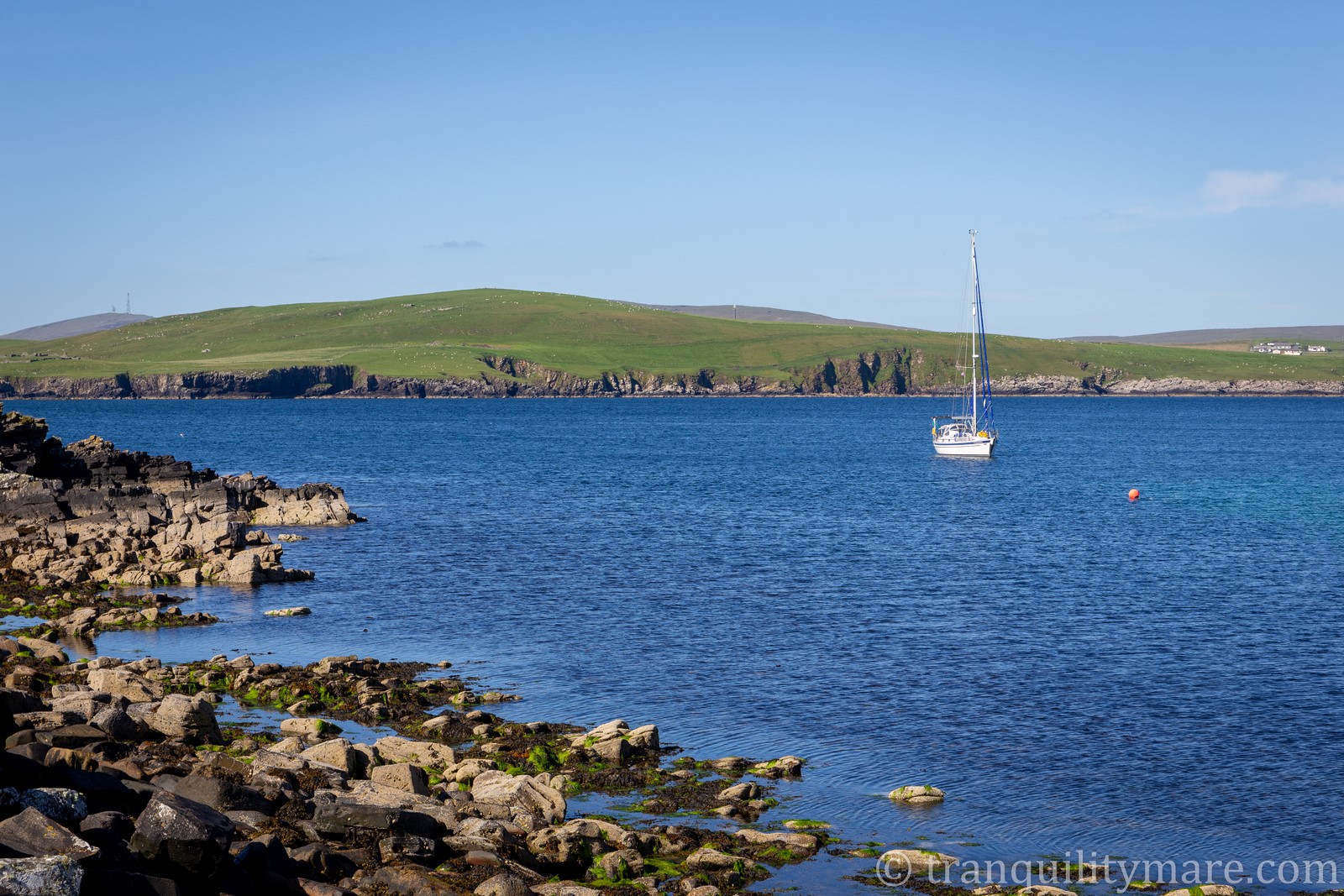
Treat this guide as inspiration and a practical hint. Always make sure to check the latest navigational information in pilot books and official charts before setting off.
We would be very grateful if, after reading this article, you could buy us a virtual coffee. Writing it—and especially gathering all the information and experiences—meant not only weeks of sailing in the area, but also many long hours behind a computer. Thank you!
And if you’re planning a similar voyage and would like to ask questions or need help with planning, feel free to reach out through our Cruising Consulting.

![🌿 São Jorge, Azores
[🇵🇱 Język polski w pierwszym komentarzu👇]
After an intense summer season, we’re finally catching up on our photos — and there are quite a few waiting to be shared. 📸
So, continuing our Azores story, here’s São Jorge — one of the islands of the Central Group, together with Faial and Pico.
Much less touristy and noticeably wilder, São Jorge has a distinctive long, narrow shape, with a mountainous ridge running along the island. We stayed in the marina in Velas, which quickly became our favourite in the Azores. Maybe because the dramatic cliffs rising above it reminded us so much of last season in Norway and Scotland. 🌊
The cliffs were home to Cory’s shearwaters, whose strange, haunting calls gave us an evening concert every night. 🐦
At the foot of the cliffs lie the famous fajãs — small, flat and incredibly fertile areas, formed mainly by landslides and volcanic processes. Many of them are still difficult to reach today, but their fertile soil and sheltered, relatively flat terrain have attracted people for centuries. 🌱
As always, we rented a car and spent our time exploring the island, hiking through the mountains and discovering its wilder corners. 🚗🥾
Here’s a little photographic glimpse of São Jorge. 🌿🌊📷
#saojorge #azores #sailingazores #marinavelas](https://tranquilitymare.com/wp-content/plugins/instagram-feed/img/placeholder.png)
No responses yet